





Bitcoin wallet dormant since 2011 moves $3.2 million toward FalconX-linked address

Lời nói đầu:A dormant 2011 Bitcoin wallet moved 50 BTC to an address that has received funds from wallets labeled as a Nexo hot wallet and Prime Trust custody, though on-chain evidence does not yet show the coins were sent to an exchange or sold. Such early-era transfers are often ambiguous, reflecting custody changes or upgrades rather than imminent sales. The activity follows a serious cold-wallet exploit affecting Bitcoin: Coinkite disclosed a firmware flaw dating to 2021 that could expose keys from certain Coldcard devices, and attackers have stolen as much as $114 million from vulnerable wallets since July 30 in four waves. The incident underscores that coins idle for over a decade can still become vulnerable if key-protecting software fails.

It has also received funds from wallets Arkham labels as a Nexo hot wallet and Prime Trust custody.

The newly arrived 50 BTC remained in the address as of Friday morning. That means there is no on-chain evidence that the dormant coins themselves have been sent to FalconX, another exchange or sold.
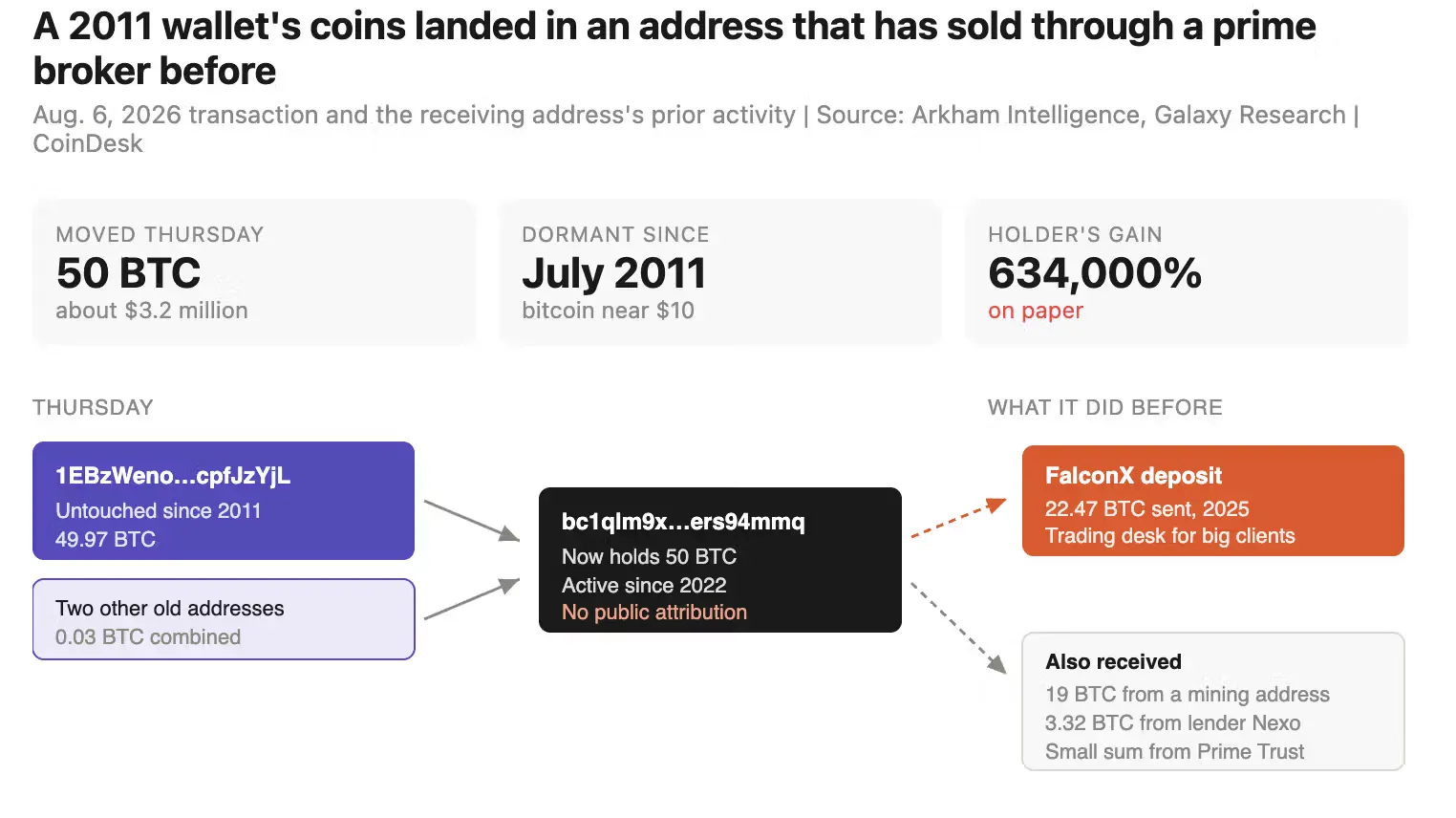
A 2011 wallet's coins landed in an address that has sold through a prime broker before. (Shaurya Malwa/CoinDesk)

Dormant wallets from bitcoin's earliest years tend to draw attention when they move because their owners accumulated coins when the asset was worth a fraction of today's price.

While movement alone gives little indication of what the holder plans to do next, and transfers can reflect anything from wallet upgrades and custody changes to preparations for a sale.

The movements come on the back of one of the worst cold-wallet exploits to hit Bitcoin in years, a reminder that coins can sit safely for more than a decade and still become vulnerable when the software protecting their keys fails.

Coinkite, maker of the Coldcard hardware wallet, urged users on Tuesday to move funds after disclosing a flaw in firmware dating to 2021 that could expose keys generated by affected devices. Attackers have swept as much as $114 million from vulnerable wallets since July 30, according to the company, in four waves of thefts.

Miễn trừ trách nhiệm

Các ý kiến ​​trong bài viết này chỉ thể hiện quan điểm cá nhân của tác giả và không phải lời khuyên đầu tư. Thông tin trong bài viết mang tính tham khảo và không đảm bảo tính chính xác tuyệt đối. Nền tảng không chịu trách nhiệm cho bất kỳ quyết định đầu tư nào được đưa ra dựa trên nội dung này.
Bài viết trước

Nhà nghiên cứu “sống” cùng các hacker Triều Tiên, phát hiện 1,640 nạn nhân

Bài tiếp theo

Một đợt tách công ty có thể cứu Fujifilm sau ngày tồi tệ nhất trên thị trường Nhật Bản?