





XRP Ledger
3.78
5-10 years
Not Regulated
Questionable Regulatory License

No Regulatory License

Be aware of the risks!

Basic Information

Country/Region
Estonia
Exchange AbbreviationXRP Ledger
Trade TypeFiat Trading
Operating Period5-10 years
Websitehttps://xrpl.org/
Bloghttps://xrpl.org/blog/
0.00/10

Score

Regulation
Risk Control
Business
Reputation
Tech

RiskNotice

2 risk alerts
High Risk 1
Medium Risk 1

Exchange Overview

Exchange Overview

The XRP Ledger (XRPL) is a decentralized, public blockchain led by a global developer community.

Business Region

InfluenceB
0
2
4
6
8
10

News

117

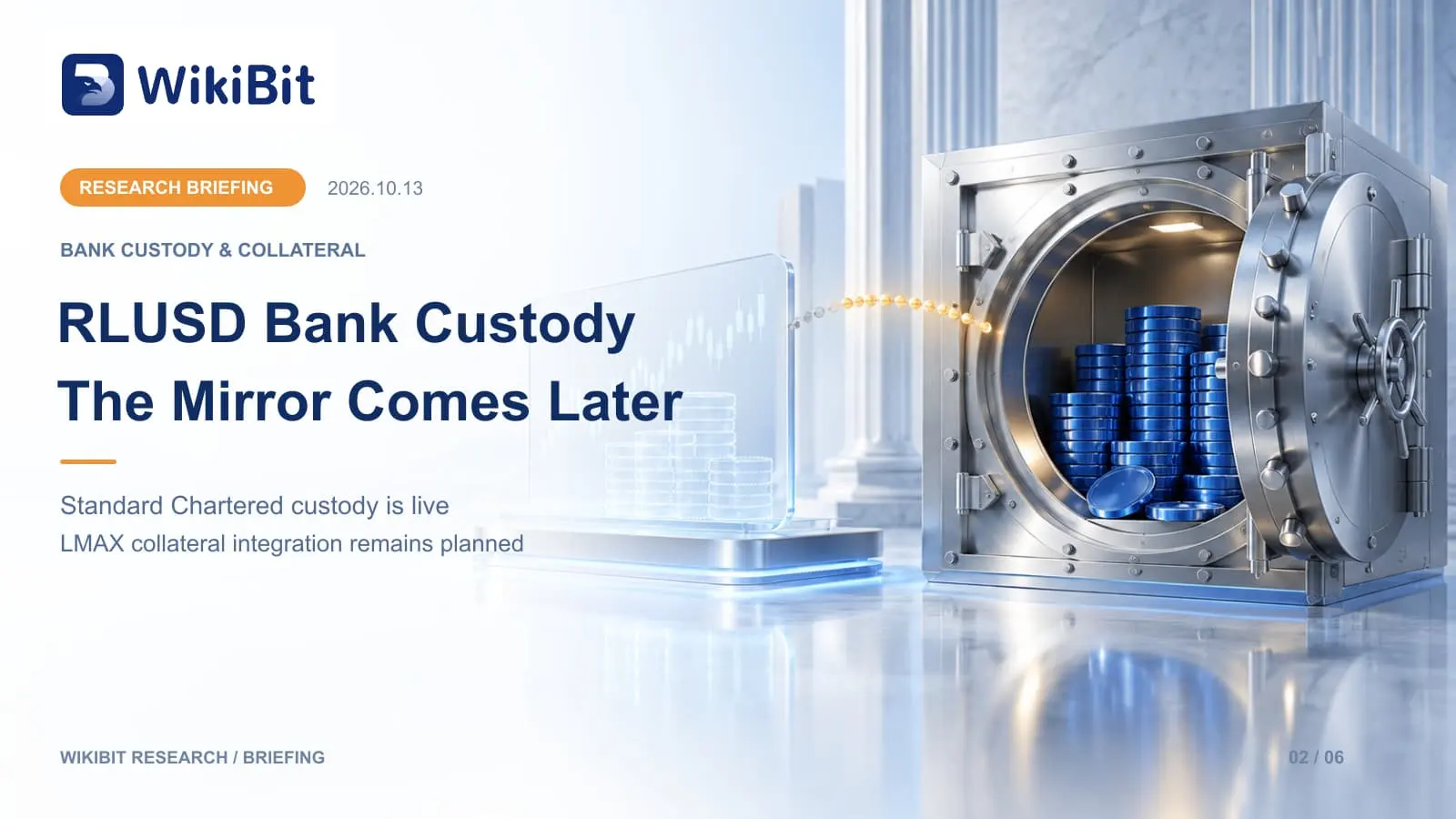
Standard Chartered RLUSD Custody Is Live; LMAX Collateral Link Is Not Yet

Standard Chartered announced on October 12 that institutional clients can now use its custody infrastructure for Ripple USD (RLUSD) issued on the XRP Ledger. The live service is offered through the banks Dubai International Financial Centre branch, regulated by the Dubai Financial Services Authority.  A second, potentially more consequential capability remains unfinished. The bank, Ripple and LMAX Group intend to make eligible RLUSD balances usable as collateral for agreed LMAX products through a mirroring arrangement. The banks announcement explicitly conditions that future capability on documentation, testing, internal approvals, applicable law and jurisdictional readiness. Calling it a live trading or credit facility would misstate what has been launched.Why collateral mirroring changes the operating model  Institutions commonly keep digital assets at a custodian and move them to a trading venue when they need margin. Every transfer can create settlement timing, address-management and counterparty-exposure risks. A collateral mirror seeks to tell a trading venue how much eligible value the custodian holds without requiring the underlying assets to be deposited directly at that venue.  Suppose a fund holds 10 million RLUSD under custody and seeks to support a trading position. In a hypothetical mirror, the custodian would confirm an eligible amount to the venue, while agreed legal
Standard Chartered RLUSD Custody Is Live; LMAX Collateral Link Is Not Yet
10-13Industry Research

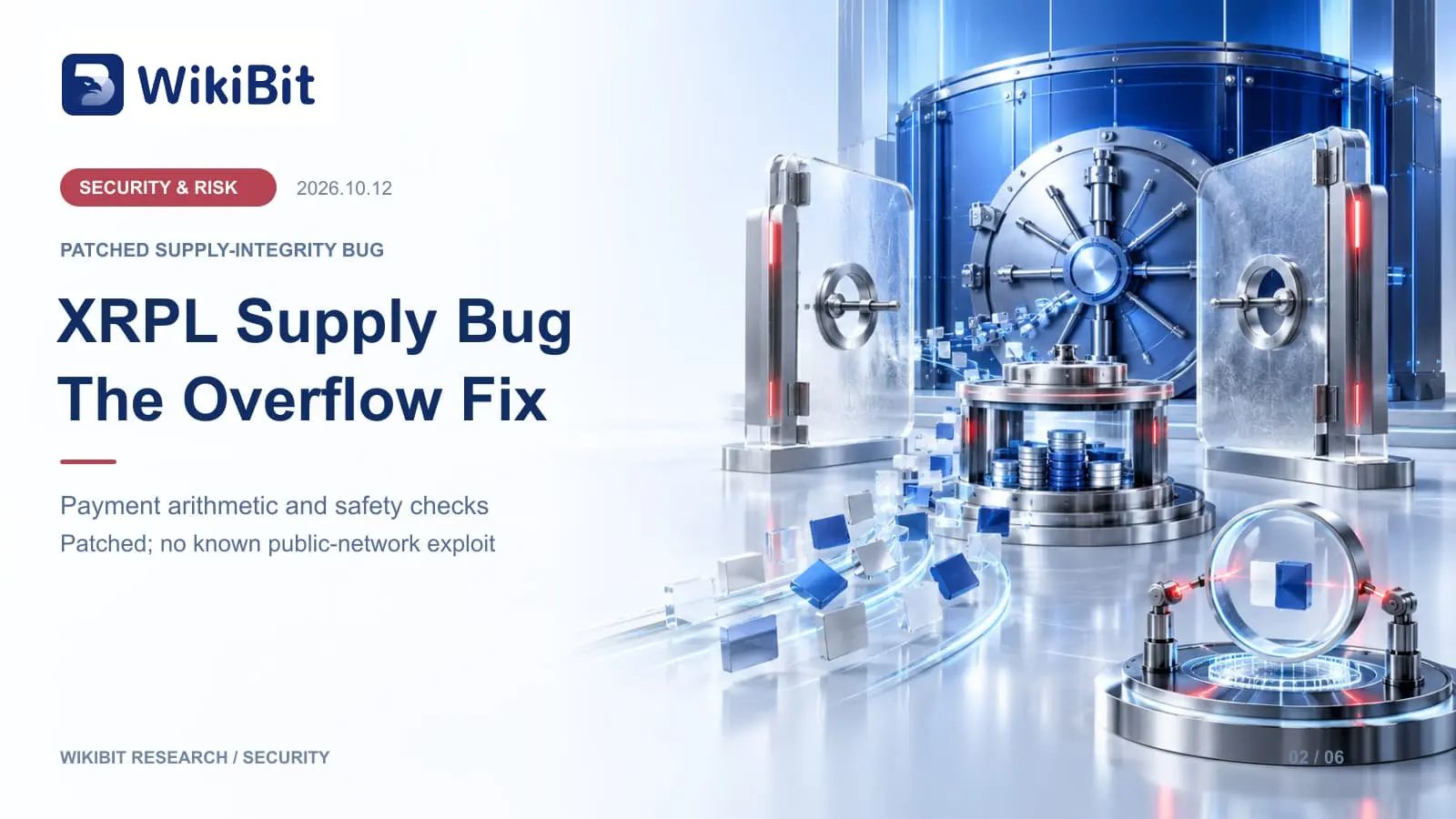
XRPL Payment Overflow: How a Critical XRP Supply Bug Was Patched

The XRP Ledger avoided a potential supply-integrity failure that, in a deliberately constructed test, could have created spendable XRP beyond the protocols intended total supply. RippleXs October 9 disclosure describes a critical arithmetic bug that had remained in the payment engine since 2015. The project states it found no evidence of exploitation on any public network. Developers released xrpld 3.4.1 on September 25; the issue is now patched, not an active confirmed minting event.  The widely repeated 18 trillion XRP example comes from security researcher Cayden Liaos proof-of-concept estimate. It illustrates possible severity; it is not the amount created on Mainnet and not a financial loss.How one payment could overpay hundreds of offers  XRPL payments can consume multiple offers in the native order book. The vulnerable code added the XRP amounts owed across offers using unchecked 64-bit integer arithmetic. If a maliciously constructed group of offers caused the sum to exceed the integers limit, the total could wrap around to a small number. The engine credited each seller for the full sale while charging the buyer the wrapped total.  This was not an everyday overflow condition. The attack required hundreds of attacker-controlled accounts offering tiny amounts of another token in exchange for extraordinarily

XRPL Payment Overflow: How a Critical XRP Supply Bug Was Patched
10-12Industry Research

'XRP Ledger Was 15 Years Ahead': Ripple's Ex Chief Engineer Reacts to New Visa-Mastercard Stablecoin

The announcement of the Open USD (OUSD) stablecoin by a consortium of 140 financial giants, including Visa, Mastercard, Stripe and BlackRock, sparked discussion about the historical roots of this technology. Former Ripple principal engineer Matt Hamilton noted that the structure of the new project effectively repeats the architectural solutions embedded in the $XRP Ledger (XRPL) back in 2012.  The comment was prompted by an ironic post on X about the emergence of yet another “universal standard,” which only increases the number of competing coins on the market.  The 2012 concept  According to Hamilton, the original idea of the $XRP Ledger creators was based on the prediction that, in the future, every bank would want to issue its own stablecoin. To ensure their interoperability, the developers integrated two core functions into the network at the dawn of the industry: the free issuance of custom tokens and a built-in decentralized exchange (DEX) with an automated order book.  Fifteen years ago, the traditional financial sector showed no interest in this model. However, current events show that major players eventually arrived at exactly this approach.  “The original concept behind the $XRP Ledger and the reason it allows anyone to issue stablecoins and has a built-in DEX was because they

'XRP Ledger Was 15 Years Ahead': Ripple's Ex Chief Engineer Reacts to New Visa-Mastercard Stablecoin
07-02Exchange