
WmHub
3.51
5-10 years
Not Regulated
Exchange
Questionable Regulatory License

No Regulatory License

Be aware of the risks!

Basic Information

Country/Region
United Kingdom
Exchange AbbreviationWmHub
Company NameWmHub
Operating Period5-10 years
Websitehttps://next-exchange.com/
Exchange TypeCentralized Exchange
0.00/10

Score

Regulation
Risk Control
Business
Reputation
Tech

RiskNotice

2 risk alerts
High Risk 1
Medium Risk 1

Exchange Overview

Exchange Overview

What is WmHub?

WmHub (next-exchange.com) is a Russian electronic currency exchange service. All exchanges must be applied for through the site.

Platform Features

The platform indicates that it does not have a Telegram account, and only contacts via email (wmhub@gmail.com). Working hours are Monday to Friday 10:00 to 19:00, with flexible scheduling on weekends.

(Encryption and currency exchange involve compliance and market risks. Users must evaluate on their own.)

News

205

WikiBit Exchange Runaway Risk Rankings – Episode 56: BloFin: Blacklisted by France's AMF, Delisted by India's FIU, and Ranked Last in On-Chain Reserves — How Long Can BloFin's “Polished Product” Hold Up?

Introduction: A Derivatives Exchange with a Polished Product but a Fragile Foundation  In our previous 55 episodes, we investigated a wide range of exchanges, from HashKey to Coinbase. For Episode 56, were turning our attention to a rather specialized player: BloFin.  When it comes to product design, BloFin does have some notable strengths. Founded in 2019 by Matt Hu, the founder of TokenInsight, the exchange officially launched in January 2023. Its core business focuses on perpetual futures and copy trading, offering 508 perpetual trading pairs, leverage of up to 150x, maker/taker futures fees of 0.02%/0.06%, and copy trading with a minimum starting amount of just 100 USDT.  Its copy trading system offers three position modes, while its trader leaderboard additionally discloses risk-adjusted performance metrics such as the Sharpe, Sortino, and Calmar ratios — features that are relatively uncommon among comparable platforms.  BloFin also claims to provide 1:1 asset reserves, Merkle Tree-based Proof of Reserves (PoR), independent monitoring by Nansen, and custody services through Fireblocks.  However, the picture looks very different on the regulatory and financial fronts.  BloFin is absent from ESMAs MiCA CASP register. Frances financial regulator, the Autorité des Marchés Financiers (AMF), has included it on its cryptocurrency blacklist since December 2024. On September 9,
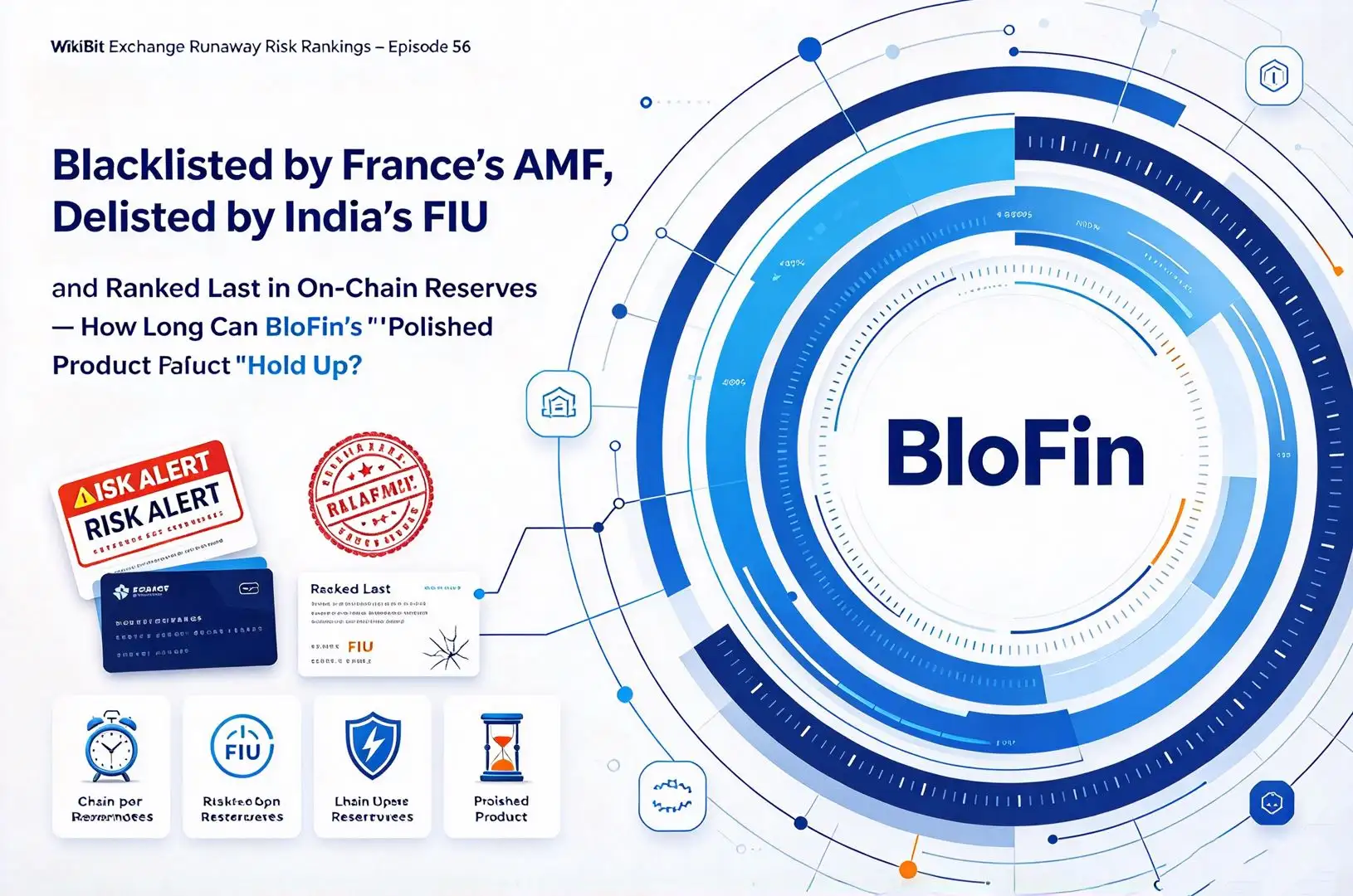

WikiBit Exchange Runaway Risk Rankings – Episode 56: BloFin: Blacklisted by France's AMF, Delisted by India's FIU, and Ranked Last in On-Chain Reserves — How Long Can BloFin's “Polished Product” Hold Up?
Yesterday 12:14Deep Dive

Where Is the Crypto Market Heading in November? What Are the Next Wealth-Building Opportunities?

Now that November has arrived, the market is approaching a critical turning point.  On one side, the U.S. midterm elections, nonfarm payrolls, CPI, PPI, and Federal Reserve policy expectations are all coming into focus. On the other, Bitcoin is struggling around $78,000, ETF capital flows are showing signs of divergence, and excessive leverage in the derivatives market has yet to be fully flushed out.  At the same time, the market faces substantial token unlocks, year-end capital reallocation, and potential sector rotation opportunities across AI, RWA, stablecoins, and Layer 1 projects.  So, the big questions are: Are there still wealth-building opportunities in crypto? And how should investors position themselves?  Here is the bottom line: November is neither the start of a broad altcoin season nor the time to blindly buy the dip. There is only one guiding principle: Manage risk first, then look for opportunities.  Historical data shows that November often acts as a trend amplifier: bull markets tend to rally harder, while bear markets can fall faster. Historically, Bitcoin has also experienced significant corrections following U.S. midterm elections, with an average peak-to-trough decline of approximately 37% and an average bottoming period of around 41 days.  However, history does not simply repeat itself. It often rhymes.Early November:

Where Is the Crypto Market Heading in November? What Are the Next Wealth-Building Opportunities?
2 days agoDeep Dive

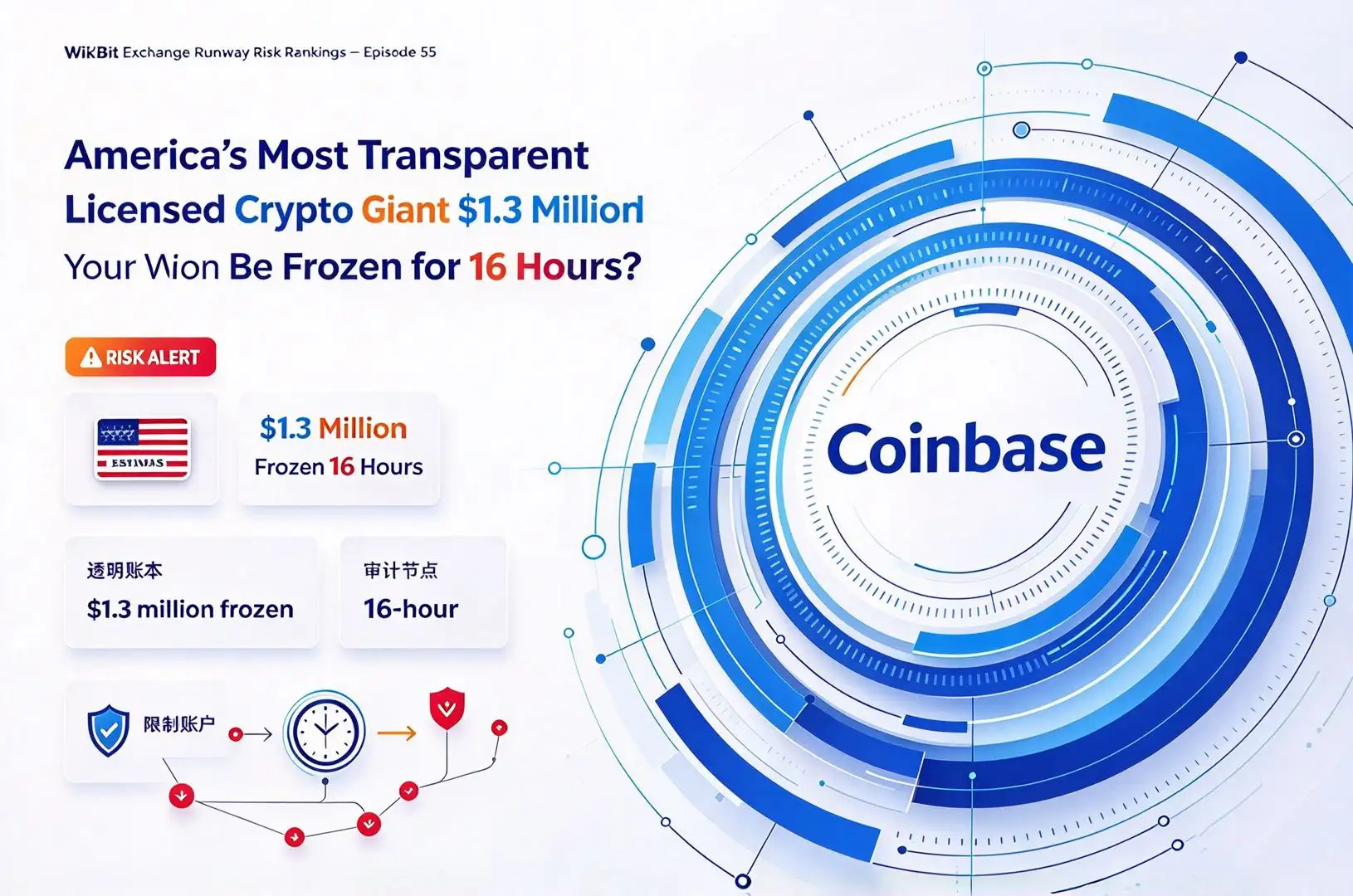
WikiBit Exchange Runaway Risk Rankings – Episode 55: Coinbase — America’s Most Transparent Licensed Crypto Giant, So Why Could Your $1.3 Million Be Frozen for 16 Hours?

Introduction: An Exchange with One of the Lowest Runaway Risks, Yet Some of the Most Real-World Friction for Users  The first 54 episodes examined a series of exchanges, from HashKey to OKX. For Episode 55, were turning our attention to one of the most distinctive players in the entire series when it comes to regulatory compliance: Coinbase.  When it comes to institutional security, Coinbase is arguably at the top of the crypto industry. It is a Nasdaq-listed company (COIN), a publicly traded entity subject to SEC oversight, and its quarterly 10-Q and annual 10-K financial reports are audited by Deloitte in accordance with PCAOB standards.  The platform holds $377 billion in assets, representing 12.5% of the global cryptocurrency market capitalization. In Q3 2026, it reported net income of $719 million, maintained positive adjusted EBITDA for 15 consecutive quarters, and saw its trading volume market share reach 10.7%, marking its fourth consecutive quarterly increase.  From the perspective of whether an exchange might disappear with customers funds, Coinbase is arguably one of the lowest-risk platforms in this entire series.  But theres another side to the story.  In August 2026, a user claimed that after depositing $1.3 million in USDC, their account was restricted for 16 hours, resulting in

WikiBit Exchange Runaway Risk Rankings – Episode 55: Coinbase — America’s Most Transparent Licensed Crypto Giant, So Why Could Your $1.3 Million Be Frozen for 16 Hours?
3 days agoDeep Dive