

Royal Tron Coins
3.47
2-5 years
Not Regulated
Broker
Questionable Regulatory License

No Regulatory License

Be aware of the risks!

Basic Information

Country/Region
United States
Exchange AbbreviationRoyal Tron Coins
Company NameRoyaltroncoins
Operating Period2-5 years
Websitehttps://www.royaltroncoins.com/
Phone number45 785 965 6547
0.00/10

Score

Regulation
Risk Control
Business
Reputation
Tech

RiskNotice

2 risk alerts
High Risk 1
Medium Risk 1

Exchange Overview

Exchange Overview

What is Royal Tron Coins?

Royal Tron Coins is a self-proclaimed cryptocurrency investment platform that offers investment plans with "activation amounts from 20,000 to 900 million USD\".

Platform Features

The platform solicits investments through slogans such as \"Empowering users to grow wealth\", \"Transparent opportunities and reliable returns\", and \"Helping everyone achieve financial freedom", emphasizing integrity and trust. (Investment platforms that promise high returns are extremely risky, and users must discern for themselves.)

News

5

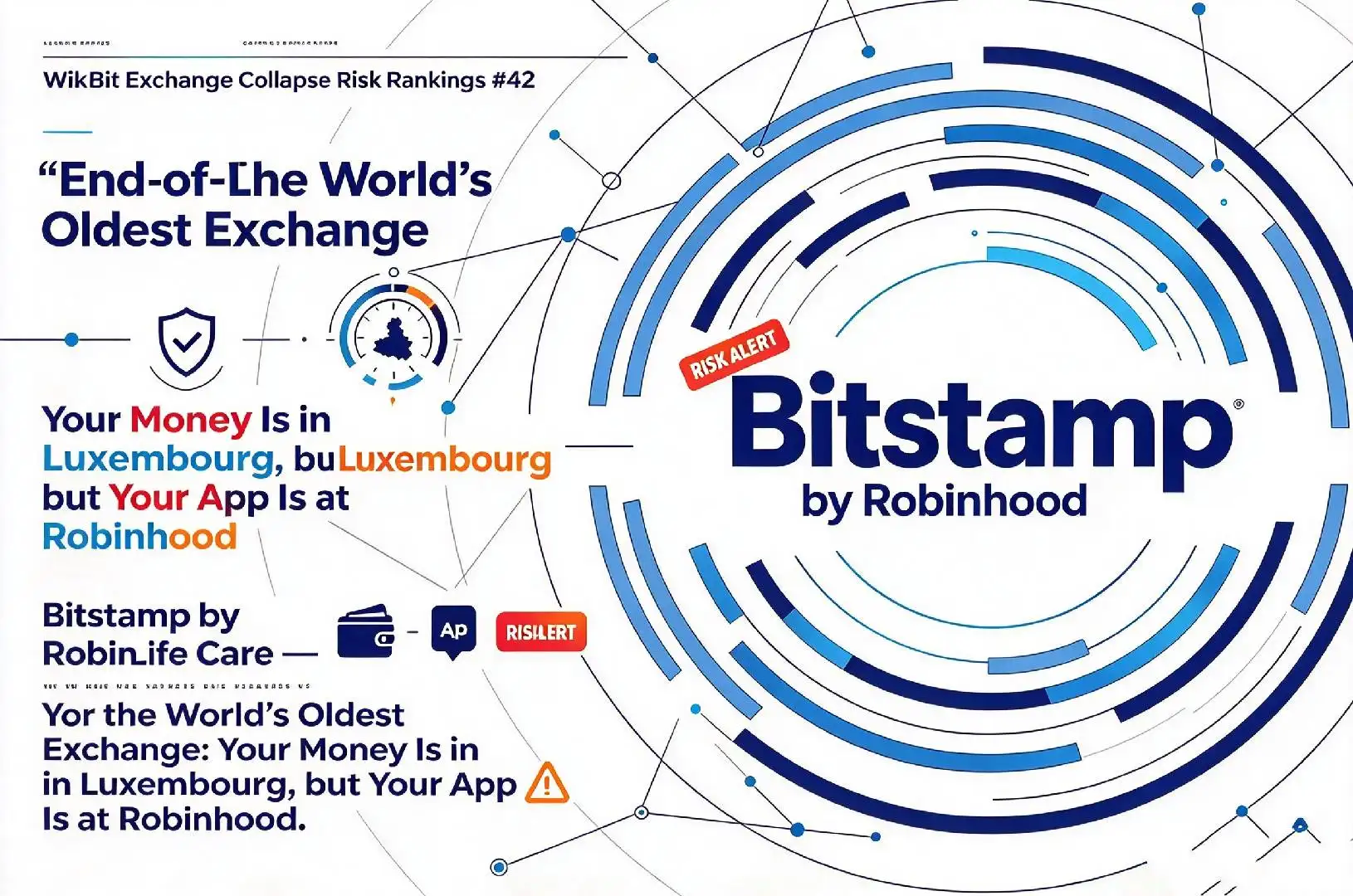
WikiBit Exchange Collapse Risk Rankings #42: Bitstamp by Robinhood — “End-of-Life Care” for the World’s Oldest Exchange: Your Money Is in Luxembourg, but Your App Is at Robinhood

Introduction: An Old-School Exchange That Has Been “Adopted”  In our first 41 installments, we investigated a series of exchanges, from HashKey to Bithumb. For Episode 42, were taking a look at one of the most unusual cases yet: Bitstamp by Robinhood.  When it comes to industry experience, Bitstamp‘s résumé is arguably second to none in the crypto world: founded in 2011, it is one of the longest-operating cryptocurrency exchanges in the world. It holds a MiCA Crypto-Asset Service Provider (CASP) license issued by Luxembourg’s CSSF, a Major Payment Institution license from Singapores MAS, dual VASP and SIBA registrations in the British Virgin Islands (BVI), more than 50 active licenses and registrations worldwide, 4–5 million users, 95% of assets held in cold storage with 1:1 custody, and annual audits by a Big Four accounting firm.  Sounds like “the most compliant established exchange in crypto, bar none,” right?  But theres another side to the story.  Bitstamp has a Trustpilot rating of just 1.3/5, with users describing their experiences as “Bad” and complaining about “accounts frozen for a year” and customer support that “simply doesnt exist.”  In June 2025, the Grenoble Court of Appeal in France ruled that Bitstamp Europe was civilly liable to a user for operating in
WikiBit Exchange Collapse Risk Rankings #42: Bitstamp by Robinhood — “End-of-Life Care” for the World’s Oldest Exchange: Your Money Is in Luxembourg, but Your App Is at Robinhood
10-13Deep Dive

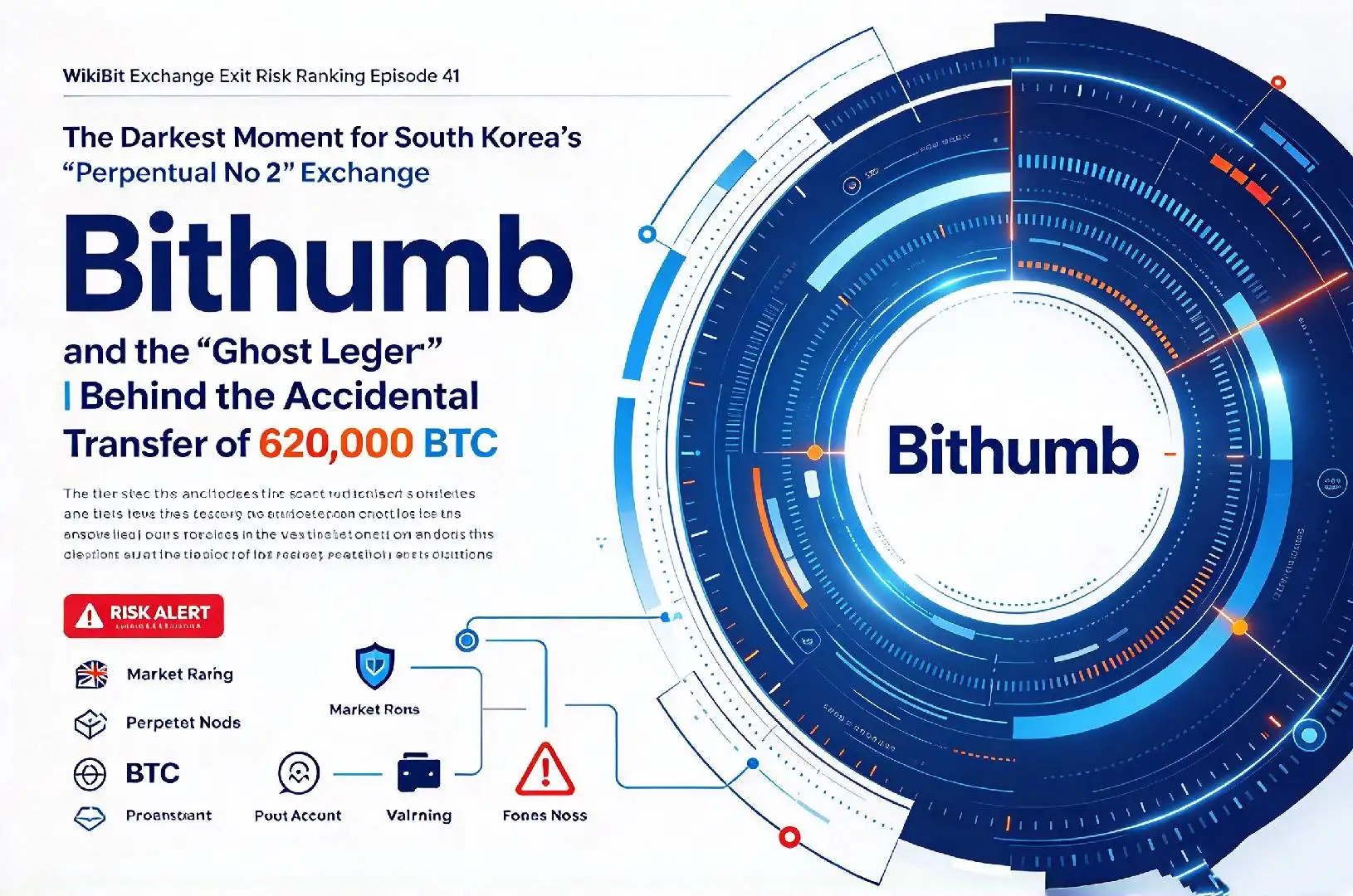
WikiBit Exchange Exit Risk Ranking Episode 41: Bithumb — The Darkest Moment for South Korea’s “Perpetual No.2” Exchange, and the “Ghost Ledger” Behind the Accidental Transfer of 620,000 BTC

Introduction: A “Self-Destructing” Second-Largest Korean Exchange  In the first 40 episodes, we dug into a series of exchanges ranging from HashKey to XT.com. Today, in Episode 41, were looking at a “self-destructing player” — Bithumb.  On paper, Bithumb‘s resume in the Korean market looks like a textbook example of a “top-tier compliant platform”: founded in 2014, South Korea’s second-largest crypto exchange, approximately 22.3% market share, a VASP-licensed exchange approved by the Financial Intelligence Unit (FIU), a real-name banking partnership with KB Kookmin Bank, and even a previous plan for an IPO.  Sounds like the perfect profile of a leading regulated Korean exchange, right?  But on the other side of the story:  On February 6, 2026, Bithumb accidentally distributed 620,000 BTC to 695 users due to an employee operational error — a mistake involving more than $40 billion worth of Bitcoin, about 15 times the amount of BTC actually held by the platform.  Bithumb CEO Lee Jae-won admitted during a parliamentary hearing that the companys “internal control system had serious deficiencies.” The FIU accused Bithumb of approximately 6.65 million regulatory violations, imposed a fine of 36.8 billion Korean won (around $27 million), and issued a six-month “partial business suspension” sanction.  In the first half of 2026, Bithumb recorded

WikiBit Exchange Exit Risk Ranking Episode 41: Bithumb — The Darkest Moment for South Korea’s “Perpetual No.2” Exchange, and the “Ghost Ledger” Behind the Accidental Transfer of 620,000 BTC
10-12Deep Dive

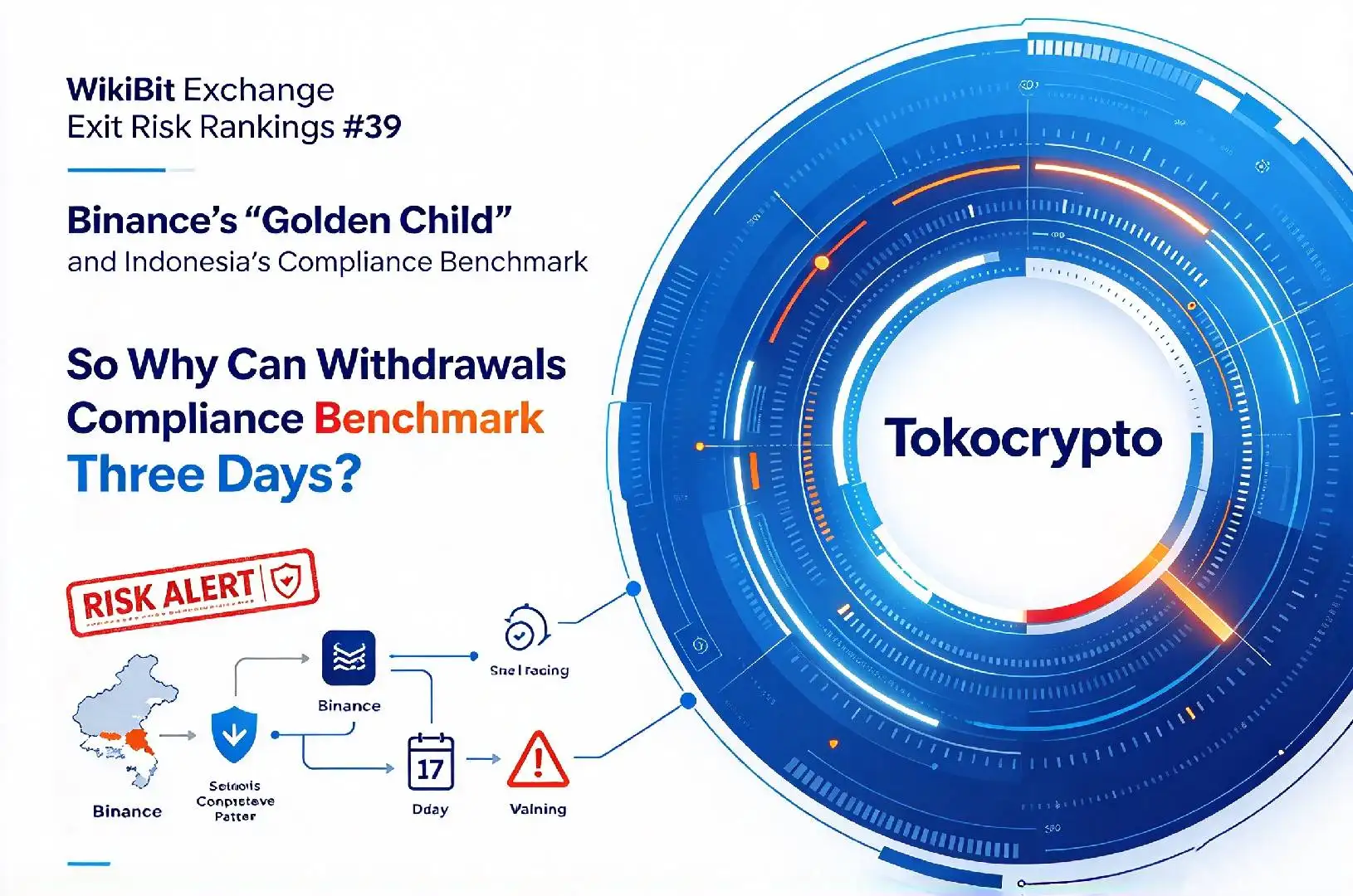
WikiBit Exchange Exit Risk Rankings #39: Tokocrypto — Binance’s “Golden Child” and Indonesia’s Compliance Benchmark, So Why Can Withdrawals Take Three Days?

Introduction: An Exchange Born with a Silver Spoon  In our first 38 installments, we investigated a range of exchanges, from HashKey to Websea. For Episode 39, we turn our attention to a platform that appears to have one of the most legitimate pedigrees in the industry: Tokocrypto.  Its credentials look impressive on paper: founded in 2018; Indonesia‘s first crypto exchange registered with Bappebti; awarded a full PFAK license in 2024; placed under the direct supervision of Indonesia’s Financial Services Authority (OJK) starting in January 2025; fully acquired by Binance in 2022; more than 5 million users; dual ISO 27017 and ISO 27001 certifications; Proof of Reserves using Merkle trees and zk-SNARKs; and user assets totaling $345 million.  Sounds like a gold-standard example of regulatory compliance in Southeast Asia, right?  But there is another side to the story. Tokocrypto has a Trustpilot rating of just 1.9 out of 5, with users repeatedly complaining about slow withdrawals and unresponsive customer support. Gridinsoft gives the website a trust score of only 35 out of 100 and flags it as a “suspicious website.” Multiple Chinese-language anti-fraud articles have accused Tokocrypto of being involved in a futures-trading Ponzi scheme scam. Academic research also indicates that 46.2% of sentiment toward

WikiBit Exchange Exit Risk Rankings #39: Tokocrypto — Binance’s “Golden Child” and Indonesia’s Compliance Benchmark, So Why Can Withdrawals Take Three Days?
10-09Deep Dive