DFSRegulated
United States Crypto Asset Exchange License (CEX)





United States Crypto Asset Exchange License (CEX)
United States Crypto Asset Transfer License (MTL)
United States Crypto Asset Transfer License (MTL)

Singapore Crypto Asset Exchange License (CEX)
Luxembourg Crypto Asset Transfer License (MTL)
United Arab Emirates Crypto Asset Custody License (CUST)
United Kingdom Virtual Asset Service Provider (VASP)
What is Ripple?
Ripple is a leading provider of cross-border payment and digital asset custody solutions, focusing on stablecoin-driven cross-border payments and blockchain technology.
Main Business
The platform provides institutions with capabilities such as prime brokerage, tokenization, and custody, enabling instant global fund transfers between stablecoins, cryptocurrencies, and fiat currencies, helping financial institutions upgrade their infrastructure and participate in the digital asset economy.
Kraken, a well-known veteran giant familiar to insiders, was founded in San Francisco, USA, in 2011. It stands among the longest-running centralized exchanges still operating today. Unlike the prolific listing platforms and small altcoin exchanges featured in previous issues, Kraken has centered its value proposition on security, compliance and reserve transparency since inception, serving as an industry pioneer of Proof of Reserves (POR). Even a top performer, however, has vulnerabilities. Controversies surrounding SEC lawsuits, regulatory fines and compliance-triggered account freezes have lingered alongside it. In this issue, we break down this established compliance-first exchange across seven dimensions to uncover its hidden risks.1. Regulatory Compliance Risks Stem Largely from Temporary Compliance Restrictions Withdrawal performance is the core scoring metric for this risk list. Kraken differs fundamentally from platforms such as LBank. Over more than a decade of public operation, it has never experienced a systemic event of mass withdrawal denials, liquidity shortfalls or intentional fund locking to seize user assets — this is its most substantial competitive advantage. Categories of Verified User Feedback Temporary freezes permitted under published platform rules: Credit/debit card assets may be traded but cannot be transferred off-platform. ACH bank transfer deposits: Withdrawal lockup up to 7 days. AML or sanctions list flagging:
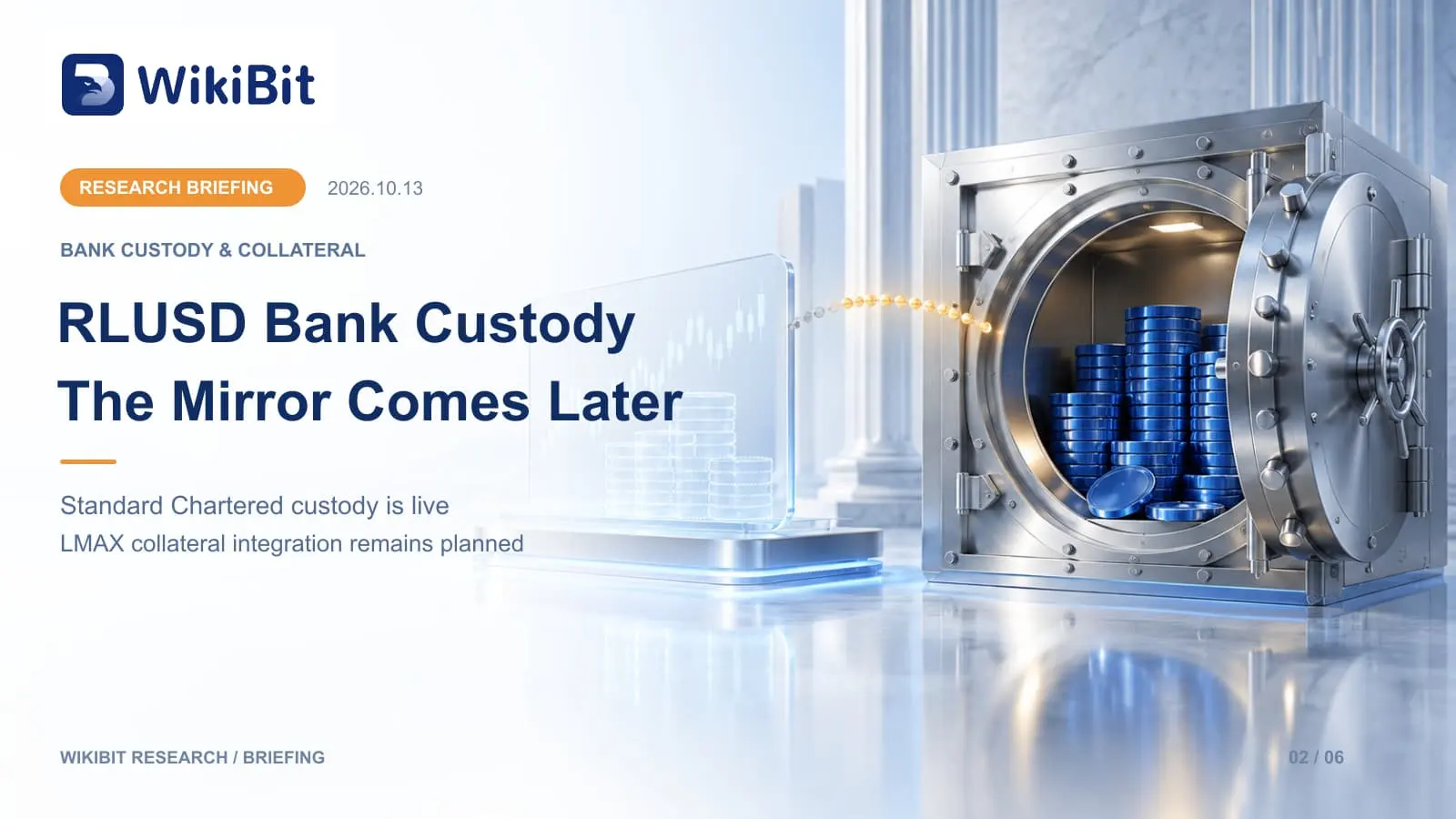
Standard Chartered announced on October 12 that institutional clients can now use its custody infrastructure for Ripple USD (RLUSD) issued on the XRP Ledger. The live service is offered through the banks Dubai International Financial Centre branch, regulated by the Dubai Financial Services Authority. A second, potentially more consequential capability remains unfinished. The bank, Ripple and LMAX Group intend to make eligible RLUSD balances usable as collateral for agreed LMAX products through a mirroring arrangement. The banks announcement explicitly conditions that future capability on documentation, testing, internal approvals, applicable law and jurisdictional readiness. Calling it a live trading or credit facility would misstate what has been launched.Why collateral mirroring changes the operating model Institutions commonly keep digital assets at a custodian and move them to a trading venue when they need margin. Every transfer can create settlement timing, address-management and counterparty-exposure risks. A collateral mirror seeks to tell a trading venue how much eligible value the custodian holds without requiring the underlying assets to be deposited directly at that venue. Suppose a fund holds 10 million RLUSD under custody and seeks to support a trading position. In a hypothetical mirror, the custodian would confirm an eligible amount to the venue, while agreed legal
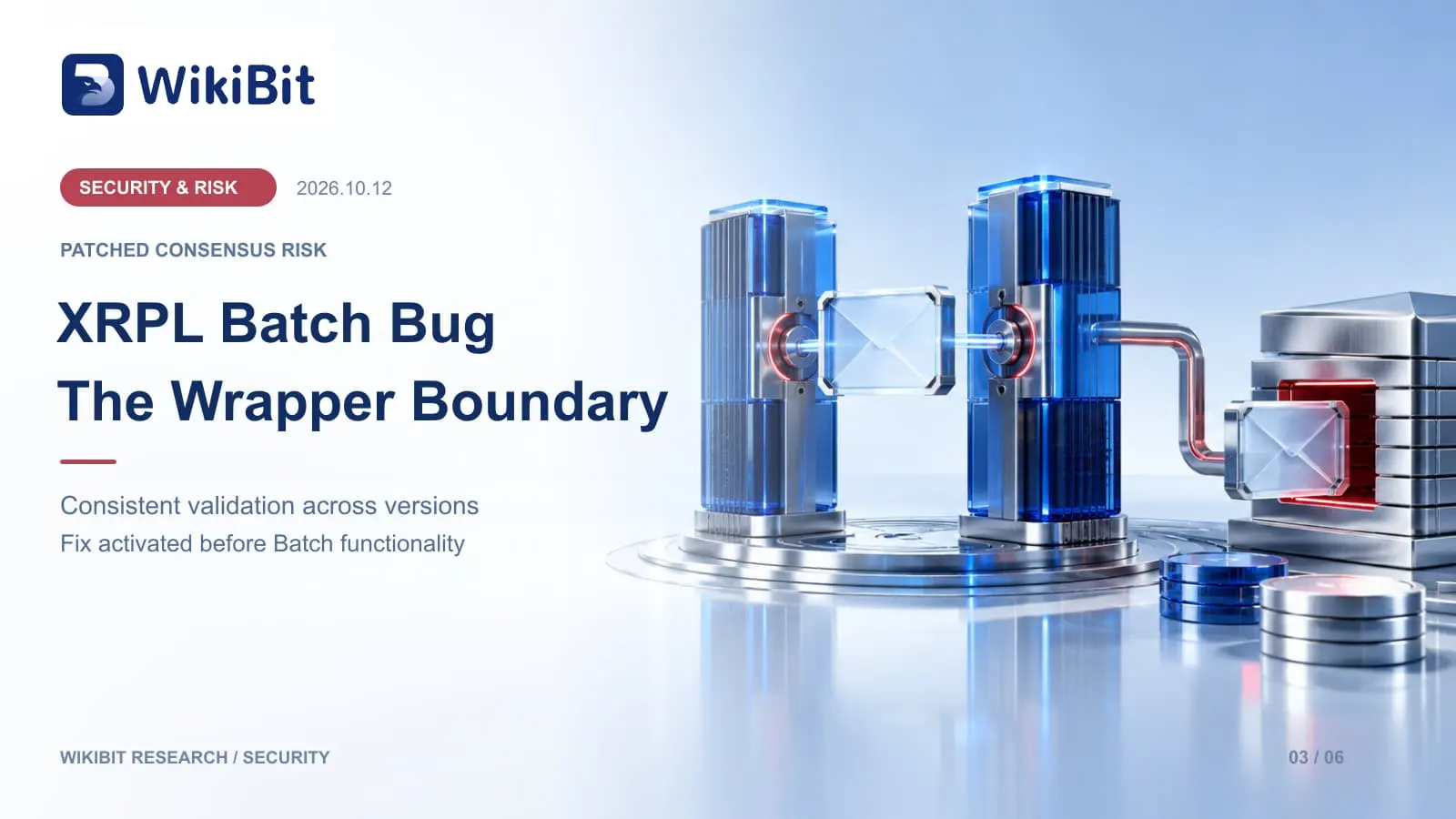
XRPLs October 9 security report describes a second, independent flaw in the Batch transaction feature. Unlike the payment-engine overflow, this bug threatened ledger availability and data compatibility, not the supply of XRP. A crafted inner-transaction wrapper could have been interpreted differently by servers on different versions. The developers say Batch had not been activated on Mainnet when the bug was found, and no funds were lost and no consensus failure occurred.Why a field name could split a network Batch allows a group of signed transactions to be submitted together. Each inner transaction is supposed to be carried inside a field called RawTransaction. The faulty validation logic accepted other object-type wrapper fields if that field had no restrictive template. Older xrpld 3.3.0 and newer 3.4.0 defined different object fields. A deliberately nonstandard Batch payload could be accepted and relayed by one version but fail deserialization in another. If enough validators ran the incompatible combinations, the trusted validator group could disagree on the contents of a ledger and potentially stop validating new ledgers. The technical issue is distinct from private-key theft. Every inner transaction still required ordinary valid signatures and balance checks. The attacker could not simply authorize another users payment without that users signature.