NMLSRegulated
United States Crypto Asset Transfer License (MTL)





United States Crypto Asset Transfer License (MTL)
Singapore Crypto Asset Exchange License (CEX)

United Arab Emirates Crypto Asset Exchange License (CEX)
Malta Crypto Asset Exchange License (CEX)
Salvador Crypto Asset Exchange License (CEX)
Bahamas Crypto Asset Exchange License (CEX)
Turkey Virtual Asset Service Provider (VASP)
Seychelles Crypto Asset Exchange License (CEX)
Australia Virtual Asset Service Provider (VASP)

OKX platform suspected of colluding with currency dealers to defraud money. On December 2nd, I used the payment method of the currency dealer in C2C to transfer Canadian dollars according to the address. The currency dealer insisted that they did not receive it and refused to make the payment. I complained to the platform, and the platform asked me to provide information. After I provided it as instructed by the platform, I have not received any response. Today, on December 14th, the platform directly canceled my order. I did not receive the purchased USDT on OKX, and my bank account has not been refunded. I complained to the customer service, but they just referred me back to the so-called specialist for investigation. I sincerely advise to be more cautious when trading on OKX. I will not use this platform anymore because the risk is too high.
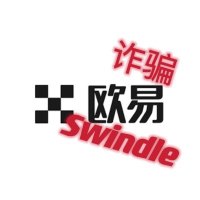
Blockchain black platform Ouyi OKX official certified merchant joint fraud uremia mother medical treatment cost 2000u has been filed. So far, Ouyi black platform has not responded.
Exchanges with reserves exceeding 96.87%
Exchanges with 24H outflows exceeding 95.99%
Exchanges with 24H trading volume exceeding 98.72%
OKB
OKB
$113.52
0.81%
24H Vol
$32,816,979.29
Market Cap
$2,384,008,932.32
Issue Time
2019-04-30
Crowdfunding Price
$1.58
Circulation (pieces)
21,000,000.00
return on investment
+7,078.40%
Recently destroyed (pieces)
--
Total destroyed (pieces)
--
| Currency/Name | Trade | Unit Price | Change | 24H Vol | +2%/-2% Market Depth | Liquidity |
|---|---|---|---|---|---|---|
| BTC/USDT | $78,957.44 | 2.12% | $687,795,329.73 | $4.37M/$2.09M | 840 |
| ETH/USDT | $2,478.82 | 1.33% | $442,308,569.77 | $3.30M/$2.02M | 825 |
| USDC/USDT | $1.00 | 0.02% | $174,562,689.95 | $10.33M/$15.14M | 812 |
| SOL/USDT | $96.18 | 1.05% | $144,253,694.4 | $1.97M/$2.27M | 721 |
| XRP/USDT | $1.48 | 1.59% | $132,375,277.38 | $1.27M/$1.68M | 727 |
| HYPE/USDT | $77.45 | 4.26% | $77,873,867.13 | $422.31K/$579.94K | 689 |
| DOGE/USDT | $0.0893613 | 3.91% | $66,019,262.41 | $1.23M/$1.43M | 701 |
| ZEC/USDT | $818.12 | 7.09% | $50,987,281.44 | $463.88K/$450.86K | 645 |
| TRUMP/USDT | $2.45 | 9.63% | $40,200,707.58 | $441.40K/$411.06K | 573 |
| SUI/USDT | $0.81251179 | 2.22% | $34,843,957.57 | $630.19K/$586.72K | 650 |
What Is OKX?
OKX is a global company offering exchange and Web3 services with offices in Hong Kong, Singapore, the UAE, Silicon Valley, and the Bahamas. OKX exchange services are offered by its Seychelles-incorporated and Bahamas-registered entities. OKX offers Web3 services in the United States and has an office in Silicon Valley, but it does not offer exchange services in the United States. The exchange offers basic trading including spot and simple options, and derivatives including margin, futures, perpetual swaps and options. Other products include: trading bots, block trading, OKX Earn (savings, stablecoins, DeFi, staking, ETH 2.0 and more), crypto loans and Jumpstart, the exchange’s launchpad.
OKX wallet claims to be the “portal to Web3,” offering a crypto hot wallet, decentralized exchange (DEX), a NFT marketplace and decentralized applications (DApps). The wallet supports over 30 networks, including major blockchains like Bitcoin, Ethereum, BNB Chain, Solana, Polygon, Avalanche, Fantom and more.
OKX also has its own native blockchain — X Layer and native token — OKB, which allows builders and projects to deploy DApps and developers to use infrastructure like OKX Oracle and more.
In January 2022, OKEx was rebranded as OKX, with a new branding and roadmap.
Who Are the OKX Founders?
OKX (formerly OKEx) is owned by OK Group.
The company was founded by Mingxing "Star" Xu back in 2013 in China. Xu is a Chinese entrepreneur. He holds a Bachelor's degree in Applied Physics from the University of Science and Technology Beijing. Star Xu is CEO of OK Group.
The present CEO of OKX is Star Xu.
When Did OKX Launch?
The exchange, formerly known as OKEX, was launched in 2017.
OKX Restricted Countries
The project is supported in over 200 countries. However, residents of the United States don’t have access to the platform's services.
What Coins Are Supported on OKX?
The exchange lists over 350 cryptocurrencies and supports more than 500 trading pairs. The platform lists major tokens including BTC, ETH, OKB, AAVE, SOL, MATIC, XRP, DOGE, SHIB, and DOT.
How Much Are OKX Fees?
The fee structure is based on market taker and maker model. Trading fees on the platform start at 0.10% and decrease as trading volume increases. For regular users, fees depend on the number of OKB (native currency) in the OKX ecosystem, while for advanced users, fees are based on their 30-day trading volumes.
Is It Possible To Use Leverage or Margin Trading on OKX?
OKX offers margin trading with leverage up to 10X. For derivatives, OKX also offers futures trading and perpetual swaps with up to 125X leverage. Traders can also leverage through crypto options, including BTC, ETH and more.
Executive Summary Security has become one of the most important factors when choosing a cryptocurrency exchange. While trading volume, available assets and fees remain important, users increasingly want to understand whether an exchange has strong risk controls, transparent operations and a reliable security record. This research evaluates some of the leading crypto exchanges in 2026 from a safety perspective. The assessment focuses on regulatory transparency, security history, custody practices, proof of reserves, operational controls and user protection measures. A larger exchange is not automatically a safer exchange. Safety depends on multiple factors, including the exchanges legal structure, compliance framework, security practices and ability to manage operational risks.How WikiBit Evaluates Exchange Safety WikiBit uses a multi-factor framework to assess exchange safety:RegulationCategory: RegulationEvaluation Factors: Licensed entities, regulatory registrations, jurisdictional transparencySecurity HistoryCategory: Security HistoryEvaluation Factors: Previous incidents, response capability, security track recordAsset ProtectionCategory: Asset ProtectionEvaluation Factors: Custody practices, cold storage, withdrawal controlsTransparencyCategory: TransparencyEvaluation Factors: Company information, reserve disclosures, operational reportingUser ProtectionCategory: User ProtectionEvaluation Factors: KYC, account security, compliance procedures No framework can eliminate all risks. The purpose is to provide a structured way to compare exchanges.What Makes a Crypto Exchange Safe?Clear Regulatory Status A safer exchange generally provides clear information about:Operating companiesRegistered jurisdictionsRegulatory licensesCompliance responsibilities Users should understand which entity
Executive Summary Crypto exchange rankings are often dominated by trading volume, liquidity and market share. However, volume alone does not provide a complete picture of an exchanges reliability. In 2026, users increasingly evaluate exchanges based on broader factors, including regulatory status, security history, transparency, asset protection and operational stability. This research presents a framework for ranking cryptocurrency exchanges beyond simple market activity metrics. The goal is to provide a more comprehensive view of exchange quality and risk.Why Crypto Exchange Rankings Need More Than Trading Volume Trading volume is an important indicator of market activity, but it does not answer several critical questions:Is the exchange operating under a clear legal structure?Does it have appropriate regulatory coverage?Has it maintained strong security practices?Does it provide transparent information about customer assets?How does it protect users during operational risks? A complete exchange ranking should consider both business scale and trust-related factors.WikiBit Crypto Exchange Ranking Framework WikiBit evaluates exchanges across multiple categories:RegulationCategory: RegulationWeight Consideration: Licensing status, registered entities and compliance transparencySecurityCategory: SecurityWeight Consideration: Security history, protection measures and incident responseTransparencyCategory: TransparencyWeight Consideration: Company information, disclosures and reserve transparencyMarket InfrastructureCategory: Market InfrastructureWeight Consideration: Liquidity, trading products and platform stabilityUser ProtectionCategory: User ProtectionWeight Consideration: KYC, account controls and risk management The framework focuses on long-term
Executive Summary Choosing a crypto exchange is no longer only about trading volume, supported assets or low fees. As the cryptocurrency industry matures, users increasingly need to evaluate whether an exchange provides sufficient regulatory clarity, security protection, operational transparency and risk controls. This research compares leading cryptocurrency exchanges in 2026 based on several factors, including regulatory status, security history, proof of reserves, transparency practices, product availability and user protection measures. The purpose of this report is not to identify a single universal winner. Different users may prioritize different factors, from regulatory compliance and asset protection to trading features and market access.How We Evaluate Crypto Exchanges WikiBit evaluates exchanges using a multi-factor framework:RegulationCategory: RegulationKey Considerations: Licensing status, registered entities, regulatory coverageSecurityCategory: SecurityKey Considerations: Security history, custody practices, incident recordsTransparencyCategory: TransparencyKey Considerations: Public disclosures, company information, reserve transparencyTrading EnvironmentCategory: Trading EnvironmentKey Considerations: Liquidity, products, supported marketsUser ProtectionCategory: User ProtectionKey Considerations: Risk controls, account security, compliance procedures A high trading volume alone does not guarantee a safer exchange. Users should consider multiple factors before choosing a platform.Leading Crypto Exchanges in 2026Binance Binance remains one of the largest cryptocurrency platforms globally by trading activity. Its strengths include broad asset coverage, deep liquidity and a wide range of trading products. Key factors