Marginal
3.46
2-5 years
Not Regulated
Exchange
Questionable Regulatory License

No Regulatory License

Be aware of the risks!

Basic Information

Country/Region
United Kingdom
Exchange AbbreviationMarginal
Exchange TypeDecentralized Exchange
Operating Period2-5 years
Websitehttps://marginal.network/
Twitterhttps://twitter.com/MarginalDEX
0.00/10

Score

Regulation
Risk Control
Business
Reputation
Tech

RiskNotice

2 risk alerts
High Risk 1
Medium Risk 1

Exchange Overview

Exchange Overview

What is Marginal?

Marginal is a permissionless DeFi superstructure that allows users to engage in leveraged trading of any on-chain token, fully on-chain.

Platform Features

The platform emphasizes passive liquidity, No Auto-Deleveraging, and permissionless leverage, equipped with an insurance mechanism and automatic hedging to protect LPs, claiming to be "the Uniswap moment for on-chain leverage." (Leveraged trading is a high-risk product.)

News

WikiBit Exchange Runaway Risk Ranking #59: Zaif — Japan’s FSA License No. 00001 Makes It a “Living Fossil,” but Why Has Its Usability Nearly Fallen to Zero?

Introduction: A Licensed Exchange That Is Still Alive but Barely Trading  In our previous 58 editions, we examined a wide range of exchanges, from HashKey to YUBIT. For Edition #59, we turn our attention to one of the quietest players in the industry: Zaif.  In terms of regulatory credentials, Zaif is practically a “living fossil” in Japan‘s crypto market. Founded in 2014 by Tech Bureau, Zaif obtained registration as a cryptocurrency exchange operator from the Director-General of the Kinki Local Finance Bureau under Registration No. 00001 on September 29, 2017. The prestigious-looking “No. 00001” designation means it was among the earliest exchanges licensed under Japan’s regulatory framework.  In 2018, after approximately ¥6.7 billion was stolen in a hacking incident, listed company Fisco injected ¥5 billion and took over the business, ultimately ensuring full compensation for affected users. The operating company was renamed CAICA Exchange Co., Ltd. in November 2021, but officially reverted to its former name, Zaif Co., Ltd., on November 1, 2023. In July 2025, NCXX Group Co., Ltd., a company listed on the Tokyo Stock Exchange Standard Market (renamed JN Group in March 2026), made Zaif a wholly owned subsidiary through an acquisition valued at ¥1.162 billion.  Its official website remains operational,
WikiBit Exchange Runaway Risk Ranking #59: Zaif — Japan’s FSA License No. 00001 Makes It a “Living Fossil,” but Why Has Its Usability Nearly Fallen to Zero?
38 minutes agoDeep Dive

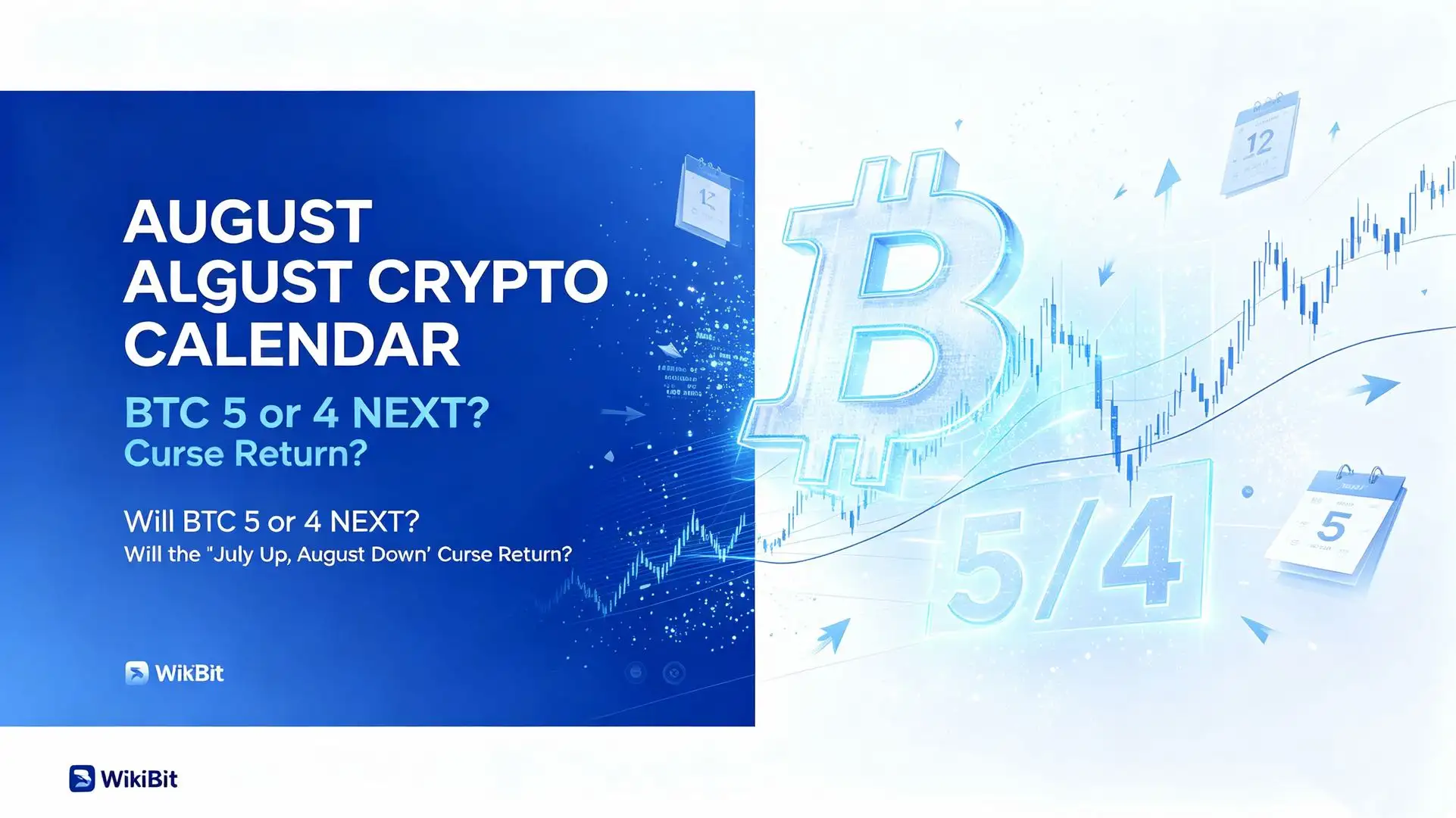
August Crypto Market Calendar: Will the “July Up, August Down” Curse Return? Will BTC Start with “5”

Bitcoin closed July with an approximate 7.26% gain (according to Binance data), injecting a much-needed boost of confidence into a market that had remained sluggish for an extended period. However, as the calendar turns to August, a long-standing “curse” in the crypto market begins to resurface — August has historically been one of Bitcoins worst-performing months. As shown below:  Summary:August has historically been one of Bitcoins weakest-performing months. Over the past 13 years, BTC recorded 5 monthly gains and 8 monthly declines in August. The median return was -6.99%, making August the only month with a negative median return among all calendar months.  Looking back at historical data, July has long been regarded as one of Bitcoin‘s stronger-performing months, often featuring a pattern of an early-month pullback followed by a rapid recovery. However, for investors, the key question is: after July’s rally, will August become a month of profit-taking and market correction?  A market saying that has circulated for years is: “July pumps, August dumps.”  Will this seasonal pattern repeat itself in 2026? Can Bitcoin continue pushing toward new highs, or will it face another round of deep correction?  The more direct question is: By the end of August, will Bitcoin hold above the $50,000

August Crypto Market Calendar: Will the “July Up, August Down” Curse Return? Will BTC Start with “5”
08-04Deep Dive

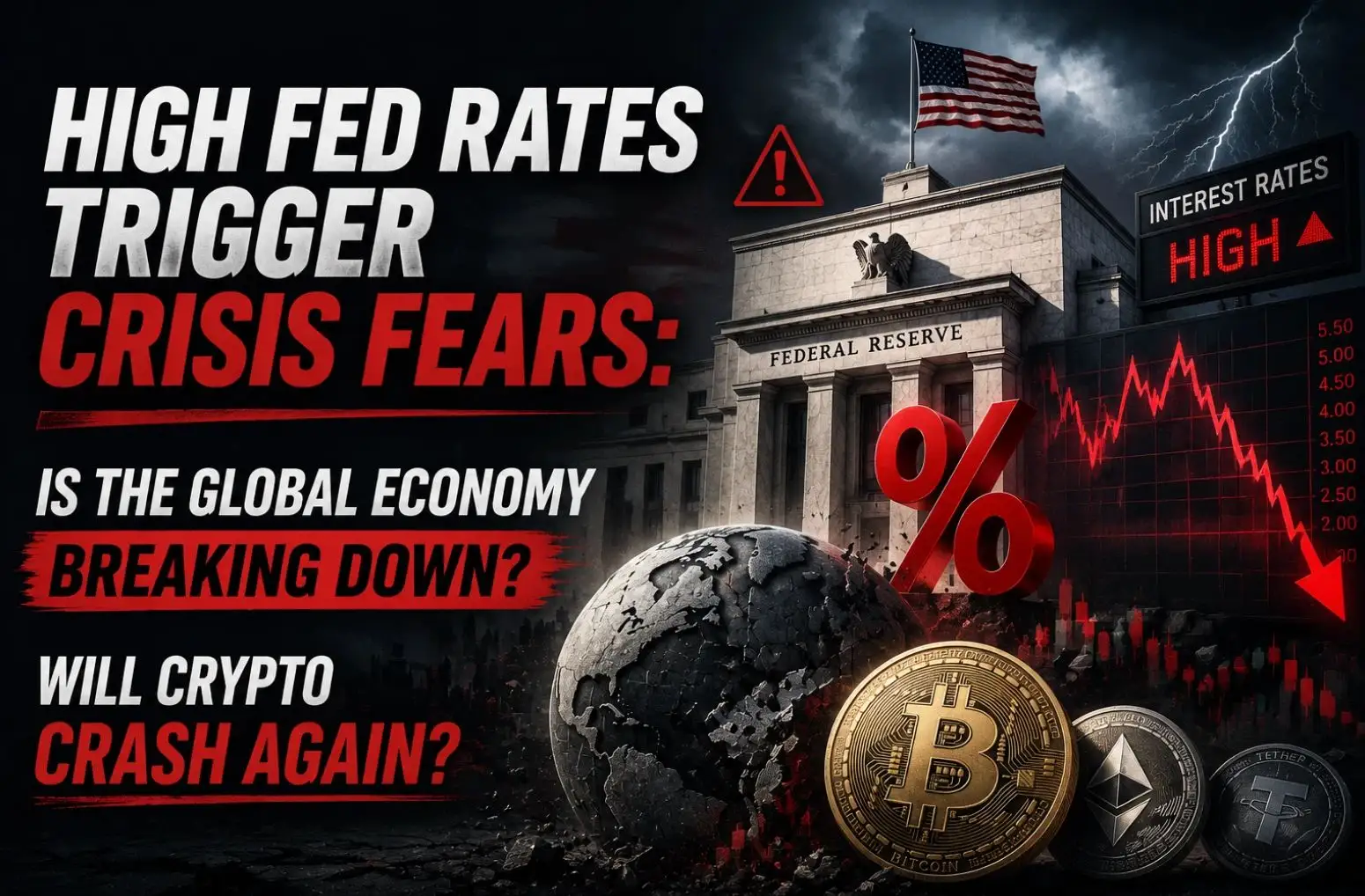
High Fed Rates Trigger Crisis Fears: Is the Global Economy Breaking Down? Will Crypto Crash Again?

At 2:00 a.m. Beijing time on July 30, the Federal Reserves interest rate decision was announced: the Fed kept rates unchanged at 3.50%–3.75%, marking the fifth consecutive meeting this year in which it has held rates steady.  Starting from July 2023, when the Federal Reserve completed 11 rate hikes and raised interest rates from near-zero levels to 5.25%–5.50%, the Fed has maintained a high-rate environment for 36 months. Historically, during the previous tightening cycle (2004–2006), the Feds peak interest rate level lasted only around 24 months before the 2008 financial crisis erupted.  Todays interest rate curve shows striking similarities to the period before the 2008 crisis, as illustrated in the chart below:  Federal Reserve Interest Rates Since the 21st Century (Source: Macromicro)  Among the 15 major financial crises over the past century, 12 occurred within one year after the Federal Reserve entered a rate-hiking cycle. The current high-interest-rate environment has already lasted 36 months, far exceeding the historical 18-month critical cycle, meaning delayed impacts have been accumulating for a long time.  Now, as the “canary in the coal mine” of global financial markets, South Koreas stock market has triggered full-market circuit breakers nine times this year. In July alone, it plunged approximately 33%, marking the

High Fed Rates Trigger Crisis Fears: Is the Global Economy Breaking Down? Will Crypto Crash Again?
07-31Deep Dive