
Hyperliquid
3.79
1-2 years
Not Regulated
Exchange
Questionable Regulatory License

No Regulatory License

Be aware of the risks!

Basic Information

Country/Region
Cayman Islands
Exchange AbbreviationHyperliquid
Exchange TypeDecentralized Exchange
Operating Period2-5 years
Websitehttps://hyperfoundation.org/
Emailnotices@hyperfoundation.org
0.00/10

Score

Regulation
Risk Control
Business
Reputation
Tech

RiskNotice

2 risk alerts
High Risk 1
Medium Risk 1

Exchange Overview

Exchange Overview

What is Hyperliquid?

Hyperliquid is a high-performance blockchain that "carries all finance".

Platform Features

The platform allows users to build projects, create value, and trade assets on the same ultra-high-performance chain for the first time. It is primarily an all-in-one high-performance blockchain built for finance, known for its decentralized perpetual contract exchange. (Derivatives trading is a high-risk product.)

Business Region

InfluenceB
0
2
4
6
8
10

Disclosure

News

47

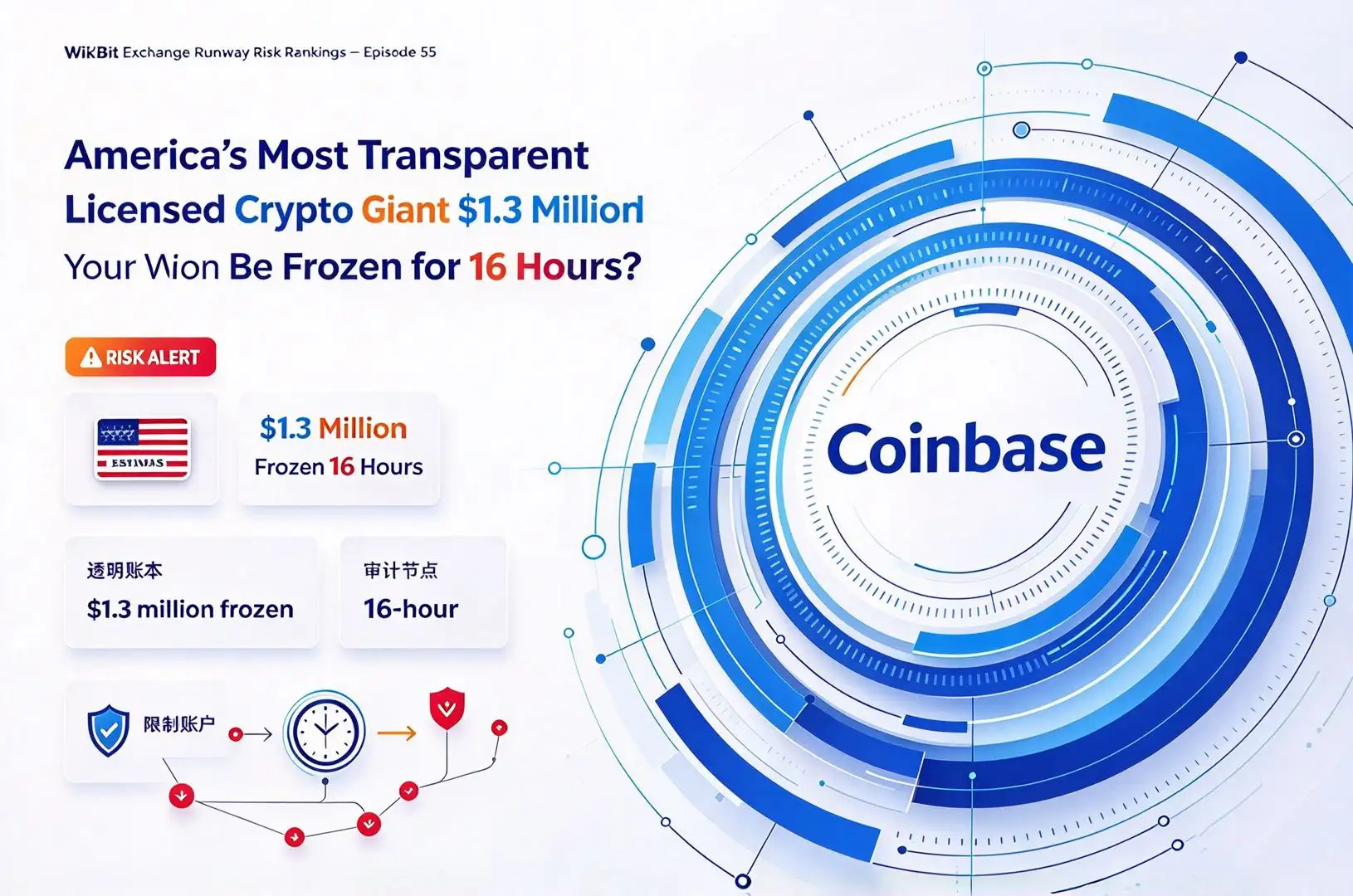
WikiBit Exchange Runaway Risk Rankings – Episode 55: Coinbase — America’s Most Transparent Licensed Crypto Giant, So Why Could Your $1.3 Million Be Frozen for 16 Hours?

Introduction: An Exchange with One of the Lowest Runaway Risks, Yet Some of the Most Real-World Friction for Users  The first 54 episodes examined a series of exchanges, from HashKey to OKX. For Episode 55, were turning our attention to one of the most distinctive players in the entire series when it comes to regulatory compliance: Coinbase.  When it comes to institutional security, Coinbase is arguably at the top of the crypto industry. It is a Nasdaq-listed company (COIN), a publicly traded entity subject to SEC oversight, and its quarterly 10-Q and annual 10-K financial reports are audited by Deloitte in accordance with PCAOB standards.  The platform holds $377 billion in assets, representing 12.5% of the global cryptocurrency market capitalization. In Q3 2026, it reported net income of $719 million, maintained positive adjusted EBITDA for 15 consecutive quarters, and saw its trading volume market share reach 10.7%, marking its fourth consecutive quarterly increase.  From the perspective of whether an exchange might disappear with customers funds, Coinbase is arguably one of the lowest-risk platforms in this entire series.  But theres another side to the story.  In August 2026, a user claimed that after depositing $1.3 million in USDC, their account was restricted for 16 hours, resulting in

WikiBit Exchange Runaway Risk Rankings – Episode 55: Coinbase — America’s Most Transparent Licensed Crypto Giant, So Why Could Your $1.3 Million Be Frozen for 16 Hours?
11-04Deep Dive

Papertrade Price-Feed Manipulation: $1.28M Wallet, ETH Midpoint and LP Risk

A wallet withdrew about $2.48 million from Papertrade after depositing approximately $1.2 million, according to transaction records reviewed by The Block on October 11. The roughly $1.28 million difference became the focus of an unusually concrete dispute over how a new 1,000x perpetuals venue prices its trades. The activity centered on ETH orders placed on Hyperliquid while the same wallet held much larger synthetic positions on Papertrade.  The earlier October 11 analysis of Papertrade examined an estimated $11 billion of open notional, roughly $54 million of trader margin in one snapshot, and the difference between open interest and funds available to honor winners. The new evidence is about how a trader may influence the price that determines those winners and losers. It calls for an update to that existing analysis, not a second general introduction to leverage.A price move of 0.12% can matter enormously at 1,000x  Papertrade settles synthetic trades against a pool rather than matching each customer with a second trader. Its reference price comes from the midpoint between Hyperliquids best bid and offer. A synthetic position can therefore be highly sensitive to changes at the top of a separate venues order book.  The Block reported that, between 6:01 and 6:02 p.m.

Papertrade Price-Feed Manipulation: $1.28M Wallet, ETH Midpoint and LP Risk
10-12Industry Research

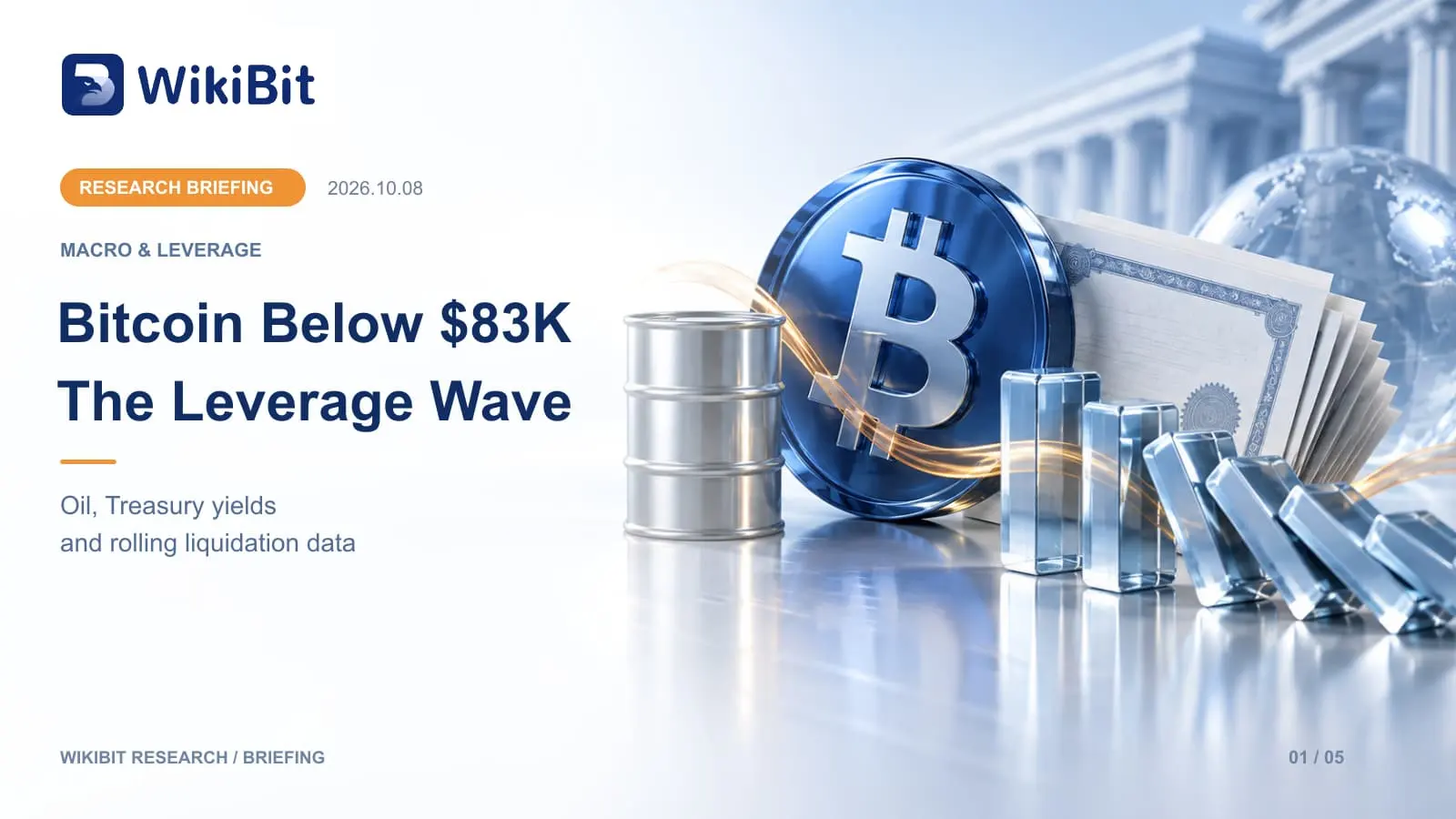
Why Bitcoin Fell Below $83K: Oil, Treasury Yields and Crypto Liquidations

Bitcoins October rally encountered an unusually uncomfortable combination on October 7: renewed pressure from oil prices, higher U.S. government bond yields and forced selling in leveraged crypto positions.  During Wednesdays trading, BTC fell to approximately $82,734 on Bitstamp, according to Cointelegraphs market report. A separate Cointelegraph/CoinGlass snapshot showed about $550 million in rolling 24-hour crypto long liquidations during the initial sell-off. The figure was a measurement at the time of reporting, not a final settlement figure for a fixed calendar day.  Brent crude was reported near $102 a barrel, while the U.S. 10-year Treasury yield was quoted around 5.36% during the stress. Those observations support the conclusion that crypto was trading within a wider risk-asset repricing. They do not prove that one news headline caused every dollar of selling.  The more useful question is how the shocks interacted.First Layer: Oil and Bond Yields Change the Cost of Risk  An oil price rise can change the markets inflation assumptions. If investors worry that energy prices will keep inflation elevated, they may demand higher yields to hold long-dated government debt.  Higher bond yields change the opportunity cost of holding assets that do not produce contractual cash flow. Bitcoin does not pay a coupon. Its valuation is sensitive

Why Bitcoin Fell Below $83K: Oil, Treasury Yields and Crypto Liquidations
10-08Industry Research