

Ex-money
3.46
2-5 years
Not Regulated
Exchange
Questionable Regulatory License

No Regulatory License

Be aware of the risks!

Basic Information

Country/Region
United Kingdom
Exchange AbbreviationEx-money
Company NameEX-money
Operating Period2-5 years
Websitehttps://ex-money.cc/en/litecoin-na-dash.html
Trade TypeSpot Trade、Fiat Trading
0.00/10

Score

Regulation
Risk Control
Business
Reputation
Tech

RiskNotice

2 risk alerts
High Risk 1
Medium Risk 1

Exchange Overview

Exchange Overview

What is Ex-money?

Ex-money is a cryptocurrency and payment system exchange service provider, offering 7×24 exchange of Qiwi, Sberbank, Yandex.Money, Bitcoin, Ethereum, Perfect Money, etc.

Platform Features

The platform offers preferential exchange rates and one-click exchange. Users can view real customer reviews on mainstream reliable monitoring systems.

News

121

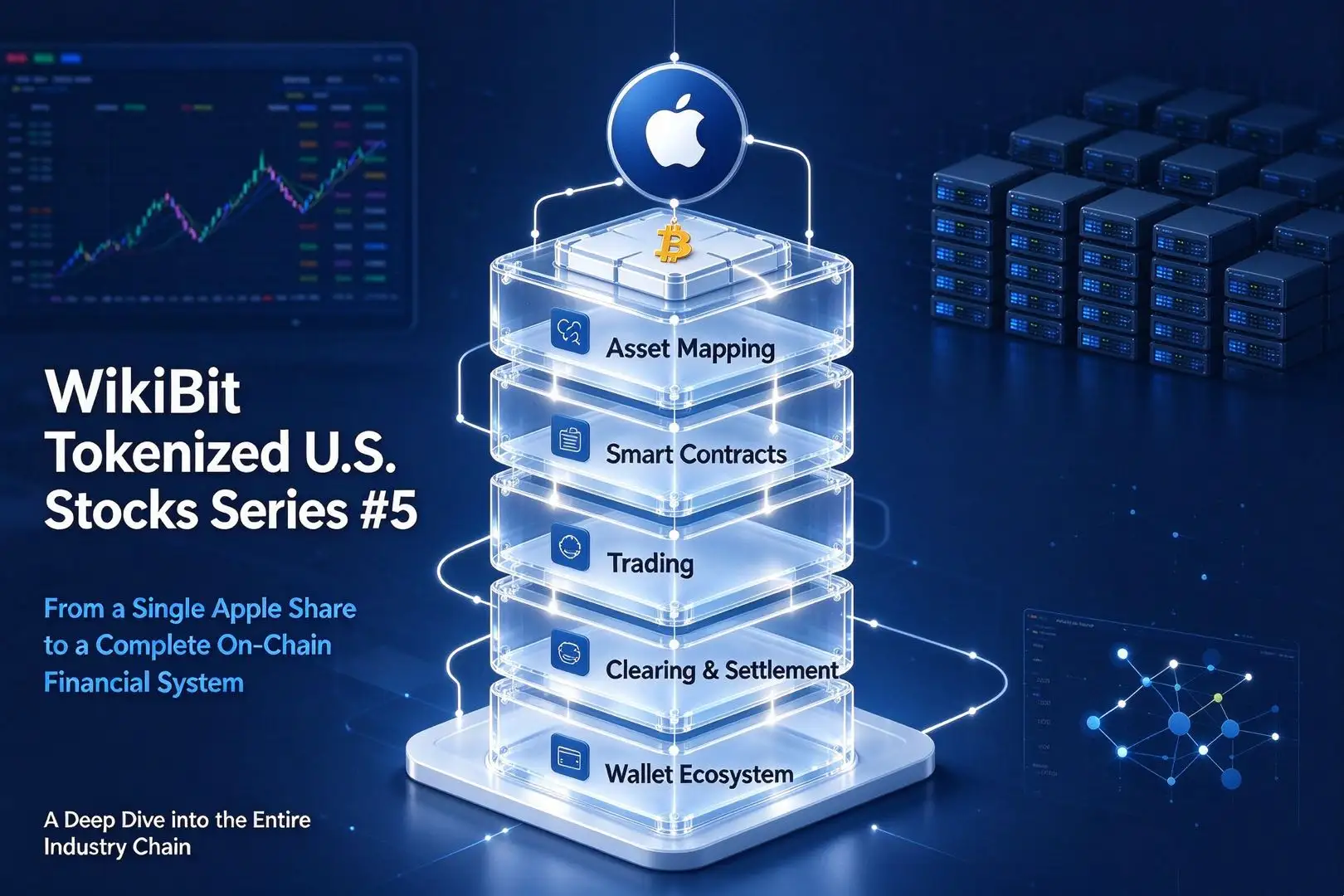
WikiBit Tokenized U.S. Stocks Series #5: From a Single Apple Share to a Complete On-Chain Financial System — A Deep Dive into the Entire Industry Chain

Tokenized stocks are not as simple as “taking a screenshot of a stock and putting it on the blockchain.” They are more like a matchmaking event spanning Wall Street and public blockchains.  The matchmakers include listed companies, custodian banks, brokers, exchanges, stablecoins, oracles, wallets, and auditing firms. The dowry consists of custody fees, issuance fees, trading fees, settlement fees, and data fees. In the end, whoever wins the users business becomes the tollbooth operator collecting the fees.  Imagine there is one share of Apple stock that needs to travel all the way from Nasdaq into your crypto wallet. You might think it is just a matter of clicking a button and putting Apple on-chain.  Not quite. Behind the scenes lies an entire industry chain: the asset layer ensures the underlying shares actually exist; the compliance layer keeps everyone on the right side of the law; the data layer makes sure nobody feeds you a pear when you ordered an Apple; the settlement layer ensures your money doesnt disappear along the way; the technology layer keeps the blockchain running smoothly; and the access layer brings the whole experience to your fingertips.  In a nutshell, tokenized stocks are not a single project, but an entire on-chain
WikiBit Tokenized U.S. Stocks Series #5: From a Single Apple Share to a Complete On-Chain Financial System — A Deep Dive into the Entire Industry Chain
9 hours agoDeep Dive

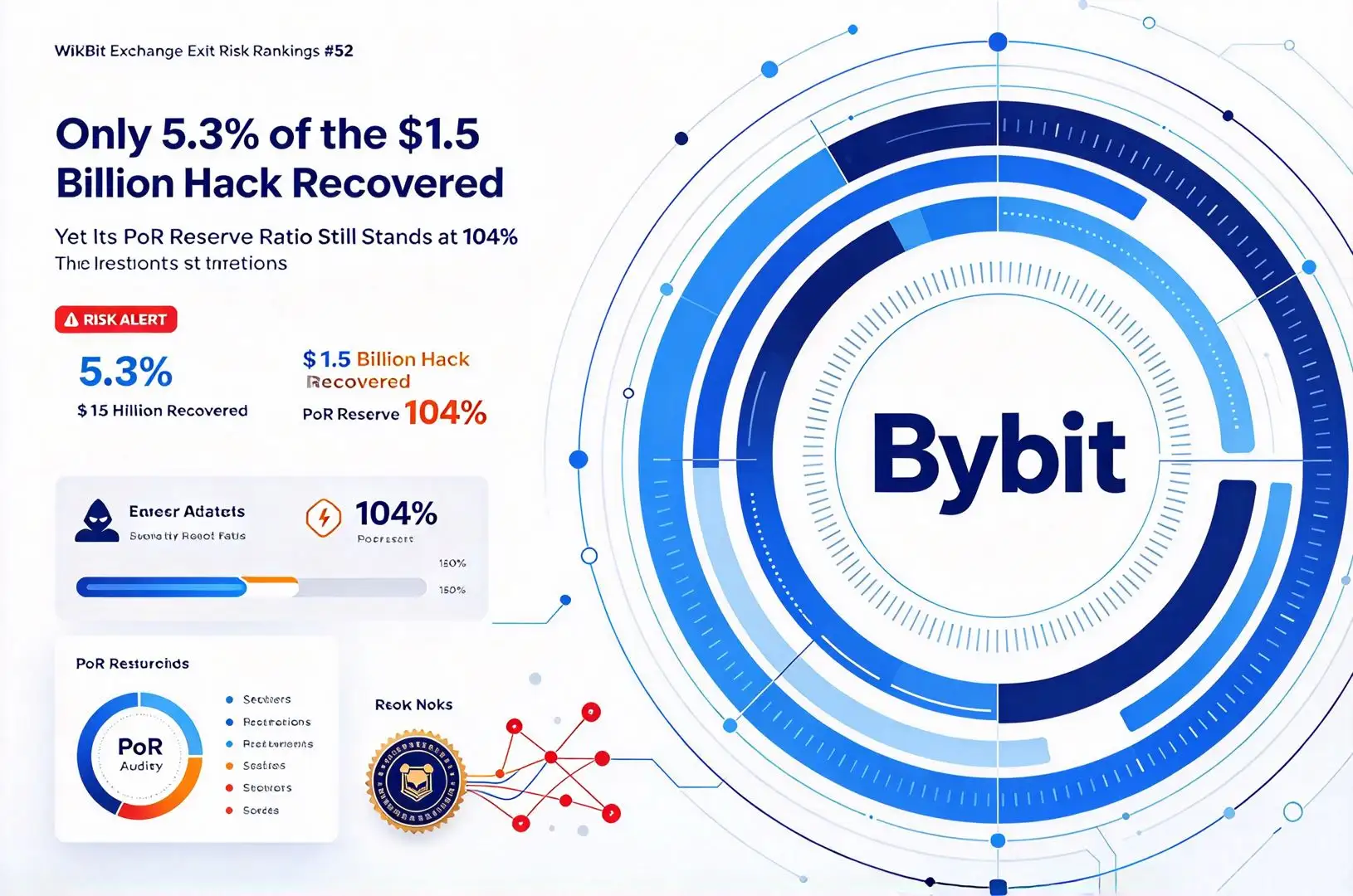
WikiBit Exchange Exit Risk Rankings #52: Bybit — Only 5.3% of the $1.5 Billion Hack Recovered, Yet Its PoR Reserve Ratio Still Stands at 104%

Introduction: The Worlds No. 2 Exchange — Perfect on Paper, Vulnerable in Practice  In our first 51 installments, weve investigated a range of exchanges, from HashKey to Bitget. For Episode 52, were turning our attention to a name that cannot be ignored: Bybit.  On paper, Bybits numbers are among the most impressive in the crypto industry. It was once the worlds second-largest cryptocurrency exchange, with more than 80 million users, average daily trading volume exceeding $18 billion, and the worlds third-largest derivatives market, recording $1.49 trillion in trading volume in Q1 2026. It has published 40 consecutive Proof of Reserves (PoR) reports, covering 50 tokens and $19.6 billion in assets. Its reserve ratios stand at 104% for BTC, 103% for ETH, and 110% for USDT.  Judging by these static metrics alone, Bybit looks like an industry giant that is simply too big to fail.  But theres another side to the story.  In February 2025, North Korean hackers stole approximately $1.5 billion from Bybit in what was then the largest single hacking incident in crypto history—surpassed only by Binances reported $6.3 billion theft today. The FBI identified North Koreas Lazarus Group as the culprit and dubbed the operation TraderTraitor. Nearly two years later, the total amount

WikiBit Exchange Exit Risk Rankings #52: Bybit — Only 5.3% of the $1.5 Billion Hack Recovered, Yet Its PoR Reserve Ratio Still Stands at 104%
12 hours agoDeep Dive

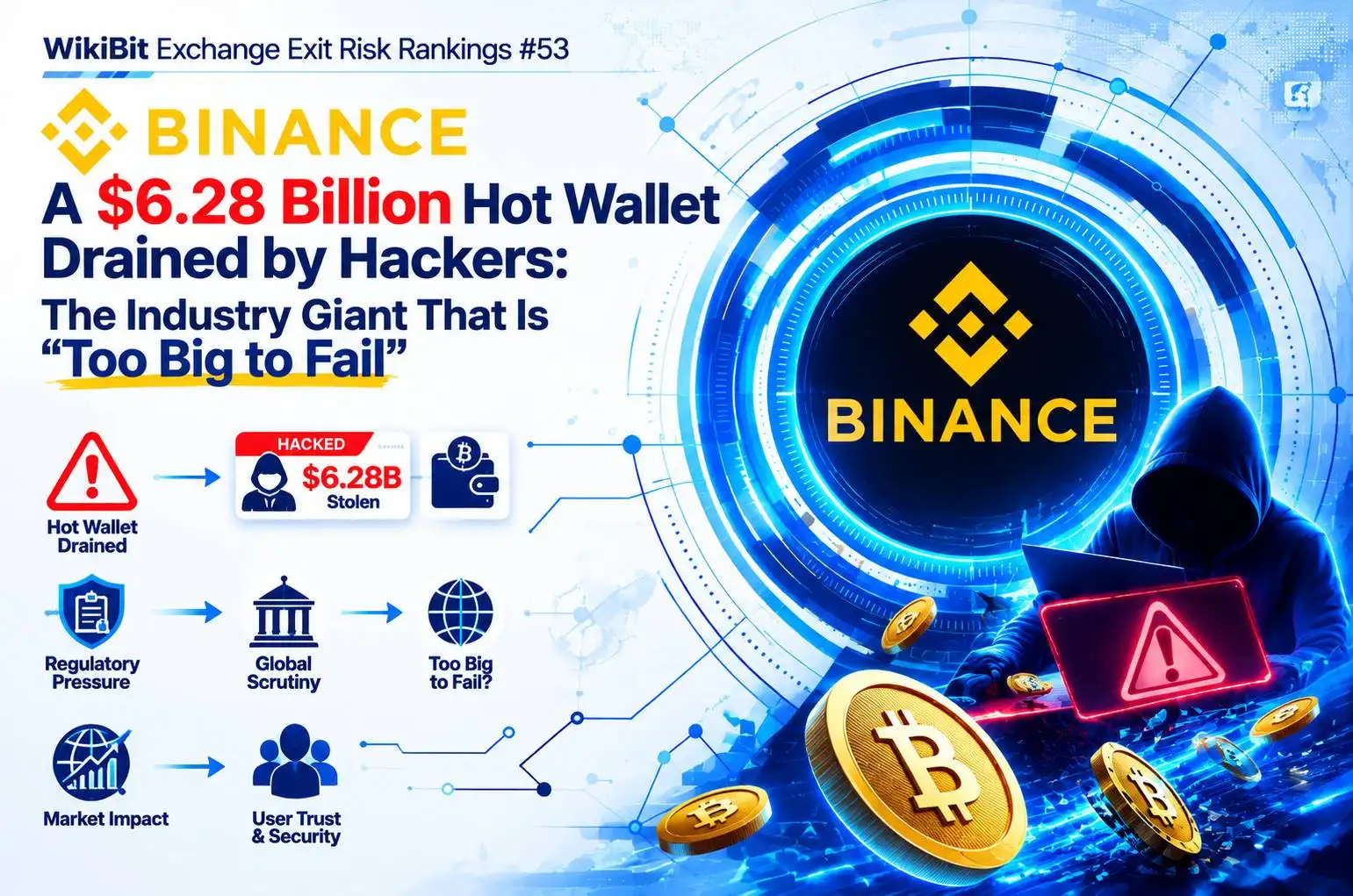
WikiBit Exchange Exit Risk Rankings #53: Binance — A $6.28 Billion Hot Wallet Drained by Hackers: The Industry Giant That Is “Too Big to Fail”

Preface: An industry giant with “a perfect ledger but a breached front line”  In the previous 52 issues, we dug into a series of exchanges from HashKey to Bitget. Today, in issue 53, we come to a name no one in crypto can avoid—Binance.  On “paper metrics,” this player is the ceiling of the crypto industry: customer assets of about $129.4 billion; total PoR reserves of about $135.8 billion; BTC reserve ratio of 100.35%, USDT 103.88%, and USDC 108.26%; derivatives trading volume of $4.90 trillion in Q1 2026, accounting for 34.9% of the Top 10; and custodial assets of $152.9 billion, accounting for 73.5% of the top ten exchanges. By any static financial indicator, Binance is the “too big to fail” existence.  But on the other side, just today—October 30, 2026—on-chain data shows that Binances hot wallets had about $6.0 billion to $6.28 billion in assets transferred out across 8 to 9 chains, with more than $6 billion flowing out within 55 minutes. Issuers such as Tether and Circle urgently froze about $2.8 billion, but about $3.27 billion (mainly native assets such as BTC and ETH) was still moving freely on-chain.  An exchange with a “PoR reserve ratio above 100%” had billions of dollars

WikiBit Exchange Exit Risk Rankings #53: Binance — A $6.28 Billion Hot Wallet Drained by Hackers: The Industry Giant That Is “Too Big to Fail”
Within 1 weeksDeep Dive