

Common
3.58
2-5 years
Not Regulated
Exchange
Questionable Regulatory License

No Regulatory License

Be aware of the risks!

Basic Information

Country/Region
Poland
Exchange AbbreviationCommon
Company NameCardinal Cryptography Sp. z o.o
Operating Period2-5 years
Websitehttps://common.fi/
Exchange TypeDecentralized Exchange
0.00/10

Score

Regulation
Risk Control
Business
Reputation
Tech

RiskNotice

2 risk alerts
High Risk 1
Medium Risk 1

Exchange Overview

Exchange Overview

What is Common?

Common is a privacy-first multichain crypto financial application that allows users to manage, earn, and trade cryptocurrencies across multiple chains without exposing their financial data.

Platform Features

Common combines the simplicity of a neobank with full user control over wealth, emphasizing "privacy by default, one experience across all chains." Its web application is already live on mainnet.

Positioning

The platform makes crypto simple, seamless, and secure, helping users send, receive, and grow their assets while protecting their privacy.

Business Region

InfluenceD
0
2
4
6
8
10

News

45

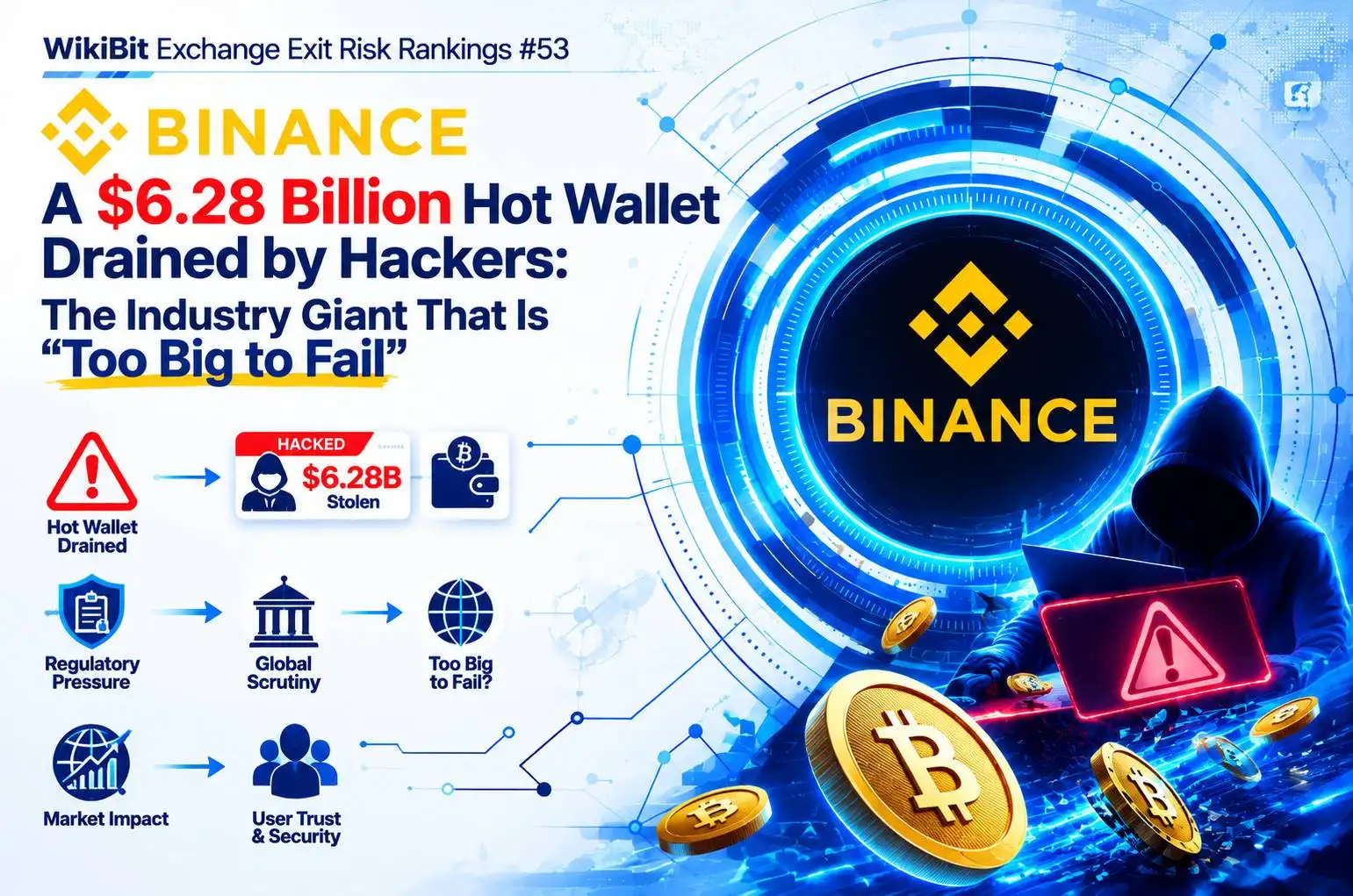
WikiBit Exchange Exit Risk Rankings #53: Binance — A $6.28 Billion Hot Wallet Drained by Hackers: The Industry Giant That Is “Too Big to Fail”

Preface: An industry giant with “a perfect ledger but a breached front line”  In the previous 52 issues, we dug into a series of exchanges from HashKey to Bitget. Today, in issue 53, we come to a name no one in crypto can avoid—Binance.  On “paper metrics,” this player is the ceiling of the crypto industry: customer assets of about $129.4 billion; total PoR reserves of about $135.8 billion; BTC reserve ratio of 100.35%, USDT 103.88%, and USDC 108.26%; derivatives trading volume of $4.90 trillion in Q1 2026, accounting for 34.9% of the Top 10; and custodial assets of $152.9 billion, accounting for 73.5% of the top ten exchanges. By any static financial indicator, Binance is the “too big to fail” existence.  But on the other side, just today—October 30, 2026—on-chain data shows that Binances hot wallets had about $6.0 billion to $6.28 billion in assets transferred out across 8 to 9 chains, with more than $6 billion flowing out within 55 minutes. Issuers such as Tether and Circle urgently froze about $2.8 billion, but about $3.27 billion (mainly native assets such as BTC and ETH) was still moving freely on-chain.  An exchange with a “PoR reserve ratio above 100%” had billions of dollars
WikiBit Exchange Exit Risk Rankings #53: Binance — A $6.28 Billion Hot Wallet Drained by Hackers: The Industry Giant That Is “Too Big to Fail”
Within 1 weeksDeep Dive

WikiBit Tokenized U.S. Stocks Series #4: The SEC’s Five-Year Window Isn’t a Countdown—It’s a Trial Period

Imagine this: You buy a tokenized version of Apple stock on a blockchain and transfer it to a friend seconds later. While you sleep, blockchain transactions continue around the clock, and smart contracts settle trades automatically. Sounds great, right?  But questions immediately arise. If Apple trades at $200 on Nasdaq while its tokenized version sells for $206 on-chain, which price should you trust? If Apple pays a dividend, are token holders entitled to receive it? If the platform goes bankrupt, do you actually own Apple shares, or just a contractual claim against the platform? And if market manipulation, a hack, or a liquidity run occurs, who is responsible?  These are the real questions the SEC must answer. The five-year period is not a countdown to the full-scale opening of the market. It is a financial experiment with defined boundaries: innovation gets a chance, but that does not justify handing the entire securities market over to a new model that has yet to prove itself.1.A Stock Is More Than a String of Code: Four Major Challenges Tokenization Must Address  Blockchain technology can make transaction records easier to track, automate asset transfers, and potentially reduce intermediaries. But the securities market is much more than a

WikiBit Tokenized U.S. Stocks Series #4: The SEC’s Five-Year Window Isn’t a Countdown—It’s a Trial Period
Within 1 weeksDeep Dive

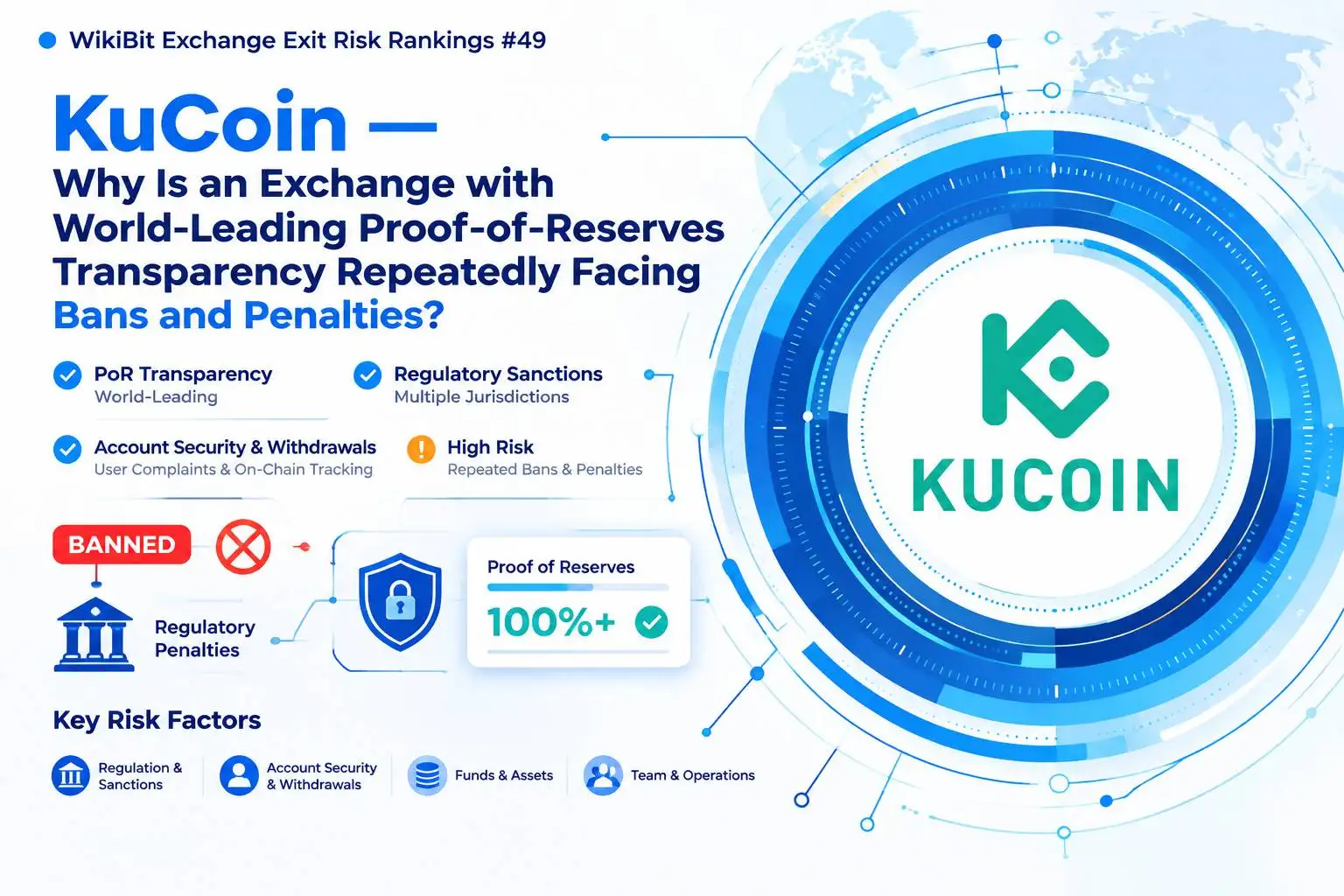
WikiBit Exchange Exit Risk Rankings #49: KuCoin — Why Is an Exchange with World-Leading Proof-of-Reserves Transparency Repeatedly Facing Bans and Penalties?

Introduction: An “A-Student” Report Card on Regulatory Compliance  In the first 48 installments, we investigated a range of exchanges, from HashKey to MEXC. For Episode 49, we turn to one of the most strikingly contradictory cases: KuCoin.  In terms of transparency, KuCoin has delivered one of the most impressive performances in the crypto industry. Founded in 2017, it received a Proof-of-Reserves (PoR) transparency score of 96.7 out of 100 from CryptoQuant in 2025, ranking first globally. It has published Merkle tree-based Proof-of-Reserves reports for more than 39 consecutive months, undergone third-party verification by Hacken, and held a 6.69% share of the global spot market in Q1 2026, placing it among the worlds top three exchanges.  But there is another side to the story.  On October 13, 2026, South Koreas Financial Intelligence Unit (FIU) officially blocked access to KuCoins website, extending restrictions beyond its app to the web platform. The UKs Financial Conduct Authority (FCA) listed KuCoin as an unauthorized firm. In January 2025, KuCoin pleaded guilty to charges brought by the U.S. Department of Justice (DOJ), agreeing to pay more than $297 million in penalties and admitting to receiving billions of dollars in suspicious funds between 2017 and 2024. The Commodity Futures Trading Commission

WikiBit Exchange Exit Risk Rankings #49: KuCoin — Why Is an Exchange with World-Leading Proof-of-Reserves Transparency Repeatedly Facing Bans and Penalties?
10-27Deep Dive