

ACY
3.47
5-10 years
Not Regulated
Broker
Questionable Regulatory License

No Regulatory License

Be aware of the risks!

Basic Information

Country/Region
Australia
Exchange AbbreviationACY
Phone number2 9188 2999
Operating Period5-10 years
Websitehttps://www.acycn.com/en/
Emailsupport@acy.com
0.00/10

Score

Regulation
Risk Control
Business
Reputation
Tech

RiskNotice

2 risk alerts
High Risk 1
Medium Risk 1

Exchange Overview

Exchange Overview

With trading conditions that are second to none, full suite of resources to help you grow as a trader, and a choice of over 1600 instruments to diversify your portfolio, join ACY today and discover your edge.

News

15

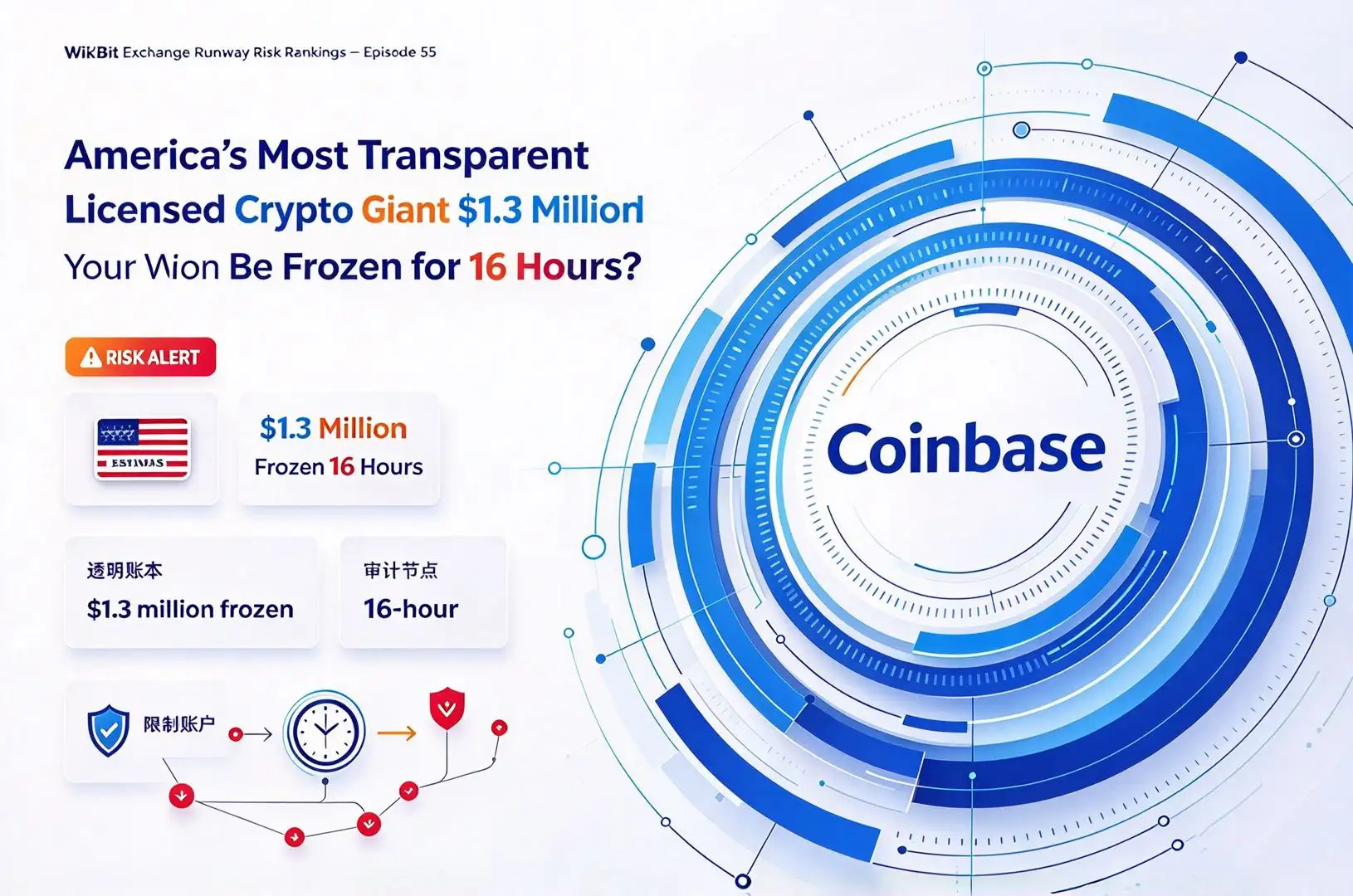
WikiBit Exchange Runaway Risk Rankings – Episode 55: Coinbase — America’s Most Transparent Licensed Crypto Giant, So Why Could Your $1.3 Million Be Frozen for 16 Hours?

Introduction: An Exchange with One of the Lowest Runaway Risks, Yet Some of the Most Real-World Friction for Users  The first 54 episodes examined a series of exchanges, from HashKey to OKX. For Episode 55, were turning our attention to one of the most distinctive players in the entire series when it comes to regulatory compliance: Coinbase.  When it comes to institutional security, Coinbase is arguably at the top of the crypto industry. It is a Nasdaq-listed company (COIN), a publicly traded entity subject to SEC oversight, and its quarterly 10-Q and annual 10-K financial reports are audited by Deloitte in accordance with PCAOB standards.  The platform holds $377 billion in assets, representing 12.5% of the global cryptocurrency market capitalization. In Q3 2026, it reported net income of $719 million, maintained positive adjusted EBITDA for 15 consecutive quarters, and saw its trading volume market share reach 10.7%, marking its fourth consecutive quarterly increase.  From the perspective of whether an exchange might disappear with customers funds, Coinbase is arguably one of the lowest-risk platforms in this entire series.  But theres another side to the story.  In August 2026, a user claimed that after depositing $1.3 million in USDC, their account was restricted for 16 hours, resulting in
WikiBit Exchange Runaway Risk Rankings – Episode 55: Coinbase — America’s Most Transparent Licensed Crypto Giant, So Why Could Your $1.3 Million Be Frozen for 16 Hours?
3 days agoDeep Dive

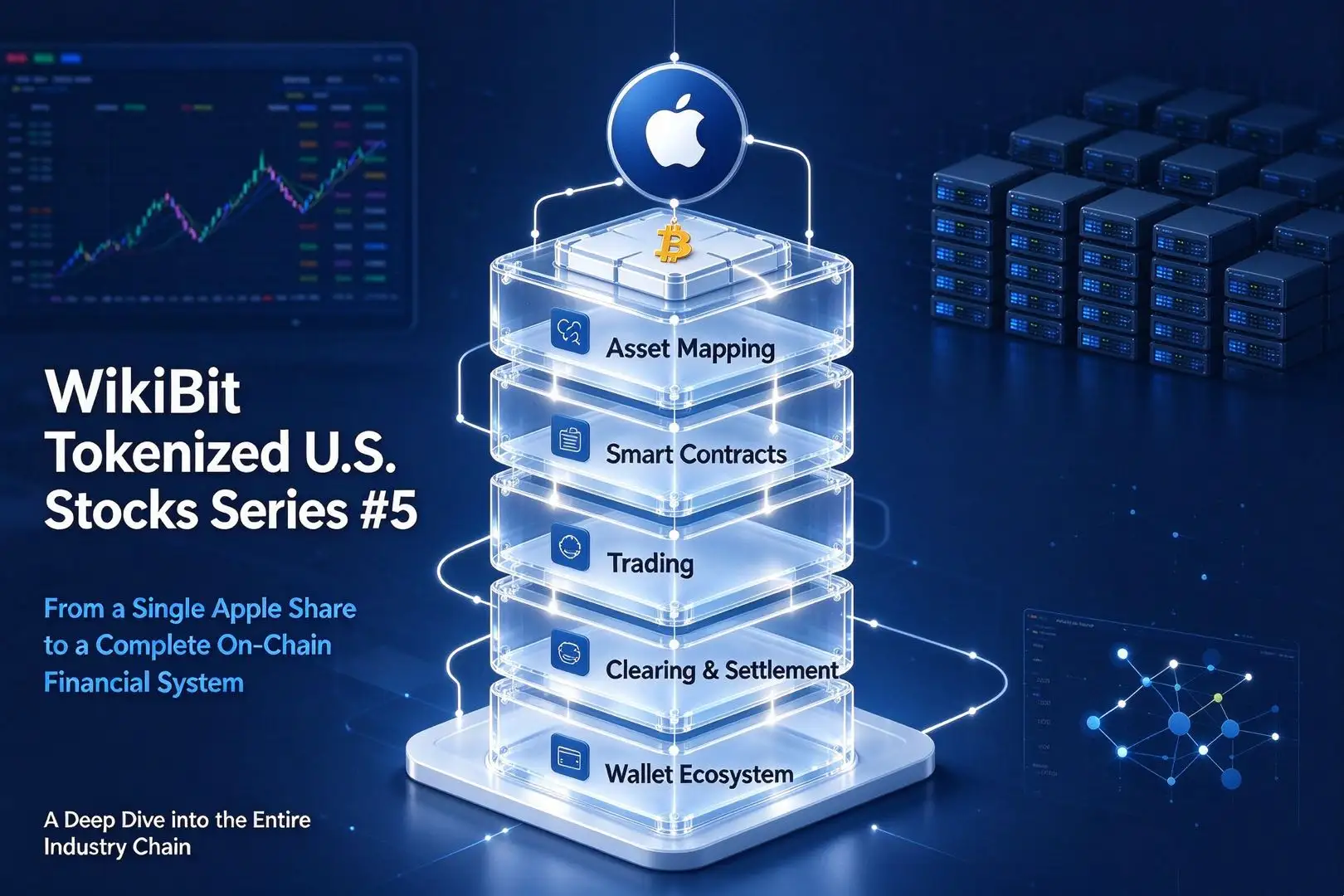
WikiBit Tokenized U.S. Stocks Series #5: From a Single Apple Share to a Complete On-Chain Financial System — A Deep Dive into the Entire Industry Chain

Tokenized stocks are not as simple as “taking a screenshot of a stock and putting it on the blockchain.” They are more like a matchmaking event spanning Wall Street and public blockchains.  The matchmakers include listed companies, custodian banks, brokers, exchanges, stablecoins, oracles, wallets, and auditing firms. The dowry consists of custody fees, issuance fees, trading fees, settlement fees, and data fees. In the end, whoever wins the users business becomes the tollbooth operator collecting the fees.  Imagine there is one share of Apple stock that needs to travel all the way from Nasdaq into your crypto wallet. You might think it is just a matter of clicking a button and putting Apple on-chain.  Not quite. Behind the scenes lies an entire industry chain: the asset layer ensures the underlying shares actually exist; the compliance layer keeps everyone on the right side of the law; the data layer makes sure nobody feeds you a pear when you ordered an Apple; the settlement layer ensures your money doesnt disappear along the way; the technology layer keeps the blockchain running smoothly; and the access layer brings the whole experience to your fingertips.  In a nutshell, tokenized stocks are not a single project, but an entire on-chain

WikiBit Tokenized U.S. Stocks Series #5: From a Single Apple Share to a Complete On-Chain Financial System — A Deep Dive into the Entire Industry Chain
Within 1 weeksDeep Dive

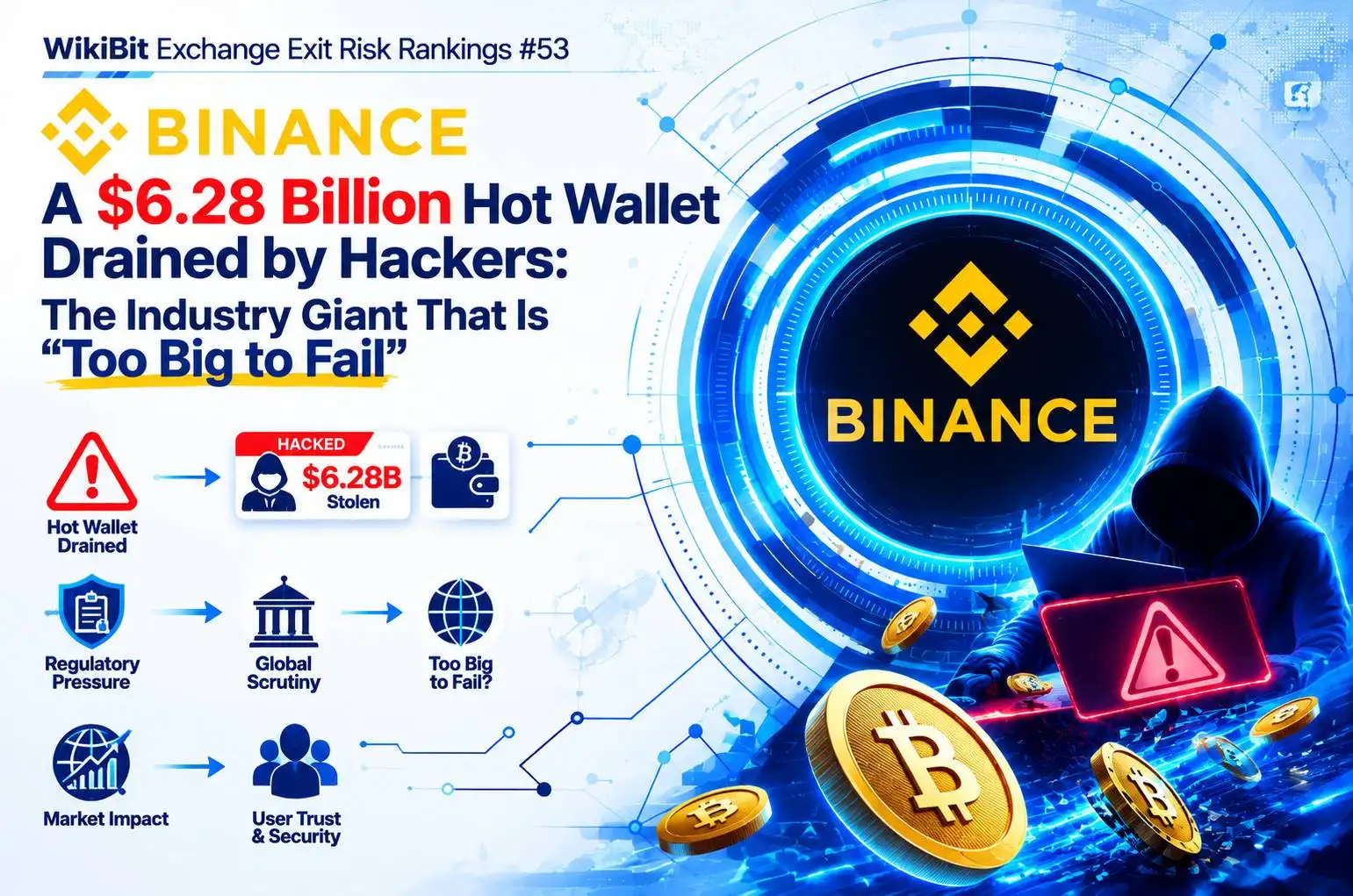
WikiBit Exchange Exit Risk Rankings #53: Binance — A $6.28 Billion Hot Wallet Drained by Hackers: The Industry Giant That Is “Too Big to Fail”

Preface: An industry giant with “a perfect ledger but a breached front line”  In the previous 52 issues, we dug into a series of exchanges from HashKey to Bitget. Today, in issue 53, we come to a name no one in crypto can avoid—Binance.  On “paper metrics,” this player is the ceiling of the crypto industry: customer assets of about $129.4 billion; total PoR reserves of about $135.8 billion; BTC reserve ratio of 100.35%, USDT 103.88%, and USDC 108.26%; derivatives trading volume of $4.90 trillion in Q1 2026, accounting for 34.9% of the Top 10; and custodial assets of $152.9 billion, accounting for 73.5% of the top ten exchanges. By any static financial indicator, Binance is the “too big to fail” existence.  But on the other side, just today—October 30, 2026—on-chain data shows that Binances hot wallets had about $6.0 billion to $6.28 billion in assets transferred out across 8 to 9 chains, with more than $6 billion flowing out within 55 minutes. Issuers such as Tether and Circle urgently froze about $2.8 billion, but about $3.27 billion (mainly native assets such as BTC and ETH) was still moving freely on-chain.  An exchange with a “PoR reserve ratio above 100%” had billions of dollars

WikiBit Exchange Exit Risk Rankings #53: Binance — A $6.28 Billion Hot Wallet Drained by Hackers: The Industry Giant That Is “Too Big to Fail”
10-30Deep Dive