NMLSRegulated
United States Crypto Asset Transfer License (MTL)



United States Crypto Asset Transfer License (MTL)

Singapore Crypto Asset Exchange License (CEX)

United Arab Emirates Crypto Asset Exchange License (CEX)
Malta Crypto Asset Trading License (STP)
Singapore Digital Asset Issuance License (ICO)
Cayman Islands Virtual Asset Service Provider (VASP)


What Is Crypto.com Exchange?
Crypto.com was initially established in Hong Kong in June 2016, and Crypto.com Exchange was launched 3 years later. Now based in Singapore, the platform has more than 50 million customers in over 90 countries, including Europe, the USA, Canada, Australia, Latin America, and some Asian countries.
The company offers its customers the following products: a mobile app, Crypto.com Visa card, a mobile wallet, Crypto.com Earn, Crypto.com Pay, Crypto.com NFT, Crypto.com Credit. The centralized exchange (CEX) offers spot trading, margin trading and derivatives trading. Crypto.com also offers DeFi products like a DeFi wallet and an ecosystem on the Crypto.org chain powered by its native token, Cronos (CRO).
Who Are the Crypto.com Exchange Founders?
The Singapore-based crypto and payments platform was co-founded by Kris Marszalek, Gary Or, Rafael Melo and Bobby Bao as "Monaco”. In 2018, the project was renamed as Crypto.com. The company is operated by Foris DAX Asia, owned by Foris DAX Markets, Inc.
Kris Marszalek is a serial entrepreneur. Before founding Crypto.com, Marszalek launched Yiyi, a location based service platform, and Beecrazy, an e-commerce company. He also co-founded Starline Polska, a consumer electronics design and manufacturing company.
Where Is Crypto.com Exchange Located?
Crypto.com is based in Singapore.
Crypto.com Exchange Restricted Countries
The Crypto.com App is currently available in 49 states in the United States, except New York. Globally, the exchange has quite extensive restrictions, and the full list is on the official website.
What Coins Are Supported on Crypto.com Exchange?
The exchange supports over 250 digital assets (with spot trading, futures, advanced order types), 100 trading pairs and 20 fiat currencies. The top crypto assets available on the platform include: BTC, ETH, USDT, USDC, BNB, BUSD, ADA, XRP, SOL, DOGE, MATIC, DAI, SHIB.
How Much Are Crypto.com Exchange Fees?
Spot and margin trading fees are tiered in 5 levels based on the user’s 30-day spot trading volume. For level 1 (below $250K), maker and taker fees are 0.075%. For level 5 ($10M or more), maker fees are 0.00% and taker fees are 0.05%.
For derivatives, maker-taker fees are also segmented in 5 levels based on 30-day derivatives trading volume. For level 1 (below $1M), maker fees are 0.017% and taker fees are 0.034%. For level 5 ($50M or more), maker fees are 0.00% and taker fees are 0.026%.
Fees are further reduced based on the amount of CRO staked. Crypto.com also offers VIP tiered trading fees for users who trade between 0.10% and 2.00% or more of the exchange’s spot or derivative volume.
Is It Possible To Use Leverage or Margin Trading on Crypto.com Exchange?
Investors can access up to 10X leverage via margin trading on the Crypto.com platform. Margin traders can choose between 3X, 5X and 10X leverage. Users who stake CRO receive preferential interest rates of as low as 0.008% per day.
Users can also trade crypto derivatives — perpetuals and futures contracts with up to 100X leverage.
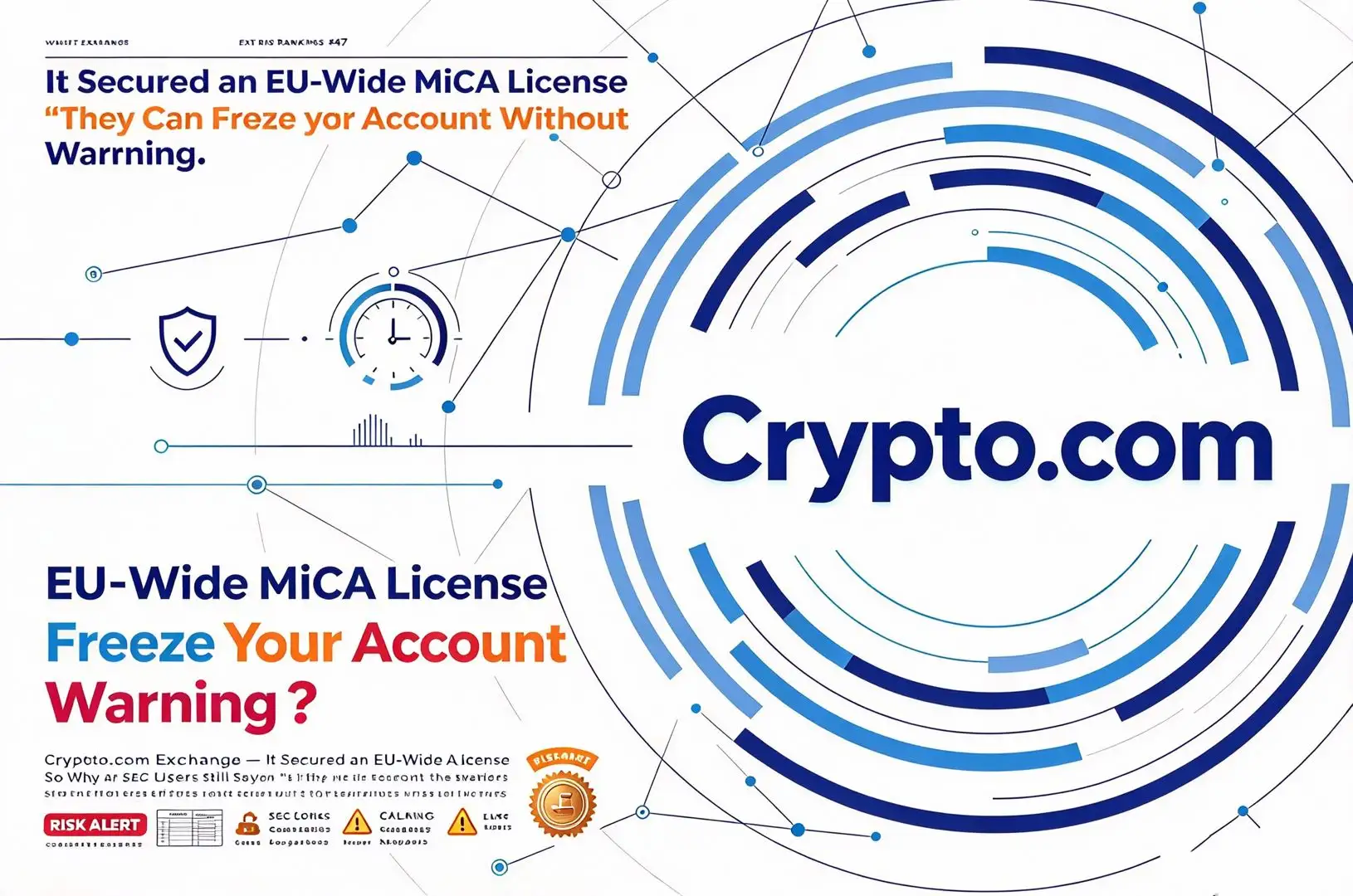
Introduction: The Other Side of a “Compliance Star” In the first 46 installments, we investigated a range of exchanges, from HashKey to Bitfinex. For Episode 47, were taking a look at one of the most Hollywood-style names in crypto: Crypto.com. Its résumé in compliance and marketing is almost unmatched: founded in 2016, with more than 140 million users worldwide; one of the first major global crypto-asset service providers to obtain a MiCA license covering the European Union; an SEC investigation that ended with no enforcement action; more than 100 regulatory approvals; a Maltese MiCA license; dual CFTC registrations as a Designated Contract Market (DCM) and Derivatives Clearing Organization (DCO); FINRA-registered broker-dealer status; a $700 million deal in 2021 to secure the naming rights to the Los Angeles Lakers‘ home arena; Matt Damon’s “Fortune Favors the Brave” campaign; and sponsorships of Formula 1 and the UEFA Champions League. Sounds like a globally compliant crypto super app, right? But there is another side to the story. Crypto.com has a Trustpilot score of just 2/5, with 72% of ratings being one star. Numerous users complain about sudden account restrictions, funds they can see but cannot access, scripted customer support responses, and cases that remain unresolved for weeks
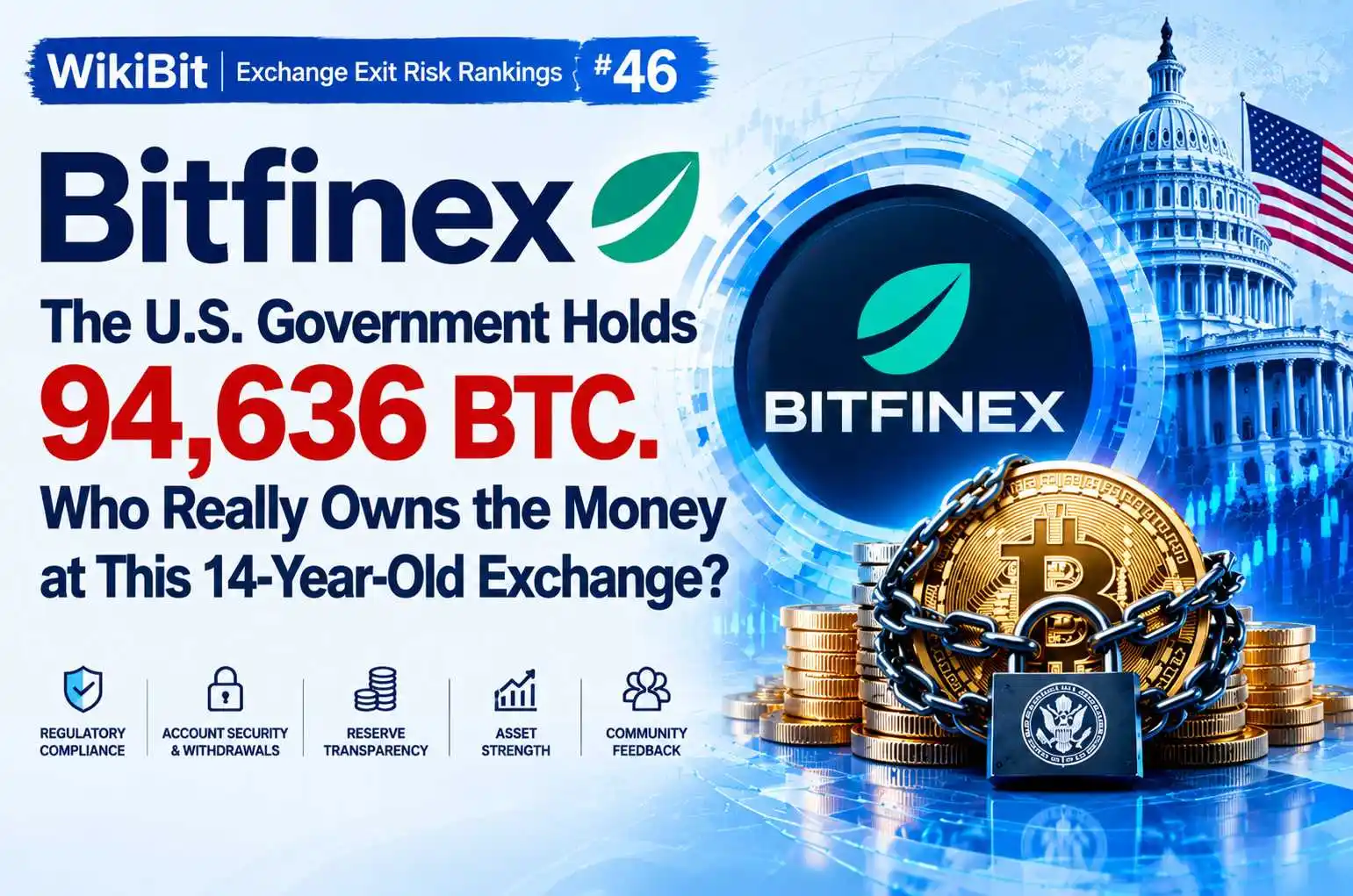
Introduction: A Veteran Exchange That Refuses to Die In our first 45 installments, we investigated a range of exchanges, from HashKey to BingX. For Episode 46, were examining a true fossil from the early days of crypto: Bitfinex. Its résumé puts it among the industrys most established players: founded in 2012, 14 years of operating history, one of the worlds earliest cryptocurrency exchanges, a sister company of Tether, the issuer of USDT, and the legal claimant to 94,636 BTC seized by the U.S. government. Its parent company, iFinex, operates both Bitfinex and Tether. It holds a full Digital Asset Service Provider (DASP) license in El Salvador and supports more than 270 cryptocurrencies. Sounds like a seasoned, technically sophisticated exchange, doesnt it? But theres another side to the story. In 2016, Bitfinex suffered a hack that resulted in the theft of 119,755 BTC, worth nearly $10 billion at current prices. In 2021, the CFTC fined it for illegally offering off-exchange retail commodity transactions. That same year, the New York Attorney General fined Bitfinex and Tether $18.5 million over allegations of misrepresenting their reserves. Its Trustpilot rating is just 1.6/5, with users complaining about withdrawals being locked for five days and customer support requiring two
Introduction: An Exchange That Has “Won Countless Awards” Yet Cannot Be Found by Regulators In the previous 42 editions, we investigated a series of exchanges ranging from HashKey to Bitstamp. In this 43rd edition, we take a closer look at one of the most controversial exchanges in terms of public image versus regulatory reality — LBank (Blue Shell). When it comes to marketing and branding, LBanks profile looks impressive: Founded in 2015, more than 20 million registered users worldwide, daily trading volume exceeding $10 billion, regional sponsorship of the Argentina national football team, ISO/IEC 27001:2022 certification, a $100 million futures fund, 10 years without major security incidents, and a team of more than 500 employees. At first glance, it sounds like a major global exchange with a long operating history. However, the other side of the story is very different. In June 2025, Japan‘s Financial Services Agency (FSA) issued an official warning stating that LBank had an “unknown location and unknown representative”. WikiBit’s risk assessment gave LBank a score of 6.66 and flagged it for questionable regulatory licenses and high-risk concerns. The Ontario Securities Commission (OSC) in Canada also placed LBank on its investor warning list. Meanwhile, users on platforms such as Trustpilot and Sikayetvar have complained