New York Jury Finds Do Kwon, Terraform Labs Liable for Fraud in SEC Case

NEW YORK – A Manhattan jury has found Terraform Labs and its co-founder, Do Kwon, liable on civil fraud charges brought by the U.S. Securities and Exchange Commission (SEC) in connection with the $40 billion implosion of the Terra ecosystem in May 2022, according to a Friday statement from the SEC.  The SEC accused Terraform Labs and Kwon of misleading investors about the stability of its so-called “algorithmic” native stablecoin, Terra USD (UST), and the use cases for the Terra blockchain.  The jury delivered the verdict on Friday, just two hours after lawyers for both the SEC and the defendants gave their closing arguments at the end of the nine-day trial in New York.  Jurors agreed with the SEC that Kwon and, under his direction, Terraform Labs deceived everyday investors about the nature of the supposed algorithm that kept UST pegged to the U.S. dollar. Though Kwon insinuated that it could “automatically self-heal” in the event of a de-peg, it actually relied on continuous trading activity, including large-scale trading done by institutional investors.  “We are pleased with todays jury verdict holding Terraform Labs and Do Kwon liable for a massive crypto fraud,” Gurbir Grewal, SEC Division of Enforcement director, wrote in a statement.  “The defendants
2024-04-08Deep Dive

dYdX experiences chain halt during upgrade, engineers are investigating

The decentralized derivatives exchange protocol dYdX has experienced a chain halt during a scheduled upgrade.  The outage has been ongoing since 6:50 a.m. UTC, according to an incident report. On-chain data shows block production appearing to stop shortly after, with dYdX engineers currently debugging the issue.  The incident represents the first major outage for the protocol since dYdX version 4 and its standalone Cosmos blockchain launched on mainnet in October, according to its status page.  The dYdX Chain was scheduled to undergo its v4.0.0 protocol upgrade today which could potentially disrupt functionalities. Scheduled maintenance was completed at 6:30 a.m. UTC. However, the chain halt issue began 20 minutes later.  In a status update at 9:21 a.m. UTC, dYdX said the issue continues to be investigated and it has been agreed for network validators to reconvene at 3 p.m. UTC.  “This means that the devs wont suggest a workaround or a fix until then so that the validators wont get jailed for not being online when the chain restarts,” the team said. When a validator is “jailed,” it means its been temporarily suspended from participating in the network activities.  The incident does not appear to have impacted the price of dYdXs token, which is up over 4%

2024-04-08Deep Dive

This Week Noteworthy Events(April 8, 2024 - April 14, 2024)

Anticipated Network Delays or Outages on April 8th Due to dYdX Chain v4.0 Software Upgrade  The dYdX Ops SubDAO announced that due to the deployment of the dYdX Chain v4.0 software upgrade, network delays and potential outages are expected between 16:00 - 17:00 on April 8th (time subject to change).  Additionally, they reminded that dYdX Chain validators using tmkms or Horcrux need to update to the latest versions of these tools before the upgrade block height.  Previously, the dYdX community voted in favor of a proposal to upgrade the dYdX Chain protocol software to version v4.0. It is reported that this version upgrade will affect the protocol and network in various ways, including: adding the x/authz module, IBC withdrawal restrictions, conditional order improvements, and upgrading to Cosmos SDK v0.5.Mina to Conduct Devnet Upgrade on April 9th  The lightweight blockchain protocol, Mina, announced on the X platform that it plans to conduct a Devnet upgrade on April 9th. They state that this upgrade serves as the final milestone before the significant Berkeley upgrade and will introduce easier ZK programmability and other key features to the mainnet. The complete schedule is as follows:  April 2nd: The release of the archive node migration tool, allowing archive node operators

2024-04-08Deep Dive

Did Strong Bitcoin ETF Demand Kill Halving's Potential Bullish Rally?

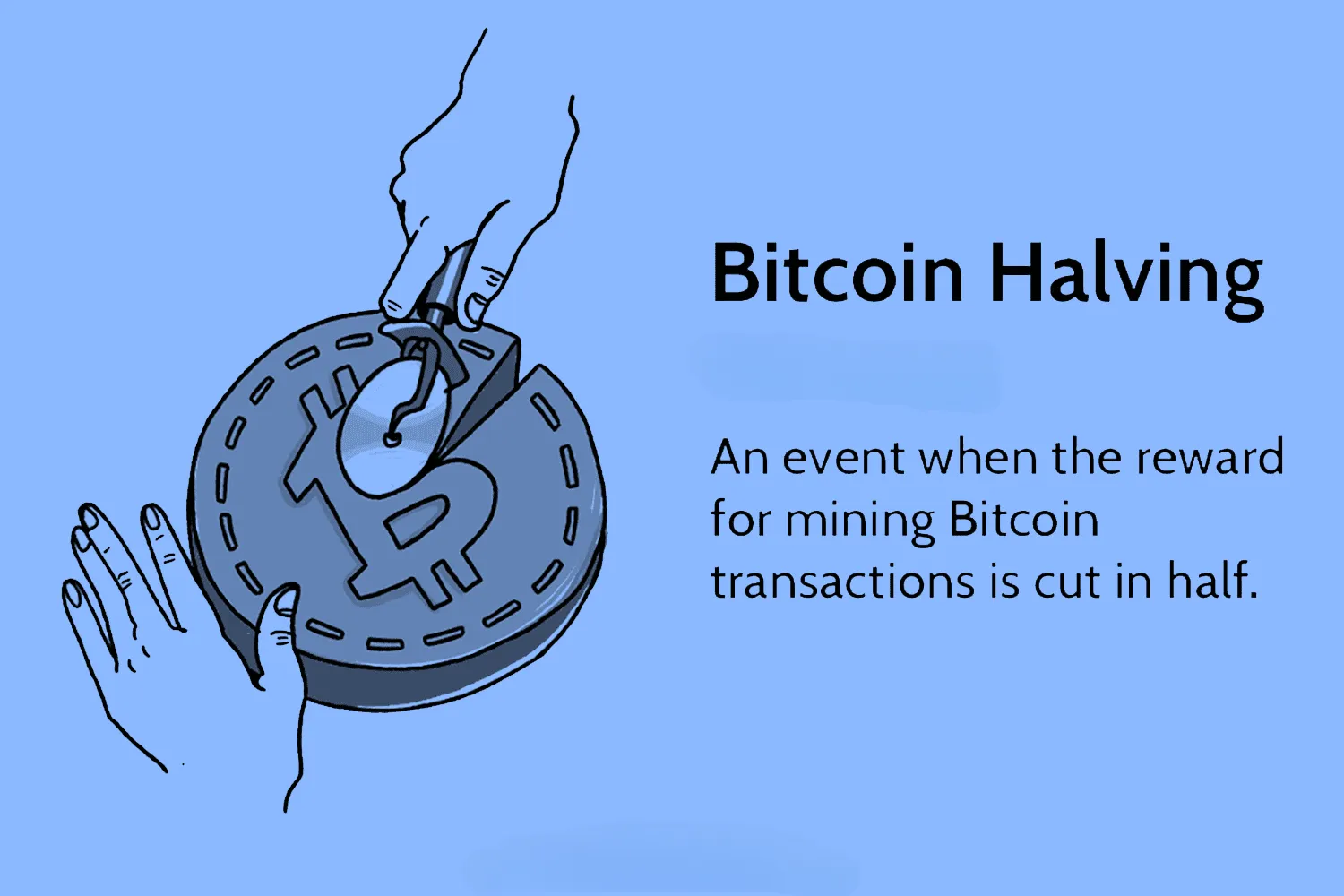
Bitcoins (BTC) halving - which is often seen as a bullish catalyst for the price - may not be as positive as the market thinks, thanks to the approval of spot exchange-traded funds (ETF).  Halving, which occurs every four years, cuts bitcoins supply growth by half, historically causing upward pressure on the price of the largest digital asset. The previous halving cycles pushed bitcoin to new highs, and this time, strong demand from the spot ETF may add even more fuel to the rally.  “If we look at demand generally since the ETFs have launched, it has created tremendous supply shock already,” said Brian Dixon, CEO of investment firm Off the Chain Capital. “Once the halving occurs, and that supply is further reduced, its only logical to think that the price will appreciate.”  On the surface, that may be the case as the demand from the funds has been significantly more than the 900 new BTC that are mined daily. And when that supply gets cut in half, it might create an even bigger pull on the prices.  However, it might not play out the same way this time.  The price of bitcoin had rallied 46% since Jan. 11, when the spot ETFs started trading

2024-04-07Deep Dive

Terraform Labs was ‘built on lies’ — SEC at trial

As the trial between Terraform Labs and the United States Securities and Exchange Commission (SEC) approaches the finish line, attorneys alleged the crypto firm made several false claims regarding the platform to investors.  According to an April 5 Reuters report, SEC lawyers said in U.S. District Court for the Southern District of New York that Terraform‘s story was “built on lies,” which included the stability of algorithmic stablecoin TerraUSD (UST) and an integration with a South Korean payment app. Terraform attorney Louis Pellegrino reportedly claimed co-founder Do Kwon had been truthful in public statements, and the SEC’s case relied on information taken out of context.  The civil trial with the SEC came more than a year after the commission filed a lawsuit against Terraform in February 2023. The regulator alleged at the time that the platform and Kwon “orchestrat[ed] a multi-billion dollar crypto asset securities fraud.”  During the trial, SEC lawyers compared Terra to a “house of cards” that collapsed for investors in 2022. The failure of Terra contributed to a major crypto market downturn that engulfed FTX, BlockFi, Celsius and others forced to file for bankruptcy.  The trial has been moving forward without Kwon attending in person. The Terraform co-founder remains in Montenegro

2024-04-07Deep Dive

Ethena: A Tool to Maximize Investor Returns or a "Black Swan" Generator?

Ethena drew inspiration from BitMEXs founder, Arthur Hayes. In his “Dust on Crust” piece, he mentioned the idea of creating a stablecoin backed by an equal amount of BTC spot longs and futures shorts. Ethena subsequently turned Arthurs concept into reality but opted for ETH as the primary asset target for both spot and futures positions. In other words, the collateral assets for USDe consist of an equal amount of ETH spot longs and ETH futures shorts.  In the crypto industry, stablecoins are considered one of the most crucial tools, with most trades being priced in stablecoins. For crypto users, USDe offers dual value. Firstly, the foundational value that any crypto stablecoin asset possesses — the ability to reduce reliance on traditional fiat banking systems. Secondly, the scalability of capturing profits by leveraging derivatives to increase capital efficiency.  Following the collapse of algorithmic stablecoin UST, there are varying opinions within the market and among industry experts regarding Ethena. Ethena has garnered support from multiple institutions and investors, including Dragonfly, OKX Ventures, Binance Labs, GSR, and Arthur Hayes, among others. However, many experts hold opposing views, believing that Ethena has not been market-tested and carries foreseeable risks. Despite differing opinions, USDe has now

2024-04-07Deep Dive

Degen's Market Cap Exceeds 1.5 Billion, Reviewing the Rise of Degen

Recently, the token $Degen on the Base chain has become extremely popular, with its market cap surpassing 1.5 billion US dollars. So, how did $Degen develop into a hot project with a market cap exceeding 1.5 billion US dollars?  After the Degen channel was launched on Farcaster in January 2024, it allowed users to reward high-quality content creators with $Degen. So far, there are already over 83,000 holders, and the number is still growing rapidly. This article analyzes the situation from four perspectives.Innovative Token Distribution Rules  Since January this year, $Degen has rapidly gained popularity in the Farcaster community. Community members reward their favorite high-quality content by commenting +DEGEN. Degen rewards users daily based on their activity and engagement on Farcaster. The airdrop quota is calculated based on the total rewards received from others each season, so users need to post high-quality content on Farcaster to earn rewards. Many active users have even reached the daily reward cap of several thousand dollars.Capital Support  In February, Degen announced the completion of a seed round financing of 490.5 ETH (approximately 14.7 million US dollars), led by 1confirmation with participation from Farcaster OG and other institutions. These funds will be used to develop the Degen ecosystem

2024-04-03Deep Dive

MEME Trend is Sweeping In, Can the ERC-50 Standard Ensure the Safety of Participants' Funds?

Meme is a unit that carries cultural ideas and symbols, continually spreading and proliferating in peoples consciousness. Like genes, memes vary in their ability to propagate; those that resonate with people endure, while those with less influence are quickly forgotten.  The meme token that first gained widespread recognition is likely Dogecoin, the dog-themed coin that Elon Musk proclaimed would be used as a payment method for Tesla, marking the beginning of the meme token craze.  The emergence of meme coins allows cultural ideas, symbols, and their propagation to be traded and speculated upon. Their value is based on the relevance of the meme and their ability to capture attention and consensus.MEME Coin Craze on the Solana  In this round of the market, multiple meme coins on the Solana blockchain have seen significant surges. Various meme coins have garnered attention from meme enthusiasts and investors due to their vision, brand image, and marketing strategies.  For instance, the founder of BOME is the enigmatic crypto artist Darkfarms1. He has a vision to create an immortal memecoin. With his passion for memes and innovative perspective, he is determined to create an unprecedented memecoin—a type that can permanently store meme content on the blockchain, fundamentally changing the way

2024-04-02Deep Dive

Tornado Cash Dev Roman Storm Moves to Dismiss Indictment Over Crypto-Laundering Allegations

Building Tornado Cash, a tool that can be used to obscure the origin and destination of cryptocurrency transfers, is not the same as laundering money, said a motion to dismiss the criminal indictment against developer Roman Storm.  Storm and fellow developer Roman Semenov were indicted last summer on charges of conspiring to commit money laundering, conspiring to operate an unlicensed money transmitter and conspiring to violate the International Emergency Economic Powers Act (in other word, to violate U.S. sanctions). Storm was arrested and released on bail. The U.S. Department of Justice, alleged that Tornado Cash facilitated the laundering of over $1 billion by groups like North Koreas Lazarus. Tornado Cash has been sanctioned by the U.S. Treasury Department multiple times now.  “Storm is a developer, and his only agreement, together with the members of his U.S-based company, was to build software solutions to provide financial privacy to legitimate cryptocurrency users,” Friday nights filing in the Southern District of New York said. “This is not a crime.”  The motion defines Tornado Cash, describing it as a “set of non-custodial smart contracts in which users maintain complete ownership and control over their assets without the need to rely on any service provider or other intermediary,”

2024-04-01Deep Dive

Bitcoin Runes Launch at the Halving: Here's Everything You Need to Know

Bitcoin is front and center again, and orange coin lovers everywhere have plenty to be excited about: new all-time high prices, the upcoming halving, rising demand for Ordinals—and soon, something totally new called Runes.  And while Runes won‘t hit Bitcoin until the halving—currently set for April 20 as of this writing—when the supply of newly minted BTC is once again cut in half by slashing miner rewards, the project is already getting a lot of hype and attention. Here’s what you need to know.What are Runes?  Runes is a new protocol from the mind behind Ordinals, Casey Rodarmor. With Ordinals, the Bitcoin developer made it possible to create NFT-like “inscriptions” on the Bitcoin network—and this, in turn, made it possible to trade jpegs for magic internet money right on the grandaddy chain.  Rodarmor, in an interview with TechCrunch, described his Ordinals “theory” as a “lens that you can view the Bitcoin blockchain through, and when you view it through that lens, these trackable satoshis pop into view like Pokémon in the tall grass.” So, in this sense, Runes similarly represent a new lens through which to view Bitcoin—but this time, with shitcoins.  The Runes protocol picks up where BRC-20s left off. BRC-20 is a

2024-04-01Deep Dive
1
...
2830
...
742