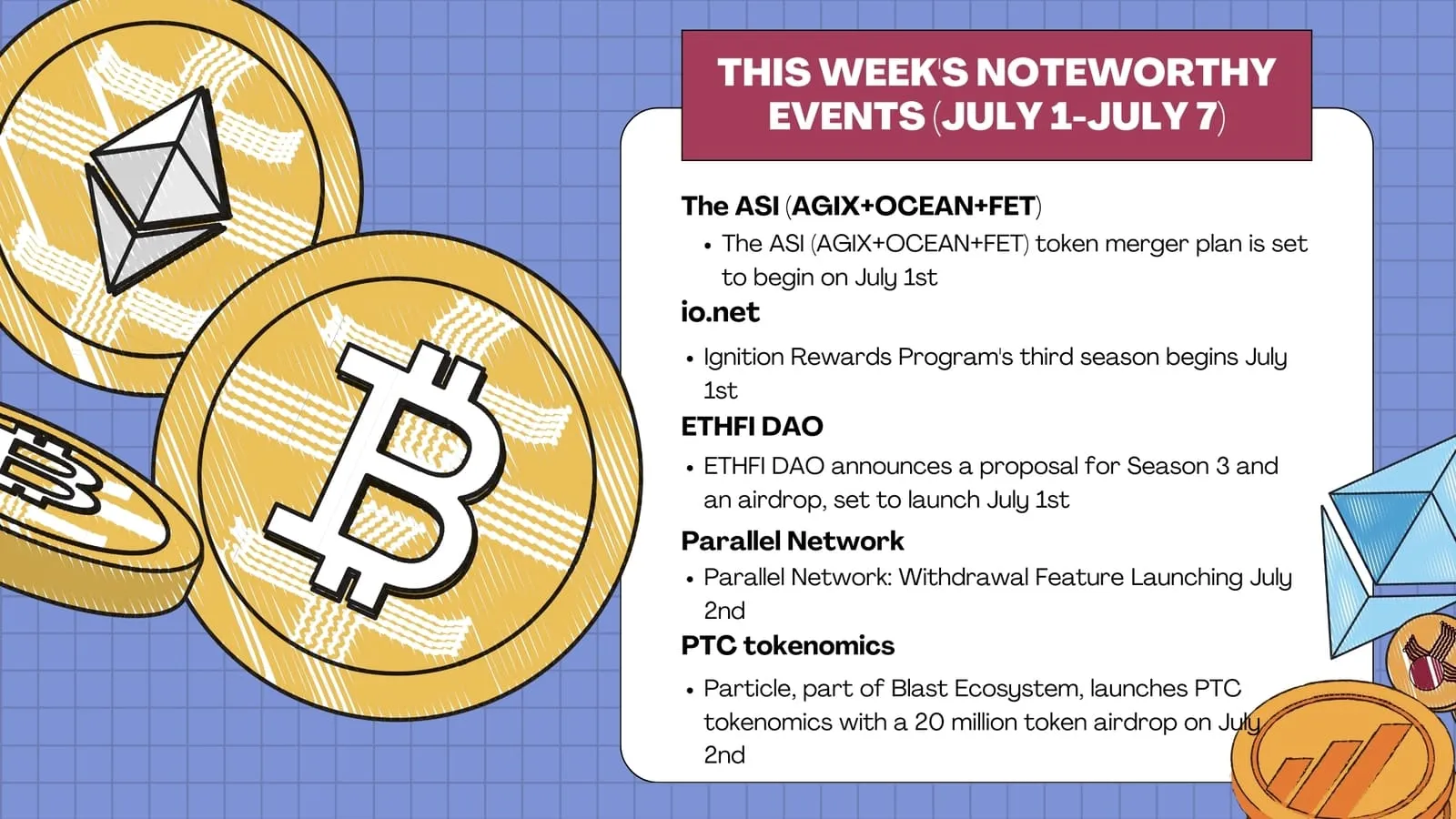
This Week's Noteworthy Events(July 15, 2024-July 21, 2024)
Ethereum Spot ETF May Launch This Week Several prominent individuals believe that the Ethereum spot ETF could launch this week. Bloomberg ETF analyst Eric Balchunas predicts that the U.S. SEC may approve the spot Ethereum ETF on July 18. Nate Geraci, president of The ETF Store, posted on X: “I would be shocked if a spot Ethereum ETF does not begin trading within the next two weeks. It could launch as early as late next week, but more likely the week of July 15.” Singapore crypto investment firm QCP Capital expects the Ethereum spot ETF to start trading around July 15.DOGS Announces Donation of Raised Telegram Stars to Charity, Event Ends on July 15 The TON ecosystem meme project DOGS announced on its official channel that the event for purchasing DOGS points using Telegram Stars will end on July 15, and all proceeds from the Telegram Stars will be donated to charity. The specific charity will be chosen through community voting. Previously, it was reported that the DOGS mini-program launched a new feature allowing users to purchase DOGS points with Telegram Stars, with 1 Telegram Star buying 1 DOGS point.South Korean Crypto Exchange GDAC to Terminate Services on July 16 South Korean crypto exchange GDAC announced that