






Negotiators for the two political parties had hashed out more than 600 pages of legislative compromise, but a few final sections of the bill — such as the ethics provisions meant to curtail senior government officials from maintaining crypto business ties — turned out to feature insurmountable rifts. And the closer the process dragged toward the elections, the more likely it was that political pressures would get in the way of a bipartisan deal.
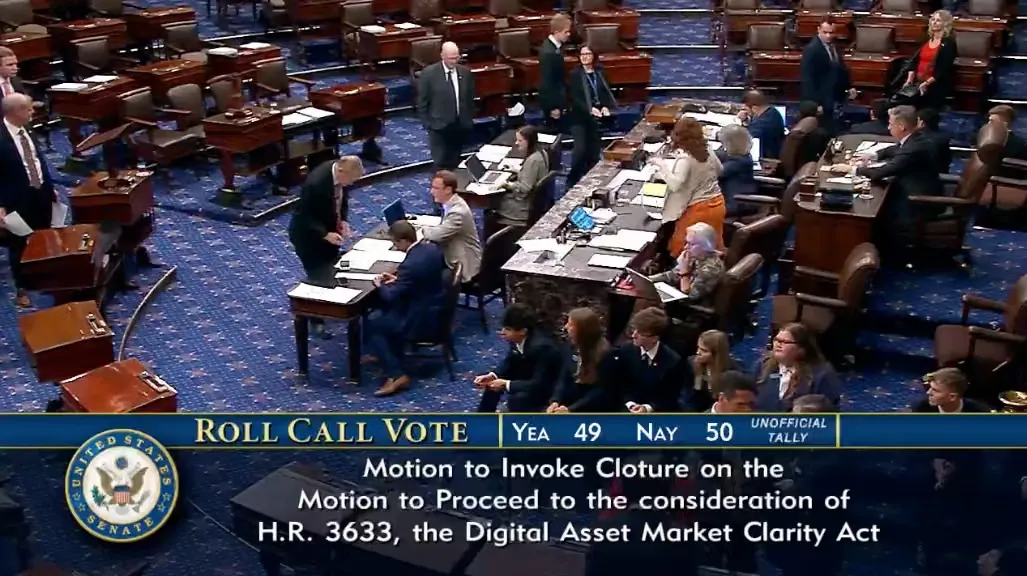
The Senate vote on the Clarity Act failed to win the 60 votes it needed. (U.S. Senate)
Leading Republican negotiator Senator Cynthia Lummis made the final pitch before the vote, but she failed to convince enough colleagues to join her.
“Do not let this day be the day we handed our future to someone else because we were too afraid to finish what we started,” she said on the Senate floor. “Let's vote yes. Let's not only join the 21st Century economy. Let's not only join the digital age. Let's lead it. Let's define it.”
So what now?
The industry will turn to the U.S. market regulators who are already at work trying to impose rules on the sector.
The Securities and Exchange Commission and the Commodity Futures Trading Commission have started moving forward on initiatives the industry hopes will provide enough regulatory stability and certainty that it will help coax more investors and businesses off the sidelines.