Visa Crypto Labs launches new wallet that lets AI work and earn for you

Visa Crypto Labs has introduced a new version of Visa CLI that allows eligible U.S. cardholders to verify AI agents and earn dollar-backed stablecoins when those agents complete paid work.  Cuy Sheffield, head of Visa Crypto Labs, announced the experimental wallet on November 22, explaining that users can connect an agent, verify its owner using a Visa card and find paid tasks through marketplaces such as Taskmarket. Payments are settled in Open USD (OUSD) on the Tempo blockchain, while the owner retains control over the wallet.  At Visa Crypto Labs, we believe ordinary people should be able to earn income from the AI economy.  Today were launching a new version of Visa CLI, an agent wallet that lets people verify their agent with a Visa card, then work with it to earn OUSD by completing creative tasks.… https://t.co/g2XzbsMjJU  — Cuy Sheffield (@cuysheffield) November 22, 2026  Visa CLI uses card verification to identify AI agents  The system starts with a Visa card issued by a U.S. bank. After the owner enters their card details, the issuing bank confirms the request through a one-time code. Visa then registers the agents public signing key in its Agent Directory, allowing participating businesses to check whether requests came from that registered
3 دن پہلےانڈسٹری

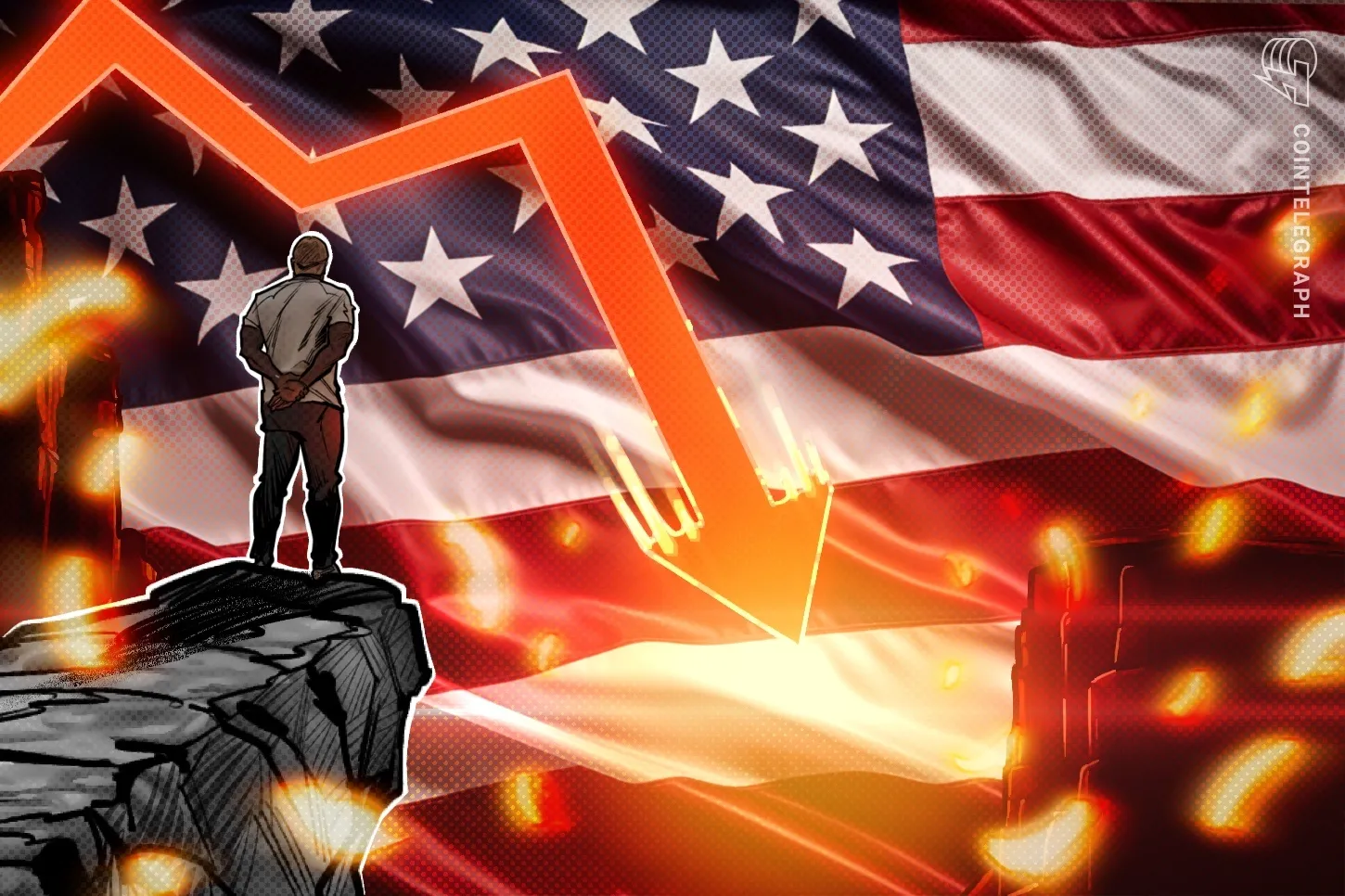
Green Week Ahead? Nvidia Futures Rip 6%, Nasdaq and S&P 500 Futures Snap Back 2%

Nvidia (NVDA) futures jumped 5.71% to $132.70 on Monday as Nasdaq 100 and S&P 500 futures gained more than 2%. The rebound follows the Nasdaq 100s worst week since March 2020.  The S&P 500 lost ground for seven straight sessions and entered a correction on Friday. However, Nvidia stock remains down nearly 50% since early October, leaving its holders deep in losses.  Sponsored  Sponsored  Is the Nvidia Futures Bounce a Relief Rally or a Reset?  Nvidia shares fell 14% on Friday and more than 26% on the week.  Nvidias perpetual contract on Binance has no expiry date. Still, it now trades only about 6% above its 52-week low of 124.99.  Futures could point to a short-term reversal. Source: Investing.com  US media reports cited by AFP say securities regulators are examining Nvidias accounting. Chief Executive Jensen Huang resigned earlier this month.  The Securities and Exchange Commission (SEC) has not publicly named the issues under review. No wrongdoing has been established.  Sponsored  Sponsored  Can Dip Buyers Hold the Line This Week?  “A bounce was always likely after seven straight days of losses, and the move in futures reflects how oversold tech had become.”  Josh Gilbert, lead analyst for Asia Pacific at eToro Ltd., said in a Bloomberg report.  Nasdaq 100 futures rose 2.71% but still trail their

3 دن پہلےانڈسٹری

Jim Cramer Says AI Selloff Is Not 2000 as S&P 500 Enters Correction, Not Crash

CNBC host Jim Cramer says the artificial intelligence (AI) selloff is not a repeat of 2000, even as the S&P 500 and Dow Jones Industrial Average closed at least 10% below record highs on Friday.  Nvidia (NVDA) fell about 14% despite strong earnings, and the Nasdaq Composite erased its 2026 gains. Cramers crash framework may show whether holders face a buyable drop or a deeper one.  Sponsored  Sponsored  Is This a Mechanical Drop or a Systemic One?  In a recent Mad Money special, Cramer sorted crashes by cause.  Mechanical drops, like 1987 and 2010, stem from broken trading systems in a healthy economy. In contrast, systemic ones, like 2007 to 2009, stem from a cracking economy.  Fox Business tied Fridays rout to AI valuations and spending concerns. The S&P 500 fell 3.7% for a seventh straight loss.  A correction means a drop of at least 10% from a record high. The S&P 500 sits almost 12% below its October peak, according to ABC, short of the 20% bear-market line.  In this analysis, that mix looks closer to Cramers sector-driven selloffs than to his systemic ones. However, the VIX, a gauge of expected volatility, closed at its highest level since April 2025.  Rising layoffs, major defaults, or bank stress would change

3 دن پہلےانڈسٹری

Coinbase CEO Brian Armstrong says third-party vendors pose major security risks

Coinbase CEO Brian Armstrong has identified third-party vendors as one of the exchanges biggest cybersecurity risks, revealing that the company is reducing its dependence on outside service providers and developing more software internally.  In a Nov. 18 interview with David Senra on the Founders podcast, Armstrong explained that Coinbase has invested heavily in protecting customer assets and securing its infrastructure, but external vendors remain an area where the company has less direct control.  “We realized at a certain point one of our biggest risks was actually third party vendors because we have less control over that,” Armstrong said.  The exchange requires its vendors to meet strict security standards and undergo audits. Armstrong said Coinbase is now looking to replace some externally supplied software with internally developed alternatives, particularly where doing so could reduce costs and improve security.  He did not identify the vendors being considered for replacement or provide a timeline for the changes.  Coinbase relies on cold storage and AI security reviews  Armstrong explained that Coinbase keeps 99% of the cryptocurrency it holds entirely offline, with the assets disconnected from the internet and distributed across different locations worldwide.  The arrangement is designed to protect the exchanges holdings against cyberattacks and physical disasters, including extreme events that

3 دن پہلےانڈسٹری

Strategy's Bitcoin Stack Is 22% Underwater. Peter Schiff Says It's About to Blow Up'

Peter Schiff says Strategy is about to blow up. The largest corporate Bitcoin (BTC) holder says it has survived worse.  Both claims now face a real test. Bitcoin trades below the average price Strategy paid for its coins.  Sponsored  Sponsored  How Far Underwater Is Strategys Bitcoin Stack?  Bitcoins price stood at $59,045 on Sunday, according to BeInCrypto Markets data. That is about 28% below its level a month ago. Although it has recovered to $61,200 on Monday.  Bitcoin (BTC) Monthly Performance. Source: BeInCrypto Markets  Strategy bought its coins at an average cost of roughly $75,400, per SaylorTracker. As a result, Strategys Bitcoin holdings sit about 22% below that level.  MSTR stock has dropped even faster. It closed Friday at $77.80, nearly 47% below its price a month earlier.  MicroStrategy (MSTR) Stock Performance. Source: Google Finance  The preferred stock Strategy sells to fund its Bitcoin purchases has also come under pressure.  Follow us on X to get the latest news as it happens  Sponsored  Sponsored  What Does the STRC Discount Cost Strategy?  STRC, or Stretch, pays a variable dividend that Strategy currently sets at 12% a year. The company aims to keep it trading near its $100 stated value.  STRC closed at $93.60 on Friday, down from near $100 in mid-November. At that price, its effective yield

3 دن پہلےانڈسٹری

Trump renews call for Nvidia to rehire Jensen Huang as CEO

US President Donald Trump has again urged Nvidias board to rehire co-founder Jensen Huang, days after the chipmaker said it did not intend to reinstate him.  “I hope the Board of Nvidia rehires Jensen Huang. It would be the best thing for the Company, and also, for the U.S.A.,” Trump wrote in a Monday post on Truth Social.  Trump had already called for Huangs return on Friday, telling reporters after his trip to Asia that he wanted the former Nvidia chief to “make a big apology and go back.”  Trump‘s remarks come after US Treasury Scott Bessent also seemingly softened his earlier calls for the company’s board to implement a “dramatic shake-up” of the company and to look outside for new leadership.  Asked Sunday if Trumps recent support for Huang contradicted his own call, Bessent declined to say whether Huang should return.  “I think we have to see where the buck stops,” he said, referring to any potential non-compliance with US export controls.  Polymarket shows traders have placed a 37% chance that Huang will rejoin Nvidia by Dec. 31, 2027.

3 دن پہلےانڈسٹری

BTIG's Krinsky Says S&P 500 Bottom Unlikely While Apple Holds Near Highs

Jonathan Krinsky, chief market technician at brokerage BTIG, says Apples roughly 3% drawdown argues against an S&P 500 bottom. Past final lows in S&P 500 selloffs of 8% or more never came with Apple down under about 10%.  Still, Krinsky said the index was basically at his 7,000 downside target, with oversold signals pointing to a bounce. Traders buying that rebound could be early, since he sees more downside over the medium term.  Why Would an S&P 500 Bottom Require Apple to Fall?  Historically, Apples median decline at those lows was 23% over the past decade. It was down about 3% during the interview.  Sponsored  Sponsored  Meanwhile, Apples relative strength has stood out while chip and AI stocks sold off.  CNBCs host countered that Apple now acts like a steadier, safer company than in past cycles. However, Krinsky said similar exceptions were argued for semiconductors in June.  What Else Must Break Before a Lasting Low Forms?  Market breadth adds a second warning after the S&P 500 broke below 7,000 last week. About half of S&P 500 stocks still trade above their 50-day moving average, Krinsky said. Lasting lows have required that share to drop below 40%, ideally under 20%.  In contrast, short-term gauges flash fear. The Cboe Volatility Index (VIX)

3 دن پہلےانڈسٹری

Billionaire Bill Ackman warns Fed will make a rate ‘mistake’ in December

Billionaire investor Bill Ackman warned Sunday that the Federal Reserve risks pushing the US and the world into recession if it keeps raising interest rates to try to bring inflation back to 2%, arguing that financial conditions have already tightened “massively.”  In an X post, the hedge fund manager argued that the required investment in global military spending, tariffs, and massive investment in AI infrastructure and energy means that 3% inflation should be a more realistic target for the Fed.  “The Fed will put the US and world in recession if it continues to raise rates in a failed attempt to drive inflation to 2%,” he said.  Ackman‘s comments came a day after US Treasury Secretary Scott Bessent cited hawkish remarks from Fed officials as one factor behind last week’s stock market sell-off.  “Many people believe that they may be making a policy mistake if they overtighten,” Bessent told CBS on Sunday.  The warning comes as Federal Reserve officials remain divided on rate hikes.  In October, the Federal Reserve held its benchmark rate at 3.75% to 4% in a 10–2 vote in October, with both dissenters favoring a quarter-point hike.  One of the dissenters was Federal Reserve Governor Lisa Cook, who on Friday argued that financial conditions

3 دن پہلےانڈسٹری

Ed Yardeni Calls It a Correction: What Makes a Bear Market?

Ed Yardeni, president of Yardeni Research, calls the S&P 500s 11.6% slide a correction, not a bear market. However, the call holds only if no recession arrives.  The S&P 500 closed last Friday at 6,910.39, which is 11.6% below its Oct. 6 record of 7,818.93. Holders of S&P 500 index funds would face a bear market near 6,255, roughly 9.5% below that close.  Sponsored  Sponsored  Does a Recession Decide the Bear Market Label?  Yardeni told CNBCs Power Lunch that the panic looked overdone and that buyers would step in.  “Without a recession, I think this is a correction and not a bear market.”  Ed Yardeni, President, Yardeni Research, via CNBC  Formal definitions, however, rest on size, not economics. Morningstar describes a bear market as a drop of 20% or more from a recent high. A correction falls between 10% and 20%.  Sponsored  Sponsored  Meanwhile, Yardeni has cut his year-end S&P 500 target twice, Bloomberg reported on Nov. 22. The latest target is 7,500, down from 7,900 and an earlier 8,400.  He still expects 8,500 to 9,000 by the end of 2027.  Can AI Spending Still Carry the Market?  David Lefkowitz, head of equities for the Americas at UBS Global Wealth Management, sees artificial intelligence (AI) spending hitting limits. Shortages of chips, land, data centers,

3 دن پہلےانڈسٹری

Bitcoin Crashes to $17,000 This Weekend: Inside the Bizarre Flash Crash Mystery

Over the weekend, crypto Twitter erupted as screenshots showed Bitcoin trading near $16,900. The price, however, appeared only on a single Kraken pair, not across the market.  In reality, a liquidity vacuum in one Canadian-dollar order book caused the shocking overnight plunge.  Sponsored  Sponsored  What Caused Bitcoins Flash Crash on Kraken?  A flash crash is a sudden, extreme price drop that quickly reverses. It usually happens when thin order books meet heavy selling.  Meanwhile, Bitcoin held between $55,000 and $60,000 on every major exchange and USD pair. Only the BTC/CAD order book collapsed, as few buyers stepped in to absorb the selling.  Thin weekend liquidity met a wave of aggressive market sells.  As a result, the pair fell to C$24,250 (about $16,900), nearly 70% below the real market price.  Sponsored  Sponsored  “Its their USDCAD pair that depegged, and all CAD pairs via arb accordingly,” Adam Back said.  BTC/CAD Price Performance. Source: TradingView  The dislocation lasted almost 14 hours. It also spilled into other CAD pairs, including ETH, SOL, and USD/CAD itself.  Did Bitcoin Really Crash to $17,000?  No. According to Kraken, heavy selling pressure hit its CAD pairs starting around 20:00 UTC on Friday.  “Our platform processed every order correctly,” the exchange said. It added that its security teams found “no sign of a breach or

3 دن پہلےانڈسٹری
1
...
1416
...
1000