AI Boom Could Leave Global Markets Exposed When Spending Slows

AI spending surge raises fears over sustainability and future profitability concerns.Global markets face rising risks if AI investment growth suddenly slows worldwide.Defensive sectors could outperform during an AI market reversal period ahead globally.  The artificial intelligence rally continues to fuel markets, corporate spending, and investor optimism worldwide. Technology giants still pour billions into data centers, chips, and software infrastructure. However, some analysts now warn that investors focus too heavily on how long the boom will last.  Instead, they should prepare for what follows when spending growth eventually cools. History shows that every major technology surge eventually loses momentum, and the economic consequences often spread far beyond Silicon Valley.  Technology investment reached nearly $1.5 trillion last year. That figure stands far above the inflation-adjusted peak during the dotcom era. Moreover, companies continue expanding their AI infrastructure despite rising concerns over profitability. Several analysts increasingly question whether current revenue growth can justify such massive capital expenditures.  Why a Slowdown Could Shake Global Markets  Previous technology booms offer important lessons for todays market environment. The cybernetics expansion faded during the early 1960s.  Similarly, the late-1960s growth cycle eventually lost steam. More significantly, the dotcom collapse triggered a deep decline in technology investment after 2000.  Even a modest retreat could create

05-30

Beldex Launches BNS Marketplace For Human-Readable Crypto Identities 

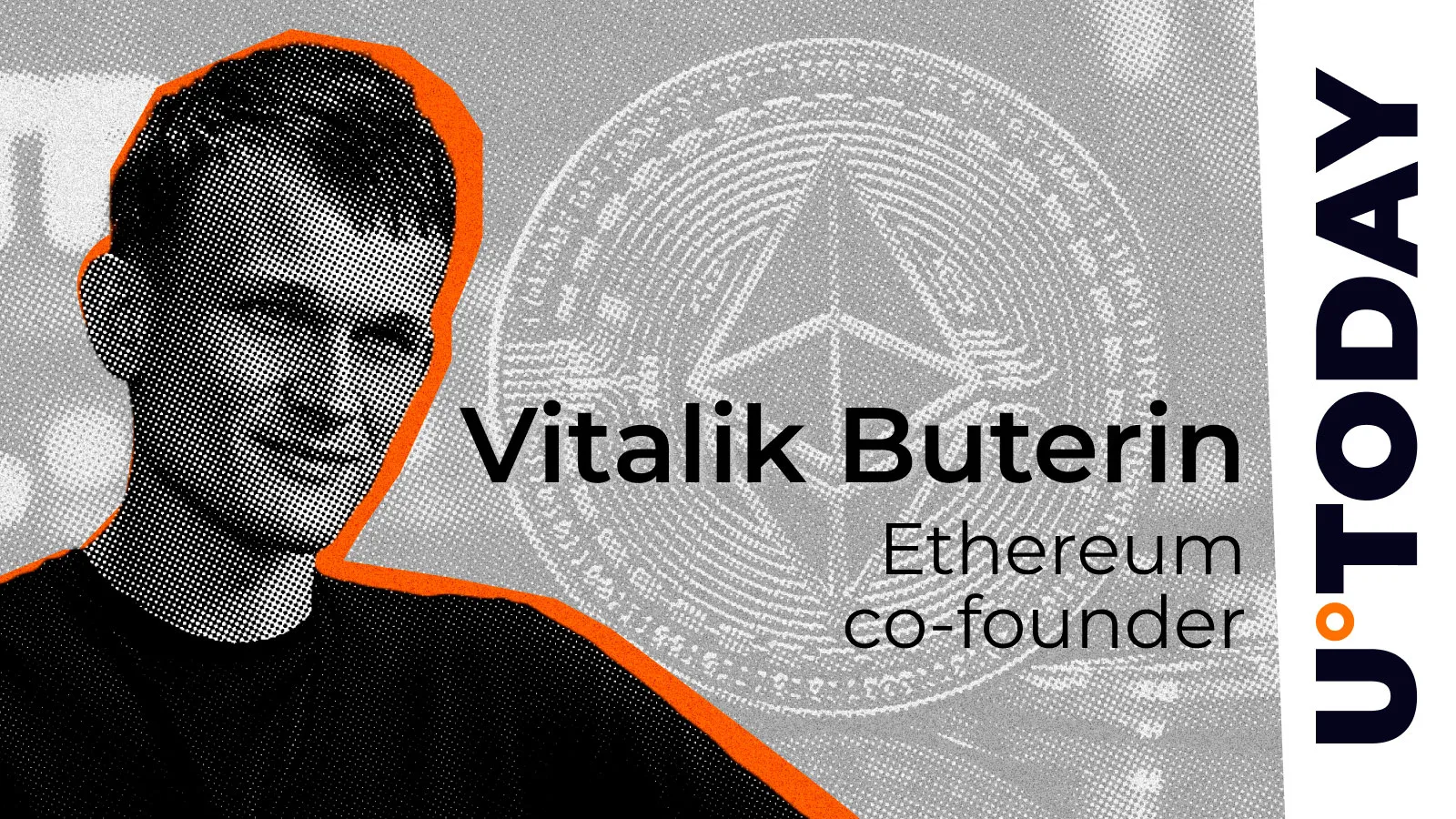
Beldex launches BNS Marketplace for peer-to-peer trading of blockchain-based .bdx identities.More than 5,500 BNS names have been sold since registrations opened in February 2024.BNS names replace complex wallet addresses with human-readable identities across the Beldex ecosystem.  BNS Marketplace:-  Beldex Launches BNS MarketplaceSo what exactly is the BNS Marketplace?  Beldex said BNS registrations have been available since February 2024. The registration fees ranges from 650 BDX for one year to 4,000 BDX for a 10-year registration period. According to the project, more than 5,500 BNS names have already been sold.  BNS Marketplace  While the company has not provided a specific valuation target for BNS names on the marketplace, it expects names to trade above their original registration costs. This is particularly in the case of premium domains. Similar to traditional internet domains, memorable and highly sought-after names could command higher prices as adoption grows.  The launch comes as privacy is increasingly becoming a focus area across the crypto industry. Recently, Ethereum co-founder Vitalik Buterin outlined a roadmap to strengthen privacy features on the Ethereum network  Trading Decentralised Ownership  Other Articles…  Frequently Asked Questions  The BNS Marketplace is a platform that allows users to buy, sell, and trade BNS names,  BNS names are human-readable .bdx identities that can be linked to wallet addresses,

05-30

AI Boom Could Leave Global Markets Exposed When Spending Slows

AI spending surge raises fears over sustainability and future profitability concerns.Global markets face rising risks if AI investment growth suddenly slows worldwide.Defensive sectors could outperform during an AI market reversal period ahead globally.  The artificial intelligence rally continues to fuel markets, corporate spending, and investor optimism worldwide. Technology giants still pour billions into data centers, chips, and software infrastructure. However, some analysts now warn that investors focus too heavily on how long the boom will last.  Instead, they should prepare for what follows when spending growth eventually cools. History shows that every major technology surge eventually loses momentum, and the economic consequences often spread far beyond Silicon Valley.  Technology investment reached nearly $1.5 trillion last year. That figure stands far above the inflation-adjusted peak during the dotcom era. Moreover, companies continue expanding their AI infrastructure despite rising concerns over profitability. Several analysts increasingly question whether current revenue growth can justify such massive capital expenditures.  Why a Slowdown Could Shake Global Markets  Previous technology booms offer important lessons for todays market environment. The cybernetics expansion faded during the early 1960s.  Similarly, the late-1960s growth cycle eventually lost steam. More significantly, the dotcom collapse triggered a deep decline in technology investment after 2000.  Even a modest retreat could create

05-30

Spains National Police Dismantle Violent Crypto-Robbery Ring Linked to Tren de Aragua

Some of the individuals, already in police custody, were involved in similar thefts, where victims were tied, gagged, and held at gunpoint to force them to give up their and fiat money holdings, using continued violence as a tool to achieve these purposes.  The police report indicates that in one instance, as a victim resisted, a gunshot was fired, putting the victims life in jeopardy.  Agents indicated that the group first studied its targets, selecting only high-profile individuals who were put under surveillance and then coerced to meet in vacation apartments for different reasons.  The group is now facing membership in a criminal organization, violent robbery, unlawful detention, fraud, and crimes against public health charges. The imprisonment of three of its members has already been ordered.  Tren de Aragua, a criminal organization of Venezuelan origins, has been singled out for integrating cryptocurrency as part of its criminal tools, including crypto theft and crypto money laundering in its illicit activity portfolio.  The U.S. Department of State labeled Tren de Aragua as a Foreign Terrorist Organization (FTO) and Specially Designated Global Terrorist (SDGT) in February 2025. In 2024, it was sanctioned by the Office of Foreign Assets Control (OFAC) for laundering funds through cryptocurrency.  Also, in July, Chilean

05-30

Gen Z moviegoing: Younger viewers are reviving the box office growth

Hollywood can breathe a sigh of relief: Generation Z is not only going to the movies, its driving box office growth.  During the pandemic, when theaters shut down and streaming became a dominant force in the media landscape, fears rose that this young cohort would shun the big screen as they matured into more engaged consumers.  However, this generation, which ranges from around 14 to 29 years old, is one of the most active moviegoing demographics and attends more films per year than some older generations, according to data from Fandango.  In 2025, members of Gen Z saw an average of seven movies in theaters — matching average viewership among millennials — while members of Generation X and baby boomers saw around six movies on average, Fandango found.  “Gen Z is driving moviegoer trends today, and I think people are shocked,” said Jason Dorsey, president and co-founder of The Center for Generational Kinetics and co-author of “Zconomy.” “They‘re like, ’Oh, Gen Z doesn‘t want to leave their house.’ Thats not true. Gen Z absolutely wants to leave their house — probably more than you know.”  Gen Z accounted for nearly 40% of all movie audiences in North America in 2025, according to data from Comscore.  As

05-30

BlackRock And Strategy Send 7,459 Bitcoin To Coinbase Prime – Will Demand Hold Up?

Sebastians journey into the world of crypto began four years ago, driven by a fascination with the potential of blockchain technology to revolutionize financial systems. His initial exploration focused on understanding the intricacies of various crypto projects, particularly those focused on building innovative financial solutions. Through countless hours of research and learning, Sebastian developed a deep understanding of the underlying technologies, market dynamics, and potential applications of cryptocurrencies.  As his knowledge grew, Sebastian felt compelled to share his insights with others. He began actively contributing to online discussions on platforms like X and LinkedIn, focusing on fintech and crypto-related content. His goal was to expose valuable trends and insights to a wider audience, fostering a deeper understanding of the rapidly evolving crypto landscape. Sebastians contributions quickly gained recognition, and he became a trusted voice in the online crypto community.  To further enhance his expertise, Sebastian pursued a UC Berkeley Fintech: Frameworks, Applications, and Strategies certification. This rigorous program equipped him with valuable skills and knowledge regarding Financial Technology, bridging the gap between traditional finance (TradFi) and decentralized finance (DeFi). The certification deepened his understanding of the broader financial landscape and its intersection with blockchain technology.  Sebastians passion for finance and writing is evident

05-30

Ripple’s On-Demand Liquidity Service Pushes Cross-Border Payments Toward Real-Time Settlement

Ripple ODL settles cross-border transfers within seconds using XRP liquidity.ODL removes costly pre-funded accounts for banks handling global payments.XRP Ledger processes 1,500 transactions per second with minimal transfer fees.  Cross-border payments still frustrate businesses and consumers despite advances in digital finance. Traditional transfers often move through several intermediary banks before reaching the recipient. Consequently, the process increases delays and raises transaction costs. Ripple developed its On-Demand Liquidity service to solve these long-standing issues.  The system uses XRP as a bridge asset between currencies, allowing institutions to move funds within seconds instead of days. Moreover, the model removes the need for banks to maintain expensive foreign currency reserves across multiple countries.  How Ripples ODL Changes International Payments  Ripples On-Demand Liquidity, commonly called ODL, operates through RippleNet, the companys global payment network. RippleNet connects more than 300 financial institutions across over 55 countries. However, only ODL transactions actively use XRP during settlement.  Under the system, financial institutions convert local currency into XRP at the moment a transaction begins. The XRP then travels through the XRP Ledger almost instantly. Afterward, the receiving exchange converts the XRP into the destination currency. This process eliminates the traditional requirement for pre-funded overseas accounts.  Additionally, the XRP Ledger supports around 1,500 transactions per

05-30

Why Hedge Funds Are Eyeing Kalshi and Polymarket

What are the regulatory lines and compliance considerations?  Kalshis key differentiator is regulatory status. As a CFTC-regulated DCM, it operates under U.S. derivatives law, implements KYC/AML, sets position limits, and publishes a rulebook. That framework can simplify institutional onboarding, surveillance, and audit trails. However, listing scope is defined by what the CFTC permits for event contracts, and those boundaries can evolve.  Polymarket, by contrast, is a crypto-native venue that previously faced CFTC enforcement and subsequently restricted U.S. users. Access typically depends on the participants jurisdiction and internal policies. Compliance teams should assess local regulations, including derivatives, wagering, and securities rules, before transacting. Many institutions choose to limit on-chain prediction activity to non-U.S. affiliates where permissible.  Across both, policies should cover market manipulation, conflict-of-interest controls, and MNPI handling—especially when outcomes overlap with companies in the portfolio. Written supervisory procedures, trade surveillance, and communications archiving can help satisfy internal and external oversight.  Nothing here is legal advice. Institutions should obtain counsel and review official guidance from regulators such as the CFTC before engaging.  How do these markets settle—and can outcomes be gamed?  Settlement mechanics are as important as price. On Kalshi, settlements follow the exchanges rulebook and predefined data sources. If an event resolves to “Yes,” the contract

05-30

DOGE Price Prediction: $0.085 Target Within 10 Days as Bulls Retreat

Market Context: Why DOGE is Moving Now  Dogecoin remains trapped below the critical $0.10 psychological barrier, with price action revealing weakening buyer conviction despite modest daily gains. The meme coin trades in an increasingly tight range with minimal volatility, suggesting a major directional move approaches. Multiple failed attempts to break above this round number highlight the challenge bulls face at current levels.  The consolidation phase reflects broader crypto market hesitation, with Blockchain.news tracking institutional flows showing cautious positioning across risk assets. This compressed trading range typically precedes either explosive breakouts or sharp corrective moves – and technical evidence increasingly supports the latter scenario.  Indicator Alignment  Technical momentum shows clear deterioration across multiple timeframes. The RSI at 39.02 has shifted from bullish to neutral territory, signaling reduced buying pressure. The MACD configuration presents additional concerns, with the histogram flatlining at zero while both MACD lines converge in negative territory at -0.0014 – a setup that historically precedes renewed selling.  Dogecoins position at 0.18 within the Bollinger Bands indicates price is hugging the lower boundary, suggesting recent bounces lack institutional support. The moving average structure reinforces this weakness, with DOGE trading below both the 20-day and 200-day SMAs at $0.11, creating layered overhead resistance.  Whales & Analyst Targets  Derivatives

05-30

Ripple’s On-Demand Liquidity Service Pushes Cross-Border Payments Toward Real-Time Settlement

Ripple ODL settles cross-border transfers within seconds using XRP liquidity.ODL removes costly pre-funded accounts for banks handling global payments.XRP Ledger processes 1,500 transactions per second with minimal transfer fees.  Cross-border payments still frustrate businesses and consumers despite advances in digital finance. Traditional transfers often move through several intermediary banks before reaching the recipient. Consequently, the process increases delays and raises transaction costs. Ripple developed its On-Demand Liquidity service to solve these long-standing issues.  The system uses XRP as a bridge asset between currencies, allowing institutions to move funds within seconds instead of days. Moreover, the model removes the need for banks to maintain expensive foreign currency reserves across multiple countries.  How Ripples ODL Changes International Payments  Ripples On-Demand Liquidity, commonly called ODL, operates through RippleNet, the companys global payment network. RippleNet connects more than 300 financial institutions across over 55 countries. However, only ODL transactions actively use XRP during settlement.  Under the system, financial institutions convert local currency into XRP at the moment a transaction begins. The XRP then travels through the XRP Ledger almost instantly. Afterward, the receiving exchange converts the XRP into the destination currency. This process eliminates the traditional requirement for pre-funded overseas accounts.  Additionally, the XRP Ledger supports around 1,500 transactions per

05-30
1
...
232234
...
1000