Humanity Protocol repositions toward enterprise AI after $36 million hack, founder says

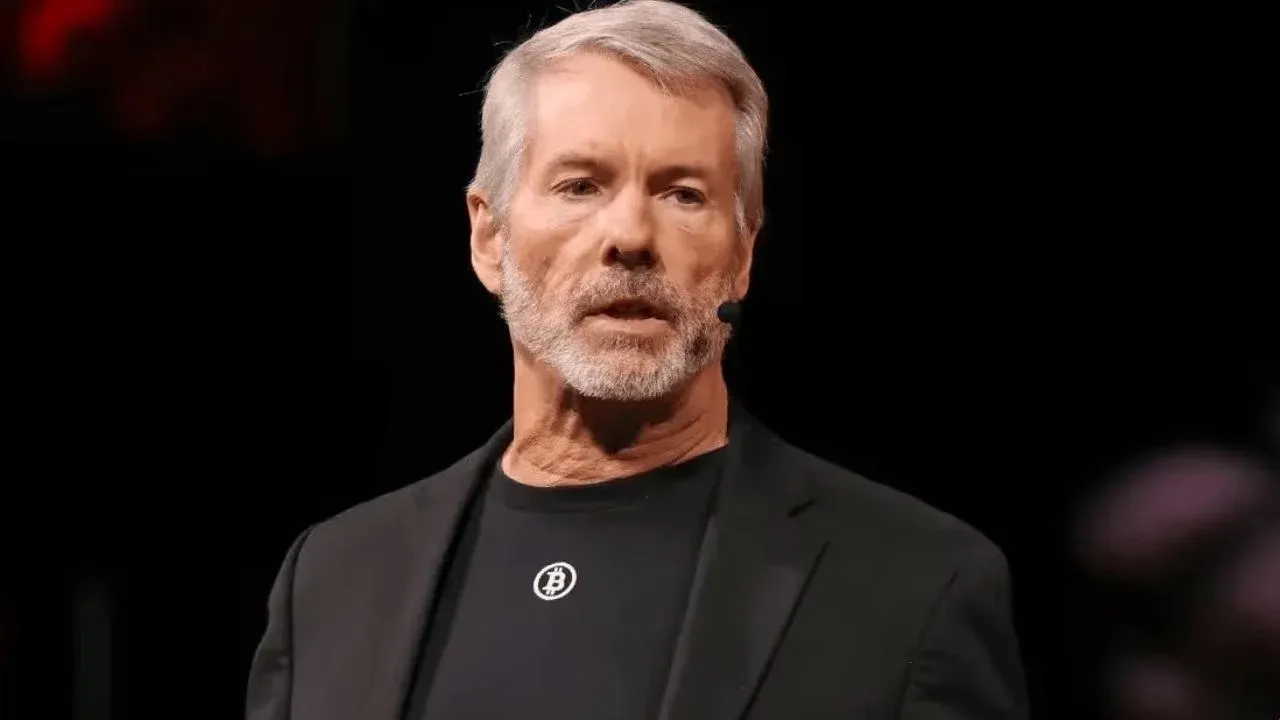
Quick TakeIn his first interview since the hack, Humanity Protocols Terence Kwok said the project is advancing with a month-long repositioning move toward enterprise AI products, stepping back from its identity-and-blockchain framing after a $36 million exploit.Kwok conceded the odds of recovering the stolen funds are low, pointing to Bybits struggle to claw back its own far larger $1.5 billion theft last year.  Humanity Protocol founder Terence Kwok said the project is repositioning toward enterprise AI products, moving away from its identity-and-blockchain roots weeks after a $36 million exploit drained its treasury and collapsed the H token.  Speaking on The Blocks daily show, The Starting Block, in his first interview since the June attack, Kwok said the team had spent the past six to nine months quietly rethinking its direction and that the hack accelerated a shift already underway.  How the breach unfolded  The exploit stemmed from a compromised developer laptop rather than a smart-contract flaw.  A phishing email reached several members of Kwoks team, and although no one clicked it, the attackers eventually gained access to private keys associated with a member of the Humanity Foundation.  At the time, estimates from onchain analysts gathered that wallets linked to the project were drained for more than

07-02انڈسٹری

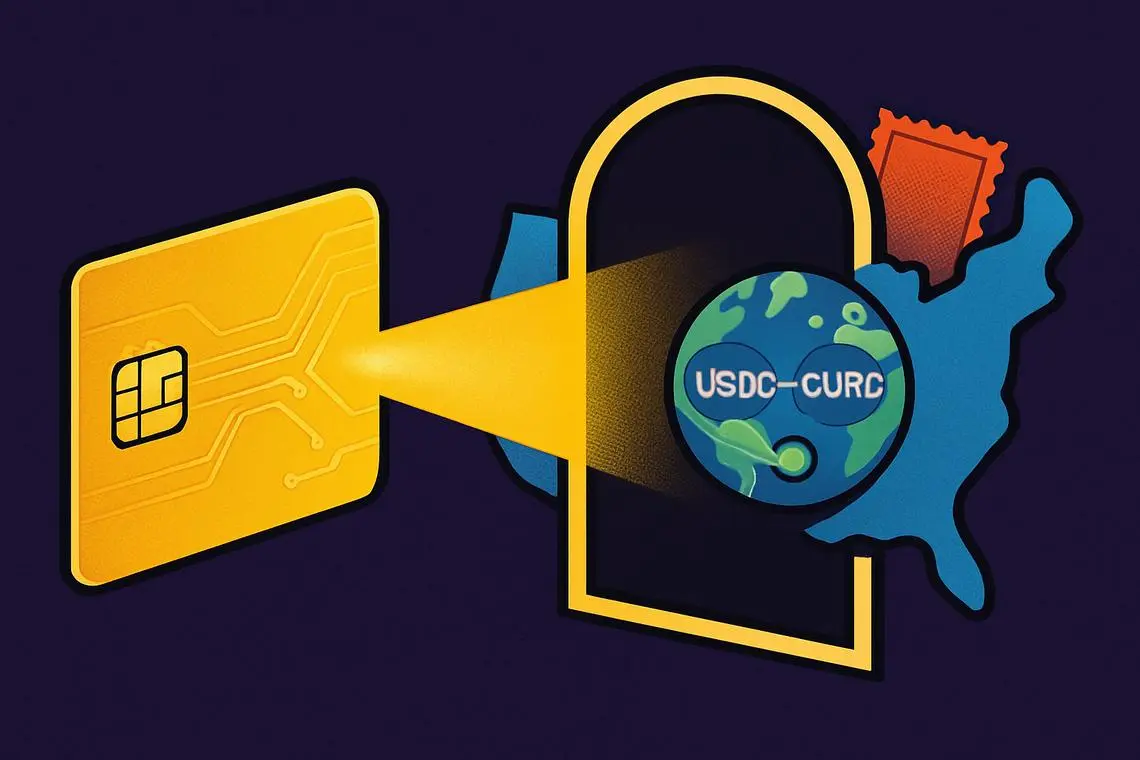
Standard Chartered partners with Circle to launch direct USDC minting

Standard Chartered has become the first globally systemically important bank to offer direct $USDC minting and redemption.   The bank announced Thursday it has partnered with Circle to allow institutional clients to mint and redeem $USDC, without needing direct Circle accounts.  Circle ???? Standard Chartered@StanChart has launched institutional $USDC minting and redemption through DIFC, becoming the first G-SIB to offer institutional access to $USDC through a regulated banking channel.  A major milestone for institutional stablecoin adoption.… pic.twitter.com/SufjFOqjyk  — Circle (@circle) July 2, 2026  The service launches first for Standard Chartereds clients in Dubai, and will expand to other regions “subject to regulatory approvals and market readiness.”  Circle said the service allows for institutional use cases such as on-chain settlement, treasury, and liquidity management, with support for payment-related functions in the future.  Digital assets are becoming an increasingly important component of global financial infrastructure, and institutional clients are seeking the same levels of trust and governance that underpin traditional markets.  With this launch, we are extending those standards into a rapidly evolving segment of the financial system, said Standard Chartereds CEO, Roberto Hoornweg.  Standard Chartered joins 140 other giants to launch OUSD stablecoin  The timing comes as more TradFi giants are increasingly dabbling in the stablecoin market amid growing institutional demand.

07-02

Tether CEO Says MiCA Rules Are Too Risky for USDT Reserves

Tether CEO Paolo Ardoino has explained why the company chose not to apply for a license under the European Unions Markets in Crypto-Assets (MiCA) framework. According to Ardoino, the regulation creates unnecessary risks for stablecoin issuers instead of making the market safer.  He said MiCA requires issuers to keep 60% of their reserves as uninsured cash deposits in European banks. Ardoino argued that such a rule could expose stablecoin issuers to banking risks during periods of heavy redemptions.  Tethers decision means $USDT, now valued at roughly $186 billion, has no MiCA authorization and can no longer trade on regulated crypto exchanges across the European Union.  Ardoino Points to Reserve Requirements  Ardoino‘s biggest criticism focuses on MiCA’s reserve rules. He said a stablecoin issuer managing €10 billion ($11.38 billion) in reserves would have to place €6 billion ($6.83 billion) in uninsured bank deposits across European banks. According to him, many large banks are unwilling to work with stablecoin issuers, leaving smaller banks to hold those funds.  He argued that these banks operate on fractional reserve banking, meaning only part of customer deposits remains available as cash.  In his example, if users redeemed 20% of a €10 billion stablecoin supply, equal to €2 billion ($2.27 billion), banks might

07-02

FBI Director Patel's Undisclosed Investment in Strategy Is Down as Much as $110K

In briefFBI Director Kash Patel disclosed months late that he bought a significant amount of Strategy stock last November.Strategy shares have since fallen about 44%, leaving Patels investment deep underwater if he still holds it.Patel said the purchase was “inadvertently omitted” from required financial disclosures.  FBI Director Kash Patel has seen his stake in Strategy collapse since making a sizable, previously undisclosed investment in the Bitcoin treasury firm last November.  Patel bought between $100,000 and $250,000 worth of stock in the Michael Saylor-founded company on November 21, according to new government filings. MSTR was trading around $181 at the time. The stock has since collapsed over 44%, to $100.55 at writing.  The FBI director did not initially disclose his investment in Strategy. He amended a required disclosure form in late May to include the Strategy buy, which he claimed were “inadvertently omitted,” according to filings obtained by NOTUS.  The stock buy should have been noted in a financial disclosure signed by Patel in early December. Under federal law, certain government employees, the FBI director included, must report securities transactions above $1,000 within 45 days.  In the intervening months, assuming he hasn‘t sold the position, Patel’s investment in Strategy has lost him anywhere between $44,000 and

07-02انڈسٹری

Bitcoin's long-term holders have returned to accumulation

SummaryLong-term holders, defined as wallets that have held coins for at least 155 days, have shifted from net distribution to net accumulation, signaling renewed demand for the cryptocurrency, according to Glassnode data.Smaller and mid-sized wallets are leading broad-based dip-buying while the largest whale wallets remain mostly neutral, prompting analysts to say it is still too early to call this a full accumulation regime.  Bitcoins price is back above $60,000, recovering from 21-month lows set early this week – and why not.  According to analysis of blockchain data by Glassnode, positive undercurrents are forming beneath the surface, contradicting the bearish sentiment following Junes 20% drop.  The most notable of those undercurrents is the long-term holder net position change, which has flipped back into positive territory after an extended period of distribution. The indicator tracks the 30-day net change in supply held by wallets that have held coins for at least 155 days (nearly six months), qualifying them as long-term holders in Glassnodes framework.  The current accumulation appears to be running in the range of roughly 50,000 to 100,000 BTC on a net basis, based on Glassnodes chart. Thats a notable positive behavioral change, though the pace of accumulation remains modest compared to the waves of

07-02انڈسٹری

Warsh's comments set the stage for U.S. jobs data to ignite bitcoin, gold rally

Weaker labor market numbers would mean less money in the hands of workers and salaried employees, which usually translates into softer consumer demand and lower demand-pull inflation. That would validate Warshs view, reduce the case for aggressive Fed rate increases and put real pressure on the U.S. currency.  With bullish positioning in the dollar and rates markets already lopsided, a soft payrolls report could trigger a sharp snap-back in the Dollar Index (DXY), giving bitcoin and gold a solid tailwind.  That said, if the numbers come in hotter than expected, especially on the wage side, the bounce could stall, fast. Stay alert!  Whats trendingOpenAI proposes handing Trump administration 5% stake (FT)  The creator of ChatGPT is considering giving the U.S. government a 5% equity stake as part of efforts to strengthen ties with the Trump administration and broaden public participation in the benefits of AI.Stock futures are little changed after weak start to July trading; jobs report ahead: Live updates (CNBC): U.S. stock futures were little changed as investors awaited key employment data that could influence the Federal Reserves decision-making on monetary policy.(CoinDesk): Metaplanet (3350) bought another 2,823 BTC ($170.7 million), bringing its total treasury to 43,000 BTC ($2.6 billion).Robinhood rolls out public blockchain

07-02انڈسٹری

Metaplanet buys another $170 million of bitcoin expanding treasury to 43,000 BTC

SummaryMetaplanet purchased an additional 2,823 BTC, increasing its total holdings to 43,000 BTC.The companys Bitcoin Income Generation business reported approximately US$10.85 million (JPY 1.747 billion) in Q2 revenue and US$29.30 million (JPY 4.717 billion) for the first half of FY2026.  (3350) announced the purchase of an additional 2,823 BTC ($170.7 million), bringing its total treasury to 43,000 BTC ($2.6 billion).  The acquisition cements the Tokyo listed firm as the third largest publicly traded company holding bitcoin, trailing only Strategy MSTR) and Twenty One Capital (XXI), according to data tracked by Bitcoin Treasuries.  Alongside the bitcoin purchase, the company released its second quarter FY2026 results for its . The division generated approximately 1.75 billion yen ($10.85 million) in operating revenue during the quarter, taking first half revenue to approximately 4.72 billion yen.  Metaplanet uses bitcoin options to generate recurring income while expanding the companys bitcoin holdings. On a trailing 12-month basis, revenue reached approximately 11.4 billion yen.  The latest results reinforce Metaplanets dual strategy of aggressively accumulating bitcoin while generating recurring cash flow from its Bitcoin Income Generation business.

07-02انڈسٹری

Taiko fully restores cross-chain bridge just 10 days after a $1.7 million hack

SummaryTaiko has reopened its Ethereum layer-2 cross-chain bridge just 10 days after a $1.7 million exploit.The protocol completed a multi-stage recovery that included an independent security review.All affected users have been made whole, the protocol said.  Ethereum layer-2 scaling network Taikos cross-chain bridge is back online, just 10 days after the June 22 hack.  The protocol halted operations after the attack, which stemmed from a compromised SGX signing key mistakenly exposed on GitHub. The flaw enabled an attacker to forge withdrawal proofs, draining roughly $1.7 million from the bridge and ERC20 Vault contracts.  Bridge exploits involving exposed keys remain a persistent challenge in crypto, with hundreds of millions lost industry-wide in 2026. However, Taikos quick recovery stands out, with every user made whole in less than two weeks.  “The bridge is open,” Taiko announced on X on Thursday. “You can move funds to and from Taiko again. Our response is complete: the network is fully restored and every user is whole. Any limits in place wont affect normal use. A reminder: well never DM you first, and theres no claim site. Only trust this account,” it added, promising to publish a full post-mortem of the incident soon.  Taikos restoration of the bridge is the result

07-02انڈسٹری

JPMorgan says Strategy's bitcoin sales policy adds 'two-way risk' to crypto markets

Strategy has become one of the largest corporate holders and buyers of bitcoin, with 847,363 BTC on its balance sheet. Its aggressive accumulation strategy has made the company a major source of demand for the cryptocurrency, meaning any shift toward selling the digital asset, even occasionally, could influence market liquidity, price dynamics and investor sentiment by introducing a new source of supply.  Demand for U.S. spot bitcoin exchange-traded funds (ETFs), the largest source of institutional crypto buying since their 2024 debut, has weakened sharply in recent months. The funds saw a record $4 billion in net outflows in June after a 13-day redemption streak pushed year-to-date flows into negative territory for the first time.  The bank said bitcoin came under pressure in late May and early June after Strategy disclosed in a June 1 regulatory filing that it sold 32 BTC between May 26 and May 31 to fund dividend payments. The sales compounded pressure from a broader repricing of Federal Reserve interest-rate expectations that had already weighed on bitcoin and gold.  JPMorgan noted that Michael Saylors Strategy has become one of bitcoins largest buyers, purchasing roughly $13.7 billion worth of the cryptocurrency year to date, about 70% of the banks estimate for

07-02انڈسٹری

Solana launches onchain governance and sets entry fee at 100,000 SOL staked

A separate, older track called a Solana Improvement Document, or SIMD, handles the follow-up: “Okay, how exactly do we do it?” – the technical details reviewed by the networks core developers.  A yes on an SGP is a clear signal to proceed, with the engineering work that follows written up as one or more SIMDs.  The vote does not open automatically, however. A proposal has to first clear a support threshold of 15% of active stake before it moves to a ballot, a gate meant to keep the network from voting on matters few actually care about while letting core developers keep shipping routine changes without a referendum on each one.  Once that threshold is met, the process runs on a fixed schedule measured in epochs, the roughly two-day periods Solana uses to organize its operations.  To pass, a proposal needs a supermajority, at least two-thirds of the stake voting for or against it, with abstentions left out of the math. There is no minimum turnout requirement.  What really stands out is that the system gives more power directly to delegators – the everyday users who stake their SOL with validators rather than running nodes themselves and collect staking rewards.

07-02انڈسٹری
1
...
191193
...
1000