CLARITY Act Explained: Crypto Market Structure and Its 2026 Status

As of September 2026, the CLARITY Act remains one of the most important unfinished pieces of U.S. crypto legislation.  The House passed H.R. 3633, the Digital Asset Market Clarity Act of 2025, on July 17, 2025. The Senate then developed its own market-structure approach through both the Banking Committee and Agriculture Committee. In May 2026, the Senate Banking Committee advanced H.R. 3633 by a 15–9 vote.  But the legislation has not become law.  On September 15, 2026, a Senate procedural motion to advance the CLARITY Act fell short. That means the proposal remains part of an active legislative debate rather than the current federal rulebook.  This distinction matters because market-structure legislation can sound more settled than it really is. Headlines about committee votes, revised drafts or bipartisan negotiations do not create new legal permissions by themselves.  The useful question in September 2026 is therefore not simply:  What does the CLARITY Act regulate?  It is:  Which provisions are proposals, which version contains them, where is the legislation in Congress, and what law applies today?  That approach is especially important because several congressional texts have shaped the debate. The House-passed CLARITY Act, Senate Banking Committee text and Senate Agriculture Committees digital-commodity proposal overlap in important areas but are not interchangeable.Where the

09-20انڈسٹری ریسرچ

Robinhood Chain fees hit $4.5M as Ethereum gets $398

Robinhood Chain has collected roughly $4.5 million in transaction fees on Sept. 3 while spending an estimated $398 to post data and proofs to Ethereum, illustrating how little Layer 1 settlement cost can accompany heavy activity on an Ethereum Layer 2.  SummaryRobinhood Chain collected $4.5 million in fees on September 3 while paying Ethereum just $398.Bitquery counted 597 million transactions through September 3 and roughly $23 million in cumulative fees.Ethereum blobs provide Robinhood Chain data availability while ETH remains the networks native gas token.L2Beat says only two whitelisted actors can challenge Robinhood Chain state updates on Ethereum today.Arbitrum receives 10% of Robinhood Chain net protocol revenue under its Expansion Program license terms.  Bitquery reported that Robinhood Chain charged users $4,503,705 that day, while approximately $396 went toward Ethereum data posting and another $2 toward proving results. Its calculation produced a fee-to-settlement-cost ratio of roughly 11,400 to one.  The figures support part of an analysis published Sept. 20 by South Korea‘s Digital Asset, which argued that rapid Layer 2 growth does not necessarily create proportional economic value on Ethereum mainnet. The publication’s conclusion is an analysis, however, while the underlying fee, architecture and settlement figures can be checked separately.  Former Robinhood engineers charged over $50K

09-20انڈسٹری

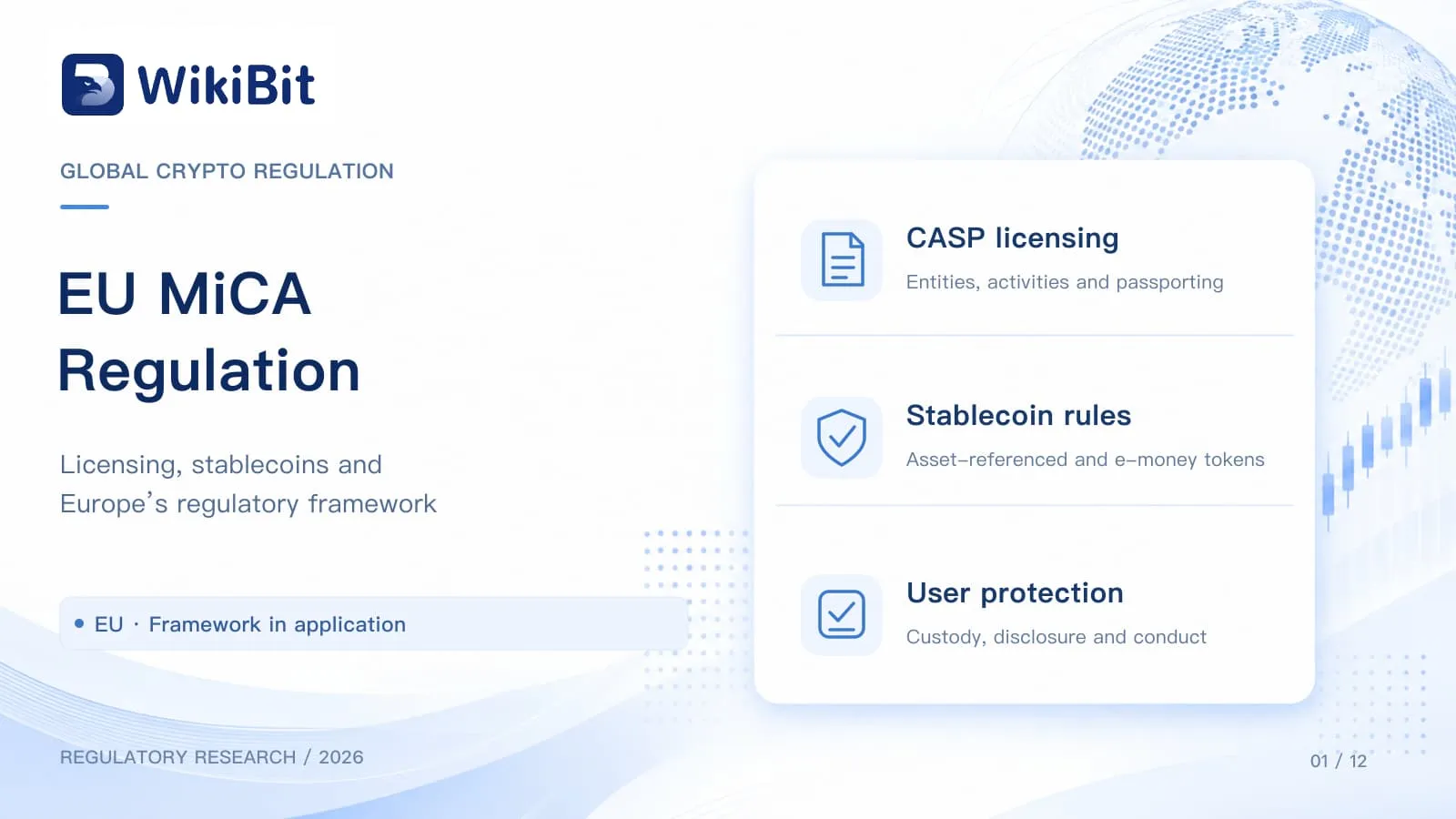
EU MiCA Regulation Explained: Crypto Rules, Stablecoins and Exchange Licensing in 2026

The Markets in Crypto-Assets Regulation, better known as MiCA, has moved into a very different phase in 2026.  For several years, the regulation was discussed mainly in terms of implementation dates, licence applications and transitional arrangements. That period is largely over.  The stablecoin provisions have applied since June 30, 2024. Most of the remaining regulation has applied since December 30, 2024. And on July 1, 2026, the longest possible transitional period for crypto-asset service providers came to an end.  For exchanges, custodians and other crypto businesses serving EU customers, the central question is therefore no longer:  Is this company preparing for MiCA?  It is:  Which legal entity serves the customer, is that entity authorised under MiCA, and which services is it authorised to provide?  That distinction is more important than the licence badge shown in an exchange footer.  A global crypto brand may operate through one MiCA-authorised European company, a separate UK entity, Middle Eastern entities and offshore companies. MiCA protections attach to the authorised legal entity and the services covered by its authorisation — not automatically to every company using the same brand.  For users, this makes MiCA more practical than it may initially appear. Regulatory claims can increasingly be verified against official registers rather than accepted as

09-20انڈسٹری ریسرچ

Why Bitcoin‘s 63% HODL wave isn’t the mega bull signal everyone thinks it is

Bitcoin‘s share of supply last moved at least one year ago reached 63.3% on Sept. 18, up 0.98 percentage points from 62.32% on Aug. 18, according to Maketo’s HODL-wave data.  Related Asset Bitcoin #1 BTC · $80,447.74 24-hour change: down 0.58% Loading price history… 24H Down 0.58% 7D Up 4.12% 30D Up 6.72%  HODL waves group Bitcoins unspent transaction outputs into age bands based on their last on-chain movement. The rising one-year share therefore shows that more supply now sits in older bands. Current-month buying and deliberate withdrawal from the market require separate evidence.  The underlying bands point to a specific mechanism. Coins that last moved roughly a year ago can enter the one-to-two-year bracket simply by remaining still long enough to cross the boundary.  What Bitcoin HODL waves measure  The one-to-two-year band increased to 14.57% of supply from 13.52% between Aug. 18 and Sept. 18, a gain of 1.05 percentage points. That was the largest positive change among the cohorts already older than one year.  Over the same period, the six-to-twelve-month band fell to 17.53% from 19.10%. Glassnodes Sept. 18 snapshot showed the same latest values for both bands.  The paired moves are consistent with coins crossing the one-year boundary. Each band is a net share

09-20انڈسٹری

BTCC Review 2026: Futures Fees, Reserves and Risks

BTCC is one of the oldest names still active in crypto trading, tracing its history to 2011. But the platform users see in 2026 is very different from the early China-based Bitcoin exchange associated with the original brand.  Todays BTCC is primarily a derivatives platform. It offers USDT- and coin-margined perpetual futures, spot trading, copy trading, Earn products and an expanding TradFi section covering stocks, indices, commodities, metals and forex through USDT-settled contracts.  Its 2026 strategy has been particularly aggressive on cost.  BTCC permanently cut standard crypto futures fees in June and removed execution fees entirely from more than 30 TradFi futures instruments. At the same time, it has continued publishing monthly Proof of Reserves reports with customer-level Merkle verification.  The reserve numbers have also changed since earlier versions of this review. BTCC reported a 140% total reserve ratio for its August 15, 2026 snapshot, up from 129% in July and 132% in February. Its live PoR page has since advanced to a September 15 report date.  Those are meaningful disclosures.  But BTCCs strongest products are still leveraged derivatives. A 0.048% taker fee does not make a highly leveraged position low-risk, and a 140% PoR snapshot does not turn futures collateral into an insured deposit.  The useful

09-20انڈسٹری ریسرچ

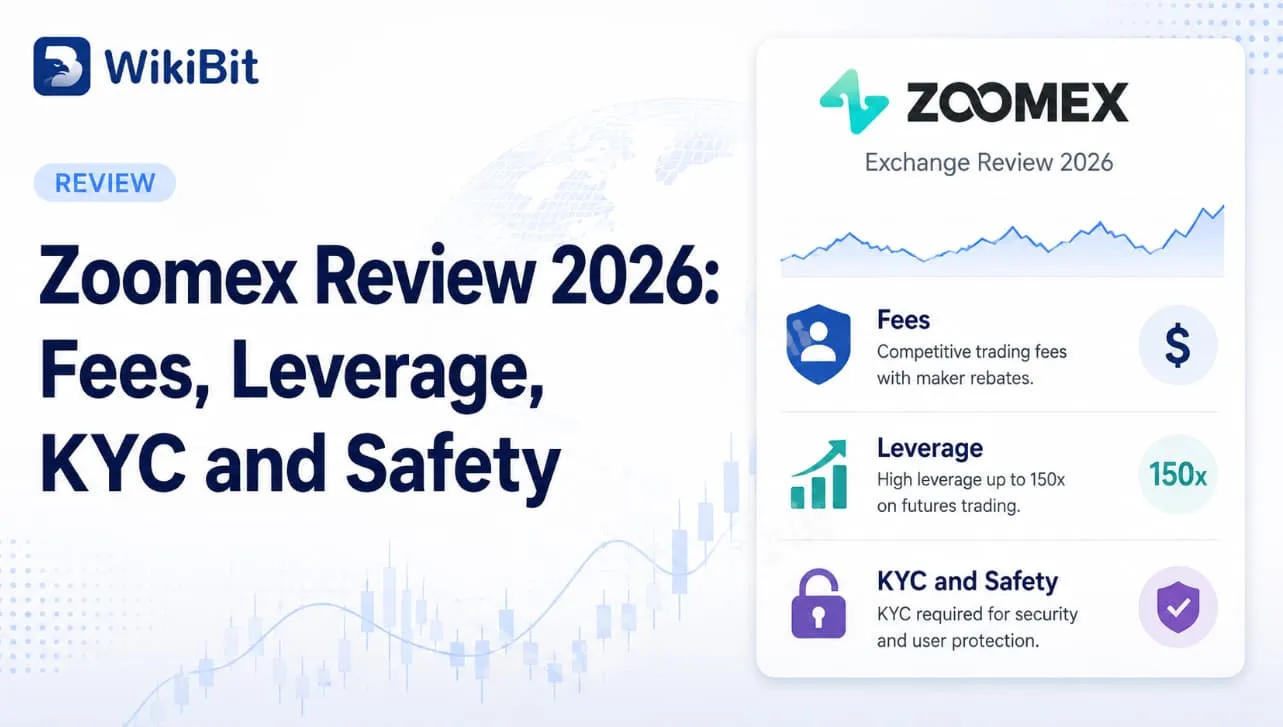
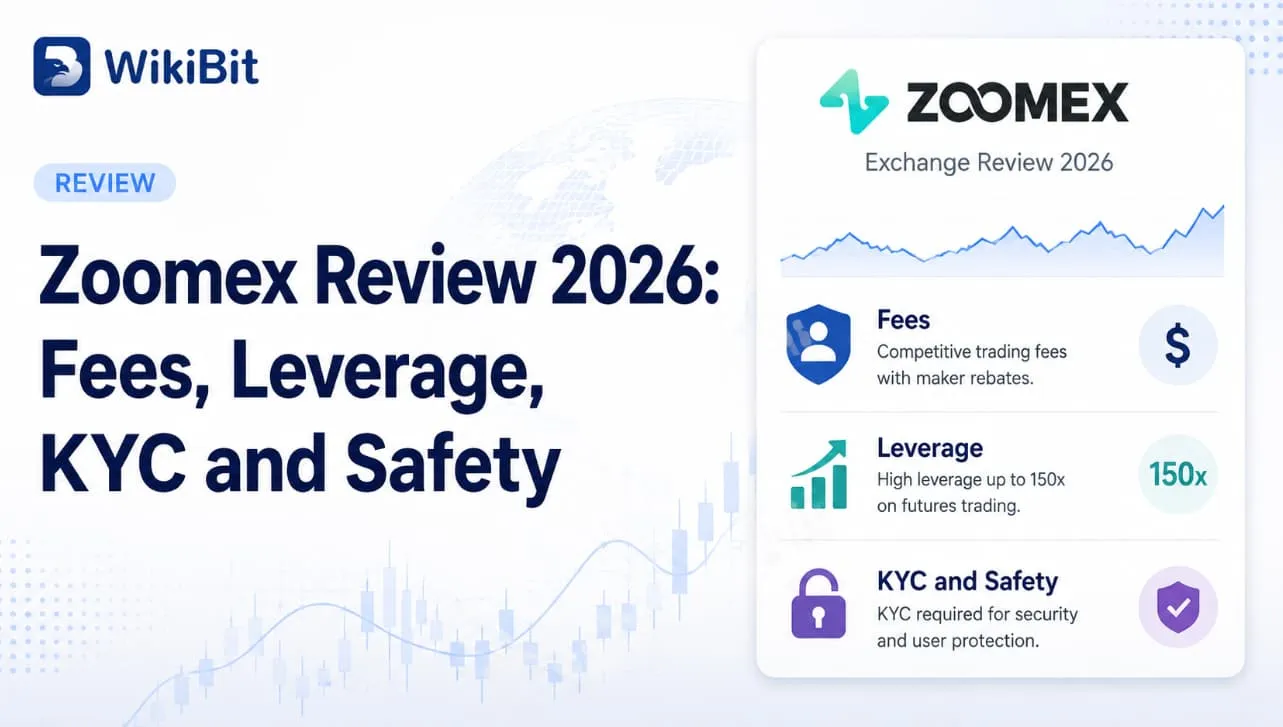
Zoomex Review 2026: Fees, Leverage, KYC and Safety

Zoomex is built primarily for active crypto traders rather than investors looking for a simple place to buy Bitcoin and leave it untouched.  The platform combines ordinary spot markets with perpetual futures, copy trading, automated strategies and a wallet-connected DEX. Its most aggressive product is a separate 1000x Futures section, where users can select leverage as high as 1,000 times their input capital.  That feature makes Zoomexs central trade-off unusually clear.  Its standard trading fees are competitive. Spot costs 0.1% for both makers and takers, while standard USDT perpetual contracts charge 0.02% maker and 0.06% taker. But on a highly leveraged position, trading commission quickly becomes a secondary issue. Funding, liquidation mechanics, position size and regional eligibility matter much more.  Zoomex has also improved the amount of security and reserve information it publishes. Its current transparency page states that customer assets are backed 1:1 and displays a 100% reserve-coverage figure, while Hacken publishes multiple penetration tests covering Zoomex systems.  Those disclosures are useful, but they need to be read carefully. Zoomexs public reserve page does not provide the same clearly exposed customer-level Merkle liability verification used by some exchanges, and a penetration test answers a different question from whether customer liabilities are fully covered.  For a

09-20انڈسٹری ریسرچ

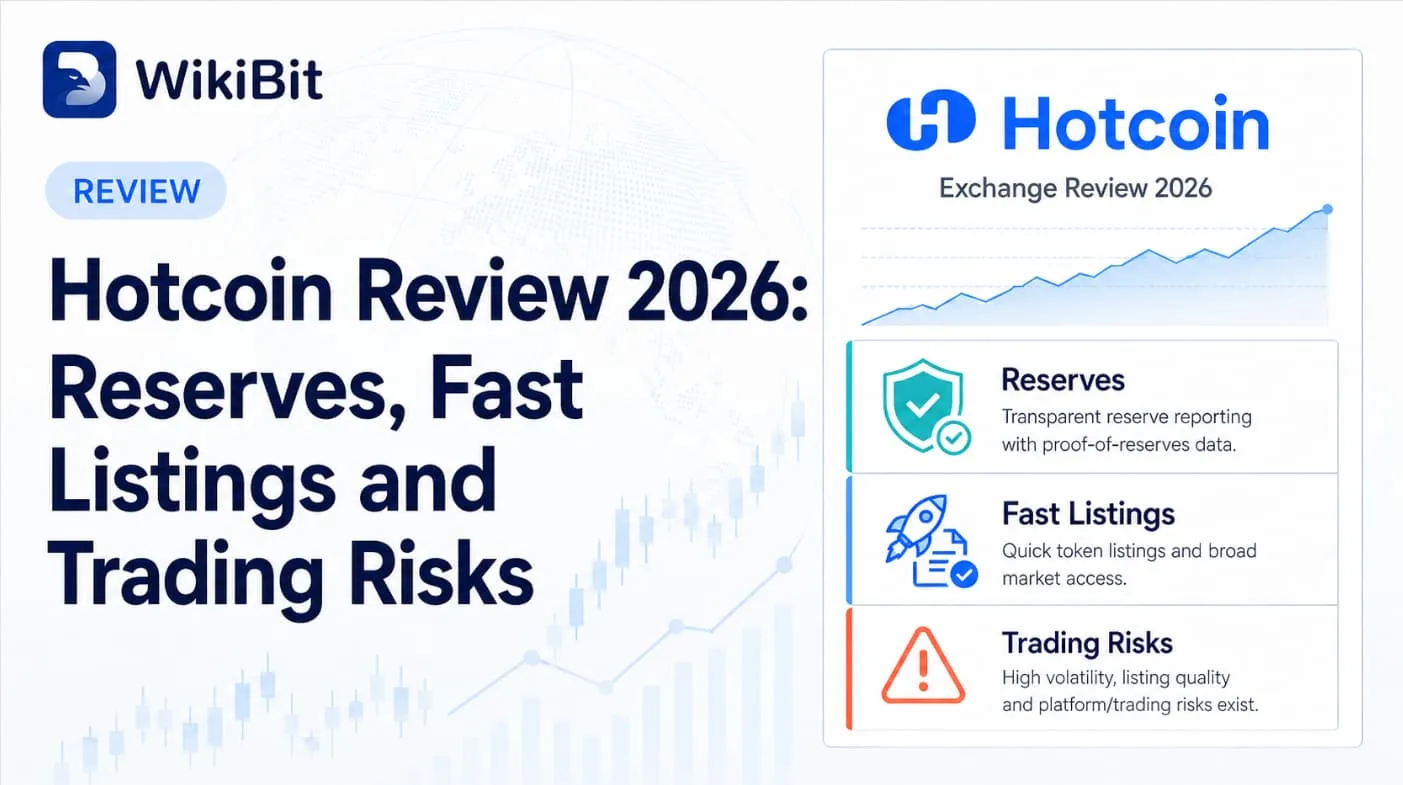
Hotcoin Review 2026: Reserves, Fast Listings and Trading Risks

Hotcoin is a centralized crypto exchange built around breadth and speed. Its platform combines spot trading, perpetual futures, copy trading, P2P, Earn products, Web3 features and an increasingly large selection of tokenized traditional-market assets.  That rapid product cycle is one of Hotcoins main attractions. It is also one of the main reasons users need to monitor the platform more actively than they might on an exchange focused on a smaller set of established markets.  New tokens can appear quickly. Futures contracts can be introduced or removed. Blockchain deposits and withdrawals can be suspended for maintenance. Smaller assets can be delisted with a fixed withdrawal deadline. Tokenized stocks may launch with temporary zero-fee campaigns that expire only days later.  The other major issue is custody transparency.  Hotcoin publicized approximately $137.45 million in exchange assets as of June 15, 2026, based on wallet data displayed by CoinMarketCap. But reserve values move with asset prices, deposits, withdrawals and changes in disclosed wallets. At the time of this review in September 2026, CoinMarketCap was displaying roughly $56.7 million in total assets attributed to Hotcoin, substantially below the June snapshot.  That change should not automatically be interpreted as customer withdrawals, a reserve deficit or financial distress. CoinMarketCap itself notes that

09-20انڈسٹری ریسرچ

KCEX Review 2026: Zero Fees, Restrictions and Risks

KCEX has one of the simplest fee pitches among centralized crypto exchanges in 2026: spot trading costs 0% for both makers and takers, while standard USDT-margined perpetual futures charge 0% maker and 0.01% taker.  There is no VIP ladder to climb before reaching those headline rates, and KCEX now describes its zero-fee spot structure as standard pricing rather than merely a limited campaign.  For an active trader generating substantial turnover, that difference can be meaningful.  But fees are not the hardest part of evaluating KCEX.  Its current User Agreement excludes residents of a long list of countries, including the United States, Canada, Singapore, Indonesia, mainland China and Hong Kong. KCEX simultaneously publishes a U.S. FinCEN MSB registration for a subsidiary, which can easily be misunderstood as authorization to serve American traders even though its own terms explicitly reject U.S. registrations and transactions.  Reserve transparency is another important limitation. Unlike exchanges that publish customer-verifiable Merkle-tree proof of reserves, KCEX does not currently surface an equivalent public verification system. CoinMarketCaps KCEX exchange page currently labels its reserve data as unavailable.  KCEX does have independently inspectable security evidence. Hacken conducted penetration tests covering its Web/API infrastructure, Android app and iOS app in 2025, with most identified issues subsequently fixed.  The

09-20انڈسٹری ریسرچ

Deepcoin Review 2026: Derivatives, Fees and Account Risks

Deepcoin is built more like a derivatives trading workstation than a simple place to buy and hold crypto.  Its product emphasizes perpetual futures, flexible position management, copy trading, strategy tools and APIs. Traders can use USDT-margined or coin-margined contracts, choose cross or isolated margin, maintain split or merged positions and access market, funding, leverage and position data programmatically.  That makes Deepcoin potentially useful for experienced derivatives traders.  It also makes the platform harder to evaluate through a conventional exchange checklist.  Execution fees are only one part of the cost. Funding, leverage and liquidation can matter substantially more. Account structure also needs to be understood correctly: Deepcoins newer unified-balance tools can display equity across Funding, Spot, USDT Swap, Coin-margined Swap, Copy Trading, Robot and other sections, but those account categories do not automatically form one universal collateral pool. Cross-margin exposure applies according to the trading mode and product being used.  There is also a significant regulatory development that cannot be omitted from a 2026 review.  On July 5, 2026, the Seychelles Financial Services Authority issued a public warning concerning Deepcoin, stating that an entity it identified as DC Group Ltd., formerly DEEPCOIN Global Limited, had not been authorized under Seychelles Virtual Asset Service Providers Act 2024. The

09-20انڈسٹری ریسرچ

Why Was Bitcoin Rejected at $82K? 3 Reasons Behind the Sunday Pullback

The tension in the Middle East is on the rise once again on several fronts.  Despite the overall macro calamity experienced last week, bitcoins price surged from $75,000 to almost $82,000 within days, hitting its highest level since the start of the month.  However, the breakout attempt was halted at $82,000 due to more worrisome news from the Middle East. Theres also a technical aspect that helped prevent another leg up.  New Escalation  Numerous reports online suggested on Sunday that the United States had warned that hostilities between Saudi Arabia and Iran-backed Houthis have escalated, with some even suggesting that the latter‘s capital was under drone and ballistic missile attacks. BBC added that even some energy sites on the country’s Red Sea coast were targeted.  Saudi authorities reported that they intercepted and destroyed a ballistic missile fired at Riyadh on Saturday evening, claiming that there were no casualties and no new attacks.  “Iranian-supported Houthis have engaged in hostilities against Saudi Arabia, including civilian airports. This military conflict has the potential to escalate rapidly,” said the US State Department. The statement also warned Americans to “seriously reconsider travel to and through the region.”  Meanwhile, Daily Iran News, an X account with over 500,000 followers, claimed that Iran had

09-20انڈسٹری
1
...
109111
...
1000