WIF Price Prediction: Dead Below Every Moving Average — $0.12 Beckons Before Any Credible Recovery

Felix Pinkston  Aug 01, 2026 09:41  WIF is pinned at $0.14 with every meaningful moving average stacked overhead as resistance and taker sell flow consuming 56% of all volume — a breakdown toward $0.12 carries 70% probability before …  Market Context: Why WIF Is Struggling to Find a Pulse  WIF is not moving — and that silence is the loudest signal on the tape. At $0.14 heading into August, dogwifhat is already trading below InvestingHaven‘s stated 2026 floor of $0.16, which means the asset has broken the lower bound of the most optimistic institutional model before the year is even done. When a coin violates an analyst’s floor projection mid-cycle, it doesnt mean the analyst was wrong about the range — it means the fundamental demand assumptions powering that range have already collapsed.  The volume number is equally brutal. Binance spot cleared just $1.1 million in 24-hour turnover. For a coin that was once a marquee name in the meme coin supercycle, that‘s a ghost-town print. There’s no institutional accumulation happening at these levels, no retail FOMO flooding in, no catalysts surfacing. CoinMarketCap‘s AI desk framed it directly last week: WIF’s trajectory depends entirely on “meme culture staying power amid intense competition.” That‘s not a

08-01انڈسٹری

Cathie Wood Buys More Circle Stock Amid New York License Feat

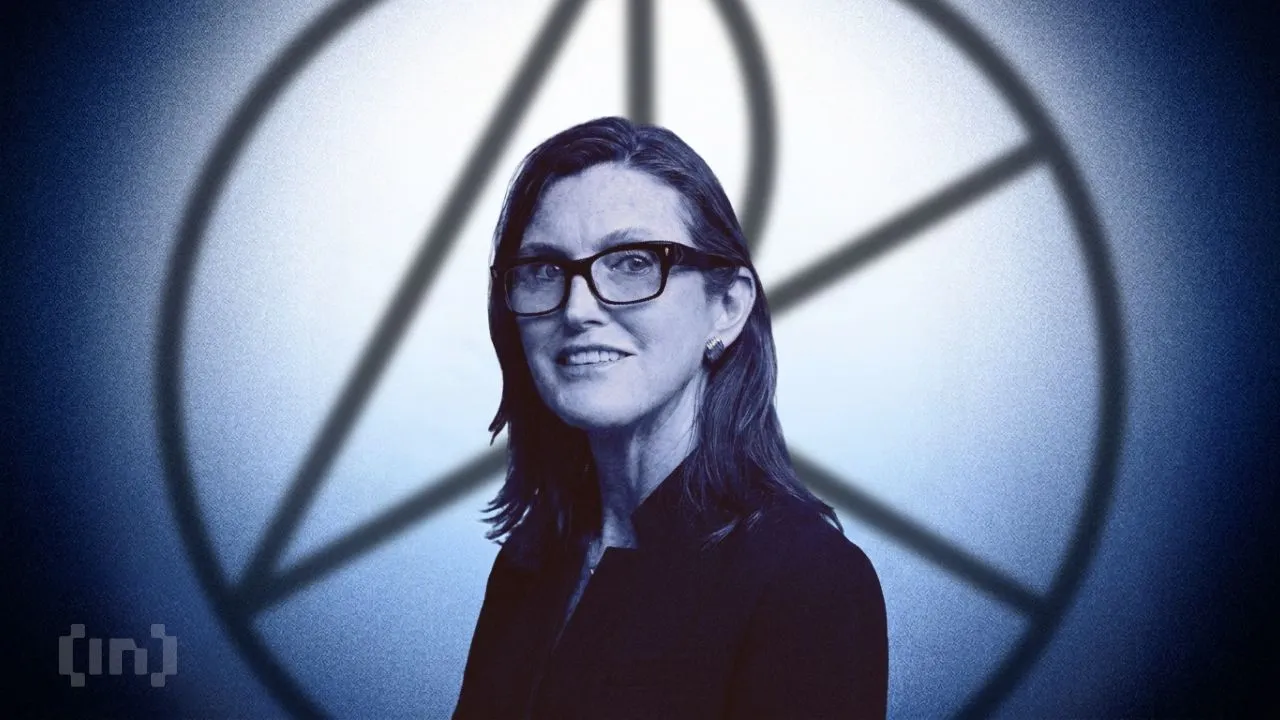
Cathie Wood‘s ARK Invest bought more Circle Internet Group (NYSE:CRCL) shares. The buy move follows the stablecoin issuer’s major regulatory breakthrough in New York.  Cathie Woods ARK Snaps Up Circle Stock  Circle stock closed at $62.61, down $1.63, or 2.54%, on Friday, July 31. Nearly $6.83 million in nearly 109,129 Circle shares were acquired by ARK based on the closing price. The stock purchases were made through ARKK, ARKW and ARKF with 77,103, 22,238 and 9,788 shares of CRCL stock bought respectively.  Cathie Woods CRCL stock purchase came on the heels of the New York Department of Financial Services (NYDFS) granting a limited-purpose trust charter to Circle Internet Trust Company LLC (Circle New York Trust).  Besides Circle shares, ARK bought 298,243 CoreWeave shares, 12,512 shares of the 3iQ Solana Staking ETF, 7,500 Pony AI shares, and 2,700 Kodiak AI shares. The Cathie Wood-led firm also cut down its stakes in Shopify, Cloudflare, CrowdStrike, Snowflake, 10x Genomics, Komatsu, Brera Holdings, Iridium Communications, and Figma.  Earlier, Cathie Wood raked in millions worth of SpaceX and Tesla shares alongside Circle.  About The NYDFS License For USDC  The new charter enhances Circle‘s regulatory framework. It merges state regulation of the issuance of USDCs with the federal trust powers the company acquired

08-01انڈسٹری

Double-Digit Gains From These 2 Altcoins, Bitcoin Struggles at $63K: Weekend Watch

PUMP and PI are also well in the green on a daily scale.  Bitcoins price failed at $65,000 earlier this week, and the subsequent correction pushed it south to a 17-day low of $62,400 before it found some support and rebounded to $63,000.  Most larger-cap alts are also in the red in the past 24 hours, led by more painful losses from HYPE, UNI, and AAVE.  BTC Back to $63K  It was just over a week ago when the primary cryptocurrency was riding high and tapped a monthly peak at $67,000 after the favorable US inflation data for June. However, the predominantly bearish sentiment quickly returned, and the asset slumped below $64,000 that Friday.  Its recovery began last weekend and intensified on Monday when bitcoin pumped to $65,600 on a couple of occasions. However, it couldnt keep climbing and dumped to $62,700 a day later as investors de-risked ahead of the key FOMC meeting. More volatility ensued before and after the event as the Fed ultimately left the rates unchanged.  Bitcoin began a more profound recovery on Thursday and Friday morning, jumping to $65,500 once again. A familiar scenario repeated, though, as the bears resumed control and drove it south to its lowest position since July

08-01انڈسٹری

The $70 million Coldcard exploit prompts CZ to urge wallet diversification.

Crypto holders used to focus on diversifying their coins. Now, following a $70 million Coldcard exploit, theyre being told to diversify their wallets as well.  On Saturday, Binance founder Changpeng Zhao, known as CZ, asked crypto holders to split their funds across multiple wallets following a major security failure in popular Coldcard hardware devices.  “Even hardware wallets can have bugs. Even old wallets (with long history) can have bugs. How to mitigate? Split your funds in a few wallets maybe? This has a different set of risks. Nothing is 100%. Stay informed. Stay SAFU!,” he said.  On July 30, some bitcoin users discovered that funds from their Coldcard wallets had been stolen in a series of unexpected transactions. The attacker exploited a firmware flaw dating to March 2021 that weakened the randomness used to generate recovery seeds on certain Coldcard models. By reconstructing private keys offline, the attacker was able to drain funds without ever physically accessing the devices.  Initial reports said about 594 BTC, worth $38 million at the time, were drained from around 500 wallet in a 25-minute window. Subsequent analysis by Galaxy Research expanded the scope to 1,082.65 bitcoin, valued at approximately $70 million, drained from 1,196 addresses over about 41

08-01انڈسٹری

From crypto treasury to AI data centers: Inside the aggressive 4,375 ETH selloff that just hit a massive collateral wall

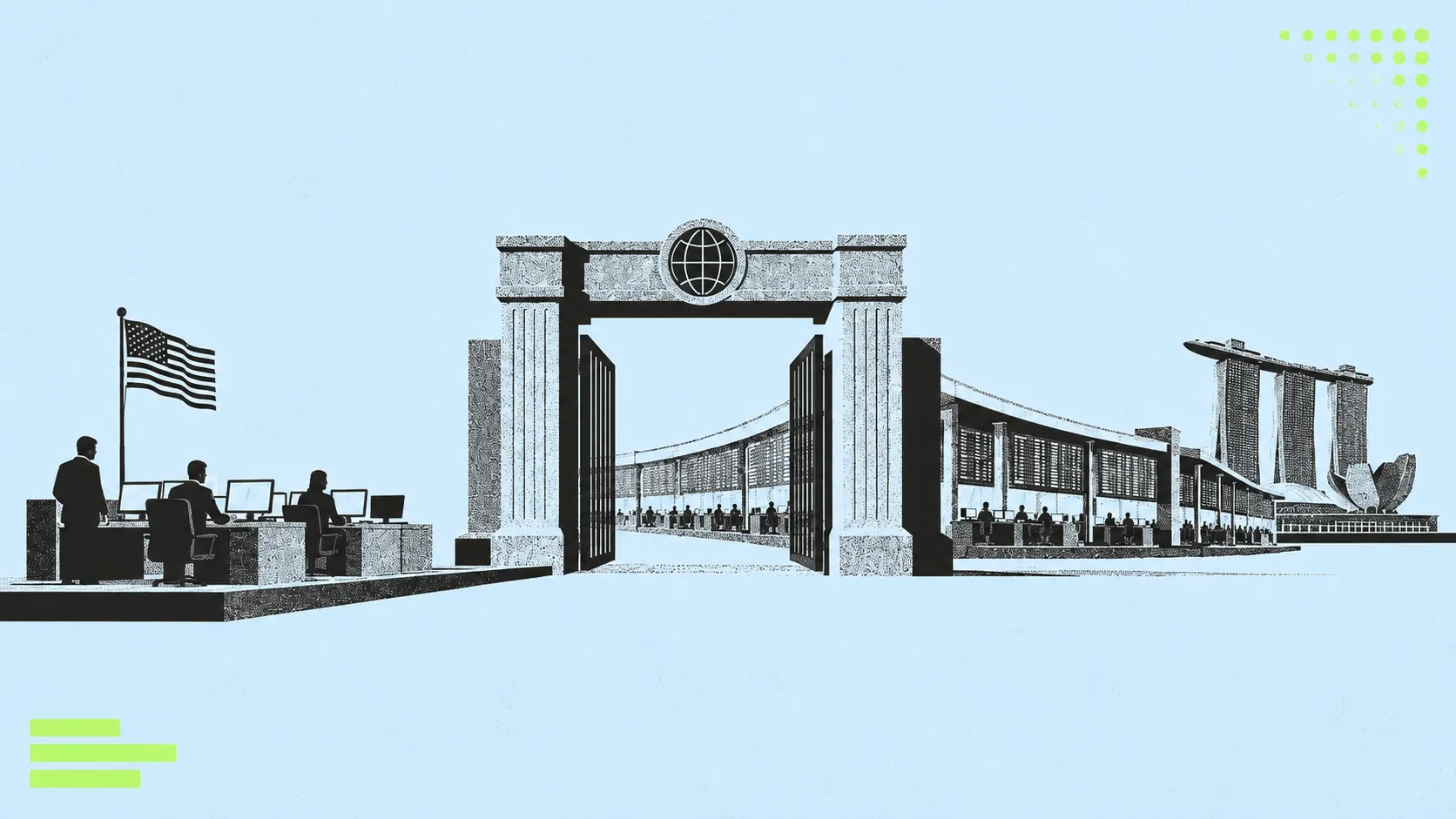
Japan-listed Quantum Solutions expanded the amount of Ether its group may sell through Oct. 30, 2026, after subsidiary GPT Pals Studio sold another 1,000 ETH to help fund its AI data-center push. The group can still sell up to 2,471 ETH, while only 1,714.8 ETH of its present balance is disclosed as outside a lender pledge.  The July 30 board action raised the aggregate ceiling from 1,875 ETH to 4,375 ETH. Together with 904 ETH sold on June 16, the latest transaction brought sales under the policy to 1,904 ETH.  GPT received $1.903 million in aggregate proceeds, net of transaction fees, at $1,903 per ETH. Quantum expects a roughly JPY 17 million loss because the sale price was below the May 31 carrying value of $2,003.97 per ETH.  Why the 756.2 ETH gap is conditional  After the sale, Quantum reported holdings of 4,764.8 ETH. Of that balance, 3,050 ETH remained pledged to a Singapore-based lender, while 1,714.8 ETH was outside the disclosed pledge.  On the current disclosed balance, the group is 756.2 ETH short of using its full remaining sale authority without touching the pledged coins. To use the entire remaining authority from its present inventory, it would need at least that much ETH released

08-01انڈسٹری

Pump.fun cut staff weeks before PUMP tokens vested: Report

Pump.fun reportedly dismissed employees shortly before their PUMP token grants were scheduled to vest, leaving at least one former worker without an allocation now valued at seven figures.  Pump.fun layoffs preceded employee token vesting  Pump.fun reduced its workforce in late March and early April after rapidly expanding its operations, according to an investigation by Sandmark.  Documents, emails, and internal recordings reviewed by the publication showed that some employees lost their jobs shortly before their PUMP allocations were due to begin vesting. At least one former employee allegedly forfeited tokens now worth seven figures.  Workers had reportedly signed token grant agreements in June 2025. Under those arrangements, the first 25% of their allocations would vest after one year, followed by additional releases over time.  Sandmark obtained a termination email showing that Pump.fun head of talent Lloyd McCarthy called affected employees into a group meeting in late March. During the recorded meeting, co-founder Noah Tweedale said the company had “grew too quickly,” limiting its ability to operate “fast and rough.”  Contracts were terminated in early April, according to the report. Affected workers received severance payments based on how long they had worked for the company, but their unvested PUMP allocations were reportedly canceled.  Pump.fun has not publicly addressed the

08-01انڈسٹری

Why DeFi giant Aave is pulling the plug on six hyped blockchains making less than $5,000 a quarter

In a July 29 forum-stage proposal, Aave risk service provider LlamaRisk recommended winding down the decentralized lenders V3 deployments on Sonic, Scroll, zkSync, Metis, Soneium, and Aptos. The plan would put $4.1 million of debt on a staged exit path that keeps existing positions open during the initial step.  The Aave Request for Final Comments, or ARFC, covers 25 lending reserves with $12.8 million supplied, based on LlamaRisk data dated July 28. The forum thread still showed the request under discussion on July 31. Aaves proposal lifecycle places an ARFC before a community Snapshot and any executable on-chain Aave Improvement Proposal.  LlamaRisks economic case rests on support costs exceeding revenue. It said Sonic, Scroll, and zkSync each generate less than $5,000 in quarterly protocol revenue at current balances, while Metis, Soneium, and Aptos each generate less than $1,000. The proposal cites oracle, monitoring, and operational support costs but does not quantify the shortfall.  The same ARFC separately targets 50 individual reserves and 21 matured Pendle principal tokens across 11 deployments, with $85.3 million supplied and $11.5 million borrowed. Those balances sit outside the six-market totals.  How the six-market exit would work  For the six full-market exits, every reserve would be frozen and its supply and

08-01انڈسٹری

Grayscale joins push for CLARITY Act Senate vote as deadline nears

Grayscale Investments has urged the Senate to vote on the CLARITY Act before the August recess as lawmakers face mounting pressure to resolve disputes holding up the crypto market structure bill.  Grayscale urges action on the CLARITY Act  Grayscale sent a letter to senators calling for action on the Digital Asset Market Clarity Act, or H.R. 3633. The asset manager said hundreds of thousands of Americans hold its digital asset investment products, giving the company and its clients a direct interest in clearer federal rules.  Grayscale Investments, the worlds largest digital asset-focused investment platform¹, just sent a letter to the Senate requesting a floor vote on the CLARITY Act before the August recess.  Senators and staff across the aisle have spent months addressing hard questions about…  The bill seeks to establish a regulatory framework for digital asset markets and clarify the respective responsibilities of the Securities and Exchange Commission and Commodity Futures Trading Commission.  “Senators and staff across the aisle have spent months addressing hard questions about jurisdiction, investor protections, and developer safeguards,” Grayscale said.  According to the company, the proposed framework would strengthen investor protections while preventing legitimate blockchain developers from facing rules intended for financial intermediaries.  Grayscale argued that crypto businesses, developers and investors need stable

08-01انڈسٹری

The free ride for VanEcks Bitcoin ETF is officially over after falling $1.4 billion short of growth target

VanEcks Bitcoin ETF ends its zero-sponsor-fee period today, July 31, with $1.076 billion in net assets, equal to 43.0% of the waivers $2.5 billion asset threshold.  The VanEck Bitcoin ETF, which trades as HODL, reported the asset figure as of July 30. It was about $1.424 billion below the threshold, meaning HODL remained fully covered by the waiver through its final day.  The waivers mechanics are more precise than a simple cap. VanEck waived the sponsor fee on the first $2.5 billion of trust assets through July 31. Had the fund grown beyond that level before the deadline, only assets above $2.5 billion would have incurred a 0.20% fee, producing a weighted sponsor fee.  After July 31, the 0.20% sponsor fee applies to all trust assets, according to VanEcks latest fee-waiver filing. VanEck had not announced another extension by Friday morning, and the funds SEC submissions feed contained no newer fee-waiver filing.  What HODLs post-waiver fee changes  At HODLs July 30 asset level, a 0.20% annual sponsor fee would amount to about $2.15 million if assets remained unchanged. For an investor, the same rate equals $20 a year for every $10,000 invested before changes in the share price.  That is the sponsor fee, not a measure

08-01انڈسٹری

Grayscale Sees 3,000 Onchain Vaults With $7B+ as Next Crypto Breakout

Key TakeawaysGrayscale says 3,000+ onchain vaults hold $7B, positioning them as cryptos next TradFi product.Ethereum, Base, and Solana vaults could pressure the $1.5T CLO market with cheaper, transparent rails.Grayscale says adoption hinges on US rules as 57 curators manage 79% in stablecoin strategies.  Grayscale Tracks $7B in Vaults as Wall Street Eyes Onchain Credit  Stablecoins and tokenized assets have already begun reshaping traditional finance. Grayscale now expects onchain vaults to be the next crypto innovation to go mainstream.  Vaults pool investor funds and deploy them across yield-producing strategies. Their investment rules vary. However, many operate within set risk limits and rely on professional managers, known as curators, to allocate capital.  “Vaults are a vehicle for onchain asset management,” Zach Pandl, Grayscales head of research, wrote in a recent report.  The structure bears a close resemblance to collateralized loan obligations (CLOs). Both products combine investor capital in managed portfolios that aim to generate risk-adjusted returns from underlying assets.  Smart Contracts Replace Traditional Intermediaries  The main difference is the infrastructure.  Traditional CLOs rely on custodians, trustees and other intermediaries. Onchain vaults instead use smart contracts to manage assets and settle transactions directly on blockchain networks such as Ethereum, Base and Solana.  That design can provide investors with real-time visibility into holdings

08-01انڈسٹری
1
...
7678
...
1000