AI Stocks Rally as Oil Falls: Nvidia, Broadcom Lead the Rebound

AI stocks are rallying again as falling oil prices give Wall Street some relief from the inflation and interest-rate fears that hammered technology shares earlier this week.  The rebound swept across semiconductors on Thursday, with Nvidia gaining more than 2% and Broadcom rising more than 2%, while AMD, Micron, Arm and Marvell posted even larger advances. Semiconductor ETFs also climbed sharply.  The shift came as crude prices retreated and the 10-year Treasury yield fell back below 5%. Reuters noted that U.S. crude dropped toward $101 a barrel while the 10-year yield eased to around 4.93%, two levels investors have been watching closely as pressure points for expensive growth stocks.  AI Stocks Reverse a Brutal Selloff  The turnaround is notable because AI stocks were under heavy pressure only days ago.  The sector sold off after leading AI executives called for slower development of increasingly powerful models, raising questions about whether the enormous infrastructure spending behind the boom could eventually cool.  That sent Nvidia and other semiconductor names lower and triggered a broader selloff in global AI stocks.  Now investors appear to be separating those longer-term concerns from current demand.  Nvidia CEO Jensen Huang added fuel to the rebound by saying the company expects to sell roughly twice as many


09-19انڈسٹری

Dollar Index nudges to a fresh high and slips back as Japan raises rates

The Bank of Japan (BoJ) raised its rate to 1.25% on Friday and the Yen weakened anyway. The Dollar Index ran to its highest level since late July on that and has given the move back, trading just above 100.30. The Euro is 57.6% of this index and the Yen is 13.6%, so seven tenths of what the Dollar is measured against belongs to a central bank that raised rates in September.  Three central banks, a quarter point each, and the same two gaps  The European Central Bank (ECB) raised its deposit rate to 2.50% on September 10. The Federal Reserve raised its rate to 3.75-4.00% on September 16. The BoJ raised its own to 1.25% on September 18. All three moved by a quarter point, so the two gaps that set most of this index are as wide as they were nine days ago. Japan‘s rate is the highest it has been since 1995 and exactly a third of the bottom of the Fed’s range.  An increase that made the next one less certain  The Japanese vote was 7-2, with board members Asada and Sato, both appointed this year, against. Speculators had flipped to betting on a stronger Yen before the meeting on

09-19انڈسٹری

Dow Jones gives back its bounce as factory output stalls

The Dow Jones Industrial Average trades near 51,500, back at the level where Wednesday‘s selling stopped, which means Thursday’s rebound is gone. The selling ran one way down from the session high, and every level that looked like a floor turned into a step. Each of the last three sessions has made a lower high than the one before. The 10-year Treasury yield is back above 5%, and the only American data on the calendar was industrial production, which came in at zero.  No growth in the part of the economy the index is named after  Industrial production was flat in August against a 0.3% forecast, after 0.2% in July. The number counts what American factories, mines and utilities actually made, which is as close as the calendar gets to measuring the business this index was built to track. It also counts two industries the Dow owns nothing in, since there is no miner and no utility among the 30.  Four companies, and one of them is most of it  What there is: Caterpillar (CAT), Honeywell (HON), Boeing (BA) and 3M (MMM), the four members classified as industrials. Between them they hold 15.7% of the index, a little more than half of what the

09-19انڈسٹری

Tokenized stocks face 24/7 pricing gap: RedStone COO

The SEC has opened permissioned onchain trading to fully backed U.S. stock tokens, but the 32.5-hour trading week on NYSE and Nasdaq leaves automated markets without a live reference price for most of each 168-hour week.  SummarySEC relief permits qualifying tokenized U.S. stocks to trade through permissioned automated market makers.RedStones COO said nights, weekends and holidays could allow pricing gaps to build.Synthetic products remain outside the exemption, creating two token classes tied to the same shares.The five-year relief requires issuer notice, equivalent shareholder rights and coordinated trading halts.  The SECs temporary exemption allows qualifying venues to bring buyers and sellers together through permissioned automated market maker pools for tokenized National Market System stocks.  Under the order, each token must provide the same rights and privileges as an equivalent class of conventional stock. The SEC also placed limits on the number of available symbols and trading volume, while requiring public, auditable smart contracts deployed on permissionless blockchains.  Trading venues must stop onchain activity whenever the primary exchange halts the underlying stock. Ordinary closures at night, on weekends or during holidays are treated differently, leaving tokenized venues able to operate when NYSE and Nasdaq are not producing live prices.  You might also like:  Morpho adds USDC lending for

09-19انڈسٹری

Gold Weekly Forecast: Short covering lifts prices as traders await the Trump-Xi summit

The week in retrospective  The precious metal started the week in quite a bearish mood, further extending the almost uninterrupted leg lower after August tops near the $4,700 mark per troy ounce.  However, market sentiment made a U-turn in the second half of the week. It was not the Federal Reserve (Fed), reignited geopolitical tensions, the US Dollar (USD) or Treasury yields.  This time the catalyst for the ongoing recovery in Gold prices has been the marked retracement in prices of crude Oil, both the American (WTI) and European (Brent) benchmarks.  So, broadly speaking, declining crude Oil prices work against expectations of higher consumer prices, which in turn prompts the Fed to maintain its (now reinforced) cautious stance.  And a direct consequence of the latter was an extra impulse from short covering, as the vast majority of traders were positioned for lower prices in tandem with the widely anticipated rate hike by the Fed on Wednesday.  Discover more  Merchant Services & Payment Systems  Brokerages & Day Trading  Engineering & Technology  Gold longs hold firm, but crowding risk rises  Gold bullish positioning strengthened modestly in the week ending September 8, according to the Commodity Futures Trading Commission (CFTC). That said, net speculative positioning rose to almost 232K contracts, reversing part of the

09-19انڈسٹری

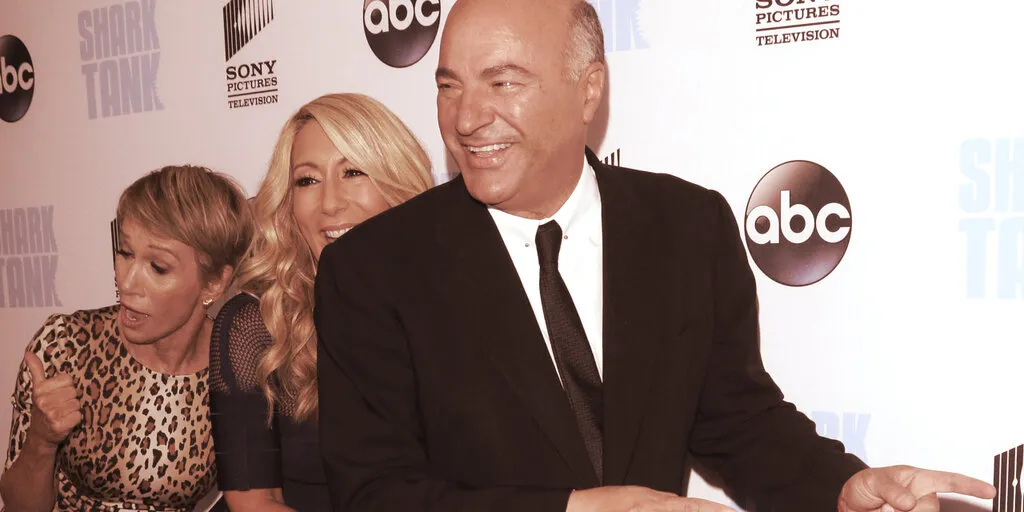
Bitcoin Will Hit $1 Million, Says Kevin O‘Leary—But There’s a Quantum Catch

In briefKevin OLeary thinks Bitcoin could hit $1 million if the industry resolves the quantum computing threat known as “Q-Day.”OLeary said his old thesis that Bitcoin and Ethereum alone capture cryptos upside was wrong, and now bets industries will standardize on whichever blockchain their exchanges pick first.Instead of betting on individual AI models, OLeary is investing in the power grid behind them, including a first-ever position in uranium to back next-generation nuclear reactors.  We‘re back in ultra bullish mode again, and “Shark Tank” star Kevin OLeary just put a number on Bitcoin’s endgame: $1 million. Then he laid out exactly what has to happen first.  Speaking with The Rollup podcast at Avalanche Summit in New York, the famed investor said Bitcoin‘s path to seven figures rungs through a risk nobody’s solved yet: Quantum computers powerful enough to break the encryption behind the whole technology. Until that is resolved, he said, institutions will keep treating Bitcoin more like a novelty than a core holding.  Myriad: Where does Bitcoin go next? Click to make your prediction.  OLeary showed up to the summit wearing an $11 million baseball card around his neck. Thats not a figure of speech.  The investor and media personality was draped in a Shohei

09-19انڈسٹری

BaFin official warns centralized MiCA oversight may add burdens

A BaFin official has warned that centralized EU crypto supervision could place extra burdens on firms while reducing flexibility in applying MiCA rules.  SummaryBaFins Stephan Mögelin raised concerns about transferring authorization to a centralized EU supervisor.National regulators would still hold knowledge of local markets and business models.Mögelin said EU countries lack a consistent private-law framework for some crypto assets.E-money tokens could provide the cash side of tokenized financial-market transactions.  Centralized MiCA supervision could reduce flexibility  The European Blockchain Convention‘s Day 2 briefing attributed the warning to Stephan Mögelin of Germany’s Federal Financial Supervisory Authority, or BaFin, during a panel on proposed changes to the Markets in Crypto-Assets framework.  Mögelin said centralized supervisors could still depend on knowledge held by national authorities, particularly when dealing with the characteristics of individual markets.  “What weve seen, for example, in the application of EMIR, is that with a centralised supervisor, one might assume the application and understanding of specific provisions also becomes somewhat centralised,” he said.  You might also like:  Binance keeps MiCA plans intact despite Lagarde intervention report  According to Mögelin, centralization could leave crypto-asset service providers with less flexibility when regulators apply individual provisions. Moving responsibility after companies have already completed national authorization procedures could also create additional work.  “Market participants

09-19انڈسٹری

LSEG plans 24/5 trading and tokenized equity system

LSEG has outlined plans for 24/5 trading, a digital securities depository, tokenized equities, and new infrastructure involving Kraken and HSBC.  SummaryLSEG expects its LSEG24 trading cycle to begin in the first half of 2027.The group is building a digital securities depository and tokenized equity products.LSEG is working with Kraken on listings and HSBC on an interoperable connection.U.S. exchanges and regulators are also examining longer trading hours and tokenized securities.  LSEG plans to connect trading and tokenized settlement  The European Blockchain Conventions Day 2 media briefing attributed the plans to Darko Hajdukovic of London Stock Exchange Group, who discussed the projects during a panel on institutional digital-market infrastructure.  “In the first half of next year we move to a 24/5 trading cycle, LSEG24. We‘re building a digital securities depository, partnering with Kraken to list on it, and building tokenised equity tokens. We’ve also signed an MOU with HSBC on an interoperable link,” Hajdukovic said.  The comments indicate that LSEG is working across several parts of the trading process rather than developing a single tokenization product. Trading, depository services, listings and connections with other financial institutions each address a separate part of the market.  You might also like:  Morpho adds USDC lending for five Coinbase tokenized stocks  Hajdukovic referred to

09-19انڈسٹری

Crypto stocks rebound after CLARITY Act selloff

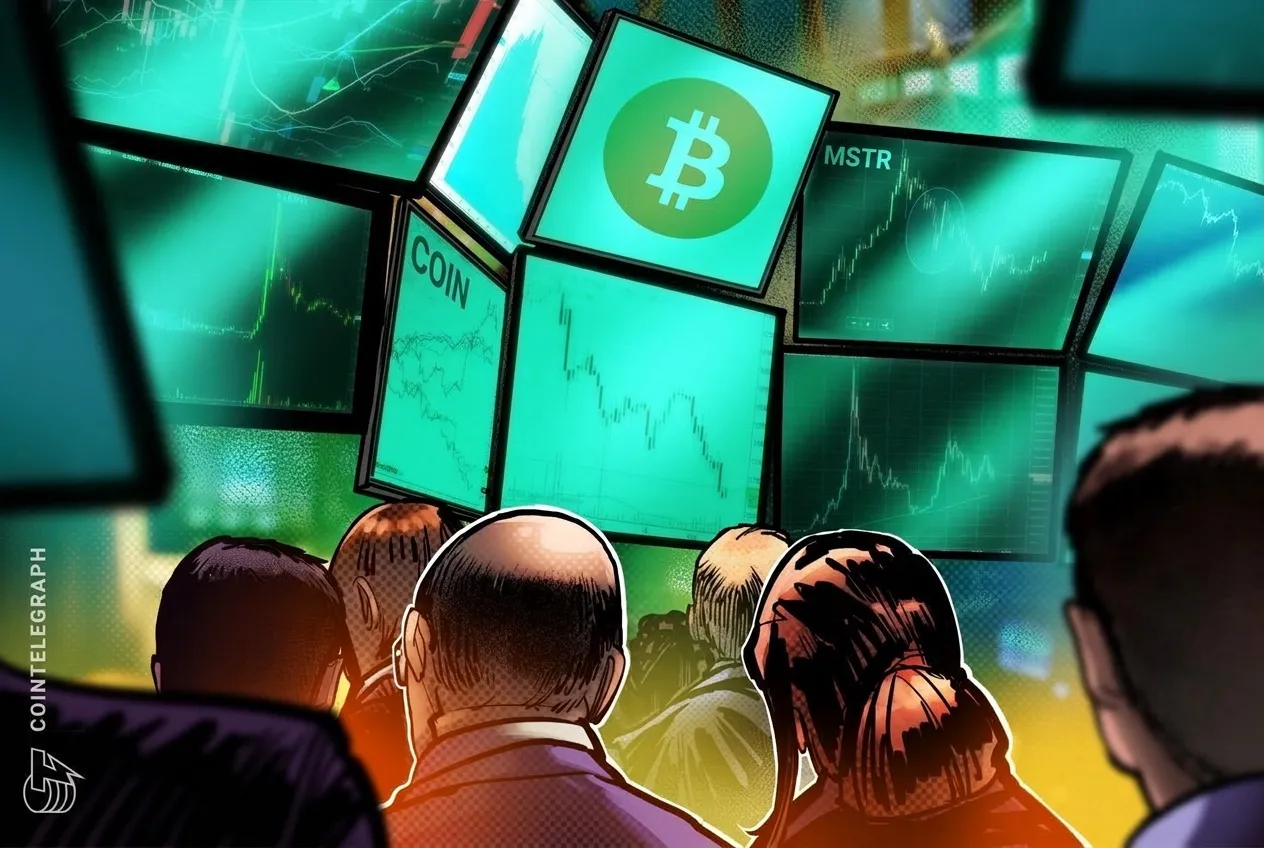
Crypto-linked stocks rebounded sharply on Friday, reversing losses that followed the Senates failure to advance the CLARITY Act earlier this week, as Bitcoin climbed back above $80,000.  Strategy led the gains, rising more than 13%, while Coinbase and American Bitcoin climbed about 11% each. Robinhood gained nearly 9%, according to Yahoo Finance data.Source: Yahoo Finance  The rally extended across other crypto-linked equities, with Circle, Strive and Bitcoin miner Riot Platforms all gaining between about 5% and 7%. Bitcoin (BTC) was also up about 5% over the past 24 hours to around $80,800 at the time of writing, according to CoinGecko.  The gains came after the same stocks fell sharply following the Senates Sept. 15 failure to advance the CLARITY Act. Coinbase and Circle dropped about 10% following the vote, while Strategy and Strive fell about 5% and American Bitcoin declined roughly 8%.  Since the vote, US regulators have begun moving ahead with crypto-related actions under their existing authority. Thursday brought actions from both agencies, with the CFTC providing no-action relief to passive software providers and the SEC temporarily easing requirements for certain platforms facilitating onchain trading of tokenized securities.  The CFTC also submitted a crypto market regulatory action for White House review, though the “prerule”

09-19انڈسٹری

Stablecoins must preserve one form of money: BlackRock

BlackRock has said stablecoins must remain interchangeable with bank deposits and central-bank money if they are to function as regulated settlement assets.  SummaryStablecoins must provide recognizable claims and recourse across banks, according to BlackRock.Banking systems would need to accept stablecoins and convert them into deposit liabilities.Central banks could provide the final settlement layer through fiat money or wholesale CBDCs.U.S. rules now govern permitted payment stablecoin issuers under the GENIUS Act.  Stablecoins need recognition across banking systems  The European Blockchain Convention‘s Day 1 media briefing attributed the position to Nikhil Sharma, BlackRock’s head of digital assets, during a panel on how tokenized forms of money can operate together.  Sharma said the central issue is the “singleness of money,” a principle under which different forms of the same currency remain interchangeable at face value. The form of payment may change, but users must understand the claim, backing, access conditions, and recourse attached to it.  “When you think about what you‘re using as cash for payments and settlement, you look at what’s the claim, what‘s the backing, what’s the form, whats the access,” Sharma said.  His comments addressed how privately issued stablecoins, commercial-bank deposits and central-bank money could operate within one financial system. A user paying with a dollar

09-19انڈسٹری
1
...
233235
...
1000