Recently, a former BitMart employee publicly exposed allegations on X, claiming that BitMart‘s collapse was a premeditated scheme to take users’ funds and disappear.
According to the claims, before its alleged shutdown, BitMart used high-yield financial products to attract and collect approximately 40 million USDT from users. The platform has since reportedly refused withdrawal requests, especially large withdrawals. Even former employees allegedly had their crypto assets locked, while the company also refused to pay employee compensation and delayed some salary payments.
It can be said that BitMart has severely damaged its reputation this time — allegedly even betraying its own employees. If insiders cannot withdraw their funds, can ordinary users still expect to get their assets back?
Even more controversially, some allegations claim that BitMarts executives are planning to move to WooxPro and repeat the same alleged fund-raising and exit strategy.
A crypto blogger on X claimed that the BitMart incident has already been officially filed for investigation and is highly likely to be treated as a landmark case.
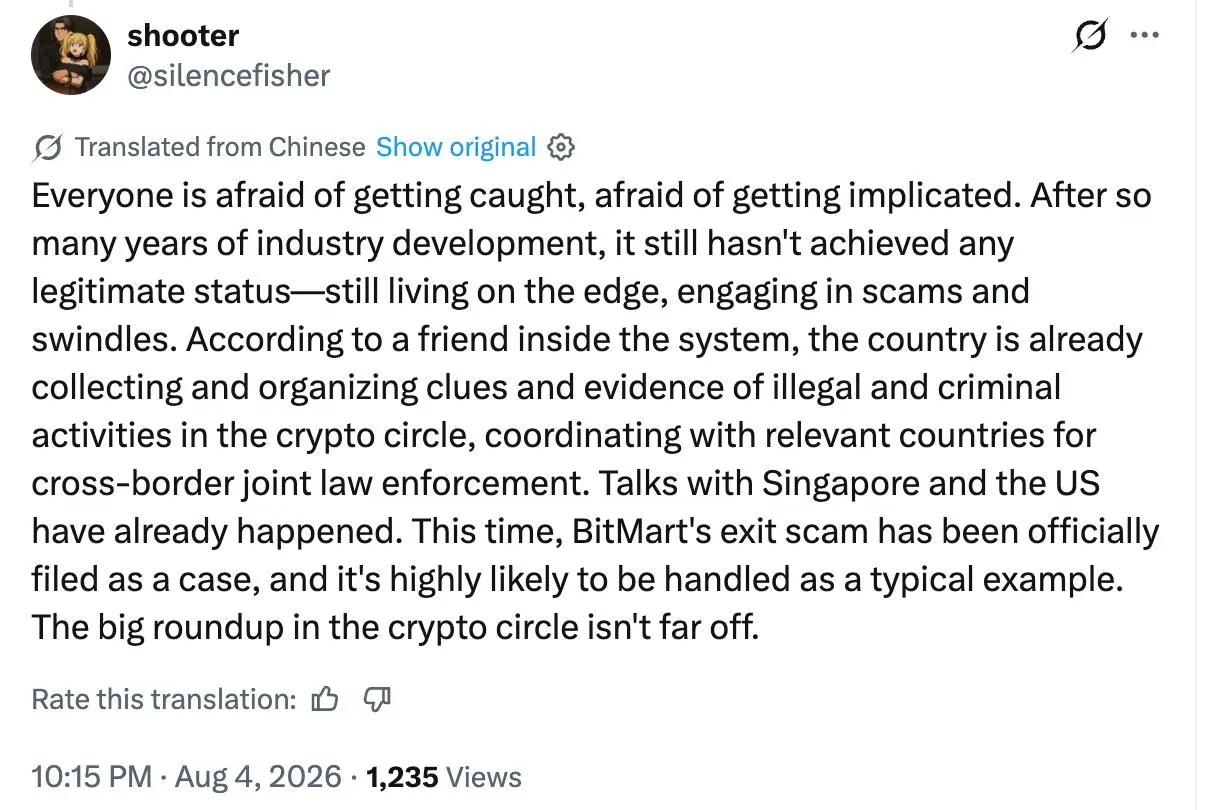
Exposé on X (Source: @silencefisher)
Users affected by BitMart‘s withdrawal restrictions have now begun organizing themselves and forming a “Debt Recovery Alliance” to demand the return of their assets. This matter is unlikely to end anytime soon. Let’s first review the entire timeline of events, so that the lessons of the past can help prevent future mistakes.
BitMart: “Poor Management” or a “Premeditated Exit Scam”?
On July 25, 2026, BitMart issued an official announcement stating that the company would gradually cease operations due to “poor business management.” However, according to internal employee revelations, the story behind the shutdown appears to be far more complicated than a simple case of “poor management.”
Before the shutdown announcement was released, founder Sheldon had already begun the first round of layoffs on June 10. Even earlier, in April, the platforms copy-trading and fake-volume trading incidents reportedly revealed a serious deficit in its accounts. Following this, Sheldon allegedly began gradually transferring more than 20 million USDT in user assets. After that, the platform started experiencing failures in approving large withdrawal requests.
But the story did not end there. The financial services department continued attracting deposits for BitMart, with new funds constantly flowing into the platform. This temporarily allowed some withdrawals to continue, and many users did not immediately realize the severity of the situation.
Then came the most controversial move: as financial pressure increased, BitMart launched a USDT fixed-income product offering a 12% annualized return with a 399-day term, promoting “unlimited subscription amounts.” After employees and users began raising concerns, Sheldon further introduced another USDT fixed-income product on July 23, offering an annualized return of 18.88% over 10 days.
Everyone should remember: this is the crypto market in 2026, during a deep bear market. Even major exchanges typically offer yields below 5% (for example, Binance‘s USDT flexible savings annual rate is 4.59%). BitMart’s extremely high guaranteed returns lacked any apparent underlying business revenue to support them and were allegedly sustained through a Ponzi-like model.
Over the past six months, BitMart reportedly attracted more than 40 million USDT in user funds through high-yield products. However, such a model is ultimately unsustainable.
Many users already know what happened next: on July 23, a bank run officially began. That night, BitMarts platform token BMX crashed by more than 60%. The sharp decline triggered panic withdrawals among users, creating a downward spiral. From that point onward, large withdrawals entered a state of prolonged pending approval, some withdrawals were directly rejected, and balances across multiple chains and assets gradually dropped to zero.
BitMart then allegedly began a “cleanup operation” before its exit. On July 24, the company arranged overtime work for employees to remove a large number of services. Ordinary employees initially believed the company was simply reducing operating costs. However, the reality was reportedly:
- Balances across multiple blockchain networks had already reached zero.
- Withdrawals exceeding $10,000 were generally unable to pass approval.
- The company urgently removed the “financial product redemption” button, leaving users without their final exit channel for funds.
At the same time, a series of other controversial actions reportedly took place:
- During the week of July 21, BitMart began large-scale layoffs in disguised forms. The finance department reportedly instructed employees to move their own funds as soon as possible, while continuing to assist Sheldon in handling platform assets.
- On July 24, CEO Nenter, who had been appointed by Sheldon, was removed from his position. Several senior executives, including the U.S. regional head and legal director, reportedly resigned due to dissatisfaction with Sheldons alleged transfer of user assets.
- On July 25, the company reportedly began completely restricting employee access permissions. Employee salaries were paid only through July 24, with no severance compensation provided and overtime payments left unresolved.
The most controversial allegation came afterward: according to internal employee disclosures, Sheldon had already begun transferring some senior executives to WooxPro, allegedly preparing to replicate the BitMart incident.
WooxPro is reportedly an exchange platform acquired by Sheldon in January 2026. Many parts of its platform structure are reportedly similar to BitMart, and some employees are also former BitMart staff. After the acquisition, WooxPro allegedly attracted large amounts of user funds through promotional campaigns such as “deposit the same amount and receive the same amount as a bonus.”
WooxPro users should take note:Withdraw your funds in a timely manner and avoid allowing another BitMart-like incident to happen again.
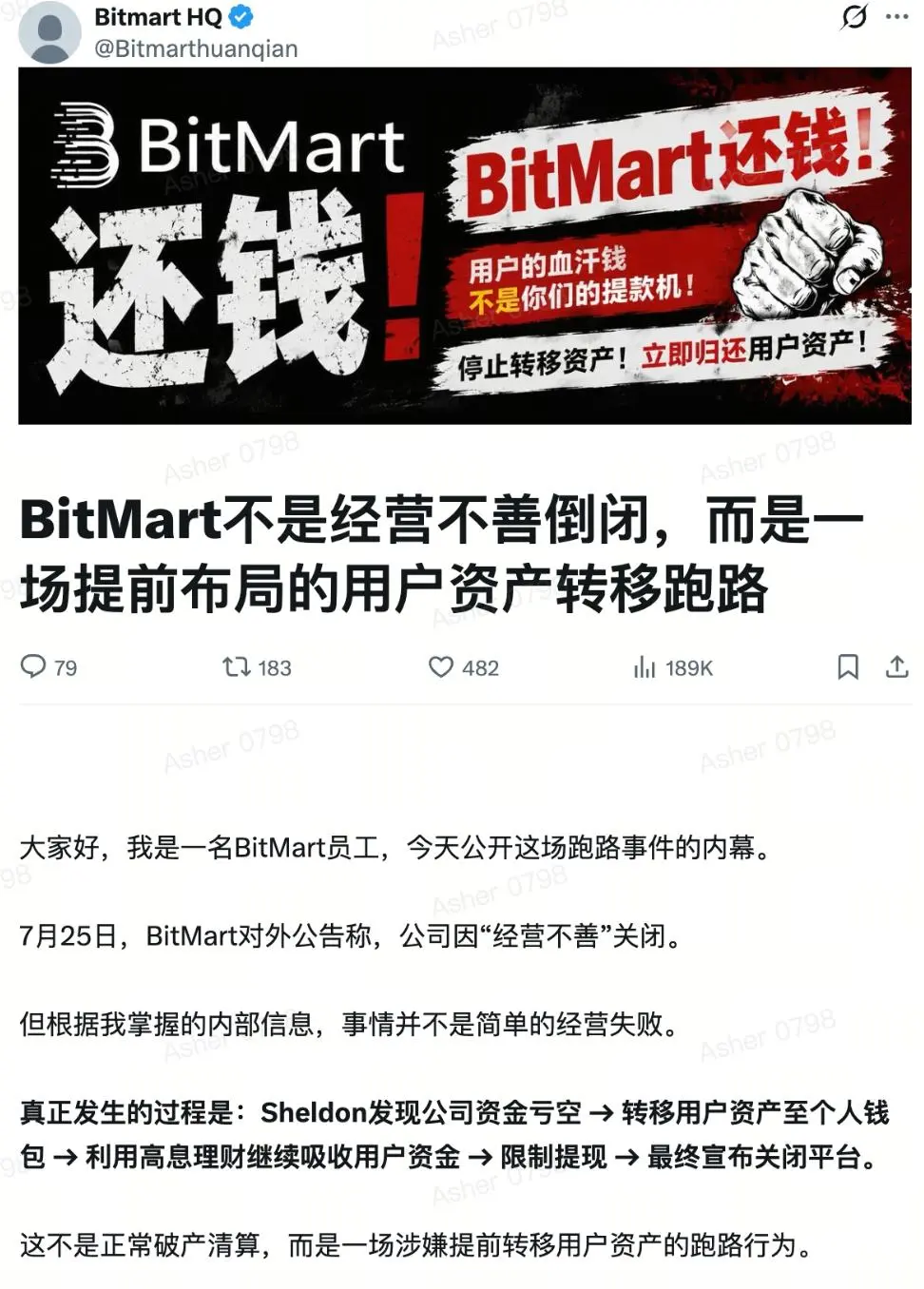
Part of the Internal Employee Revelations About BitMart For more details, please refer to @Bitmarthuanqian
Withdrawals Rejected, Accounts Frozen — “Debt Recovery Alliance” Is Gathering: Return Our Funds!
After BitMart announced the suspension of operations, an increasing number of users began reporting issues including withdrawal difficulties, delayed withdrawals, abnormal fund situations, and unresponsive customer service.
On July 30, users affected by BitMarts large asset withdrawal issues established a joint group. Within the group, 27 users reported being unable to withdraw their funds normally, with total affected assets reaching the equivalent of 3,704,214 USDT.
The highest amount reported by a single user reached 700,000 USDT, while several other users reported account balances ranging between 100,000 and 600,000 USDT.
Based on the original account screenshots provided by just seven users, their combined reported balances alone totaled 1,692,203.67 USDT.
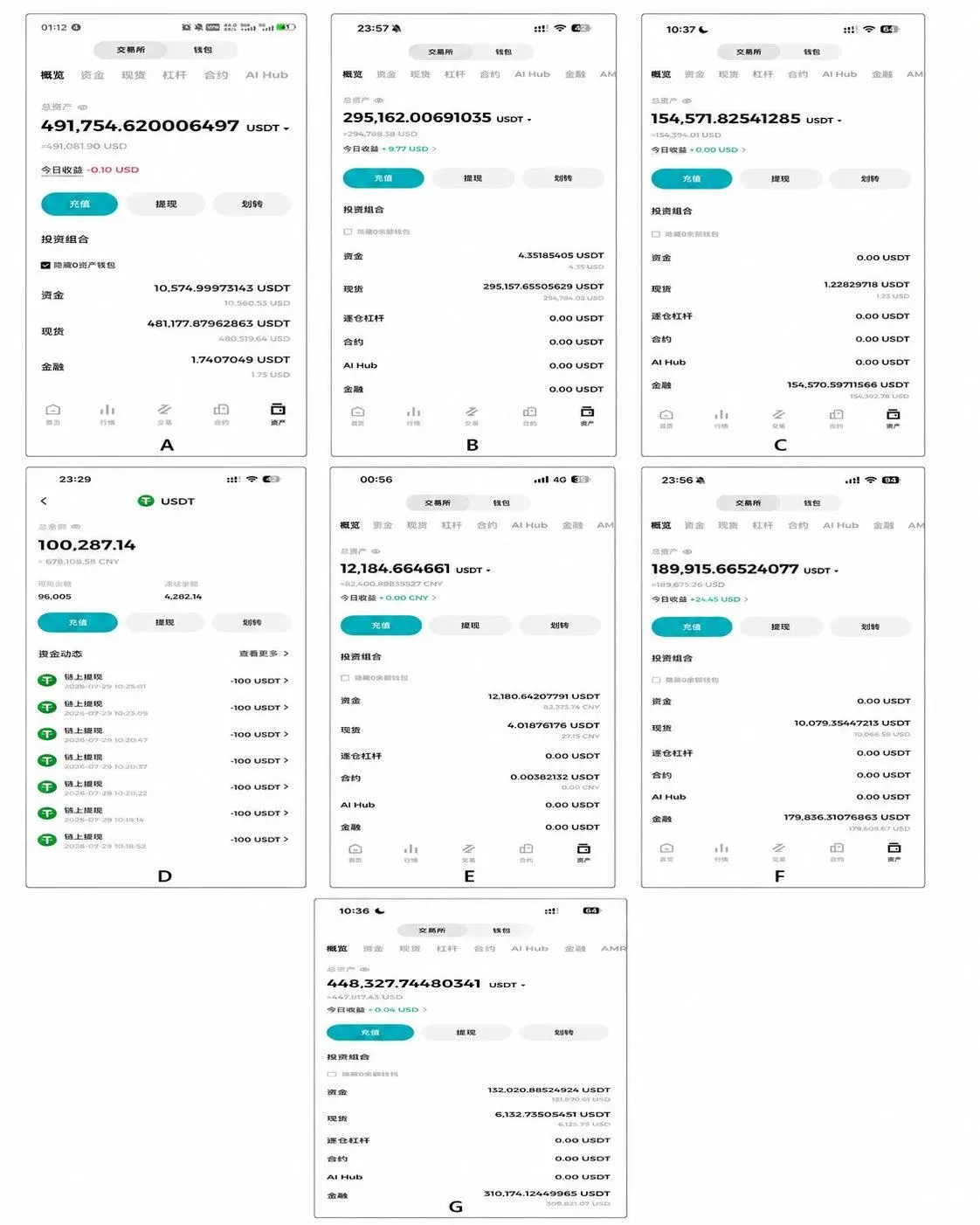
Screenshot of a BitMart User Unable to Withdraw Funds Normally (Source: @MINGLIbtc)
Previously, Scandic Coin had officially raised concerns with BitMart, stating that three institutional account withdrawal requests had remained unprocessed for more than eight days, involving a total of 22,153 USDT and 926,634 SNC. The transactions still showed 0/12 confirmations with no TXID provided. As of now, BitMart has not provided any explanation.
In addition, some users reportedly found their accounts frozen and were even unable to log in normally. For users who cannot access their accounts, how can they verify their assets and submit withdrawal requests? The official announcement has not provided a clear answer.
Several crypto KOLs have publicly warned about abnormal movements in BitMarts hot wallets and called on the platform to release a verifiable and trackable timeline for returning user assets.
A former BitMart employee stated bluntly:
“Seeing BitMart shut down was not surprising. From using unrealistic KPIs imposed on CIS-region employees to reduce our salaries, to the chaotic internal culture across the entire company. They continuously deceived employees, traders, and KOLs, while refusing to pay the salaries and bonuses that were owed.”
Global Crackdown: 2026, the “Black Ultimatum” for Crypto Exit Scammers
In 2026, the cryptocurrency industry entered an unprecedented “cleansing storm.” From Seoul to London, from Singapore to Dubai, regulators are no longer just issuing warnings on paper — they are taking direct action.
South Korea filed its first criminal prosecution against a DEX operator accused of an exit scam, breaking the illusion that “decentralization means being beyond the law.”
Dutch prosecutors directly sought bankruptcy proceedings against platforms without MiCA authorization, with the losses suffered by 30,000 users leading to demands for accountability over €7 million in assets.
The UK FCA, working with law enforcement, raided eight locations across London in a case involving up to £1 billion, bringing the previously gray area of P2P transactions under judicial scrutiny for the first time.
The United States launched a two-pronged approach: the SEC tightened its focus on crypto brokers, while the FTC made an unprecedented move by directing investigative attention toward BitMart. With the White House closely monitoring the situation, the message appeared clear: “You may try to exit, but you will not be allowed to disappear.”
The Asian regulatory front has been equally intense:
- Japan increased the maximum prison sentence for unregistered crypto sales to 10 years.
- Singapore placed Bybit on its warning list and worked with seven major exchanges to combat crypto scams.
- The main suspect in Taiwans BITGIN money laundering case faces up to 12 years in prison.
- The former head of Hong Kong-based AAX allegedly fled with private keys controlling HK$633 million in assets and now faces four criminal charges.
- The JPEX case resulted in 16 arrests, along with Interpol red notices targeting related suspects.
Amid this global crackdown, BitMart has become one of the most prominent targets — not only because internal employee disclosures described an alleged “five-step exit scam playbook”:
asset transfers → high-yield financial products → removal of redemption options → withdrawal restrictions → employee dismissals
but also because the FTCs first major crypto-related investigation reportedly targeted BitMart. Meanwhile, a group of 27 large-scale affected users has reportedly identified more than $3.7 million in frozen assets and stated that they plan to submit evidence to the Hong Kong Police and the U.S. FBI.
Sheldon may have believed that moving to WooxPro under a new name would allow the operation to restart. However, by 2026, the regulatory sword has already been raised.
This is not simply a case of poor management — it involves allegations of fraud and an attempted exit. Global regulators are sending a clear message through action:
Return the funds, or face the consequences.
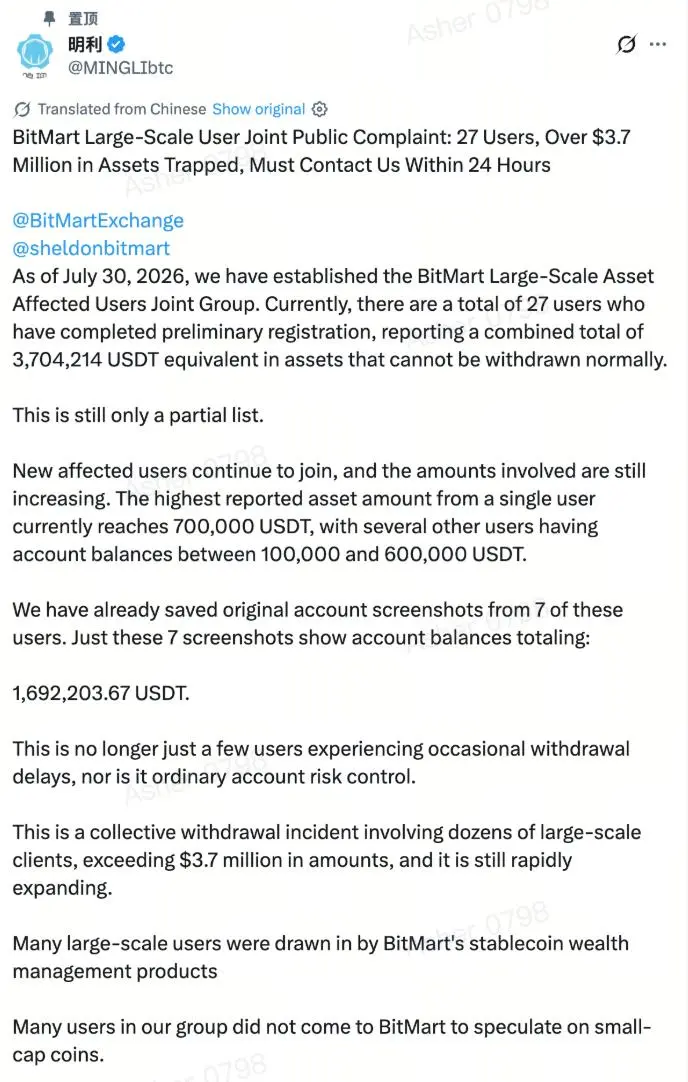
BitMart Users Report $3.7 Million in Assets Unable to Be Withdrawn (For Details, See: @MINGLIbtc)
BitMart is also facing an investigation by the U.S. Federal Trade Commission (FTC). The FTC is reportedly investigating BitMart‘s operator over a December 2021 hacking incident that resulted in losses estimated between $150 million and $200 million. This marks the FTC’s first investigation into the cryptocurrency market.
Meanwhile, from August 1 to August 3, the Hong Kong Police Force, in collaboration with the Macao Judiciary Police, launched a cross-border joint law enforcement operation codenamed “Operation Junli” to crack down on criminal groups involved in virtual currency investment scams. Eight suspects were arrested, with the total amount involved exceeding HK$97 million.
Several Life-Saving Tips for Crypto Traders
1. Dont Put All Your Eggs in One Basket
BitMart, BitMEX, and AscendEX — three well-known crypto exchanges — announced shutdowns within the same month.
Diversify your assets and never allow a single platform to control your entire net worth.
2. Be Cautious of High-Yield Financial Products
Guaranteed returns of 12% or 18.88% annually? In the cold crypto market of 2026, such products are often just a cover for Ponzi schemes.
Remember: the higher the promised return, the faster the potential collapse.
3. Withdrawal Issues Are a Red Alert
After BMX dropped more than 60%, BitMarts withdrawal approval times reportedly became significantly longer. This is often an early warning sign of platform risks.
Do not hesitate — if you can withdraw your assets, do it as quickly as possible.
4. Save All Transaction Records
Users should download and preserve account balances, deposit and withdrawal records, and transaction histories in advance.
Do it now — dont wait until the website becomes inaccessible before trying to recover your records.
5. Be Wary of “Deposit More, Get More” Promotions
The lessons from WooxPro are still fresh.
Such campaigns are not necessarily genuine benefits — they can also be a way to attract users and lock in funds.
6. Choose Regulated Platforms
Prioritize platforms supervised by reputable regulatory authorities. This at least provides a certain level of oversight and accountability.
Users can also check the regulatory status and risk information of exchanges through professional third-party platforms.
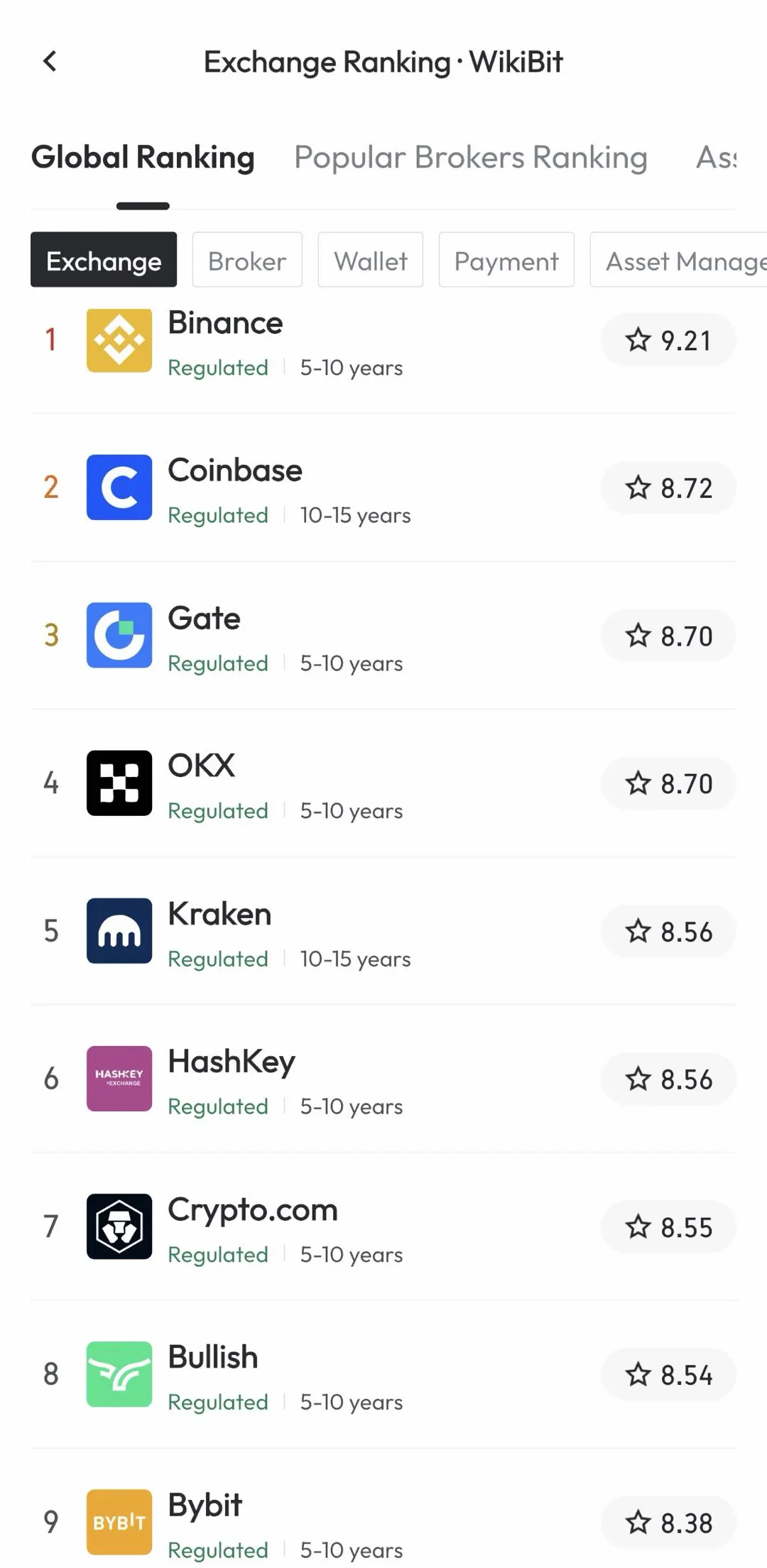
Exchange Regulatory Status (Source: WikiBit)
Finally, one more thing to say: the BitMart incident, from high-yield financial products to senior executives collapse, from layoffs and account restrictions to the CEO being “removed,” from the alleged transfer of 20 million USDT in assets to the alleged attempt to continue operations through WooxPro — this is not simply a case of poor management. It represents what critics describe as a textbook-style exit operation.
As for Sheldon himself, according to on-chain data, wallet addresses suspected to be controlled by Sheldon reportedly once held assets exceeding $10 million at their peak.
The hard-earned funds of users allegedly became his way to “secure profits and walk away.”