






Joint currency interventions in the yen by Japan and the US could ultimately benefit Bitcoin and risk assets.
Key points:
- The first joint intervention in the yen between Japan and the US since the late 1990s could set a precedent for future moves.
- A liquidity crisis tied to the yen carry trade poses questions for Bitcoin (BTC) and risk assets as the two countries attempt a juggling act to stabilize the currency without impairing US Treasury markets.
- Japanese two-year bond yields rose above 1.57% on Monday.
Bessent signals new era of US yen involvement
Washingtons growing coordination with the Bank of Japan (BoJ) points to a potential boost in global dollar liquidity — even as it runs up against a yen carry trade unwind that could squeeze liquidity if it deepens further.
Last week, the US and Japan conducted a rare joint intervention to prop up the yen, which had slid to 40-year lows of 164 per dollar — the first of its kind since 1998. The New York Federal Reserve Bank sold euros, rather than dollars, on behalf of the US Treasury. The sales involved the Exchange Stabilization Fund, or ESF, a stockpile of foreign exchange reserves.
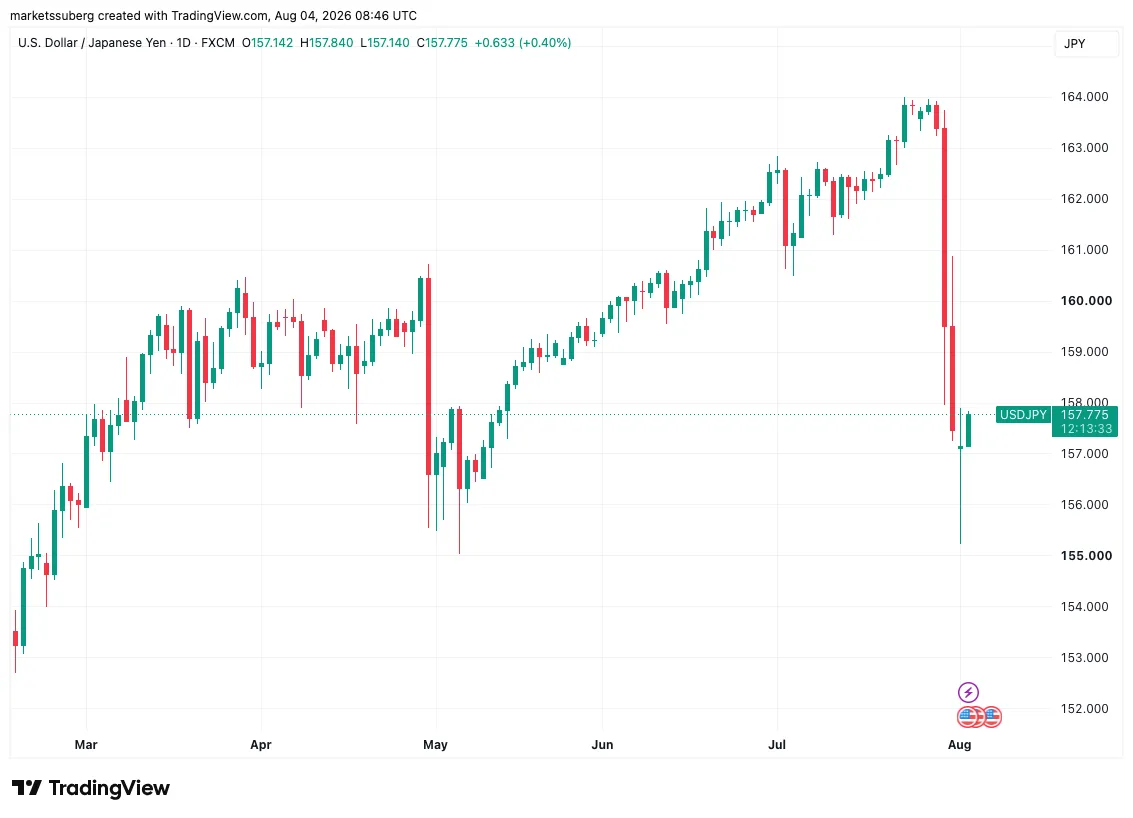
USD/JPY one-day chart for Tuesday. Source: Cointelegraph/TradingView
Subsequently, US Treasury Secretary Scott Bessent publicly placed emphasis on meeting with BoJ Governor Kazuo Ueda at the forthcoming G20 gathering of finance ministers in North Carolina at the end of August.
“Japans economy continues to perform well under Prime Minister Takaichi, Governor Ueda, and the Bank of Japan Board, which has demonstrated a strong commitment to monetary and financial stability. We continue to enjoy a strong relationship and close coordination,” he said.
The BoJ is one of the few central banks with access to the Federal Reserves Foreign and International Monetary Authorities (FIMA) repo facility, which allows access to dollar liquidity without selling US Treasuries. Japan, as the largest holder of Treasuries, could push up yields should sales accelerate, which would in turn increase borrowing costs for the US government, corporations and consumers alike.
In a subsequent post, Bessent drew attention to FIMA, calling for the facility to be expanded.
“The FIMA Repo Facility is an important backstop. We would encourage it to be upsized in the coming months. We strongly support Japans decisive market and monetary steps to correct the substantial undervaluation of the yen,” he continued.
FIMA use sees the Fed provide dollars to foreign institutions, which use Treasurys as collateral, with the result that the facility is positive for dollar liquidity, as it increases the supply of dollars outside the US.
Bitcoin may rise from the yen carry trades ashes
Reactions to the move were mixed, with economist Mohamed El-Erian noting that the US government was now bound into coordination with the BoJ going forward.
“Washington has now signed onto a strategy whose ultimate success doesn‘t rest in its own hands. Instead, as discussed in previous posts, it hinges on a comprehensive policy alignment in Tokyo among the Bank of Japan, the Ministry of Finance, and the Prime Minister’s Office,” he said.
In Bitcoin circles, too, there were misgivings about the long-term implications of ongoing yen interventions — even if these inadvertently boosted the BTC bull case. Expectations have long anticipated the disintegration of the yen carry trade as the BoJ shifts away from past decades of low interest rates.
This outcome is being spurred on by other aspects of Japans own domestic fiscal policy. High government spending has helped government bond yields hit multi-decade highs, and this in turn makes yen funding mechanisms less attractive.
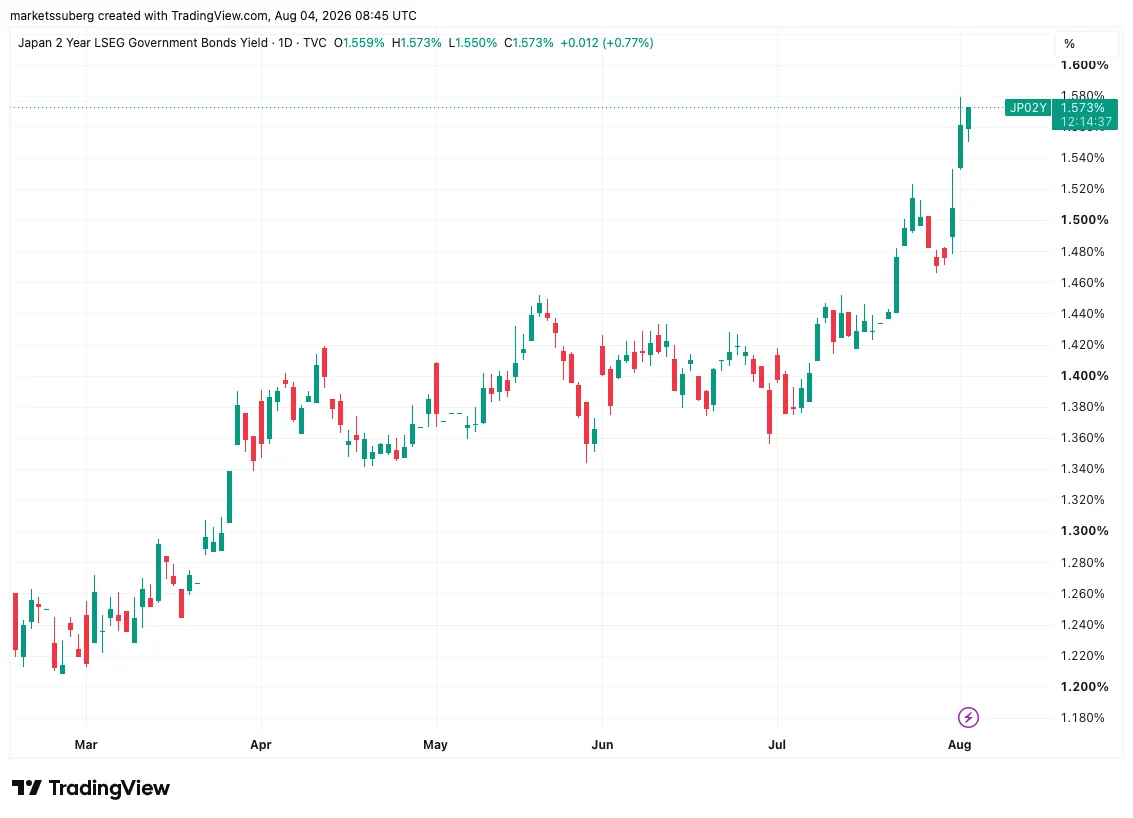
Japan two-year bonds, one-day chart. Source: Cointelegraph/TradingView
Japanese two-year bond yields rose above 1.57% on Monday, a signal that low-interest-rate conditions were coming to an end in advance of market expectations. Japanese investors repatriating capital to take advantage of this sea change in the domestic economy adds to the risk of the carry trade unwinding further.