






Circle‘s USDC (USDC) has overtaken Tether’s USDt (USDT) in stablecoin trading against the euro, as European Union regulations increasingly favor bloc-compliant stablecoins, according to a new Kaiko report.
USDC now accounts for 56% of stablecoin trading against the euro, up from just 10% in January 2024, according to Kaiko data. The shift accelerated after major exchanges restricted USDT trading for customers in the European Economic Area under the Markets in Crypto-Assets Regulation (MiCA).
USDC has also overtaken USDT in euro-denominated trading liquidity, with its order books now roughly 40% deeper than its rivals. Tether remains the larger stablecoin globally, with a circulating supply about 2.5 times that of USDC.
Kaiko described stablecoin-to-euro trading pairs as a “main on-ramp and off-ramp for European customers,” allowing them to exchange euros for US dollar-pegged stablecoins when entering or exiting cryptocurrency markets.
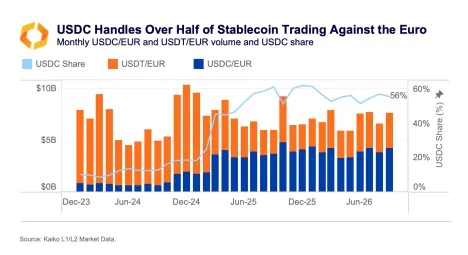
USDC-to-euro trading pair overtakes USDC-to-USDT. Source: Kaiko
The findings come about two weeks after the European Banking Authority designated USDC as the EUs first “significant e-money token” under MiCA, a classification that places the stablecoin under direct EBA supervision and subjects its issuer to additional regulatory requirements.
Related: Germany leads MiCA crypto authorization race as Europes deadline looms
US stablecoin rules could shift the balance between Circle and Tether
Kaiko said the US is taking a similar approach to stablecoin regulation under the GENIUS Act, raising the possibility that American exchanges could see the same shift in trading activity observed in Europe.
On Oct. 21, the Office of the Comptroller of the Currency issued its first final rule under the law, establishing reserve and redemption requirements for stablecoin issuers under its supervision, effective Jan. 18, 2027.
Beginning in July 2028, US platforms will also face restrictions on offering stablecoins from issuers that do not meet the laws approval requirements.
The regulatory changes could favor Circle, which has pursued authorization in both Europe and the US. Tether has taken a different approach, launching a separate US-focused stablecoin, USAT.
Related: Treasury Secretary Bessent likens GENIUS Act to Lincoln-era banking reform