







Summary
- Jupiters Lend v2, introduced Monday, allows deposits and borrowed positions to double as trading liquidity so users can earn both lending interest and a share of swap fees from the same capital.
- The product introduces optional Smart Collateral and Smart Debt features that automatically pair assets into correlated liquidity pools, boosting yields for depositors and offsetting borrowing costs when traders route swaps through those pools.
- While borrowers in correlated pools are protected if one stablecoin depegs, collateral providers bear the loss on either asset, a risk Jupiter seeks to limit by confining the design to stablecoin pairs and SOL versus its staked versions.
Solana decentralized-lending giant Jupiter rolls out its new Lend version 2 (v2) product on Monday, allowing deposits and borrowed positions to simultaneously act as trading liquidity so the same dollar earns interest as a loan and a share of swap fees.
Jupiter Lend holds about $1.9 billion in deposits, according to DefiLlama data, and generated $1.6 million in fees over the past 30 days, or roughly 1% a year on the capital sitting there before any split with the protocol.
Active loans stand at $822.7 million and have fluctuated between $600 million and $900 million since September, Token Terminal data show. Deposits and loans have both slipped over the past month.
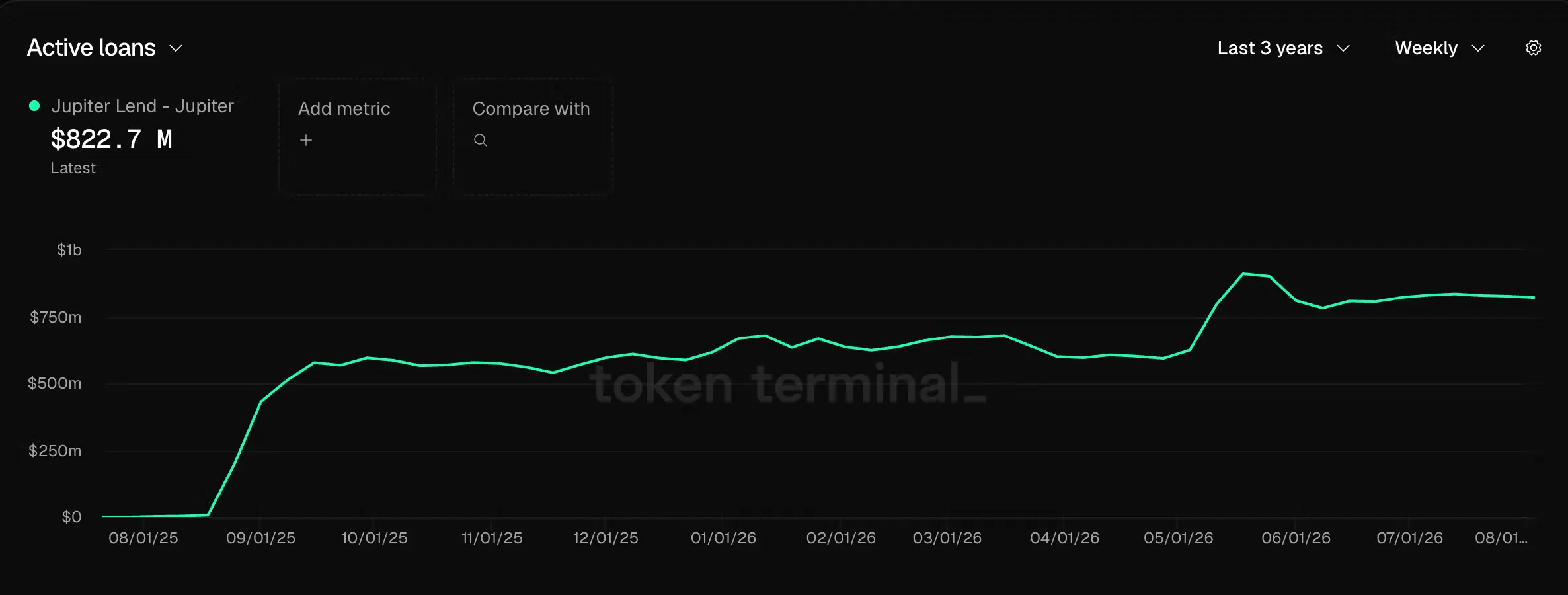
(Token Terminal)
The new version of Lend introduces two features, both optional.
Smart Collateral lets a deposit of USDC, USDT, SOL or JupSOL be paired automatically into a correlated liquidity pool. That allows the assets to earn yield on any loans while gaining trading fees and, where applicable, staking rewards from one position. Smart Debt does the same for borrowed assets, so fees generated by a debt position offset the cost of the loan. Users who want ordinary lending can ignore both.