On July 23, BitMEX, the pioneer of perpetual contracts, announced that it would officially shut down operations on September 23.
On July 26, BitMart, once ranked among the worlds top 10 cryptocurrency exchanges, announced that it would officially cease platform operations on January 31, 2027.
Neither of these exchanges was an unknown small-scale platform. One had been operating for 11 years, while the other had been in operation for 8 years. Both were veteran exchanges that grew alongside the explosive expansion of the cryptocurrency industry and could be considered witnesses to the evolution of the crypto market.
However, before BitMEX and BitMart announced their shutdowns, warning signs and risk forecasts had already emerged in the market.
For example, WikiBit, a global cryptocurrency exchange regulatory verification and risk assessment platform, had already assigned relatively low risk scores to both exchanges: 5.48 for BitMEX and 5.16 for BitMart.
Within a short period, both exchanges accumulated multiple risk alerts — 3 risk indicators for BitMEX and 6 for BitMart — including user complaints, significant increases in capital outflows, and cryptocurrency regulatory concerns.
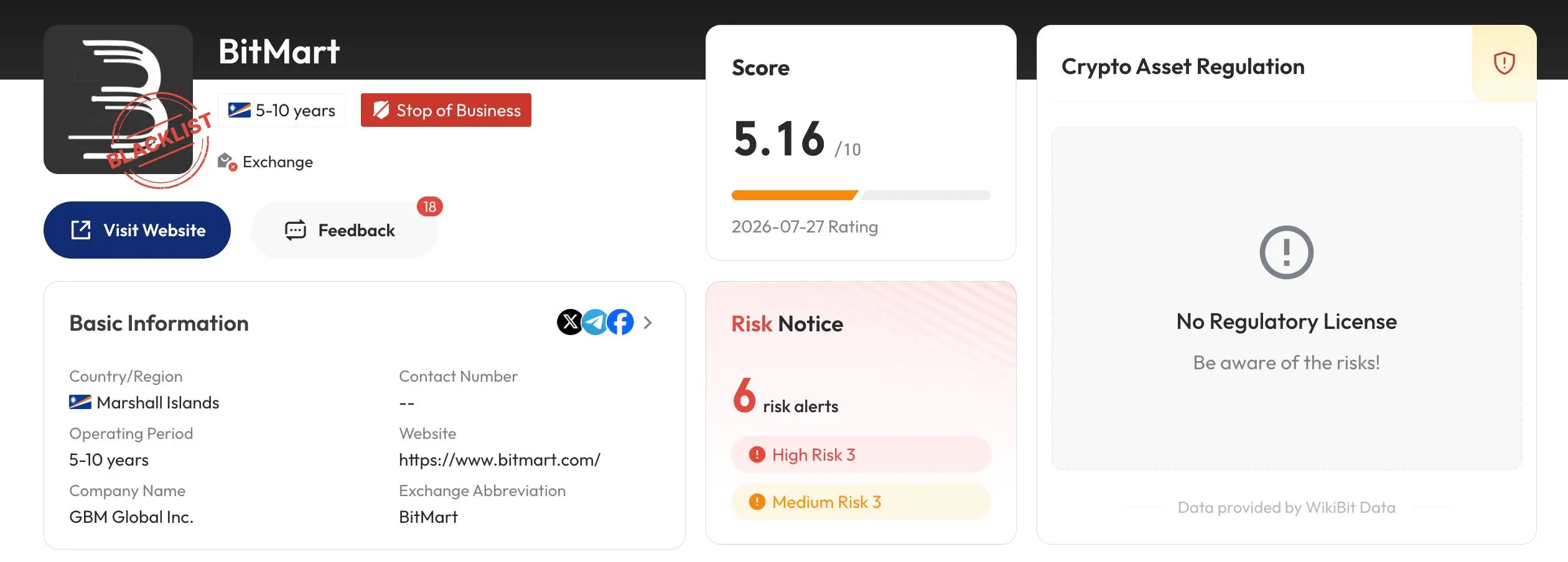
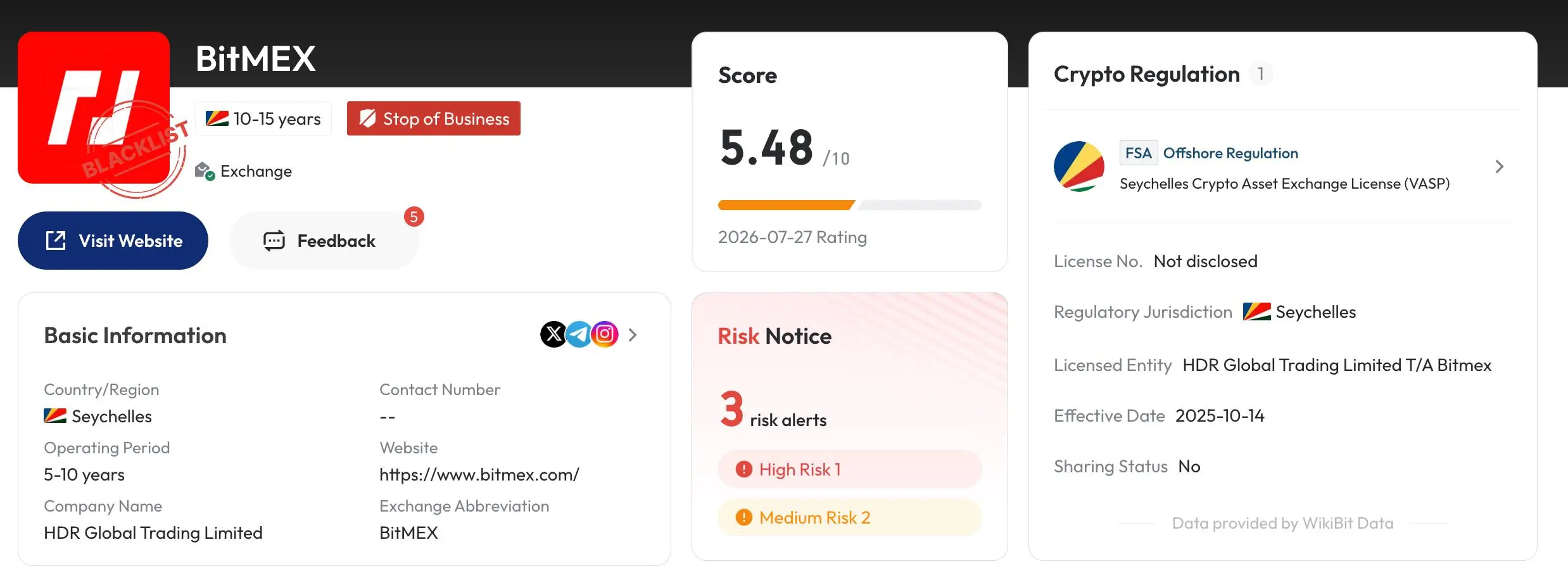
BitMEX and BitMart Risk Data (Source: WikiBit)
Regardless of the reasons, the collapse of two relatively large exchanges within just one week has sent a chilling message throughout the crypto market.
The cold winds of this bear market appear sharper than ever.
Is this wave of exchange failures a signal that the bear market is reaching its bottom, or does it represent the beginning of a deeper structural crisis?
For ordinary users, the more important question is:
How can investors identify risks before the storm arrives and protect their assets?
BitMEX and BitMart: Two Exchanges, One Similar Fate
BitMEX: From the “Father of Perpetual Contracts” to a Silent Exit
Founded in 2014, BitMEX launched the worlds first Bitcoin perpetual contract, XBTUSD, in May 2016.
By eliminating expiration dates, using funding rates to anchor prices to spot markets, and supporting up to 100x leverage, BitMEX became one of the leading forces driving the development of crypto derivatives markets.
At the time, it was considered a revolutionary innovation that reshaped crypto trading.
Less than three years after launching perpetual contracts, BitMEX had captured approximately 53% of the global crypto derivatives market share.
Its dominance in derivatives trading was arguably even stronger than Binances current influence in the derivatives sector.
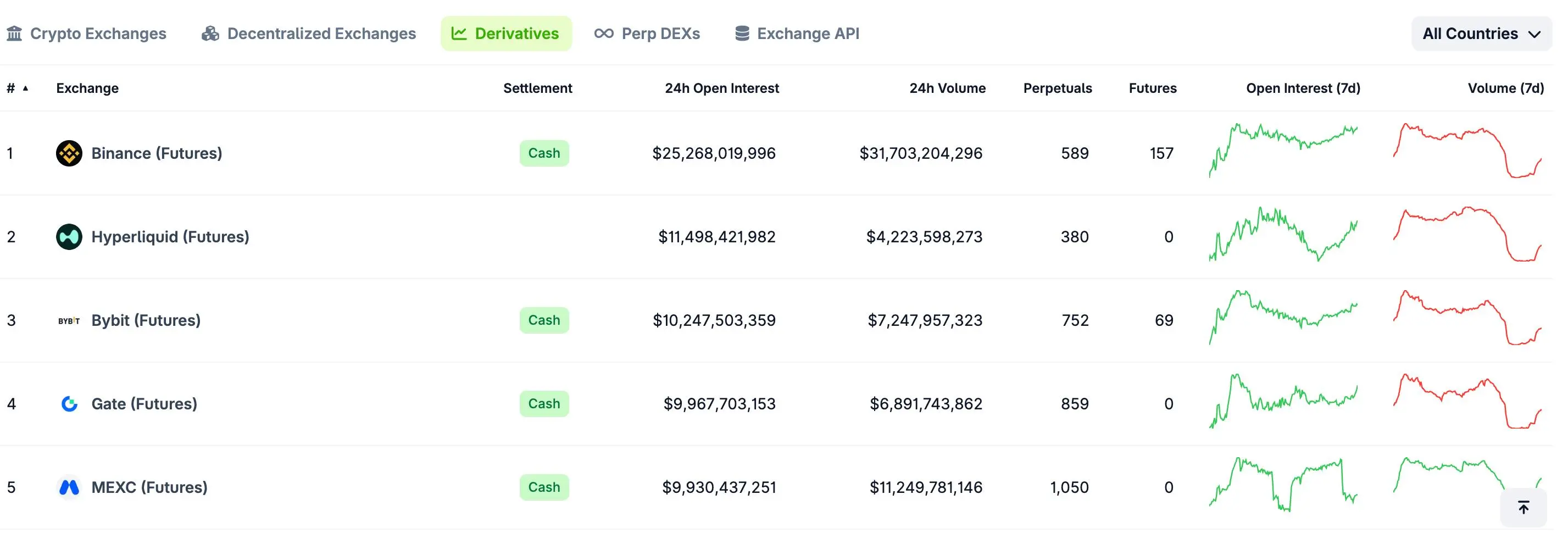
Ranking of Crypto Derivatives Exchanges by Open Interest and Trading Volume (Source: CoinGecko)
However, even the king of an era could not escape its eventual decline.
According to the official announcement, BitMEXs shutdown will proceed in three stages:
- Immediately after the announcement: New user registrations will be suspended.
- Starting August 26: The platform will impose risk limits. Users will only be allowed to reduce positions and will no longer be able to open new positions.
- September 23: BitMEX will officially shut down, and all remaining open positions will be forcibly closed.
More concerningly, BitMEX stated that the closing of positions would be carried out at the platforms sole discretion, and the exchange would not be responsible for any trading losses incurred by users who were unable to manually close their positions during this period.
Following the shutdown announcement, BitMEXs platform token BMEX plunged approximately 94.51% within 24 hours, falling from $0.06068 to $0.00517.
As of publication, BMEX has continued declining to $0.002072, reaching a new all-time low.
BitMart: From a “Top 10 Exchange” to a Hasty Departure
BitMart was once ranked among the worlds top 10 cryptocurrency exchanges.
Its shutdown timeline is even more compressed:
- Starting July 26: New user registrations, deposits, and new order submissions were suspended.
- Starting August 26: All spot trading, futures trading, and other trading services will be discontinued.
- January 31, 2027: The platform will officially cease operations.
However, BitMarts shutdown process has been marked by confusion and internal disorder.
BitMart Global CEO Nathan Chow publicly stated that he was not involved in the shutdown decision and had not been informed beforehand. He only learned about the decision after the announcement was made public.
His position as Global CEO was also terminated on July 24.
The fact that a senior executive was reportedly “kept in the dark” about such a major decision reflects serious internal management and governance issues within the platform.
Analysis of the Reasons Behind the Shutdowns of BitMEX and BitMart
No matter how stubbornly optimistic crypto bulls may be, they have to acknowledge one reality: the market has entered a deep bear cycle.
Under such severe market conditions, liquidity has dried up, and the reality that “fewer people are trading crypto” has become an unavoidable issue.
From a macroeconomic perspective, the Federal Reserves interest rate remains elevated at 3.50%–3.75%, forcing global investors and businesses to tighten spending. Overall market sentiment toward the future has become increasingly pessimistic.
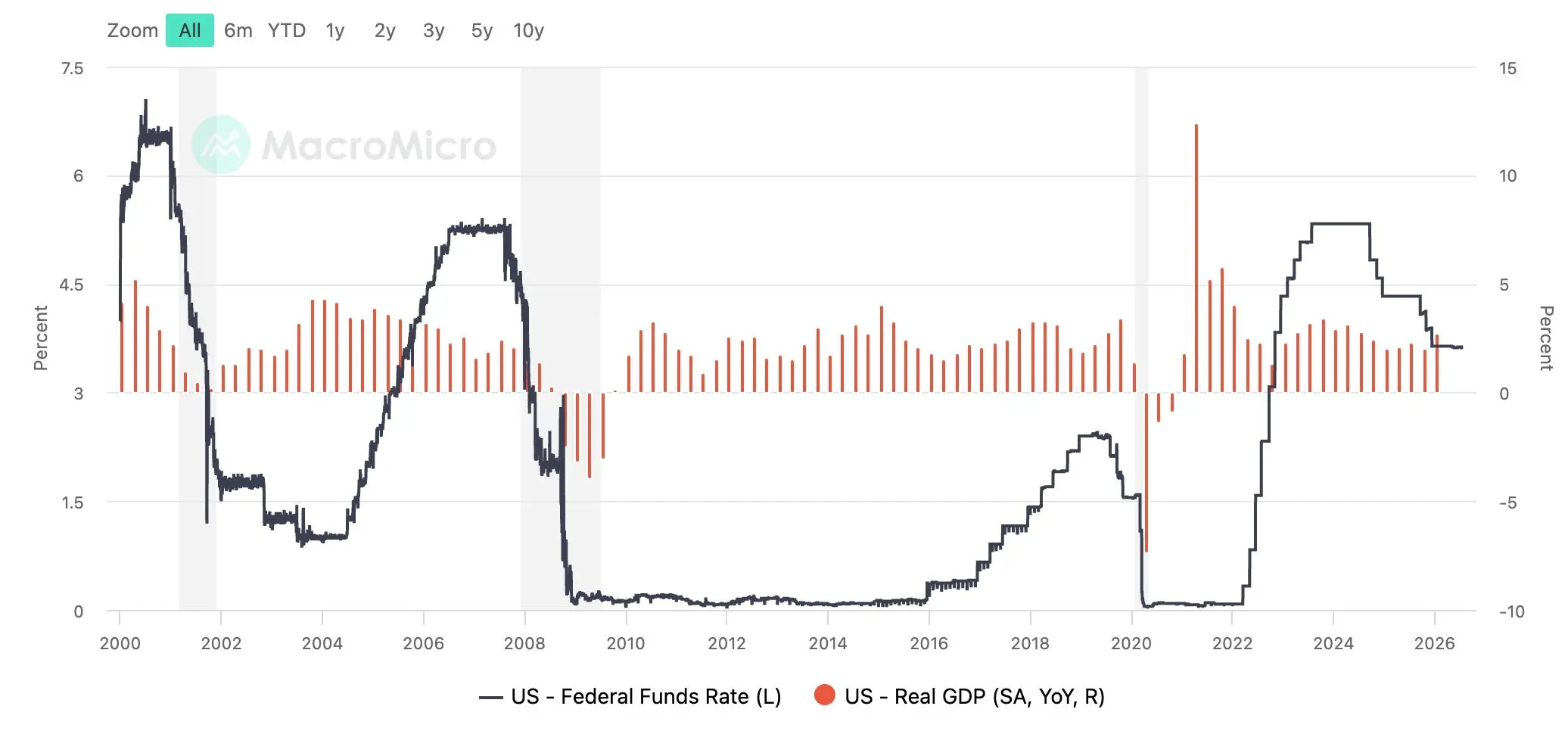
Federal Reserve Interest Rate (Source: MacroMicro)
The crypto market, as an asset class heavily dependent on abundant liquidity, is fundamentally driven by expectations. However, when liquidity becomes insufficient and future growth prospects appear uncertain, there is little reason for struggling platforms to continue operating under pressure.
From the perspective of the current industry landscape, liquidity continues to concentrate toward leading platforms, while compliance costs continue rising.
The survival space for second- and third-tier exchanges is being increasingly squeezed.
For exchanges like BitMEX and BitMart, even a single critical failure can potentially disrupt overall operations and threaten the platforms long-term survival.
For example, before its shutdown announcement, BitMEX accelerated the delisting of 65 derivatives contracts and spot trading pairs, far exceeding the 19 products removed during the first six months of the year.
The official explanation was “insufficient trading interest.”
However, when trading volumes continue shrinking and users continue leaving, the fundamental foundation supporting an exchanges survival has already begun to weaken.
Regulatory Pressure: The “Life-or-Death Line” for Exchanges
Another major factor is the increasing pressure from regulators.
It can be said that compliance has become the “life-or-death line” determining whether a cryptocurrency exchange can survive.
Previously, the four co-founders of BitMEX were fined $10 million each and placed under home confinement for violating the Bank Secrecy Act.
Binance founder CZ attributed BitMEXs downfall partly to the “crypto war” during the Biden administration era. While this perspective remains debatable, it is not without justification, as regulatory pressure has clearly had a significant impact on crypto companies.
In addition, the European Unions MiCA (Markets in Crypto-Assets Regulation) framework fully came into effect in July 2026, becoming the final blow for many exchanges.
Higher compliance requirements mean that small and medium-sized exchanges must invest significantly more resources to meet regulatory standards.
However, in a deep bear market, declining trading volumes and shrinking revenues make these investments increasingly difficult to sustain.
Internal Governance Issues: The Decisive Factor Behind the Collapse
Of course, it would be unreasonable to attribute all problems solely to external factors.
Internal mechanisms and governance issues may have been even more decisive.
For example, BitMEXs insurance fund structure faced several criticisms, including:
- The lack of segregated account management;
- No clearly defined upper limit for the insurance fund size;
- Unclear procedures for handling excess assets.
More seriously, BitMEX is also facing a proposed class-action lawsuit.
The plaintiffs allege that the exchange retained 622.66 BTC that should have been returned to traders by forcibly liquidating leveraged positions.
For BitMart, community discussions have mainly focused on financial issues and internal management disorder.
Crypto influencers have pointed out that BitMarts hot wallet addresses showed abnormal activity, while the platform failed to provide clear explanations regarding issues such as user account freezes and withdrawal problems.
Some users have also accused BitMart of allegedly obtaining funds through questionable listing fee practices.
Of course, the collapse of a major platform is never caused by a single event.
The reasons behind the shutdowns of BitMEX and BitMart go far beyond the issues mentioned above.
However, these are challenges that many cryptocurrency exchanges must confront and solve.
Otherwise, more platforms may eventually follow the same path as BitMEX and BitMart.
Warning Signs: How to Identify Exchange Risks Before It Is Too Late?
Looking back at the shutdown processes of BitMEX and BitMart, their failures were not completely unexpected. Several warning signals had already emerged beforehand.
The following risk indicators deserve close attention from every crypto user:
Signal 1: Frequent Executive Changes or Departure of Core Team Members
Three weeks before its shutdown announcement, BitMEX suddenly replaced key executives.
Meanwhile, BitMarts CEO reportedly only learned that his position had been terminated after the shutdown announcement was made public.
Unusual turbulence among senior management is often one of the earliest signs that a platforms operations are deteriorating.
Signal 2: A Sharp Decline in Platform Token Prices
Following the shutdown announcement, BMEX plunged 94.51%, while BitMarts platform token BMX dropped more than 60%.
A significant and sustained decline in a platform token‘s price often reflects internal stakeholders’ pessimistic expectations regarding the platforms future prospects.
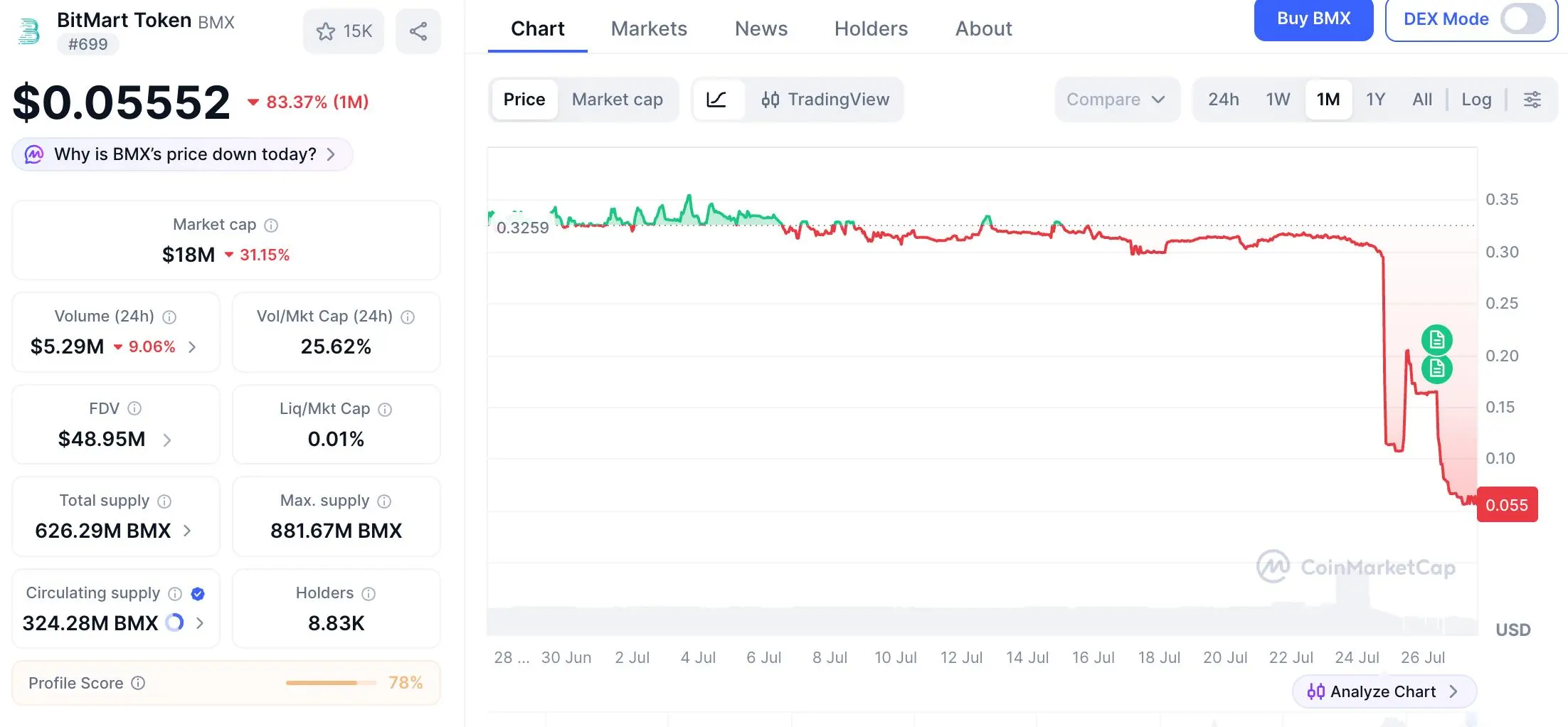
Recent BMX Price Trend (Source: CoinMarketCap)
Signal 3: Withdrawal Issues and Continuous Large-Scale Capital Outflows
Withdrawal delays are among the most direct warning signs of exchange risk.
Before its shutdown, BitMart had already faced reports of withdrawal delays, with multiple users claiming that their withdrawal reviews were taking longer than expected.
Data from third-party risk monitoring platform WikiBit further confirmed this warning signal.
Before the shutdown announcement, BitMart recorded $1.62 million in net capital outflows within 24 hours. Its 24-hour outflow volume was higher than 81.81% of exchanges in the market.
Continuous and large-scale capital outflows often serve as an earlier warning signal than any official announcement — smart money always exits first.
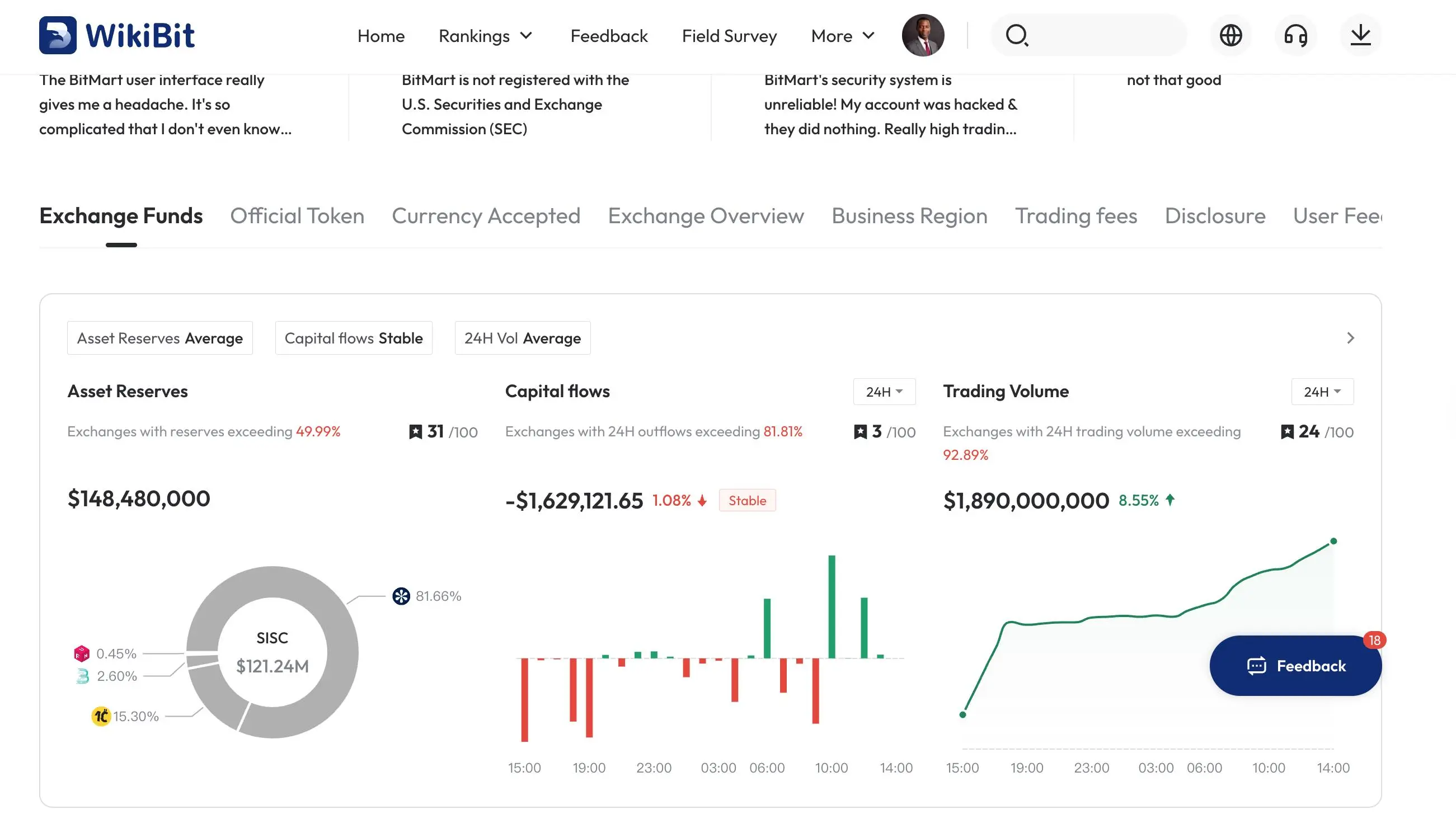
BitMart Capital Outflow Data (Source: WikiBit)
Signal 4: Large-Scale Delisting of Trading Pairs
One month before shutting down, BitMEX accelerated the removal of 65 trading products, far exceeding the total number of products delisted during the previous six months.
Large-scale delisting of trading pairs often indicates that a platform is actively shrinking its business operations and preparing for a potential shutdown.
Signal 5: Seeking Acquisition or Sale but Finding No Buyer
BitMEX reportedly spent more than a year searching for potential buyers but failed to complete a transaction.
When a well-known exchange publicly seeks a buyer but receives no acquisition interest, this alone can be considered one of the most serious warning signals.
Signal 6: Lack of Regulatory Licenses and Internal Management Chaos
BitMart has faced allegations of internal management disorder, including claims of unpaid employee salaries and bonuses.
Operational instability within a company can eventually translate into risks for users.
However, the deeper issue lies in the lack of a solid compliance foundation.
According to WikiBits risk assessment, BitMart currently has no verified valid cryptocurrency regulatory license.
The regulatory claims it made regarding:
- U.S. NMLS regulation (License No. 1848179)
- U.S. FinCEN registration (Registration No. 31000312975069)
have not been independently verified.
Furthermore, WikiBit received 10 complaint reports and exposure cases related to the platform within the past three months.
BitMarts overall WikiBit risk score was only 5.16 out of 10.
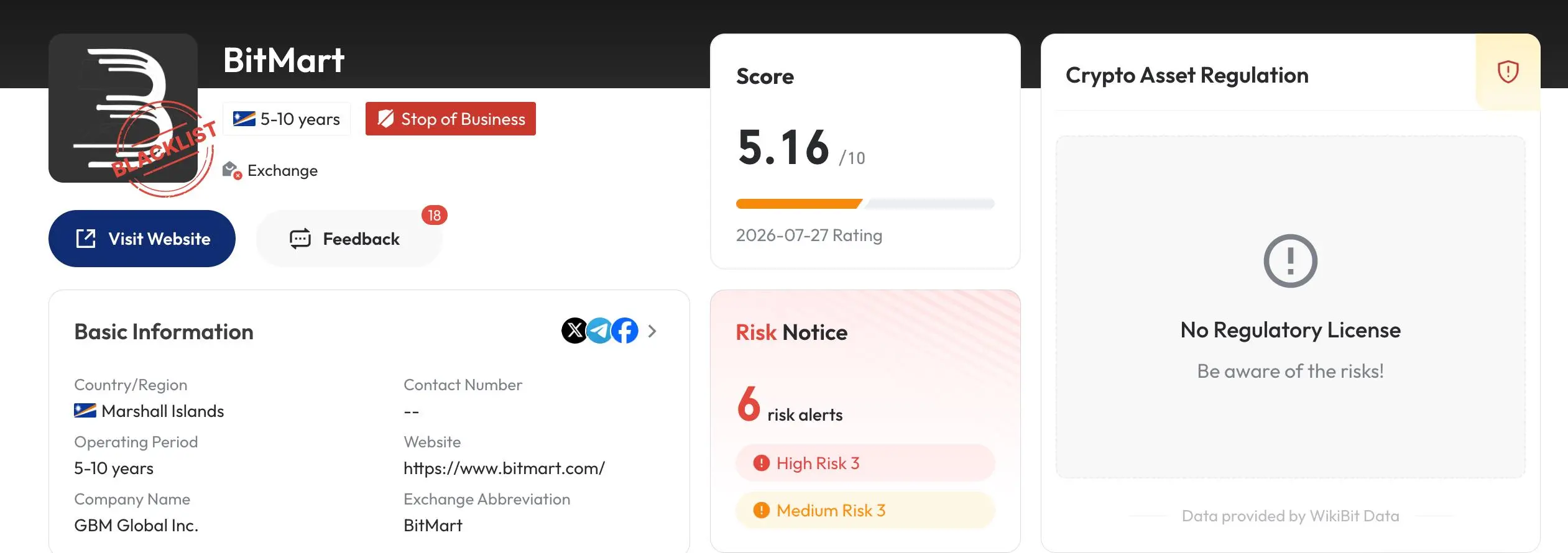
BitMart Risk Assessment Results (Source: WikiBit)
A platform with questionable regulatory qualifications provides users with little institutional protection once it encounters a severe market downturn.
During a deep bear market, exchanges without proper regulatory licenses generally have far weaker risk resistance than regulated institutions.
This is because regulation is not merely a restriction — it also serves as a fundamental safety barrier and institutional safeguard for users assets.
User Self-Protection Guide: How to Protect Your Assets During an Exchange Shutdown Storm?
Under the current deep bear market conditions, the shutdowns of BitMEX and BitMart may only be the beginning.
Every wave of exchange failures leaves thousands of traders facing potential losses: some may have to wait years to recover their funds, while others may never get them back at all.
So, what should ordinary users do to protect their assets during an exchange shutdown crisis?
First: Take Immediate Action — Withdrawal Should Be the Top Priority
If you still have assets on BitMEX or BitMart, withdraw them immediately according to the official procedures.
BitMEX users should pay close attention to the restriction starting August 26, when users will only be able to reduce positions and will no longer be able to open new positions.
BitMart users should complete identity verification and close all positions before August 26.
Do not wait blindly for a potential “rebound.”
The sharp decline of platform tokens following the shutdown announcements has already sent a clear warning.
Second: Avoid Holding Excessive Assets on Exchanges
Store your crypto assets in hardware wallets whenever possible and avoid keeping large amounts of funds on centralized exchanges for extended periods.
The golden rule of the crypto industry — “Not your keys, not your coins” — has been repeatedly proven during every major exchange failure.
Third: Diversify Risk — Never Put All Your Eggs in One Basket
Spread your funds across multiple platforms and regularly monitor exchange stability indicators.
When choosing an exchange, users should verify:
The platforms legal entity information;
Regulatory disclosures;
Compliance status;
Whether withdrawals can be successfully transferred to personal wallets.
Risk diversification is one of the most effective ways to reduce exposure to a single platform failure.
Fourth: Use Third-Party Monitoring Tools to Make Risks “Visible”
In the crypto market, where information asymmetry remains a major challenge, third-party data monitoring platforms are valuable tools for identifying potential risks.
Taking WikiBit as an example, such platforms can provide critical information including:
Exchange regulatory license verification;
Capital flow tracking;
User complaint aggregation;
Comprehensive risk ratings.
Before BitMart announced its shutdown, WikiBit had already clearly identified several risk indicators, including:
“No verified regulatory license”;
“18 complaint exposure records”;
“Risk score of only 5.16.”
These publicly available signals could have served as important early warnings for users.
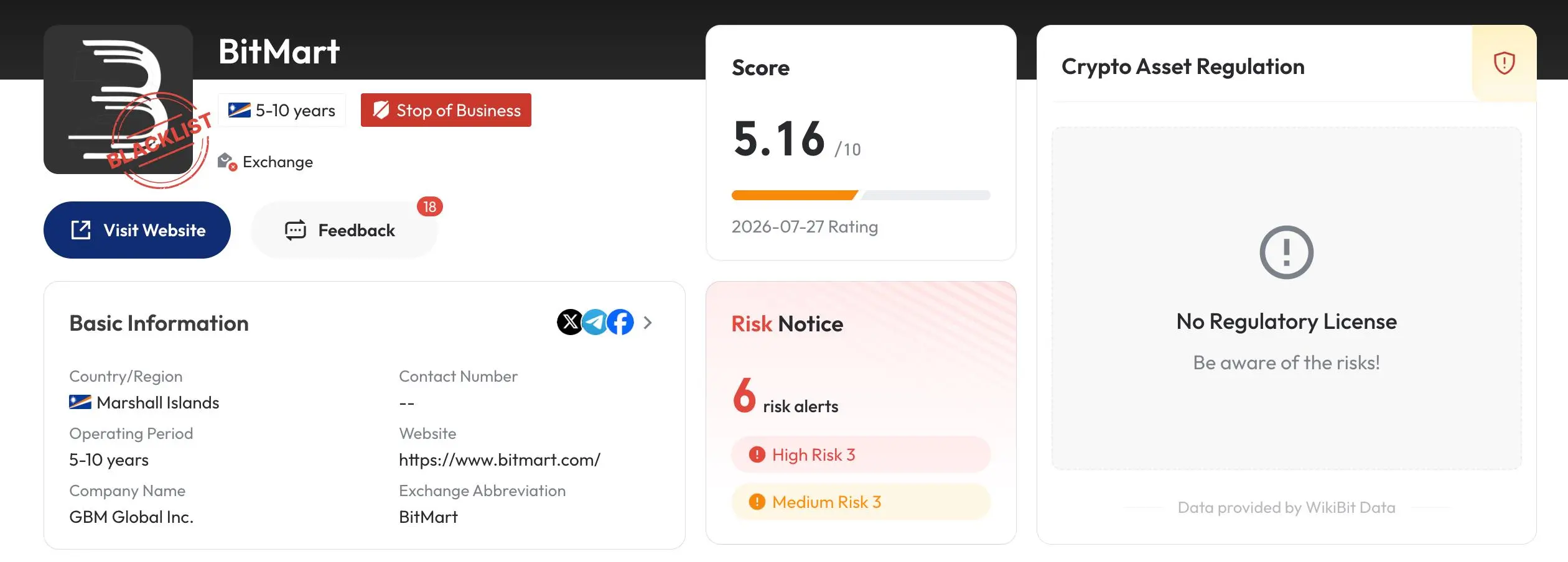
BitMart Risk Assessment Results (Source: WikiBit)
In the crypto world, “check before investing” should become as natural as “ask before buying.”
Do not wait until an exchange officially announces its shutdown before taking action.
Risk warnings displayed on third-party monitoring platforms often appear months earlier than official announcements.
Fifth: Stay Alert and Build Your Own Risk Monitoring System
Users should regularly monitor the following indicators:
Platform token price movements;
Withdrawal speed and success rates;
Exchange wallet fund movements through on-chain analytics tools;
Executive and core team changes;
Trading pair delisting announcements;
Community sentiment;
User feedback from third-party platforms.
Building a personal risk monitoring system can significantly improve the ability to identify threats before they become crises.
Conclusion: Is This Wave of Shutdowns the End or the Beginning?
Over previous market cycles, the shutdown of exchanges that failed to maintain sustainable business models was often viewed as a sign that the bear market was approaching its bottom.
Today, the consecutive collapse of BitMEX and BitMart may also suggest that a market turning point could be approaching.
However, regardless of whether this represents a bottom signal, ordinary users should remember one thing:
Protecting your assets is always more important than predicting the market bottom.
When Binance founder CZ commented on multiple CEX shutdowns, he described the situation as:
“Too brutal. Hopefully, this is a bottom signal.”
The brutality is real.
But hope should never be built on luck or blind optimism.
In this freezing deep bear market, the only thing that truly matters is:
Survive — and survive with your assets intact.