






The collapse of Silicon Valley Bank (SVB) saw investors loading their bags with USD Coin (USDC), along with an exodus of funds from centralized exchanges (CEXs) to decentralized exchanges (DEXs).
Outflows from centralized exchanges often spike when the markets are in turmoil, explained blockchain analysis firm Chainalysis in a March 16 blog post, as users are likely worried about losing access to their funds when exchanges go down.
Data from Chainalysis shows that hourly outflows from CEXs to DEXs spiked to over $300 million on March 11, soon after SVB was shut down by a Californian regulator.
A similar phenomenon was observed during the collapse of cryptocurrency exchange FTX last year, amid fears that the contagion could spread to other crypto firms.
However, data from the blockchain analytics platform Token Terminal suggests that the surge in daily trading volumes for large DEXs was short-lived in both cases.
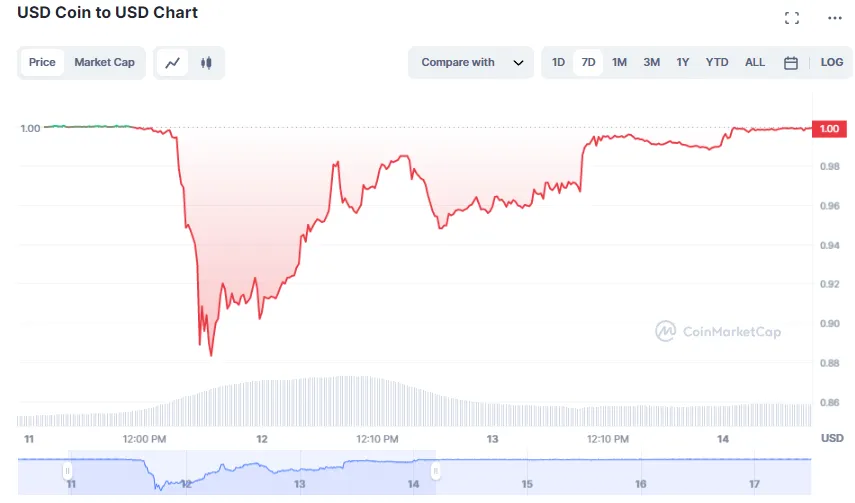
USDC was identified as one of the top assets being moved to DEXs, which Chainalysis said was unsurprising given that USDC depegged after stablecoin issuer Circle announced it had $3.3 billion in reserves stuck on SVB, prompting many CEXs like Coinbase to temporarily halt USDC trading.
Related:
What was surprising, Chainalysis noted, was the surge in USDC acquisitions on large DEXs such as Curve3pool and Uniswap, saying: “several assets saw large spikes in user acquisition, but none more than USDC.”
Chainalysis theorized that this was due to confidence in the stablecoin, with some crypto users loading up on USDC while it was relatively cheap and betting that it would regain its peg — which it did on March 13, according to CoinMarketCap.