FSARegulated
Japan Crypto Asset Exchange License (CEX)





Japan Crypto Asset Exchange License (CEX)

What is SBI VC Trade (SBI VCトレード)?
SBI VC Trade is a Japanese crypto asset (virtual currency) exchange and sales office, belonging to the SBI Group. Account opening, account maintenance, deposits, and withdrawals are all free.
Platform Features
Platform supports spot trading of a total of 42 coins including Bitcoin, XRP, Ethereum, Cardano, Dogecoin, Solana, etc., and also provides leverage trading, coin lending, and regular investment services, focusing on reassuring security and simple-to-use trading tools and app.
Nine cryptocurrencies lost some purchasing, order-book or deposit functionality across two Japanese retail crypto brands on October 7, 2026. The affected assets are not one unified market event: they belong to two distinct product notices issued by businesses now operating under SBI VC Trade after corporate consolidation. VCTRADE is retiring APT, ETC and OAS. BITPOINT is retiring BNB, DEP, JMY/JASMY, OSHI, PEPE and TRUMP. Both set major final service dates for October 28 at 13:00 JST, but asset-level withdrawal availability, collateral handling and trading mechanisms differ.VCTRADE: APT, ETC and OAS SBI VC Trade says purchases of Aptos, Ethereum Classic and Oasys ended October 7 at 13:00 JST. Sales are scheduled to continue until October 28 at 13:00 JST. Its funding notice also ends OAS inbound transfers at the first cutoff and OAS outbound transfers at the final cutoff. The critical distinction: VCTRADE does not provide crypto withdrawal services for APT or ETC under this product. Therefore the option to withdraw the original token before delisting is not available there for those two assets. OAS holders can apply to withdraw before the final cutoff, subject to the exchanges acceptance and processing controls.Margin-collateral haircut: 50% to zero SBI VC Trade also states that APT, ETC and
Tokenization usually starts with the asset. A bond, fund or stock is represented digitally. The payment side often remains conventional. Startale Japan is testing the reverse question: What changes when the bonds cash flows themselves settle in a regulated stablecoin? On October 6, Startale Japan opened subscriptions for its first guaranteed digital corporate bond, marketed as a “Stablecoin Adoption Bond.” The offering totals ¥99.9 million. It has a one-year term. The fixed annual coupon is 5.00% before tax. The minimum subscription unit is ¥100,000. Both interest payments and final principal redemption are scheduled to be paid in JPYSC, a yen-denominated trust-type stablecoin issued by SBI Shinsei Trust Bank. The issuance is small by institutional fixed-income standards. Its design is more important than its size. It puts a regulated stablecoin directly into the lifecycle of a conventional corporate liability.The Bond Is Conventional; the Cash Rail Is New The instrument still has familiar fixed-income economics. An investor subscribes to a bond. The issuer owes scheduled interest. The issuer repays principal at maturity. The difference is how those payments are delivered. Instead of sending yen through ordinary bank-transfer rails, the scheduled cash flow arrives in JPYSC through the Startale application. That distinction matters because a large share of tokenization experiments focus on digital ownership but leave payment and settlement outside the blockchain-oriented stack. If
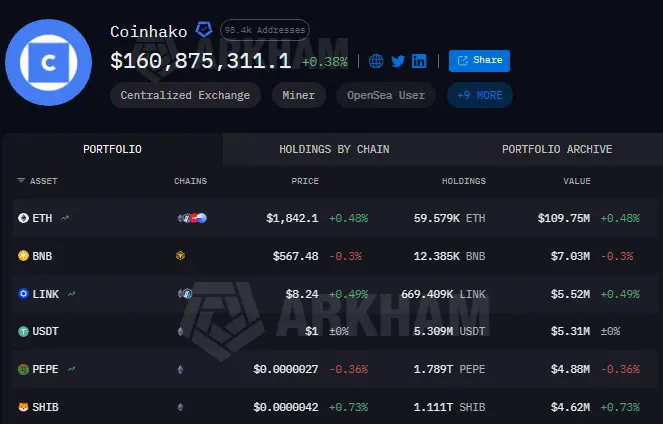
Japanese financial giant SBI Holdings has gained exposure to a substantial Shiba Inu holding following its acquisition of Singapore-based cryptocurrency exchange Coinhako. The acquisition, carried out through SBIs subsidiary, SBI Ventures Asset, received final approval from the Monetary Authority of Singapore (MAS), allowing the transaction to close. As a result, Coinhako has become a consolidated subsidiary of SBI Holdings. Through the acquisition, SBI gains immediate access to Coinhakos regulated crypto infrastructure, expanding its digital asset ecosystem beyond Japan while strengthening its regional footprint. SBI Plans Broader Digital Asset Expansion SBI plans to leverage Coinhako as a gateway to expand its blockchain-based financial services across Southeast Asia. The integration will allow SBI to connect Coinhakos user base with products such as its yen-backed stablecoin JPYSC and tokenized real-world asset (RWA) offerings. The acquisition also strengthens SBI‘s regulatory position in the region by giving it access to Coinhako’s Singapore-based operations and Major Payment Institution (MPI) license from the Monetary Authority of Singapore. This provides a compliant foundation for expanding digital asset services without building a new infrastructure from the ground up. SBI Chairman Yoshitaka Kitao said the move aligns with the companys goal of creating global digital asset corridors that connect Japan and Southeast Asia through faster blockchain-powered