






The market capitalization of compliant euro stablecoins grew 128% in the year leading up to the end of the Markets in Crypto-Assets Regulation (MiCA) transition period, according to payments infrastructure firm Decta.
Decta said in a Sunday report that the combined market cap of eight MiCA-compliant euro stablecoins rose to $673.9 million on June 28, 2026, from $295.6 million on June 30, 2025. Trading volume rose 43.1% to $67.3 million from $47 million. The number of MiCA-compliant euro stablecoins tracked in the report also rose to eight from five over the period.
Decta tracked eight euro stablecoins that were actively issuing tokens and had market capitalization and trading volume during the study period. By contrast, the European Securities and Markets Authority interim MiCA register lists a broader set, including tokens that may not meet Decta's activity criteria.
The report found that euro-denominated stablecoins are growing under MiCA but from a small base in a market still dominated by dollar-backed tokens. CoinGecko data shows US dollar-pegged stablecoins at about $300 billion in market capitalization. The combined market capitalization of Decta's eight actively traded, MiCA-compliant euro stablecoins was 0.22% of the dollar stablecoin market.
From July 1, firms offering crypto-asset services in the European Union generally needed MiCA authorization. Decta‘s data sample ends days before the close of MiCA’s crypto-asset service provider (CASP) transition period.
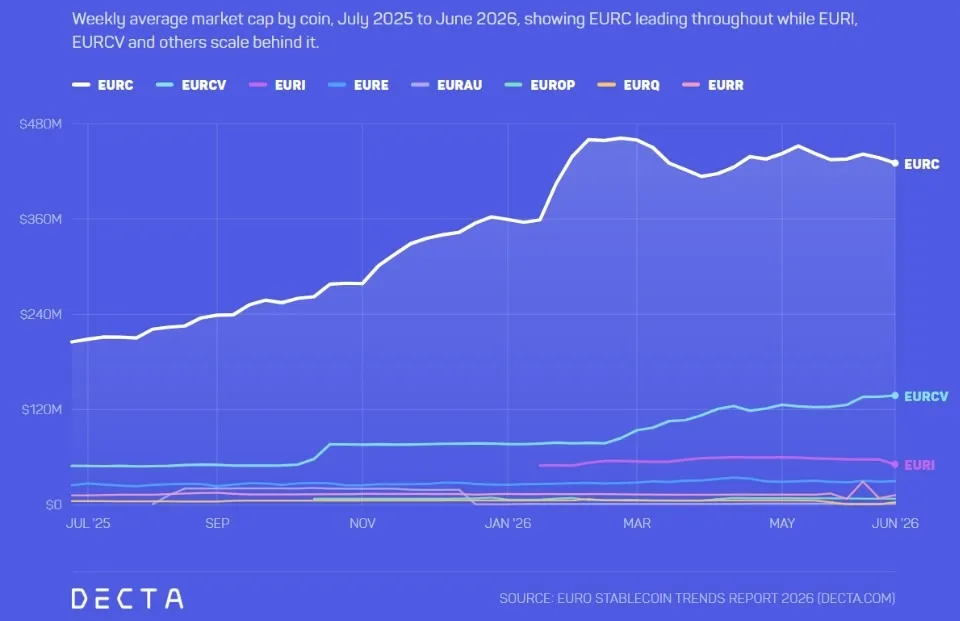
Euro stablecoin growth amid MiCA competitiveness debate
The report adds to a debate among policymakers and industry groups over whether MiCA's stricter stablecoin rules are helping the euro ecosystem grow or limiting its competitiveness against dollar-backed tokens.
On April 27, a Blockchain for Europe report argued that MiCA had made euro stablecoins safer but commercially weaker. The report said MiCAs reserve requirements and ban on interest payments left euro tokens at a disadvantage.
Related: EU crypto rulebook faces enforcement challenge as MiCA transition ends
The debate intensified in May after a policy paper from Brussels-based think tank Bruegel called for easing liquidity requirements for stablecoin issuers and potentially granting them access to European Central Bank funding. The paper argued that looser rules could help the euro stablecoin market compete with dollar-backed tokens.
However, the European Central Bank (ECB) pushed back. On May 23, the ECB warned EU finance ministers that expanding issuance of euro stablecoins could weaken bank lending and complicate monetary policy. The ECB also dismissed concerns that stricter EU rules would accelerate digital dollarization.
Magazine: Bitcoin slides to $58K, XRP hits $1 but onchain data promising: Market Moves