






Houthi attacks on Saudi refineries have pulled Brent crude off its November lows. Brent is set for its first weekly gain this month, even as forecasters expect a surplus.
Brent traded at $95.57 on Friday, up about 4.5% this week. It is still down about 17% since November began. Whether the rebound lasts will shape fuel costs and the inflation bets tied to them.
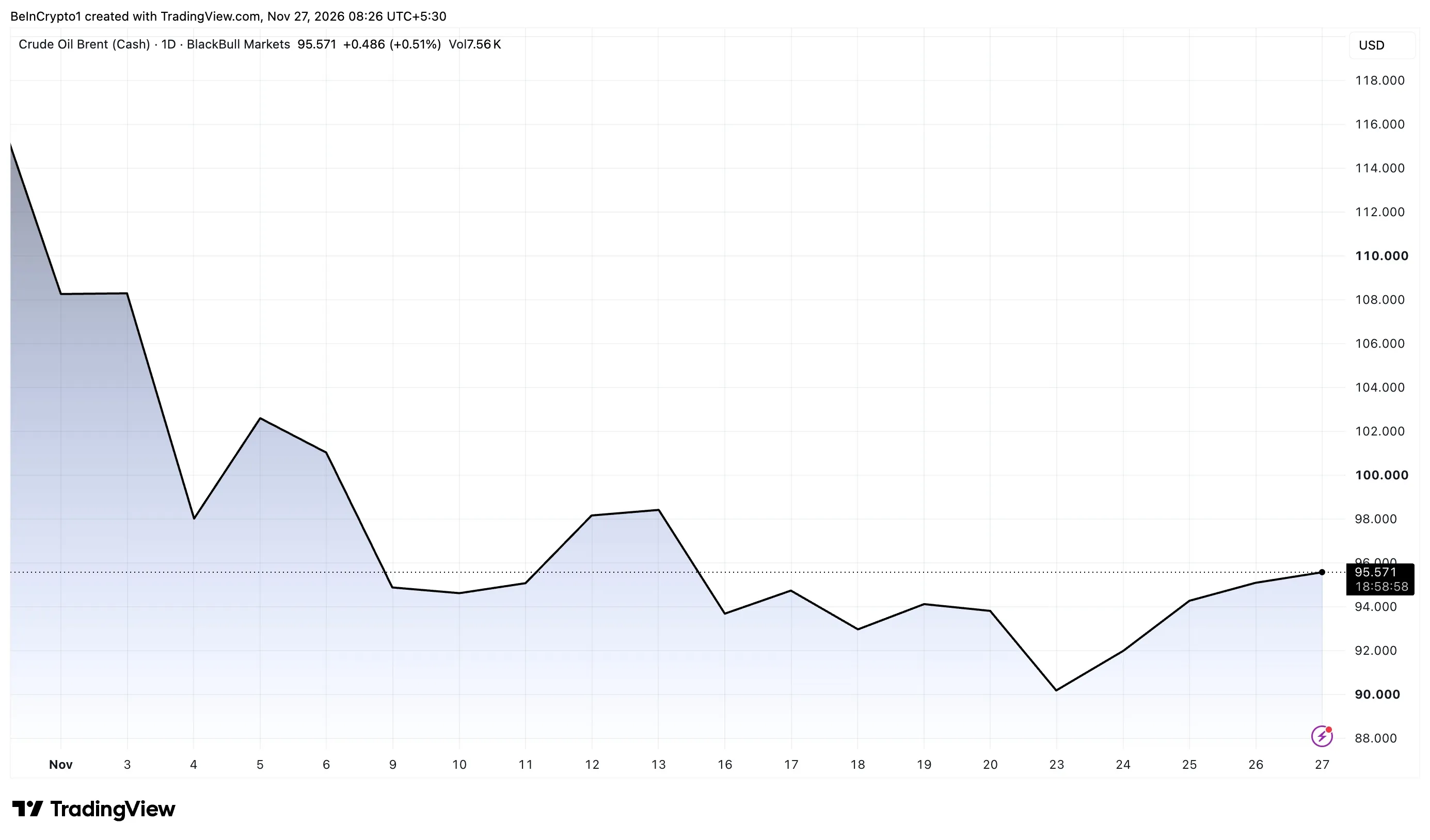
Brent crude oil price performance. Source: TradingView
Sponsored

Sponsored
Follow us on X to get the latest news as it happens
How Close Did the Attacks Get to Saudi Exports?
Yemens Iran-aligned Houthis targeted three Saudi refineries in five days.
- Rabigh, Sunday:The Houthis claimed a direct hit, while Saudi-led forces said they intercepted a drone.
- Ras Tanura, Wednesday: Houthi fighters said they targeted Ras Tanura, home to Saudi Arabias biggest refinery and a key crude terminal. Satellite images showed heavy smoke, and loadings were reportedly suspended.
- Jazan, Thursday: A projectile killed one worker and halted some operations, the Saudi Energy Ministry said.
On Wednesday, the group also said it hit ports in Jeddah and Jazan. In Hormuz, Irans Revolutionary Guards reported tanker explosions caused by sea mines.
Before the attacks, Brent had slipped below $90 to oil‘s three-month lows. In October, Houthi attacks helped push it to a five-month high. The question now is whether November’s sell-off went too far.
Sponsored
Sponsored
Did Oil Fall Too Far in November?
Commodity Context founder Rory Johnston believes the sell-off overshot.
“My view is that we were oversold when (Brent) was dipping below $90,” Johnston said. “It was only a matter of time before we tightened again.”
ANZ thinks Brent could clear $100 even if the conflict does not intensify. Front-month Brent now costs nearly $4 more than later contracts, which points to tight supply.
Not every signal points higher. Tanker traffic through Hormuz picked up over November, though this weeks attacks slowed it. Saudi Arabia is also shifting slightly more crude to Yanbu, its Red Sea port.
Recovering Gulf exports helped drive oils repeated 2026 crashes. The International Energy Agency (IEA) still expects a surplus this quarter.
With both cases open, producers send the next signal at Sundays OPEC+ meeting.
What Can OPEC+ Change on Sunday?
OPEC+, the oil producers alliance, meets on November 29 to set 2027 policy.
Two sources expect the group to leave targets unchanged for at least the first three months of 2027.
It will decide without the United Arab Emirates, which has left. Iraq and Kazakhstan are also lobbying for higher capacity figures.
A rollover would add no new barrels. That would leave Yemen and Hormuz headlines driving oil prices and inflation bets into December.