







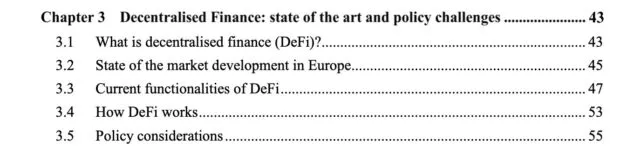
The EU Commission issued a report, “European Financial Stability and Integration Review 2022,” on April 7, containing a 12-page chapter on DeFi. In addition, the authors of the report present a sensible approach to the topic.
The report shows how DeFi can help reduce financial audit costs and provide substantial opportunities for financial integration across borders.
The European Commission has shown an unexpected understanding of how DeFi actually functions by identifying it as something different from traditional finance and acknowledging that the current system will require a regulatory rethink.
Patrick Hansen, a crypto expert and consultant at Presight Capital who has been following European regulations for years, shared some critical information from the recently published report by EU Commission.
1/ In case you missed it, the commission wrote a chapter on DeFi in its “Financial stability & integration review 2022” It shows that the Commission staff is well aware of how DeFi works, incl. single protocols. A few selected quotes wrt policy
Source: Twitter
EU Report Highlights
In the report, European Union Commission defines DeFi as “a newly emerging form of autonomous financial intermediation in a decentralized digital environment powered by […] ‘smart contracts’ on public blockchains.” It recognizes that smart contracts can replace regulated intermediaries and suggests that regulatory efforts focus on communication with the teams that create these contracts.
As outlined in the report, the DeFi system has several advantages over the traditional finance system. These include:
Compared to the traditional financial system, DeFi claims to increase the security, efficiency, transparency, accessibility, openness, and interoperability of financial services.
The report discussed the public blockchains potential for researchers and supervisors. They have free access to historical and real-time trading data. It may help to understand the risks that “often remain unclear.”
The report advocates for a more holistic and integrated approach to regulation that considers both financial entities and their activities. It suggests shifting the balance from entity-based systems toward activity-based ones.
The report suggests:
However, it is obvious that simply copying traditional regulatory approaches in a decentralised environment may not be an option, since they have traditionally focused on intermediaries that play a central role in the financial system. Adapting the regulatory framework to a decentralised environment may be challenging and would require a rethink of how we approach regulation.
After several controversial episodes, the DeFi chapter in the EU‘s recent draft regulations is a relief. So what was initially planned as a PoW-mining ban has been thankfully reverted, and the Transfer Of Funds Regulation amendment won’t target non-custody wallets.
For more Blockchain news, please download WikiBit- the Global Blockchain Regulatory Inquiry APP.