






France‘s economy is shrinking. Output fell 0.2% between July and September, putting the eurozone’s second-largest economy in a technical recession. A day later, the European Central Banks (ECB) second-in-command said France will not become the next Greece.
Bond traders are less sure. Lenders charge France about 1.5% more than Germany to borrow for 10 years, near the widest gap since the eurozone debt crisis.
Sponsored
Sponsored
Why Does Greece Keep Coming Up?
The recession call came from INSEE, Frances statistics office. Two shrinking quarters in a row meets the textbook definition.
Greece is the eurozone‘s cautionary tale. In 2010, its borrowing costs soared until lenders walked away. Athens needed three rescue packages worth €288.7 billion to stay in the euro, according to the ESM, the bloc’s bailout fund.
France now carries record debt of 119% of its yearly economic output. Its borrowing premium hit its widest since that crisis in early November, French think tank OFCE found.
What Did the ECB Say?
Austrian daily Kurier put the comparison to ECB Vice-President Boris Vujčić in interviews on November 23 and 26, before the new GDP figures. He led with debt.
“I do not see France as being in the same situation as Greece during the sovereign debt crisis for a number of reasons. First, public debt is lower than it was in Greece back then,” he said.
Sponsored
Sponsored
Greece‘s debt hit 170.6% in 2011, per Eurostat. Vujčić also cited France’s wealth, broader economy, and deeper bond market.
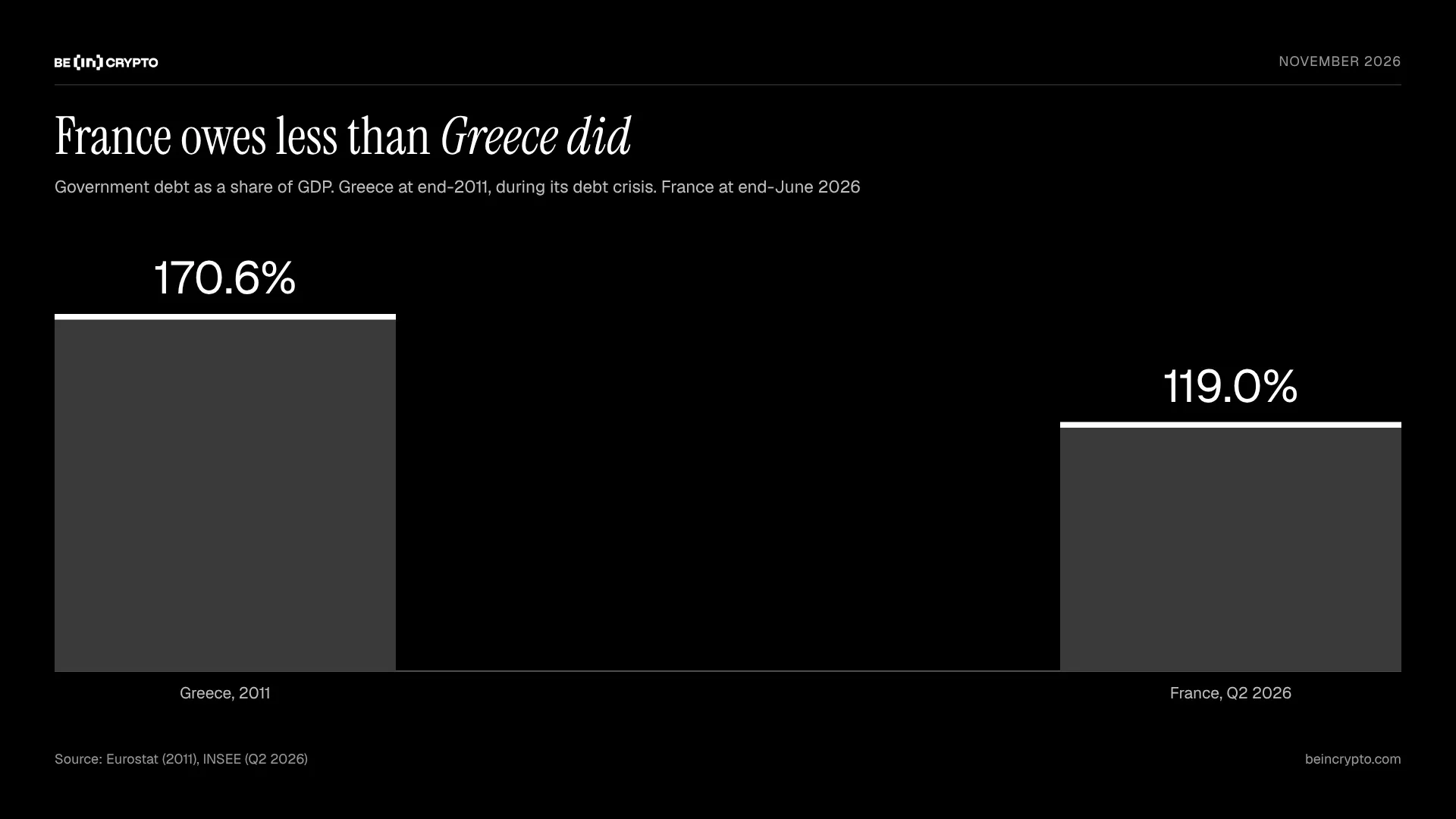
France‘s government debt compared with Greece’s during its 2011 debt crisis, as a share of GDP. Source: Eurostat, INSEE
Martin Kocher, Austria‘s central bank chief, warned that France’s deficits and debt remain a real problem.
On Friday, S&P Global cut Frances credit outlook to negative.
Why Should US Investors Care?
The euro has lost about 7% against the dollar since mid-April, to near $1.093.
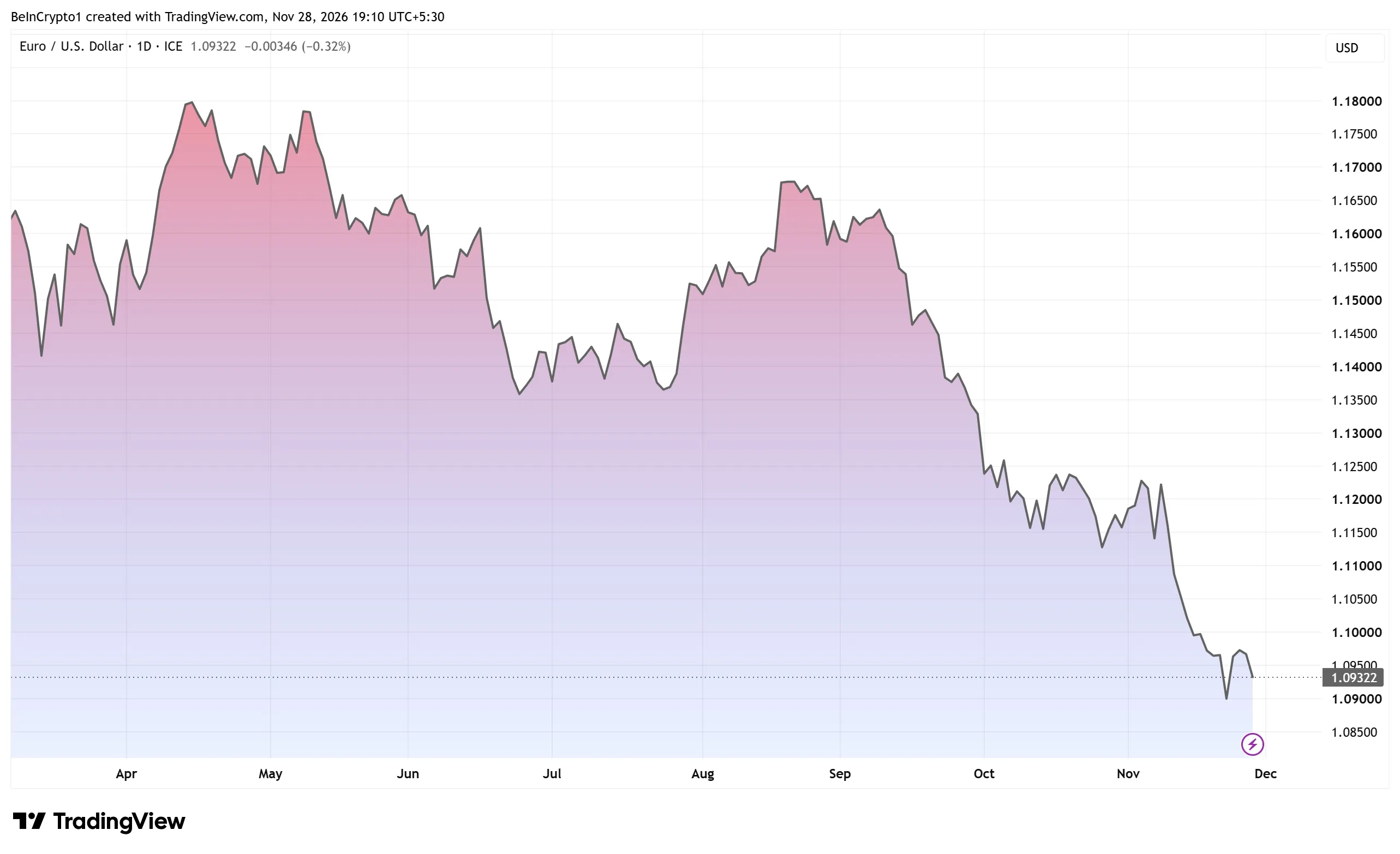
EUR/USD Performance. Source: TradingView
Vujčić ties the euros moves to the interest rate gap between the US and Europe. That gap is shifting, with an ECB meeting in three weeks and a December Fed hike expected.
Frances slump has also revived talk of US recession risk. Vujčić expects a French budget by year-end, while President Emmanuel Macron has floated a constitutional golden rule to calm lenders.