






If the AI bubble bursts in 2027 and the stock market crashes, how should investors prepare? What is the best way to stay safe while still increasing your chances of profitable trades?
Alan Greenspan, the famous Fed chairman who served under four US presidents, warned about “irrational exuberance” in 1996. The Nasdaq then nearly quadrupled before crashing 78% after its 2000 peak. Investors who sold too early missed years of gains.
A similar dilemma now faces investors riding the AI boom.
Record infrastructure spending, rising borrowing costs and questions about profitability are raising fears of a bubble. Ray Dalio recently warned that debt-funded AI expansion could be approaching a breaking point.
The warning signs are already visible. AI infrastructure company CoreWeave saw its bond yields surge toward 15% as investors questioned its debt burden.
Yet Nvidia and major technology companies continue generating substantial cash flow. AI demand is growing, even as the timing of returns remains uncertain.
In its latest analysis, BloFin Research argues investors should prepare for a potential correction while maintaining exposure to future gains.
Here are three strategies it recommends heading into 2027.
1. Reduce Dependence on Nvidia and Other AI Giants
Many investors holding the S&P 500 may have more AI exposure than they realize.
Nvidia accounts for nearly 8% of the popular SPY fund, while its ten largest holdings represent roughly 39% of the portfolio.
BloFin Research team suggests shifting some exposure toward equal-weight funds such as the Invesco S&P 500 Equal Weight ETF (RSP).
Unlike SPY, RSP gives each S&P 500 company approximately 0.2% weight at quarterly rebalancing. Its ten largest holdings therefore account for roughly 2% immediately after rebalancing.
Investors can retain exposure to AI while reducing dependence on a few technology giants. However, equal-weight funds remain vulnerable to broader market declines.
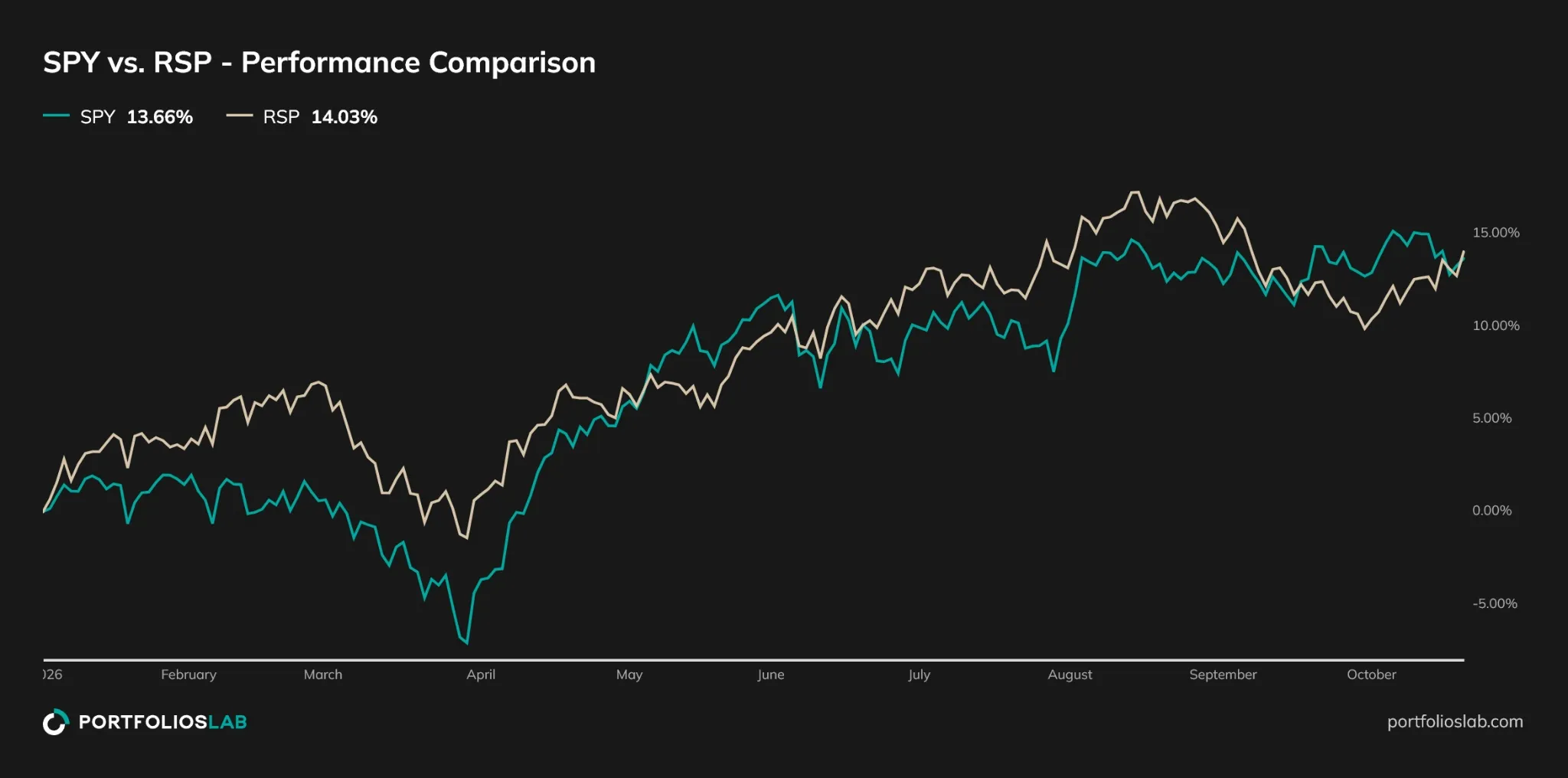
RSP has provided more returns than SPY in 2026. Source: Portfoliolab2. Take AI Profits and Earn Up to 5% in Treasuries
High Treasury yields offer another option.
As of October 20, three-month US Treasury yields stood around 4.3%, two-year yields near 4.8%, and ten-year yields above 5.1%.
BloFin Research argues investors sitting on substantial AI gains can sell to realize some profits and earn interest while waiting for better opportunities.
Inflation-protected Treasuries also offered real yields approaching 3%. Longer-term bonds, however, face greater price losses if interest rates rise further.
The approach reduces reliance on perfectly timing an AI market peak.
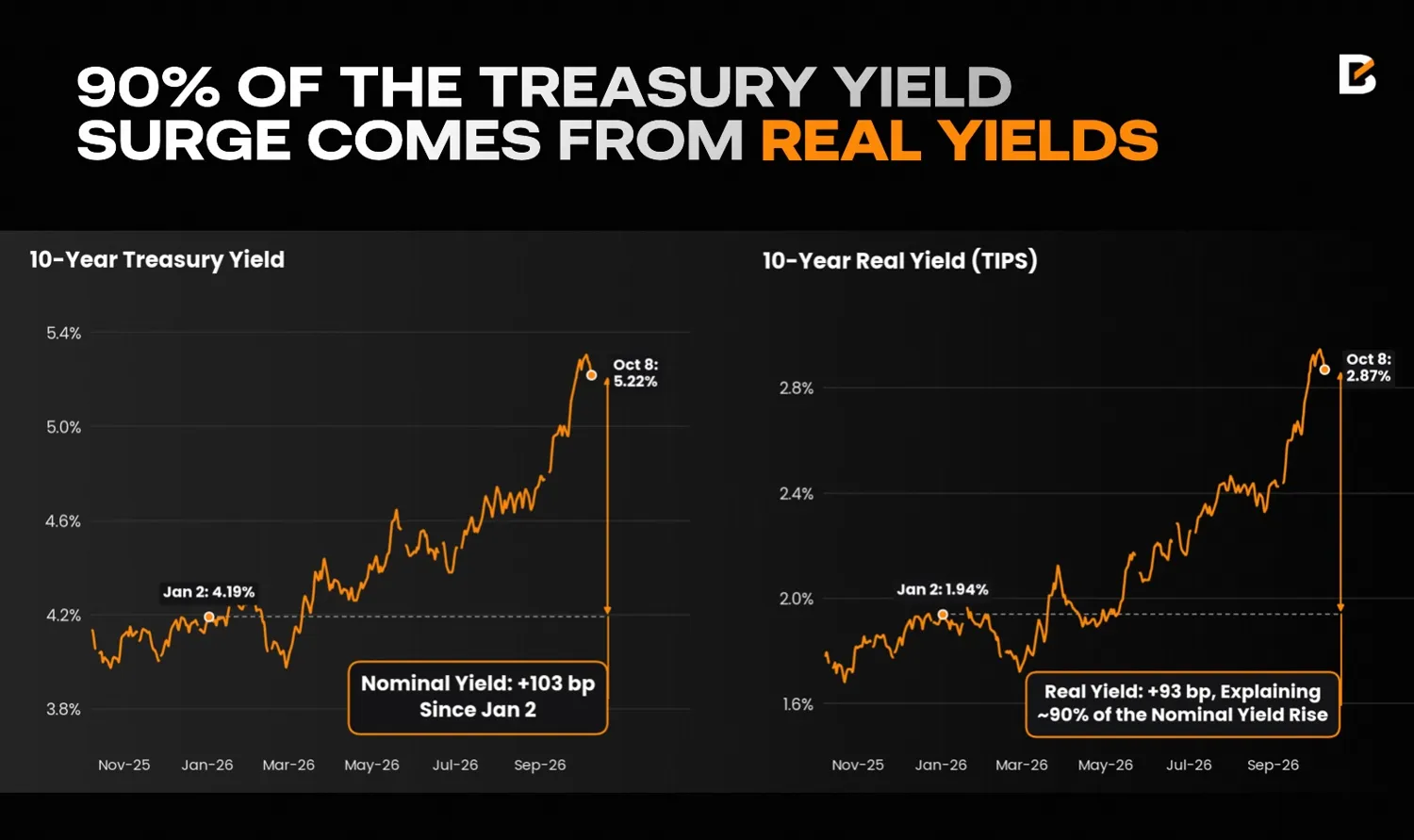
US Treasury Yields Surged in 20263. Consider Bitcoin as a 2027 Growth Opportunity
BloFin Research teams third strategy focuses on an asset it believes investors have overlooked: Bitcoin.
Bitcoin plunged more than 53% from its October 2025 peak above $126,000 to below $59,000 in June 2026. It has recovered to around $82,000 currently.
Despite that decline, Bitcoin ETF holdings have remained broadly stable in BTC terms.
The research argues that capital has favored AI stocks over crypto for two years, leaving Bitcoin comparatively underowned.
“We think a new Bitcoin cycle is beginning from this underowned base,” the BloFin Research team said.
It expects further growth in 2027 as stablecoins, tokenized assets and AI agents drive crypto adoption.
Still, Bitcoin offers no guaranteed protection from an AI-driven market crash.
Traders should also avoid shorting AI stocks to hedge exposure. BloFin Research teams central recommendation is to stay invested while reducing concentration risk and preparing for volatility.