






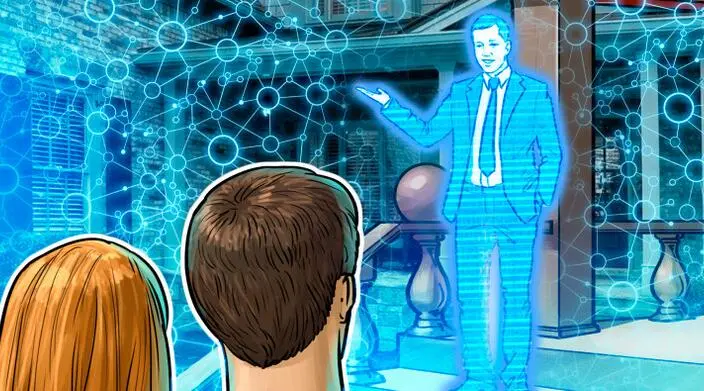
By aligning hosts and guests in a shared marketplace, decentralized platforms will make good on the promise of the sharing economy.
Anybody who uses Airbnb knows that the company is resting on its laurels as the first mover in the home-sharing economy 1.0, but its dominance rests atop exploitation of the hosts and guests that are actually doing the sharing and creating the value. The guests pay too much and the hosts are paid too little. The resulting situation is akin to feudalism, rendering hosts as serfs who rent out their homes, keep things clean, deal with guests, and do the actual work. Yet the value derived from Airbnb‘s peer-to-peer exchange goes directly to shareholders who are multiple steps removed from the action on the ground. It’s nothing less than an injustice.
There‘s a very simple reason for why this is the case. Web 2.0 sharing economies like Airbnb and Uber are forced into what's called the extraction imperative. In the early days of these platforms, they were aligned with their users on both sides of the market, and treated both as partners to kickstart network effects — similar to offering early subsidies to get people on the platform. The peer-to-peer element of the sharing economy was placed front-and-center in the brand’s marketing, and it seemed as though a populist takeover of the travel industry was afoot.
Sharing economy with Web 2.0
It did not take long for us to realize that this vision of the sharing economy was a lie. Web 2.0 companies are driven by a model of growth-at-all-costs to go public, at which point they become beholden to shareholders who demand profit from that growth. To satisfy this model, these companies are forced into extracting as much profit as they possibly can from the users transacting on their marketplace to appease shareholders and other stakeholders who aren't actually the users themselves.
While selling a myth of empowerment and peer-to-peer sharing, platforms like Airbnb are now at odds with their users because they need to take what they can from them in order to maximize profits and ensure their very survival. Airbnb, as an example, went from being well-aligned to completely misaligned, and that has created a ripple effect throughout the entire marketplace.
A prime example of misalignment in the home-sharing economy are the measures undertaken by Airbnb in the fallout from the global COVID-19 pandemic and its deleterious effects on global travel. Unilaterally, Airbnb changed cancellation and refund policies in favor of guests in the interest of retaining as many customers as possible, while simultaneously placing the burden of disinfecting measures and last-minute cancellations on hosts. This was a measure driven entirely by profit-and-loss margins that prioritized the needs of guests instead of hosts because, ultimately, the guests are the users who drive revenue. The hosts, however, who provide the assets that drive the revenue, found themselves at a loss, and a chasm of mistrust has emerged as a result.
Worse, most Web 2.0 sharing economies like Airbnb are not operating on solid foundations. Their headcounts are extremely bloated, and their business models remain unproven. Theyve had to raise countless rounds of financing to continue growing, while in turn diminishing the value they provide to their community of users. As incumbents tighten their grip on control and profit extraction, a tipping point is imminent.
Decentralization is the key
Users are well aware that theyre being exploited — they just need a viable alternative. So how do we solve for the extraction imperative, intermediaries who siphon the value away from the value creators and into the hands of wealthy shareholders, and the lack of trust and agency that both hosts and guests endure when interacting with platforms like Airbnb? The answer is a decentralized marketplace furnished and governed by its users that functions as an apparatus rather than an extractive cartel with unicorn dreams.
Home sharing is the ideal venue for a decentralized marketplace because travel is one of the world's biggest industries, and anyone with a home or a travel itinerary can participate. The underlying tech and infrastructure of blockchain is now scalable enough to accommodate the needs of such a marketplace. And while the COVID-19 pandemic presented setbacks to the travel industry, were already seeing a return of significant demand that will only grow as trends like remote work, digital nomadism and alternative accommodations kick into another gear.
If Airbnb is a feudal state, decentralized home-sharing marketplaces are a shared, democratic economy wherein those who create the value keep the value. They can create better alignment between guests, hosts and the marketplace within which they transact. And people who are actually using the platform are the ones making the decisions, directly looped into the value capture mechanisms of the platform.
Built atop a blockchain infrastructure with proven models for a peer-to-peer marketplace with powerful, built-in tokenomics, the decentralized alternative for the travel industry is here. And it means home sharing 2.0, travel booking for Web 3.0, and an end to the exploitation of hosts and guests around the world.