






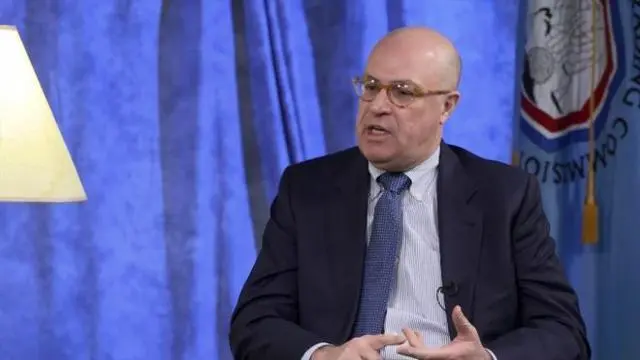
It is not up to regulators to determine which asset classes or securities are legitimate, according to Christopher Giancarlo, former chairman of the Commodity Futures Trading Commission (CFTC) and senior counsel at Willkie Farr & Gallagher.
Giancarlo was joined by Brian Brooks, CEO of Bitfury Group and Former US Acting Comptroller Of The Currency for a keynote discussion at the Digital Asset Compliance & Market Integrity Summit in New York Wednesday. Both former regulators believe there are issues with the current approach to digital asset industry oversight.
Giancarlo was leading the CFTC, the regulatory body that oversees derivatives markets in the US, during the bitcoin rally of 2017. The Commission was approached by two main operators, the Chicago Mercantile Exchange (CME) and the Chicago Board Options Exchange (CBOE) about launching bitcoin futures that year.
“It was remarkable how much pressure the commission faced to stall or stop those self-certifications of bitcoin futures, and it wasn‘t just regulators, although there was a healthy dose of regulators in the US and abroad that were calling us saying ’do not let this go forward because you are legitimizing bitcoin,” Giancarlo said. “But it was the industry itself, a lot of legacy providers in the industry.”
Various banks and traditional financial institutions were against the approval of bitcoin futures trading at the time, Giancarlo said. The argument that bitcoin should not be validated was troubling to the former chairman.
“It was that notion of ‘if you do this, you’re legitimizing bitcoin‘ that kept coming into my mind,” Giancarlo said. “It’s not for me as an unelected bureaucrat to legitimize a legal activity, it is for the market to determine what is legitimate. And the only way the market could do that is if we let this go forward.”
Brooks echoed Giancarlos sentiment. It is not up to any regulatory body to pick the winners and losers of Web3, he said.
“We dont ask the SEC to make a judgement about whether Teslas or Buicks are better vehicles,” Brooks said. “We let the market decide that.”
Not long after bitcoin futures trading was approved, Giancarlo was summoned to appear before the Senate Banking Committee to testify about bitcoin. In his prepared opening statement, Giancarlo discussed how younger generations were becoming excited about this new, emerging asset class.
“I think we owe it to this generation to respect their interest in crypto, not with disdain and dismissiveness but with a real ‘let’s get it right‘ approach,” he said. “Let’s spend the time, lets dig into this.”
A key point of resistance both regulators have been met with when it comes to digital assets is the argument that cryptocurrencies have no use case. Brooks argues that it is not up to officials to judge how a technology might be used.
“There was this idea that we can‘t allow [crypto] to happen until somebody can show us a use case. That is the problem I was trying to solve,” Brook said. “We don’t actually have to know a use case, that‘s not the role of government in a market economy. The role of the government is to create a set of risk protection guardrails and allow markets to decide what’s valuable.”
For more blockchain news, please download WikiBit- the Global Blockchain Regulatory Inquiry APP.