






South Korean crypto exchange Upbit said it is not participating in the issuance of Open USD, after its operator Dunamu was named among more than 140 businesses involved in the new stablecoin initiative.
“Upbit has only indicated our potential willingness to consider taking part in the future expansion of the OpenStandard ecosystem,” an Upbit spokesperson told Cointelegraph.
The clarification follows similar pushback from Samsung Electronics and other South Korean companies listed by Open Standard.
According to a Friday report by ChosunBiz, Samsung said it had not held formal discussions with the project and did not know what role it was expected to perform. Meanwhile, Shinhan Financial Group and KBank reportedly said they had only indicated that they would consider the initiative.
Cointelegraph reached out to Open Standard for comments but did not receive a response before publication.
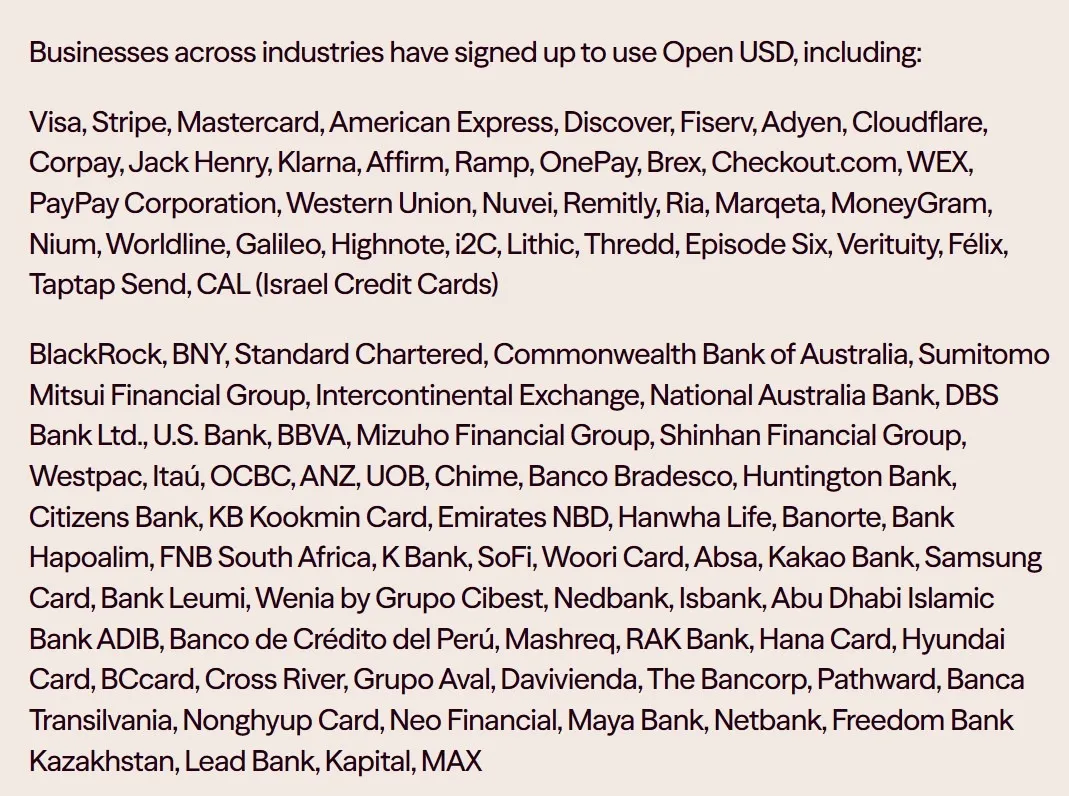
Excerpt of the list of businesses listed by Open Standard. Source: Open Standard
Open Standard announced the dollar-backed stablecoin on Tuesday, saying more than 140 businesses had “signed up to use” it, including Visa, Mastercard, BlackRock, Google, Samsung Electronics and Dunamu.
Open Standard previously said businesses would be able to mint and redeem OUSD without fees or volume limits. The project also plans to distribute earnings generated from its reserves to participating companies.
Related: South Korea adds token securities to capital market overhaul
However, some industry participants, including Circle CEO Jeremy Allaire, questioned the sustainability of offering free, unlimited minting and redemption. Meanwhile, Lorenzo Valente, director of research at ARK Invest, also previously called the announcement a “giant” letter of intent.
South Koreas stablecoin rules remain unfinished
South Korea has yet to pass the Digital Asset Basic Act, leaving questions over who may issue stablecoins and what roles companies can perform.
As Cointelegraph previously reported, lawmakers have debated whether issuance should be limited to banks or opened to qualified non-bank issuers, while the broader regulatory framework remains under discussion.
The uncertainty also makes it difficult for South Korean companies to commit to stablecoin initiatives, as the rules governing issuance, reserve management and participation in stablecoin ecosystems have yet to be finalized.