






In brief
- The Bank of Russia confirmed in an October 12 FAQ that direct crypto trades between individuals are legal only until July 1, 2027, citing new law.
- The regulator also says individuals cannot move crypto from a digital account to their own non-custodial wallet or transfer it to another person through depository-run addresses.
- Sberbank joined the central bank's crypto exchange register on October 12 and plans to launch its first crypto products on December 1.
Russians have a little over eight months left to trade Bitcoin and other crypto directly with each other. From July 1, 2027, peer-to-peer deals—where two people swap rubles for coins without a regulated middleman—will no longer be legal, the Bank of Russia confirmed this week.
The clarification sits in updated guidance the regulator posted on its official website on October 12.
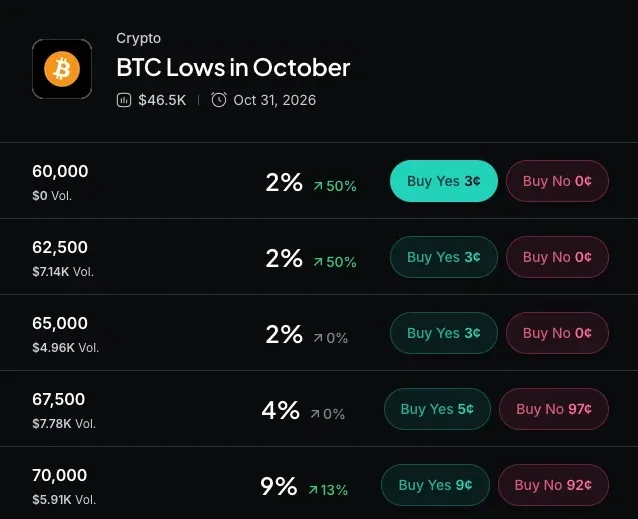
Myriad: How low will Bitcoin go? Click to make your prediction.
The legal basis is Federal Law No. 282-FZ, “On Digital Currencies and Digital Rights,” which President Vladimir Putin signed on August 4 and which took effect September 1. Article 30 lists the crypto operations residents may carry out without a licensed intermediary, and from July 2027 that list no longer includes trades between individuals.
From that date, residents may only trade crypto through, or directly with, companies that “organize the circulation” of digital currencies—mainly brokers licensed by the Bank of Russia and crypto exchange organizations listed in its registry.
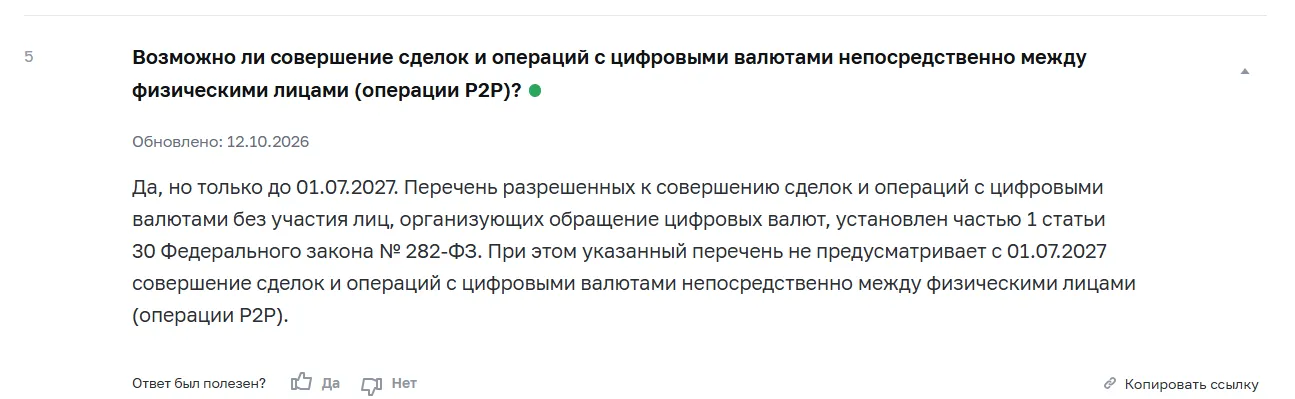
The regulator also says individuals cannot move crypto from a digital account to their own non-custodial wallet, meaning a wallet where the owner holds the private keys instead of a company. Transfers from one person to another through addresses run by a digital depository—a licensed firm that records who owns which coins—are off the table too, even to settle a trade between them.
Lending crypto is also off-limits for ordinary users: only brokers, trustees, exchange organizations, and clearing houses can act as the lender in a crypto loan.
Since Binance sold its Russian business to CommEX in 2023, a standard way for Russians to get stablecoins has been peer to peer: the buyer wires rubles to a sellers bank card and receives USDT, a dollar-pegged token, in return. That model is exactly what the new rules end.
From July 1, 2027, Russian banks will have to refuse clients who try to fund crypto wallets on foreign platforms, and wont be able to accept rubles cashed out from those platforms, Andrei Tugarin, managing partner at GMT Legal, told Kommersant FM.

BitcoinBTC · USD
$82,355+0.66%
24H7D1M1YYTD
Oct 8Oct 10Oct 12Oct 14Oct 15
$84.2k$82.9k$81.5k$80.2k
24h HighHigh$82,508
24h LowLow$79,806
VolVol$1.8B
Market projectionsOdds by Myriad
This weekAbove $82,000Above $82k59% chance

→
Buy Bitcoin with USDT
Powered by Jupiter
$50$100$500
Buy
Price data by CoinGeckoCoinGeckoMore Bitcoin news and projections →
Non-qualified investors, meaning people without professional investor status, have to pass a test and can buy up to 300,000 rubles (about $3,600) of crypto a year, while qualified investors face no cap. Bitcoin, Ethereum, and USDT are the only coins on the central banks list for non-qualified buyers.
Sberbank, Russia‘s largest lender, joined the central bank’s register of crypto exchange organizations on October 12 and plans to launch its first crypto products on December 1, per Interfax. VTB and T-Invest Lab are also on that register.
Crypto exchange organizations must be Russian companies with at least 15 million rubles (about $179,000) in equity and be listed in the central banks registry, though they can keep operating without registration until July 1, 2027.
The law still bars Russians from spending crypto at home, keeping the ban on paying for goods and services with digital assets while allowing crypto in foreign trade settlements—a carve-out Kaplan Panesh, deputy chair of the Dumas budget committee, openly described as a way of circumventing sanctions when the bill cleared its first reading in April.
Daily Debrief Newsletter
Start every day with the top news stories right now, plus original features, a podcast, videos and more.
Email addressJoin free
Join 72,000+ readers
Create an account to save your articles.
Add on Google
Add Decrypt as your preferred source to see more of our stories on Google.