Sygnum‘s APAC HNWI Report 2025 found that 87% of Asia’s high-net-worth individuals are already exposed to crypto, with an average allocation of approximately 17%.

More than half of wealthy Asian investors in a recent survey say they plan to increase their portfolio exposure to cryptocurrency over the next few years.
Sygnums APAC HNWI Report 2025 found that 6 in 10 of the surveyed Asian high-net-worth individuals (HNWIs) are prepared to increase their crypto allocations based on a strong two- to five-year outlook.
It polled 270 HNWIs with more than $1 million in investable assets and professional investors with over ten years of experience across ten APAC countries, mainly in Singapore, but including Hong Kong, Indonesia, South Korea and Thailand.
The findings also revealed that an overwhelming 90% of surveyed HNWIs view digital assets as “important for long-term wealth preservation and legacy planning, not purely speculation.”
“Digital assets are now firmly embedded within APACs private wealth ecosystem,” said Gerald Goh, Sygnum co-founder and APAC CEO.
“Despite near-term macro uncertainty, we continue to see accelerating adoption driven by strategic portfolio diversification, intergenerational wealth planning, and demand for institutional-grade products.”
This represents a fundamental shift from crypto as a speculative asset to an institutional wealth management product.
More than half of portfolios hold over 10% crypto
The survey reported 87% of Asian HNWIs surveyed already hold crypto, and around half have an allocation of more than 10%. The average portfolio allocation is around 17%.
87% of investors also said they would ask their private bank or adviser to add crypto services if offered through regulated partners.
Meanwhile, 80% of those actively investing reported holdings in blockchain protocol tokens, such as Bitcoin (BTC), Ether (ETH) and Solana (SOL). The most common reason for investing, according to 56% of respondents, was portfolio diversification.
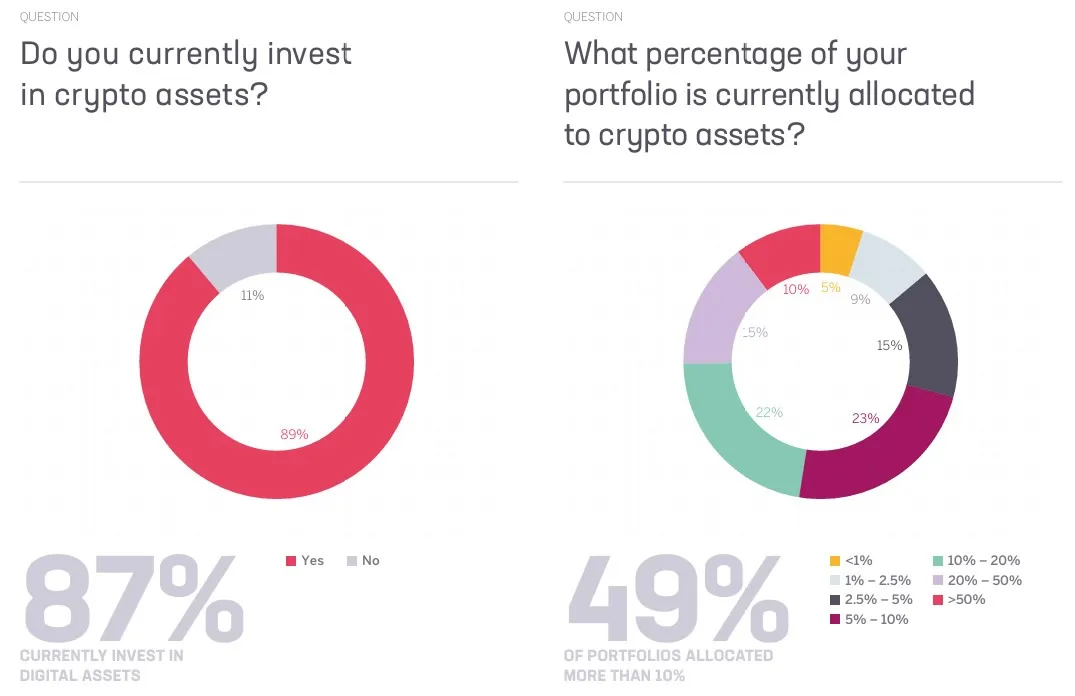
Nearly half of the portfolios hold more than 10% in crypto. Source: Sygnum
Goh said the 17% portfolio allocation shows that HNWI have a “different psychology” than “2017's ‘get rich quick’ mentality.”
“These aren‘t speculators — they’re investors with 10-20 year time horizons thinking about intergenerational wealth transfer,” he told Cointelegraph.
APAC regulations foster stronger institutional involvement
Asked whether Asia‘s crypto regulations have been more restrictive, Goh argued that Asia’s crypto regulation has been more “specific and deliberate” than that of other jurisdictions.
“MAS in Singapore has been extraordinarily thoughtful. Yes, theyve tightened licensing requirements, increased capital buffers, and restricted retail access.”
But theyve also created genuine clarity on custody standards, operational requirements, and investor protections.
“What looks 'restrictive' is actually rigorous institution-building. The tradeoff is fewer service providers can meet the bar—but the ones that do are genuinely institutional-grade,” he said, adding that Hong Kong is now on a similar path.