






According to an analysis by Robert A. Schwinger, in the case of North Korea and Venezuela, the entities involved in using cryptocurrencies to avoid sanctions were seriously charged for their actions. The paper also finds specific laws and rules directed against methods that help countries avoid sanctions. In some of the cases where an entity has been seen violating sanction programs, regulators have imposed civil liability against such crimes.
For example, BitPay was fined US$507,000 in February 2021, and BitMEX founders recently pleaded guilty to violating the U.S. Bank Secrecy Act and agreed to pay a fine of US$10 million.
In addition to keeping an eye on the crypto transactions, U.S. lawmakers have guidelines in place that require crypto service providers to take necessary security measures to ensure they dont help facilitate deals with prohibited entities. Any violation could lead to both civil and criminal penalties.
Laws are in place if Russia tries to circumvent sanctions via cryptocurrencies. But more importantly, tools are available for companies to put in alert for any transactions “intersecting with sanctioned entities,” said Caroline Malcolm, head of international policy at Chainalysis, a blockchain analytics firm.
But, we still left the part where the government and citizens could use privacy coins — such as Monero or Zcash — to avoid sanctions because they can be a means of hiding transactions. The truth is, either of the cryptocurrency could be used. But, it isnt as easy as it looks in the books.
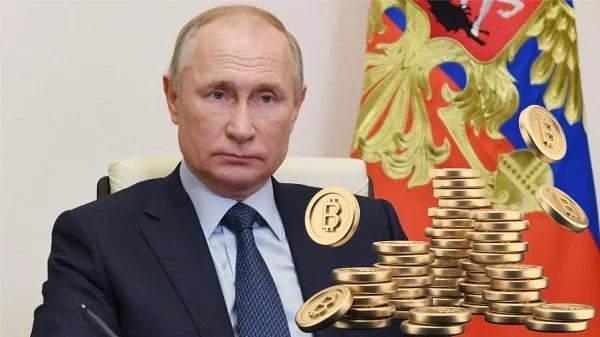
Countries that impose sanctions monitor their citizens and businesses, and authorities levy heavy penalties on anyone found trading with a sanctioned entity. So, many vendors opt out of dealings that would be deemed illegal acts. Second, most privacy tokens have low liquidity on even the largest crypto exchanges. For example, the 24-hour volume of Monero (XMR) on Binance, OKX and FTX combined is only US$1.4 million, while Zcash (ZEC) totals US$4.9 million in volume across those same exchanges.
For a large nation such as Russia, it would be impossible to rely on cryptocurrencies with such low liquidity for avoiding sanctions. It would trigger concerns for the facilitating party.
Cryptocurrencies, due to their pseudonymous nature and unlimited geographical boundaries, represent a strong case of being used to avoid sanctions. Russia, in this case, can use them to bypass the controls upon which sanctions are relying, particularly to transfer money without having to convert to any of the worlds reserve currency. Decentralized and unregulated crypto exchanges can further aid the process.
However, despite the unregulated nature of most cryptocurrencies and crypto exchanges, there is a way to identify transactions, even on a blockchain network. It is called blockchain forensics, where dedicated companies track and interpret the flow of digital assets to link them back to their original facilitator. This data can also be used to find other entities linked to the alleged trade under sanctions.
This boils down to the fact that while cryptocurrencies have the ability to help facilitate trades between countries wanting to avoid imposed sanctions, all such transactions can be tracked — and penalized accordingly.