






Haseeb Qureshi has criticized Hyperliquids USDH stablecoin request for proposal process, calling it a “farce” and alleging it was tailored to favor Native Markets.
Allegations of a ‘Backroom Deal’
A top executive at the crypto venture fund Dragonfly has labeled Hyperliquids USDH stablecoin request for proposal (RFP) a “farce,” claiming the process was designed to favor a single bidder. In a post on X, Haseeb Qureshi, a managing partner at Dragonfly, asserted that more than half of the other bidders also believe that validators were solely interested in Native Markets.
Qureshis allegations came as Hyperliquid assesses competing proposals from Ethena, Paxos, Agora, and Frax to supply the stablecoin infrastructure for USDH. As previously reported by Bitcoin.com News, these bidders submitted pitches detailing their plans for regulatory compliance, distribution, and how they would share reserve yield with the Hyperliquid ecosystem. The winning bidder would be responsible for issuing and managing the stablecoin.
According to Qureshi, despite compelling pitches from more prominent bidders, none of the validators were interested because “there was a backroom deal already done.” The Dragonfly managing partner also implied that the timing of Native Markets bid suggested advance knowledge.
“Native Markets proposal came out almost immediately after the USDH RFP was announced, implying they had advanced notice,” Qureshi claimed in a Sept. 9 X post. “Everyone else scrambled over the weekend to put something together. So this whole USDH RFP was basically custom-made for Native Markets.”
Conflicts of Interest and a Call for a Fair Process
To support his argument, Qureshi stated without providing evidence that the community appeared to believe Ethena, Paxos, Agora, and other more prominent entities had superior pitches to that of Native Markets, which he described as a “brand new startup.” A social media user, however, countered Qureshis claims by suggesting his allegations were motivated by his vested interests in Ethena and Agora.
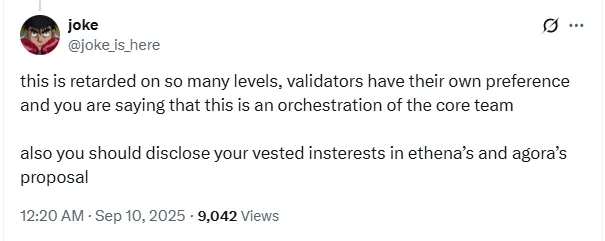
In response, Qureshi clarified that he was not blaming the core team but rather the validators, who he accused of ignoring the delegators and the community. He confirmed that his firm had stakes in several of the bidding entities that were being overlooked by validators.
“To be clear, we have stakes (of varying size) in Hype, Ethena, Agora, Sky, and Frax. We‘ve been investors for a long time, so we have a very large portfolio. It’s not really a matter of the economic impact so much as the process Im calling out,” Qureshi stated.