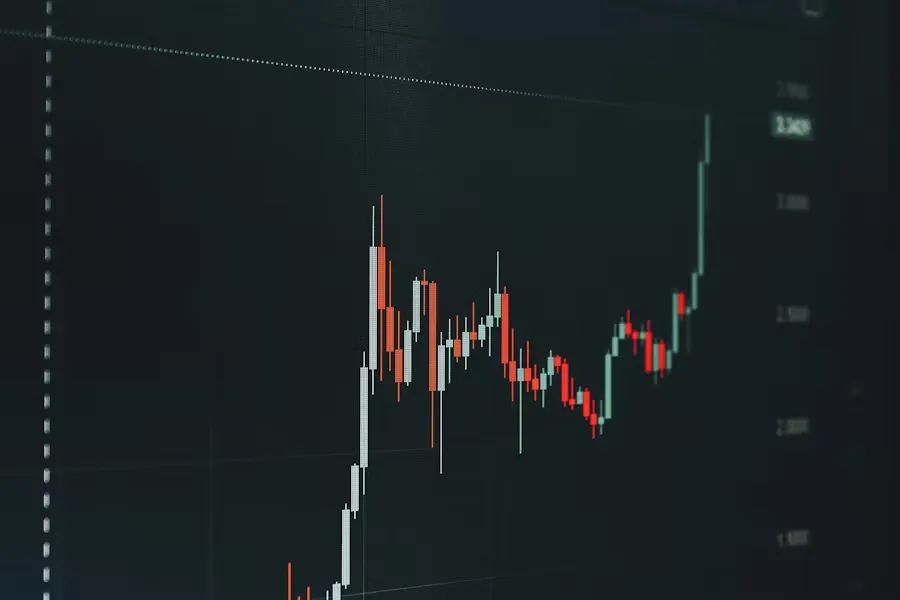
107 Dormant Bitcoin Sent to Burn Address in $8.3M Onchain Mystery

According to on-chain reports, the wallets had been dormant for about 11 years. When the coins were last active around 2015, Bitcoin traded near $314. At that time, the 107 BTC was worth roughly $33,700.  At recent prices near $75,000 to $78,000, the same coins were valued at more than $8 million. That sharp change gives the burn added weight, as the owner destroyed assets that had gained heavily over the past decade.  Related: Anonymous Plaintiff Legal Claim to Dormant Bitcoin a Lost Course—Experts  Burn Address Balance Climbs  Galaxy Research data showed the May 25 burn occurred at block 950,962. The transfers came from five sender wallets, with some inputs linked to 2014-vintage coins, 2015–2019 coins, and newer 2026 coins.  The largest sender moved 36.79 BTC, while other wallets sent 28.80 BTC, 20.03 BTC, 20.01 BTC, and 1.42 BTC. Together, the transactions pushed the known burn address above 807 BTC.  That balance is now worth about $60 million at current market prices. The address has accumulated coins over the years through irreversible transfers, including intentional burns, mistakes, and other unexplained activity.  An older post from 2021 also noted that more than one million Bitcoins had become unavailable during 2020, while only a smaller share of the supply


05-30

Paxos Wins SEC Clearing Agency Registration

Blockchain infrastructure platform and stablecoin issuer Paxos said it has become the first “blockchain-native” firm that the US Securities and Exchange Commission has granted registration as a clearing agency.  Paxos said on Thursday that its subsidiary, Paxos Securities Settlement Company, has become “the only blockchain-native firm” that the SEC approved to provide clearing and settlement services as a central securities depository in the US.  The approval represents a “critical piece of financial market infrastructure” as blockchain technology and traditional capital markets continue to converge, the company added.  Clearing agencies ensure securities trades are executed cleanly. Stock buyers and sellers do not trade directly and need clearing and settlement providers that verify the trade, match the buyer and seller, and then ensure the actual exchange of money and securities happens correctly.  A registered, SEC-approved blockchain clearinghouse removes barriers for banks and brokerages to build crypto-based infrastructure.  In October 2019, the SEC issued a no-action letter allowing Paxos to pilot a blockchain-based settlement service for US equities, and the service launched in February 2020.  Paxos said the pilot demonstrated that blockchain-based post-trade infrastructure could deliver same-day settlement, reduce costs and improve operational efficiency within a fully regulated framework.  “Our clearing agency registration is the result of seven years of

05-30

Why Billions Are Fleeing Bitcoin ETFs While Futures Open Interest Rises

U.S. Bitcoin ETFs have seen over $4.01B in outflows since May 7, Santiment data shows.Bitcoin ETFs posted a nine-day outflow streak, with about $2.8B leaving products in May.Futures open interest rose as traders rebuilt Bitcoin positions across major exchanges.  U.S. Bitcoin ETFs have recorded more than $4.01 billion in outflows since May 7, according to Santiment data. The withdrawals came through a steady multiweek trend, showing continued pressure across listed Bitcoin ETF products in the United States.  In an X post, the platform highlighted that the exits did not come from one sudden shock. Instead, the data showed consistent withdrawals over several weeks as investors reduced exposure to Bitcoin through ETF products. The trend pointed to weaker risk appetite during the period.  Source: X  Bitcoin ETFs See Heavy Withdrawals in May  The sharpest stretch began on May 15, when Bitcoin ETFs started a nine-day outflow streak. About $2.8 billion left the products during that run. The platform said it was the longest withdrawal streak since U.S. spot Bitcoin ETFs launched in January 2024.  One of the largest daily exits came on May 27. Farside Investors data showed that Bitcoin ETFs recorded about $733.43 million in outflows that day. BlackRocks IBIT accounted for $527.84 million of the

05-30

Investors, labels buy into growing South Asian music business in U.S.

When music strategist Anjula Acharia began launching superstar actress Priyanka Chopra Jonas into Hollywood in the early 2000s, her label partner Jimmy Iovine — the name behind pop sensations such as Eminem and Lady Gaga — told her she was 20 years too early to bring South Asian talent to the U.S.  Now, Acharia is the founder and CEO of 5 Junction, a joint label with focused specifically on investing in South Asian artists in the U.S.  “That sounded crazy, to think we were 20 years too early, but now, 20 years later, with the explosion of people like Diljit Dosanjh and Karan Aujla … theres all these South Asian acts that are coming here and really selling out, particularly in the live arena,” Acharia told CNBC.  The South Asian music market in the U.S. has remained largely untapped, but as music becomes more globalized, as with the success of K-pop and Latin acts, South Asian talent is making a case to investors as the next big business opportunity, Acharia said.  Global music revenues are reaching all-time highs, surpassing $30 billion in 2025, according to the International Federation of the Phonographic Industry. said last year that streams of Indian artists in international markets grew

05-30

Sui Network Restarts After 6 Hour Outage

Sui Network is back online after a nearly six-hour outage on Thursday, which it attributed to a bug introduced by an update, marking the layer-1 blockchains second period of downtime in 2026.  Sui posted to X on Thursday that activity on its mainnet had resumed after “a halt due to a crash bug in the gas charging logic introduced by the 1.72 release. A full incident review will be shared in the coming days.”  Sui had earlier shared that the blockchain was “experiencing a network stall” and said that transactions could be paused until a fix is rolled out.  The outage lasted 5 hours and 55 minutes, according to the networks status indicator. Sui mainnet validators are still listed as having “degraded performance.”  It is the second outage of the Sui blockchain this year, following a similar incident in January where the network was knocked offline for more than six hours. Another incident occurred in November 2024, when all validators were stuck in a crash loop for around two and a half hours, preventing transactions from being processed.  Sui is the 13th-largest blockchain by total value locked at $542 million and hosts 137 protocols, according to analytics platform DefiLlama.  Sui token drops 6.6% before recovery  The Sui

05-30

Sui Network Hits Third Transaction Halt in 48-Hour Outage Wave

The Sui team acknowledged this issue on social media, stating that their mainnet was experiencing a “network stall” and that it was looking for a solution. “Be aware that transactions may be paused at this time. Updates will be shared as soon as they are available,” they posted.  At 11:34 AM EDT, the network was processing transactions again, with Sui‘s team explaining that both today’s and yesterdays problems were linked to the “ gas charging logic” changes that the blockchain recently applied to make stablecoin transactions free.  “Yesterdays implemented fix was an interim measure designed to restore functionality to the network while the Sui Core Team worked on a long-term solution. The interim fix had a known issue with a low probability of causing a halt. This morning, the network hit a variant of the known issue and halted,” Sui explained, stressing that network activity had resumed.  X user 0xarthur.sui alleged that while the first network stall was likely due to a design defect, this second one was perpetrated by a threat actor. “A hacker likely opened short positions in advance, just to make Sui crash,” he declared.  In addition, he believes the fix for the problems was vibe-coded with AI and applied. “For

05-30

Gravity Bridge Loses $5.4 Million in Suspected Signing Key Compromise

Attackers drained roughly $5.4 million from the Gravity Bridge Ethereum-side contract early on May 30. On-chain investigators point to a compromised signing key rather than a smart-contract flaw.  The exploit removed $4.3 million in USD Coin (USDC) and 274 ether (ETH) worth $553,000. PeckShield also recorded $434,000 in Tether (USDT) and PAYG tokens worth $64,000.  Inside the Gravity Bridge hack  The drain came from the bridges verified Ethereum contract, with privileged access enabling withdrawals that appeared authorized. On-chain analyst Specter flagged the incident first, listing two attacker addresses tied to the theft.  PeckShield said the hacker moved part of the proceeds through ChangeNow and Binance to obscure origins. Cyvers Alerts and other on-chain monitors confirmed the figures shortly after.  The attacker swapped most stablecoins into ETH and now controls about 2,102 ETH worth roughly $4.23 million.  Bridges Remain Cryptos Weakest Link  Gravity Bridge connects Ethereum to the Cosmos ecosystem through IBC, letting assets such as USDC move between chains. The bridge held roughly $11.5 million in total value locked before the drain.  Past cross-chain bridge attacks like Ronin and Poly Network exposed how concentrated keys become a single point of failure.  PeckShield previously tallied eight major bridge exploits totaling $328.6 million in May alone.  Earlier incidents include the Meter bridge

05-30

Sui Network Hits Third Transaction Halt in 48-Hour Outage Wave

The Sui team acknowledged this issue on social media, stating that their mainnet was experiencing a “network stall” and that it was looking for a solution. “Be aware that transactions may be paused at this time. Updates will be shared as soon as they are available,” they posted.  At 11:34 AM EDT, the network was processing transactions again, with Sui‘s team explaining that both today’s and yesterdays problems were linked to the “ gas charging logic” changes that the blockchain recently applied to make stablecoin transactions free.  “Yesterdays implemented fix was an interim measure designed to restore functionality to the network while the Sui Core Team worked on a long-term solution. The interim fix had a known issue with a low probability of causing a halt. This morning, the network hit a variant of the known issue and halted,” Sui explained, stressing that network activity had resumed.  X user 0xarthur.sui alleged that while the first network stall was likely due to a design defect, this second one was perpetrated by a threat actor. “A hacker likely opened short positions in advance, just to make Sui crash,” he declared.  In addition, he believes the fix for the problems was vibe-coded with AI and applied. “For

05-30

Humanity Protocol rebounds from a sharp flush, but can H buyers clear $0.2949?

Humanity Protocol spent late April and early May building a base above the $0.1996 support zone. During this period, volume remained relatively light, suggesting sellers were gradually exhausting available supply.  As that balance shifted, buyers gained control and pushed the price sharply toward $0.2949 by the 13th of May.  Soon afterward, the market began telling a different story. The rejection near $0.2949 was swift, while subsequent rallies produced lower highs instead of continuation.  This behavior suggested larger participants were distributing into lingering demand rather than pursuing higher prices.  The signal strengthened when H revisited the $0.29 region around the 25th of May. Although buyers briefly regained momentum, the advance lacked durability and quickly faded. As a result, liquidity above prior highs increasingly appeared to attract selling pressure.  Thereafter, volatility accelerated dramatically. Price collapsed from nearly $0.28 to $0.1996 on the largest volume spike of the period, highlighting forced liquidations, heavy distribution, or a combination of both.  The reaction near $0.1996 then told a different story. Buyers stepped in aggressively and fueled a sharp recovery toward $0.256. Even so, rebound volume remained weaker than the selloff.  Therefore, reclaiming $0.27–$0.29 remains crucial, as failure could encourage another test of support, while a breakout may restore confidence.  Demand absorption challenges Humanity  is

05-30
1
...
953955
...
1000