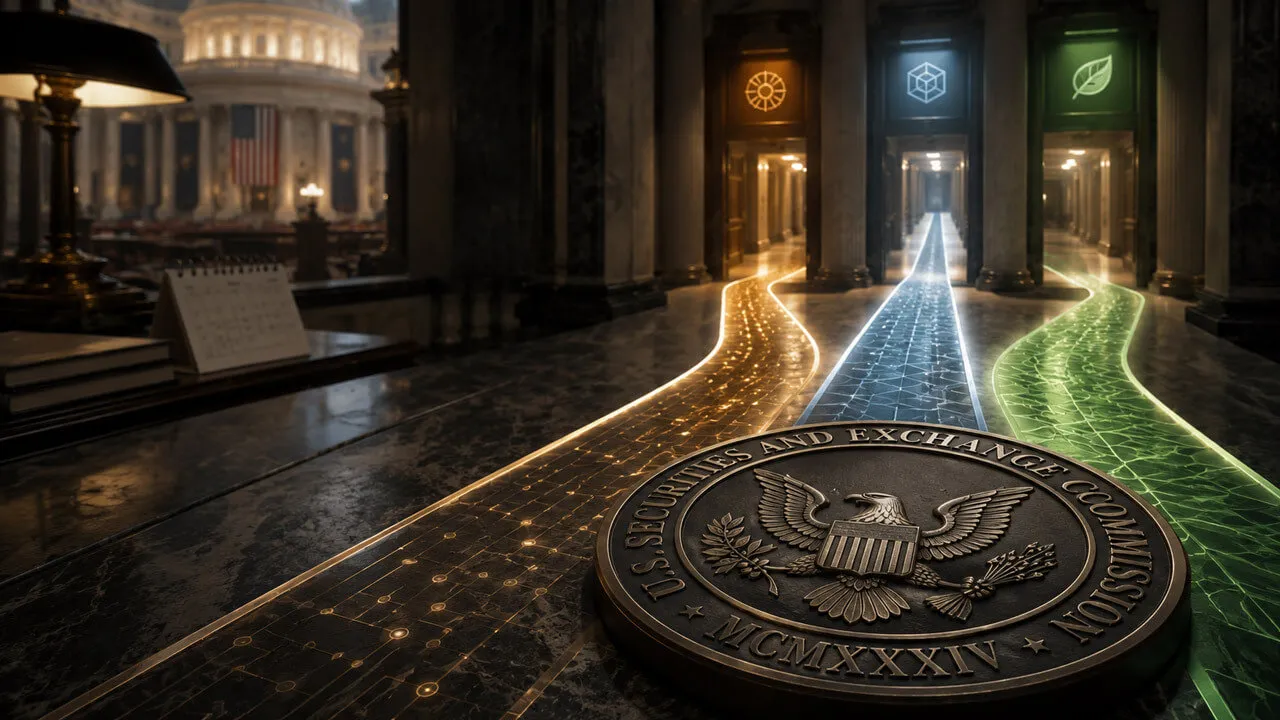
Coinbase Takes Over USDC Treasury Deployer Role on Hyperliquid, Phases Out Native USDH Stablecoin

Hyperliquid‘s native stablecoin is on its way out. The decentralized perpetuals exchange has chosen Coinbase as the official treasury deployer for USDC, a move that sidelines the platform’s own USDH token and hands a major plumbing role to a centralized entity. For a venue that built its reputation on permissionless leverage trading, the decision creates a clear trade-off: deeper liquidity and institutional alignment for a piece of on-chain governance.  According to the original report, Native Markets has already agreed to terms allowing Coinbase to purchase the USDH brand assets. The USDH market will be phased out over an unspecified timeline, effectively making USDC the primary stablecoin for collateral and settlement on Hyperliquid. The shift gives Coinbase direct exposure to treasury management inside one of the most actively used derivatives DEXs, while also extending USDCs footprint deeper into on-chain trading infrastructure.  A strategic shift for on-chain stablecoin markets  By taking the treasury deployer seat, Coinbase can directly manage and mint USDC in connection with Hyperliquid‘s trading activity. It is a role that normally sits with a protocol’s own team or a DAO treasury, not an external exchange. For Coinbase, the logic is straightforward: USDC needs to be where volume lives, and Hyperliquid has consistently

05-15

3 Altcoins That Benefit Most From the CLARITY Act and Why

The Crypto Market Structure Bill, CLARITY Act, passed the Senate Banking Committee on Thursday. The vote sends the crypto market structure bill toward a full Senate floor test and resets risk profiles for altcoin holders.  Three tokens stand out as direct beneficiaries with profiles that fit the bills grandfather clauses, decentralization tests, and DeFi protections. Meanwhile, XRP, Solana, and Hyperliquid each align with the mechanics that the legislation favors.  XRP Lands a Path Out of SEC Limbo  XRP, the native asset of the Ripple network, sits closest to the bills grandfather clause. That language fast-tracks commodity status for tokens with approved or pending ETF products, sidestepping the full mature-blockchain test.  Historically, secondary-market XRP sales have drawn SEC scrutiny. The bill ends that exposure for tokens meeting the new commodity definition.  XRP Price Performance. Source: BeInCrypto  It explains why the token is up by almost 7% in the last 24 hours, to trade for $1.51 as of this writing.  “CLARITY Act talks just took a BIG step forward. Sen. Warner confirms progress after Republicans accepted key changes. Translation: regulation is aligning… and thats exactly what XRP has been waiting for. The rails are being built,” one user noted.  Solana Anchors the DeFi Safe Harbor Case  Solana (SOL) qualifies as a

05-15

Solana positions itself as leader in quantum threat preparedness

On April 27, 2026, the Solana Foundation released a comprehensive quantum readiness roadmap, co-authored with Anza and Jump Crypto‘s Firedancer team. The document lays out a concrete strategy for migrating Solana’s cryptographic infrastructure to post-quantum standards, with a particular focus on the Falcon digital signature scheme.  Why the urgency matters now  A 2026 Google paper estimated that fewer than 500,000 physical qubits would be required to break elliptic curve cryptography, the mathematical foundation securing virtually every major blockchain. That number is significantly lower than previous estimates, which had placed the threshold comfortably in the millions.  Nic Carter has put the odds of Bitcoin being vulnerable to quantum attacks by 2035 at 70-80%. The specific vulnerability sits in Ed25519, the elliptic curve signature scheme used by Solana, and variants of the same mathematical family used by Bitcoin and Ethereum. If a sufficiently powerful quantum computer can derive a private key from a public key, anyone who has ever broadcast a transaction, which exposes their public key, becomes a target.  Solanas quantum playbook  The roadmap centers on adopting Falcon, formally known as FN-DSA, a post-quantum digital signature algorithm specifically chosen for high-throughput blockchains. Falcon was selected by NIST as one of its post-quantum cryptographic standards.  Ed25519 signatures are

05-15

Fed Governor Miran submits resignation, throws support behind Warsh as new chair

Stephen Miran, governor of the US Federal Reserve, during a television interview on the floor of the New York Stock Exchange (NYSE) in New York, US, on Monday, Nov. 10, 2025.  Michael Nagle | Bloomberg | Getty Images  Federal Reserve Governor Stephen Miran officially handed in his resignation letter Thursday, saying he will vacate his spot on the central bank board when or just before new Chair Kevin Warsh takes his seat.  Stepping in to fill what was left of an unexpired term last September, Miran served as a contrarian voice on the rate-setting Federal Open Market Committee. He voted “no” in each of the six meetings he has attended since taking over for Adriana Kugler, who abruptly resigned in August 2025.  In his letter, Miran said his brief stint was “the highest honor of my life” and expressed confidence in Warsh, who gained Senate confirmation to the top seat Wednesday. Miran came to the Fed after serving as chair of the Council of Economic Advisers.  “Going forward, I am excited about changes Chairman-designate Kevin Warsh and the Federal Reserve may make in areas such as communications policy, balance sheet policy, and keeping the Federal Reserve to its narrow mandate and out of hot-button political

05-15

Banque de Frances Beau clashes with Lagarde over digital euro plans

The European Central Bank and France‘s central bank are supposed to be on the same team. Right now, they’re reading from very different playbooks on the future of digital money in Europe.  Denis Beau, deputy governor of the Banque de France, is pushing hard for the rapid development of euro-denominated tokenized money and stablecoins, built in partnership with the private sector. ECB President Christine Lagarde, meanwhile, would rather keep the spotlight on the central banks own digital euro project, treating private stablecoins as a secondary concern at best.  Two visions, one currency  Beau‘s argument is straightforward: Europe can’t afford to wait. Hes calling for collaboration between private and public institutions to build pan-European tokenized payment infrastructure, and he wants regulatory frameworks under MiCA adapted to make that happen faster.  The Banque de France‘s wholesale tokenized money service is set to launch by the end of 2025, a full 18 months ahead of the ECB’s digital euro pilot timeline.  On the private sector side, the Qivalis consortium, a group of 12 major banks including ING and BNP Paribas, plans to launch a private digital euro in 2025. That initiative aligns neatly with Beaus vision of European banks building tokenized solutions rather than waiting for a government-issued

05-15

Tether-backed T3 Says It Froze $450M in Illicit Crypto Funds Since 2024

The group was cited earlier this year by the Financial Action Task Force as an “invaluable resource” for law enforcement and highlighted in FATF reporting on public-private partnership models.  T3 figures follow broader USDT freeze activity  The new figures also follow separate onchain data from security firm BlockSec on Friday, showing that more than $500 million in USDT had been frozen over a recent 30-day period.  Cointelegraph reached out to Tether to ask how the $450 million in assets linked to T3 FCU‘s work intersect with Tether’s broader blacklisting and freezing activity across chains, and how much of the total relates specifically to Tron-based USDT, but had not received a response by publication.  The company was also asked how it balances an expanding compliance and asset-freezing toolkit with criticism from parts of the crypto industry that such powers increase centralization risk and may undermine the permissionless nature of stablecoin transfers on networks like Tron.  Tron, which positions itself as a low-cost settlement layer for stablecoins, told Cointelegraph it is an “agnostic technology provider” that cannot directly monitor every user or block every transaction, and that the means to identify and stop illicit activity sit with partners such as Tether, TRM Labs and law enforcement.

05-15

Rep. Frederica Wilson Has Been Absent For Weeks Without Explanation

Two House members have been absent for weeks, missing dozens of votes as both face tough re-election contests, including one that could jeopardize Republicans slim majority in the House.  TNS  Key Facts  Rep. Frederica Wilson, D-Fla., has not voted in the House since April 17, missing 43 consecutive votes as of Wednesday, according to reporter Jamie Dupree.  She has remained active on social media and shared images on Tuesday of a service academy event she attended—and already posted—in October.  Wilson has not publicly explained her absence, and neither her office nor House Minority Leader Hakeem Jeffries‘ office responded to Forbes’ questions about where she has been.  Rep. Thomas Kean Jr., R-N.J., who had a near-perfect voting record until he cast his last vote on March 5, has missed 68 votes since.  Kean‘s chief of staff, Dan Scharfenberger, referred Forbes to a previous statement he provided to the New Jersey Globe: Kean is “attending to a personal health matter” and will be returning to a regular full schedule soon,“ Scharfenberger said, adding, ”the Congressman’s team continues to serve the people of New Jersey uninterrupted.  Both are running for re-election this year and could lose their seats—Kean, who has been endorsed by President Donald Trump, is uncontested in the June

05-15

Pi Network Updates KYC Milestones as PI Holds at $0.17

Pi Network confirmed that over 18.1 million users completed KYC verification and 16.7 million migrated to Mainnet.The Core Team reaffirmed its one account per real human policy to protect fair mining rewards and settlements.Pi Network rolled out protocol upgrades from version 19.6 to v22 and scheduled v23 next.Co-founders Chengdiao Fan and Nicolas Kokkalis spoke at Consensus 2026 about identity systems and AI challenges.PI traded near $0.17 on May 14 and recorded a 6% weekly decline.Exchange-held PI tokens rose to nearly 540 million, with over half stored on Gate.io.  Pi Network reported new ecosystem milestones while PI price traded near $0.17 on May 14. The Core Team confirmed higher KYC approvals and Mainnet migrations. Meanwhile, exchange balances climbed toward 540 million tokens, and weekly price losses reached 6%.  Pi Network Reports KYC Growth and Protocol Upgrades  Pi Network confirmed that over 18.1 million users completed full KYC verification. The team also said that more than 16.7 million users migrated to Mainnet. These figures reflect ongoing identity checks across the ecosystem.  The Core Team reiterated that one account must represent one real person. It said this rule protects fair mining rewards and secure settlements. However, some users on X reported long waits for verification approval.  The project

05-15

ChatGPT Is Losing Ground to Rivals—Here Are Some Numbers

Ramp lead economist Ara Kharazian called it “a stunning reversal.” A year ago, only 9% of businesses on the platform were paying for Anthropic at all. That number has now quadrupled. OpenAI, meanwhile, grew its business adoption by just 0.3% over the same 12 months.  The engine behind Anthropic‘s business surge is largely Claude Code, the company’s agentic coding tool, which has been expanding rapidly in developer teams at firms of every size. Ubers CTO publicly noted the company blew through its entire 2026 AI budget in four months—driven largely by Claude Code usage—with per-engineer monthly API costs running between $500 and $2,000.  One nuance the Ramp data can‘t fully capture: OpenAI pushed back through a spokesperson, noting that its biggest enterprise deals don’t flow through corporate cards. “We are driving enterprise transformation at scale,” the company said, per Axios. “These are not engagements where customers pay with a credit card.” That‘s a fair point—Ramp’s methodology captures a wide but imperfect slice of business spending.  Still, Ramp doesn‘t think the lead will be easy to hold. The report flagged three specific risks: Anthropic’s token-based pricing model incentivizes pushing users toward more expensive models; Claude has experienced service outages and quality complaints in recent

05-15

Best New Crypto Launches to Watch, With Little Pepe (LILPEPE) Gaining Fast Attention

The meme coin category is back on track in 2026, yet this time, the trend seems quite different from the previous iterations characterized by short-term hype and price action. Investors are becoming pickier, with an emphasis on projects that are not only popular in the community but also have some sort of practical use case.  While speculation continues to dominate much of the crypto market, todays investors place more value on the ability to scale the ecosystem, tokenomics, sustainability past the launch period, and overall growth potential. From among the recent crypto coin offerings, one of the projects making waves is Little Pepe (LILPEPE).  The project recently crossed the $28 million mark in presale funding, adding another major milestone to what has already become one of the fastest-growing meme coin launches this year. At the centre of the discussion is the fact that Little Pepe is not positioning itself as a standard meme token.  The project combines meme culture with its own Layer-2 blockchain infrastructure, aiming to create a faster and cheaper ecosystem built specifically for meme-driven applications.  The Meme Coin Market is Shifting Toward Projects with Utility  Meme coins were mostly associated with viral momentum, celebrity attention, and short-term speculation. Traders are rewarding projects

05-15
1
...
504506
...
1000