Mastercard and BVNK Launch 'Global Money Platform' to Merge Fiat and Stablecoins

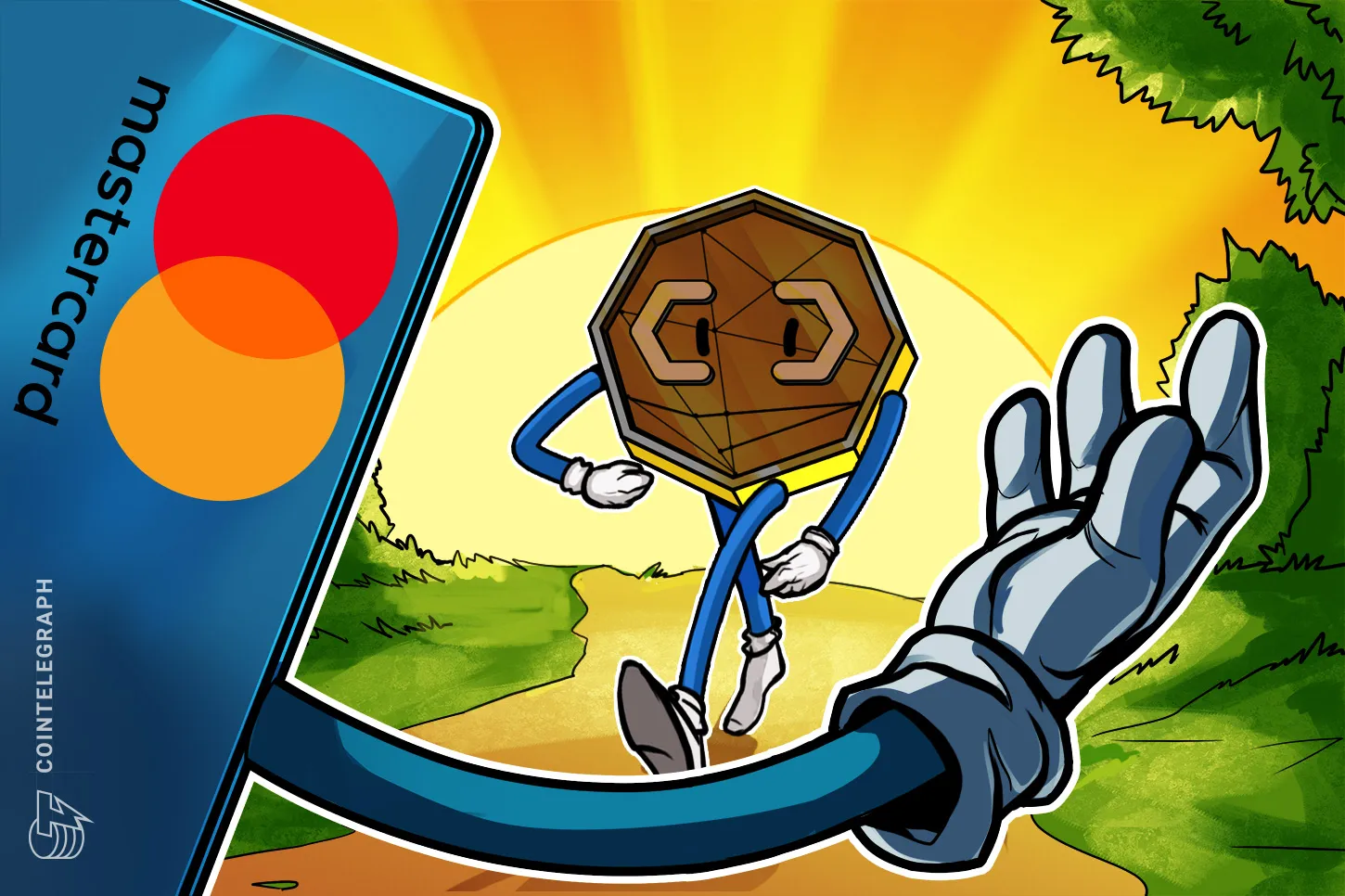
In briefMastercard and BVNK launched the Global Money Platform, a modular infrastructure layer letting businesses embed multi-currency accounts holding fiat and stablecoins side by side.It ties into Mastercard Move for local-currency payouts and lets users spend stablecoin balances across Mastercards merchant network, with Nuvei and Marqeta among first integrators.Mastercard framed it for a “multi-money” future, with planned support for agentic commerce and tokenized deposits.  Mastercard is folding stablecoins into its sprawling payments empire, launching a platform that lets businesses hold, move, and spend traditional currencies and digital dollars side by side through a single connection.  Unveiled Thursday, the Mastercard Global Money Platform pairs the payments giants global network with the stablecoin infrastructure of BVNK, the crypto firm Mastercard acquired in August.  Myriad: Where does Ethereum go next? Click to make your prediction.  Mastercard struck the deal to buy BVNK for roughly $1.8 billion, and the new platform marks the first major integration of the two companies capabilities since that acquisition closed.  At the center of the platform is what Mastercard calls a global money account, a multi-currency account where fiat and stablecoins can sit together, with conversion between them handled through a single API.  Banks, fintechs and enterprises can embed those accounts into their own branded

10-16انڈسٹری

Curve Finance loans climb 68% in Q3 as DeFi lending recovery lags

Curve Finance has recorded a 68% rise in active loans to $70.9 million in Q3 2026, moving above its 2025 closing balance while total DeFi lending has remained below that benchmark, according to figures cited by the protocol.  DefiLlama data cited in Curve Finance‘s quarterly update put the protocol’s outstanding loans above the $69 million recorded at the end of 2025. Across DeFi lending, the same comparison showed $32.8 billion in active loans at Septembers close against $37.5 billion at the end of last year.  Within Curves lending business, the team attributed most of the quarterly increase to LlamaLend v2, which reached Optimism in June and Ethereum mainnet in July. According to its update, August delivered the strongest growth, led by markets involving yield-bearing stablecoins such as sreUSD, sfrxUSD, and syrupUSDC.  Curve Finance loan growth centers on yield-bearing collateral  In explaining the quarterly figures, Curves team pointed to borrowers seeking access to credit while retaining the income generated by their collateral.  “DeFi lending is recovering unevenly. Capital is moving toward places where assets can continue earning yield while being used as collateral,” the Curve Finance team said.  The team said LlamaLend v2 gives token issuers more options for creating lending markets around their assets, while borrowers

10-16انڈسٹری

Mastercard brings stablecoin balances into traditional banking and card payments

Mastercard is expanding its role in stablecoin payments with a new platform that lets businesses integrate digital currencies into traditional banking and card services, a move that could make it easier for companies to offer stablecoin payments without building their own infrastructure.  The service, dubbed Global Money Platform, is Mastercards first major integration with BVNK since it acquired the stablecoin infrastructure company in August, the payments giant announced Thursday.  According to Mastercard, businesses can use the platform to hold and convert fiat currencies and stablecoins, offer stablecoin-linked cards and make payments directly from stablecoin balances into recipients local bank accounts.  The service connects to Mastercard Move, the company‘s global money transfer network, which can route payments to more than 17 billion destinations, including bank accounts and cards. It also connects stablecoin balances to Mastercard’s merchant network, allowing customers to spend them with payment cards. Nuvei, Marqeta and several other fintech companies are among the first integration partners.  The launch extends Mastercards role beyond processing payments to providing infrastructure that financial companies can use to offer stablecoin services under their own brands. It also puts Mastercard in closer competition with Visa, which launched a platform in July that lets financial institutions hold, mint, and transfer

10-16انڈسٹری

Episode Six adds stablecoin backing checks at issuance and redemption

Episode Six has launched Verified Backing for bank-issued stablecoins and tokenized deposits, adding real-time checks before tokens are created and before cash is released at redemption.  SummaryVerified Backing checks recorded backing at issuance and confirms tokens remain outstanding before redemption.Episode Six says the checks run inside its Token Control Ledger on the issuing banks side.The capability covers supported tokens issued through the ledger, including stablecoins and tokenized deposits.The company says Verified Backing is available to customers across the markets where it operates.  Episode Six said in its Oct. 15 announcement that Verified Backing checks tokens against backing recorded in its E6 Token Control Ledger. At redemption, the system checks whether a token is genuine, remains outstanding, and has backing recorded for it before the bank releases funds.  According to the Austin, Texas-based company, the capability covers a banks own supported tokens issued through the ledger. The release identifies both stablecoins and tokenized deposits as products covered by the checks.  Stablecoin backing checks run before issuance and payment  Before a bank creates a token, Episode Six says Verified Backing confirms that backing is available. When the holder later presents the token for redemption, the capability checks its status against the ledgers records.  Under the companys description, the

10-16انڈسٹری

Australia eyes A$14 million capital rule as crypto regulatory crackdown deepens

Australias securities regulator proposed tougher operating standards for cryptocurrency exchanges and custodians ahead of a new licensing regime next year.  The Australian Securities and Investments Commission (ASIC) released a consultation package on Oct. 15 outlining stricter requirements to protect customer assets, execute trades, manage conflicts of interest and maintain adequate financial reserves.  The proposals would bring crypto exchanges and tokenized custody platforms under safeguards comparable to those governing traditional financial institutions, expanding regulatory oversight of businesses that hold and trade digital assets on behalf of customers.  The changes implement Australias Corporations Amendment (Digital Assets Framework) Act 2026, enacted in April and taking effect in 2027. Under the legislation, affected businesses must obtain an Australian financial services license or secure additional authorization under an existing license.  ASIC Commissioner Alan Kirkland said the framework reflects the growing integration of digital assets into mainstream finance.  “Our proposed guidance and standards acknowledge the increasing role of digital assets and tokenization, including in traditional parts of the financial system,” Kirkland said.  He added that the regulator is seeking to align Australia with comparable international jurisdictions while encouraging investment and innovation without weakening consumer protections.  The proposed changes would impose greater responsibility on exchanges for customer funds and trading activity. Platforms would need

10-15انڈسٹری

Bitcoin price drops 3.6% as hot US PPI fuels Fed rate hike concerns

Bitcoin has fallen 3.6% over the past 24 hours to around $81,500 as stronger-than-expected U.S. producer inflation has renewed concerns about another Federal Reserve interest rate increase.  The U.S. Bureau of Labor Statistics reported on Oct. 15 that September‘s producer price index rose 1.3% from August, accelerating from the previous month’s revised 0.5% increase.  On an annual basis, the agency recorded a 6.3% rise in wholesale prices, the fastest increase since December 2022. The release followed Wednesday‘s consumer inflation report, giving investors a second set of stronger price readings before the Fed’s October policy meeting.  Bitcoin retreats after failing to clear $84,000  According to the initial market report, Bitcoin traded around $81,500 following the PPI release, with its daily decline exceeding 3.6%. The report also placed Bitcoin below its 50-day moving average and recorded a 24-hour low of $80,443.  Before the inflation releases, crypto.news reported that Bitcoin had approached $83,900 during Asian trading on Oct. 14 before retreating toward $83,500, leaving a recovery above $84,000 incomplete.  In that coverage, analyst Ali Martinez identified $84,000 as a potential breakout level on the 4-hour chart. Martinezs proposed route toward $93,000 depended on a confirmed close above resistance and continued upward price movement; it was a conditional target rather

10-15انڈسٹری

Bitcoin Whipsaws as Crypto Liquidations Near $1 Billion

In briefCrypto liquidations reached $948.22 million in 24 hours across 177,440 traders, with long positions accounting for 90.6%, per CoinGlass.Bitcoin fell 2.6% and broke support after hotter-than-expected CPI and PPI data revived bets on another Fed rate hike.Bitcoin now trades roughly 2% below the average cost of U.S. spot ETF holders near $82,300, putting those buyers back underwater.  Bitcoin fell below $80,000 on Thursday for the first time in over a month, extending Wednesdays inflation-driven slide and wiping out nearly $1 billion in leveraged crypto bets. Its currently trading just about $82,000 after several hours of increased volatility.  Ethereum and XRP dropped close to 5%, Zcash sank almost 10%, and only five coins in the top 100 managed gains above 1%. Pick any coin in the top 100 and its likely in the red today.  Myriad: How low will Bitcoin go? Click to make your prediction.  Across the market, 177,440 traders were liquidated in 24 hours for a total of $948.22 million, per CoinGlass, with longs accounting for $858.96 million, or 90.6%. Ethereum led with $282.03 million, with Bitcoin just behind at a little over $200 million.  This was the third-heaviest day for long liquidations in the last 90 days, behind October 8 and August

10-15انڈسٹری

Bitcoin Just Fell Below $80,000: What Triggered the Selloff?

Bitcoins fall below $80,000 appears to be a continuation of the selling pressure building throughout the week, with a fresh inflation shock today giving traders another reason to sell.  Today on October 15, US wholesale inflation came in far hotter than expected. This followed yesterdays disappointing consumer inflation report, extending fears that the Federal Reserve could raise interest rates again.  Sponsored  Sponsored  The selloff is being amplified by leveraged traders being forced to close positions. The wider stock market, particularly technology shares, is also under pressure.  Another Inflation Shock  The US Producer Price Index (PPI), released at 8:30 a.m. New York time today, recorded its largest monthly increase since March 2022.  Energy prices were a major contributor, with wholesale gasoline prices jumping 20.3% in September.  This matters for investment sentiment because higher production costs can eventually feed into consumer prices.  For financial markets, it raises the possibility of interest rates remaining elevated or increasing further.  Sponsored  Sponsored  Yesterday‘s CPI report started the latest macroeconomic shock. Today’s PPI report reinforced it, adding pressure to an already weakening Bitcoin market.  Institutional Buyers are Withdrawing Money From Bitcoin  US spot Bitcoin ETFs have been losing capital during this period.  US Bitcoin ETF Inflows in October  The figures reveal the longer-running weakness:Last week, October 5–9: approximately $679 million in net

10-15انڈسٹری

Crypto Markets Face Major Liquidation Risk, Q3 Data Shows

Crypto just added $840 billion in three months. But beneath the rally, trading on major spot exchanges is falling while leveraged bets are piling up.   CoinGeckos Q3 2026 report shows crypto market capitalization jumped 39.6% to nearly $3 trillion. Yet spot trading on the ten largest centralized exchanges dropped 14.2% from the previous quarter to $1.65 trillion.  Rising prices need willing buyers. Weak trading activity can make a rally harder to sustain and price swings more severe if sellers suddenly rush for the exits. Spot exchange volumes do not capture every trade, and activity improved toward September.  Spot Exchange Trading Volume  Sponsored  Sponsored  The Bigger Danger Is $100 Billion in Futures Bets  Meanwhile, open interest on the ten largest perpetual futures exchanges surged 40.6% to $102.2 billion. Open interest measures outstanding derivatives contracts, many of which use leverage to magnify gains and losses.  The report says open interest last stayed above $100 billion between May and November 2025.  That stretch included October 10, when Donald Trumps tariff threat against China triggered a selloff that snowballed into more than $19 billion in forced liquidations.  Bitcoin fell 14.5% and Ethereum lost 12.2%. As leveraged positions were automatically closed, the selling intensified, catching traders who had expected the rally to continue.  Perpetual Futures

10-15انڈسٹری

Russia to ban peer-to-peer crypto trades: What does it mean for traders?

Russia has confirmed that direct peer-to-peer cryptocurrency transactions between individuals will be prohibited from July 1, 2027, requiring residents to conduct trades through authorized intermediaries.  According to updated guidance published by the Bank of Russia on Oct. 12, individuals can continue trading cryptocurrencies directly with one another until the deadline, after which such transactions will no longer be permitted under Federal Law No. 282-FZ.  The central bank clarified that individuals cannot transfer cryptocurrency from their digital accounts to their own noncustodial wallets. Transfers between individuals using addresses administered by regulated digital depositories are prohibited as well.  The restrictions affect how Russian traders buy, sell and transfer cryptocurrencies, although the country has opened a regulated market where approved banks, brokers and exchange operators can provide trading services.  What will Russias P2P crypto ban mean for traders?  Russian cryptocurrency traders who currently buy or sell digital assets directly with other individuals will have to use authorized intermediaries once the July 2027 deadline takes effect.  P2P transactions generally allow buyers and sellers to agree on a price and settle trades directly, sometimes using marketplaces that connect counterparties without acting as the principal buyer or seller.  The new framework does not permit individuals to continue conducting such trades simply by arranging

10-15انڈسٹری
1
...
183185
...
1000