Ether weakness against bitcoin deepens as ETH/BTC ratio hits 10-month low

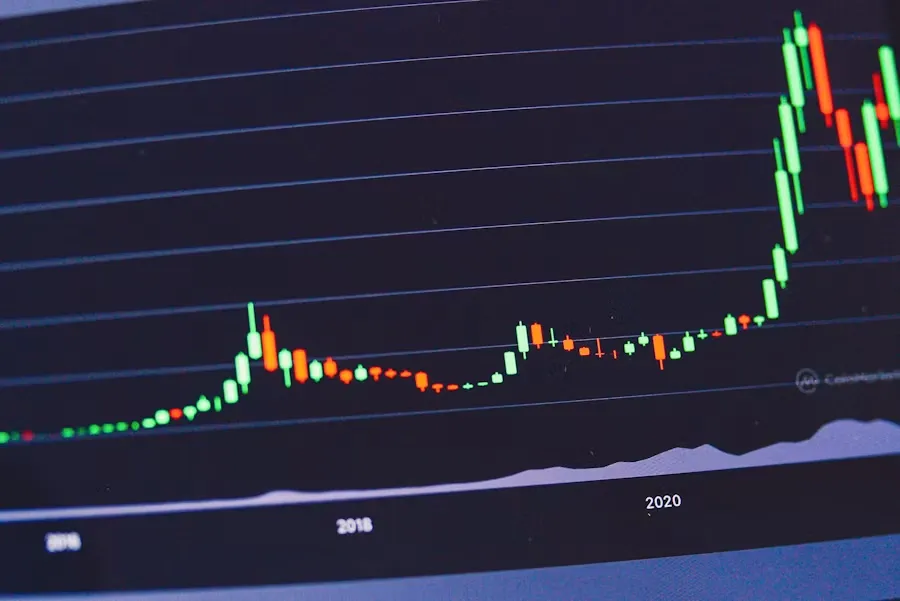
One widely watched indicator for assessing whether the crypto market is in a bullish or bearish phase is the ether-to-bitcoin (ETH/BTC) ratio.  On Tuesday, the ratio fell to 0.02835, its lowest level in 10 months and the weakest reading since July 2025. The decline comes as ether dropped more than 2% on Tuesday, compared with bitcoins decline of just over 1%. The ETH/BTC ratio is now down more than 35% from its August high of 0.04324.  The ETH/BTC ratio measures ether‘s relative performance against bitcoin across crypto exchanges and is considered a key gauge of market risk appetite. A rising ratio typically signals that investors are rotating capital into ether and other higher risk crypto assets, reflecting stronger risk sentiment. Conversely, a falling ratio suggests investors are favoring bitcoin’s relative stability and defensive characteristics.  The pair peaked above 0.08 in December 2021 before entering a prolonged multi year downtrend. Much of the weakness through 2024 and into 2025 was driven by bitcoins outperformance following the launch and success of U.S. spot bitcoin ETFs in January 2024, which attracted significant institutional inflows.  The ratio eventually bottomed at 0.01770 in April 2025 during the market turmoil surrounding President Trumps “Liberation Day” tariff announcements. It then rebounded

05-12

Bitcoin Holds $80.8K as Dalio Flags Privacy Gap, Strategy Adds 535 BTC and ETPs Pull $858M

Ray Dalio has stepped into the long-running privacy debate, arguing that Bitcoin‘s radical transparency is precisely why central banks remain reluctant to add it to their reserves. The billionaire, who personally allocates roughly 1% of his portfolio to BTC, said transactions on the network can be monitored and potentially controlled, a feature private wealth tolerates but sovereign treasuries do not. Every transfer is permanently inscribed on a public ledger, and blockchain analytics firms can frequently trace flows back to entities even when wallet addresses appear pseudonymous. Dalio also flagged Bitcoin’s tightening correlation with equities as a structural drawback when compared with golds diversification profile.  Technical analysts are warning that BTC remains pinned beneath a multi-month ceiling that has repeatedly produced double-digit drawdowns. Bitcoin slid 2.25% to roughly $80,500 after another failed attempt to clear its 200-day exponential moving average near $82,580, a level that has rejected every rebound attempt since November 2025. Prior rejections from the same line triggered sell-offs of 25% and 36%, averaging a 30% drawdown. A repeat performance could pull spot toward $56,600, an area aligning with a long-term lifetime-support model that places macro floor zones in the mid-$50,000s and a secondary band near $46,760.  The Wall Street–Main Street

05-12

AST SpaceMobile (ASTS) Stock Plunges 11% as Q1 Revenue Misses Expectations by Over 60%

AST SpaceMobile, Inc., ASTS  The satellite communications company disclosed a quarterly loss of 66 cents per share alongside revenue totaling $14.7 million. This performance fell notably short of Wall Streets consensus forecast, which anticipated a loss of merely 23 cents per share on sales of $39 million. For comparison, the same period last year saw AST record a loss of 20 cents per share with revenue of only $718,000.  The first-quarter shortfall is substantial. Sales figures reached barely 38% of analyst projections.  Yet the company chose not to revise its forward-looking projections. AST SpaceMobile reaffirmed its full-year 2026 revenue target ranging from $150 million to $200 million. Current Wall Street estimates center around $177 million for the full year.  This unchanged guidance provided some reassurance to shareholders following an underwhelming quarterly performance.  Context matters here: ASTS had climbed 10% during Mondays regular session leading up to the earnings announcement, and had surged 220% throughout the preceding twelve months. Investor enthusiasm was clearly elevated.  Expanding Satellite Infrastructure  AST is constructing a satellite-based cellular network designed to enable ordinary smartphones to communicate directly with orbiting satellites — eliminating the need for specialized equipment.  The company has demonstrated peak download speeds of 98.9 megabits per second utilizing its operational Block 1

05-12

Bhutan Opens Accelerated Fintech Licensing With 0% Corporate Tax and Free Banking – Bitcoin News

DK Bank Guarantees Accounts for Every GMC-Licensed Firm Starting May 2026  rogram, qualifying companies move through incorporation, regulatory review, and bank account opening as a single coordinated process rather than sequential steps that can stretch across months.  The integrated model connects directly to DK Bank, Bhutan‘s state-linked financial institution, and GMC’s official banking partner. Every company that earns a GMC license receives a corporate account with DK Bank as part of the process. That removes what regulators and founders commonly describe as the most stubborn friction point in setting up operations in a new jurisdiction: get  dividend tax, or inheritance tax. Foreign talent tax exemptions run through 2030.  For legal infrastructure, GMC uses common law frameworks drawn from Singapore, with regulatory principles modeled on ADGM. The region offers Variable Capital Company structures based on Singapores VCC model and operates an International Dispute Resolution Centre for cross-border investment disputes. A double taxation agreement with Singapore is already in place.  set and fintech licensing, at a time when companies in those sectors are searching for jurisdictions that can offer regulatory clarity alongside working banking rails. Bhutan is also well known for being a nation that holds bitcoin reserves.  Earlier this morning, onchain analysts noticed that Bhutan sent 100

05-12

AI Is Now Both the Weapon and the Shield in Crypto’s Fraud War

Artificial intelligence (AI) has become both the most effective weapon and the strongest shield in cryptocurrency fraud.  The cost of running a crypto scam keeps tumbling as AI accelerates the trend. However, exchanges are turning to the same technology to strengthen their defenses.  Inside the AI vs AI Arms Race Reshaping Crypto Security  Binance Research recently highlighted that AI tools exploit smart contracts about twice as efficiently as they detect vulnerabilities. Attacks cost as little as $1.22 per contract, down 22% month-on-month, with advanced models succeeding 72.2% of the time.  “The barrier to entry for scam perpetrators is falling fast, with AI accelerating the drop. What once required technical expertise can now be executed for next to nothing and at scale,” Binance noted.  The problem extends beyond code. Chainalysis reports that scammers are using deepfakes, face-swap tools, and language models to power romance and investment scams.  Notably, AI-driven operations earn an average of $3.2 million each, roughly 4.5 times as much as traditional crypto scams.  “Today, 76% of AI-driven scams fall within the highest quartile for both scale and severity, and in 2025 alone, crypto-related fraud reached $17 billion – a 30% year-on-year increase. Without a proportionate response, the impact is likely to worsen,” the blog added.  Binance

05-12

Is This Bitcoin Bear Market Different? Analysts Weigh In

Bitcoins current bear market drawdown of around 36% from its ATH is shallower than historical cycles, which saw 40–50% declines.ETF inflows and corporate treasury accumulation have introduced structural demand that analysts say is reshaping how Bitcoin cycles play out.One analyst noted that similar conditions—above True Market Mean and STH cost basis—preceded bear market resumptions in 2014, 2018, and 2022.  Bitcoins recovery over the past few weeks has led to shallower losses than any previous on record, leading analysts to believe that the cycle may have permanently changed—though not all are convinced the old playbook is dead.  The leading crypto has retreated roughly 36% from its October all-time high of $126,080, trading at around $80,500 at the time of writing, according to CoinGecko data. That retracement is higher than past bear markets, which have historically seen drawdowns of 40% to 50% from cycle peaks.  That shift is happening due to Bitcoins recent recovery. It is up 12.5% over the past 30 days, but the bulk of the bounce concentrated between April 1 and May 6, which pushed up approximately 22%.  “The fourth bitcoin bear market has materially decoupled from past cycles, for now,” Pierre Rochard, CEO of The Bitcoin Bond Company, tweeted Tuesday, attributing the

05-12

Can Bitcoin break $82K or will profit-taking stop BTC again?

Bitcoins climb toward the $82,000 resistance reflects a market slowly rebuilding conviction after weeks of unstable momentum and cautious positioning.  Spot demand continued absorbing supply throughout the rally, with daily trading volume holding between $4.2 billion and $4.5 billion. That steady accumulation helped BTC reclaim higher levels without relying entirely on aggressive leverage.  Source: CoinGlass  As confidence strengthened, futures traders expanded exposure aggressively. Futures Volume pushed beyond $50 billion, while aggregate Open Interest (OI) stabilized near $60 billion after surpassing several 2025 peaks earlier in 2026.  Taker Buy approaching the positive mark reinforced upside momentum, yet balanced Funding Rates suggested speculation remained relatively controlled.  Still, the approaching resistance zone may trigger profit-taking pressure if spot demand weakens in the face of expanding derivatives activity.  Weakening network activity exposes Bitcoins fragile recovery  Beneath Bitcoins [BTC] steady climb toward the $82,000 resistance, on-chain behavior continued telling a far more cautious story.  Network participation weakened throughout the recovery phase, with Active Addresses sliding toward 707,720 despite BTC holding above key support zones.  Source: X  That slowdown suggests price expansion increasingly comes from concentrated trading activity rather than broad user engagement across the network.  The pressure becomes clearer once unrealized losses enter the picture. Even near $82,100, Unrealized Losses still account for nearly 6.9% of

05-12

U.S. spot XRP ETFs post strongest inflow day in four months

U.S. spot XRP exchange-traded funds have pulled in their largest daily inflow in roughly four months.U.S. spot XRP ETFs recorded $25.8 million in daily inflows, the highest level since January.Franklin Templeton, Bitwise, and Grayscale all posted positive XRP ETF flows, according to SoSoValue data.  According to SoSoValue data, spot XRP ETFs listed in the U.S. recorded combined net inflows of $25.8 million on May 11, the strongest single day of inflows since Jan. 5.  Franklin Templeton‘s XRPZ accounted for the largest share with $13.6 million in new capital, while the Bitwise XRP ETF added $7.6 million and Grayscale’s GXRP attracted $4.6 million.  Institutional demand has been building across several crypto ETF products in recent weeks as money continues moving into regulated digital asset vehicles.  Bitcoin ETFs have now recorded seven consecutive weeks of positive flows, bringing in more than $3.4 billion during that period, while Solana ETFs saw $26.6 million in daily inflows, their highest level since February.  Ether ETFs moved in the opposite direction, posting roughly $16.9 million in net outflows on the same day, according to SoSoValue data.  At the same time, Ripple has continued expanding its institutional finance business through brokerage, custody, and tokenized asset initiatives tied to the XRP Ledger ecosystem.  Last week,

05-12

Billions In Prescriptions Go Unfilled. This Startup Is Using AI To Fix That.

Nearly one third of Americans never fill the prescriptions that their doctors order. Sahir Jaggi thinks AI can help.  In 2023, he started Forus (then named Tandem) to develop AI software that can handle prescriptions‘ administrative backend. The moment a physician writes a scrip, Forus’s system picks it up and processes it, figuring out nitty-gritty details like what medications a patient has tried previously and whether there are restrictions on which pharmacy can fill it. Both the doctor and the patient can see whats going on in real time. “We reduce a huge amount of headache, paperwork and phone calls,” says Jaggi, 31.  The company says that thousands of medical practices and health systems across the country currently rely on its tech, with a 10-fold annual increase for the past two years, driven almost entirely by word of mouth. Medical practices that use its software have seen an increase in prescription fill rates over time, Jaggi says.  Forus said today that it had reached a $1 billion valuation, with $160 million in total funding. Its investors include Thrive Capital, General Catalyst and Accel, each of which led a previously unannounced round of funding. Forus said that its annualized revenue surpassed $10 million by

05-12

Japanese Yen: Intervention doubts and BoJ hike risk – BBH

Brown Brothers Harriman (BBH) Elias Haddad notes that USD/JPY has rebounded toward 157.75 after testing 155.00, with 160.00 described as a key line in the sand. Haddad says the Bank of Japans (BoJ) April Summary of Opinions did not materially shift rate expectations, though it signals a lower bar to hike. Markets still price about 75% odds of a 25 bps BoJ rate increase to 1.00% next month.  Yen pressured as BoJ stays cautious  “USD/JPY rebounded to 157.75 after testing a two-month low near 155.00 last week, with 160.00 remaining the major line in the sand on the topside. The Bank of Japan (BOJ) Summary of Opinions from the April 27-28 board meeting did not move the needle on rate hike expectations. The swaps market continues to price-in about 75% odds of a 25bps BOJ rate hike to 1.00% next month.”  “The April Summary of Opinions reflected the 6 hold-3 hike votes split while signaling a lower bar to raise rates. One member noted ”it is quite possible that the Bank will raise the policy interest rate“ at the next June 16 meeting. Another key quote was ”the Bank should raise the policy interest rate soon.“”  “Japans Finance Minister Satsuki Katayama was deliberately vague

05-12
1
...
585587
...
1000