Ripple CTO David Schwartz Flags Bitcoin’s Incentive Problem

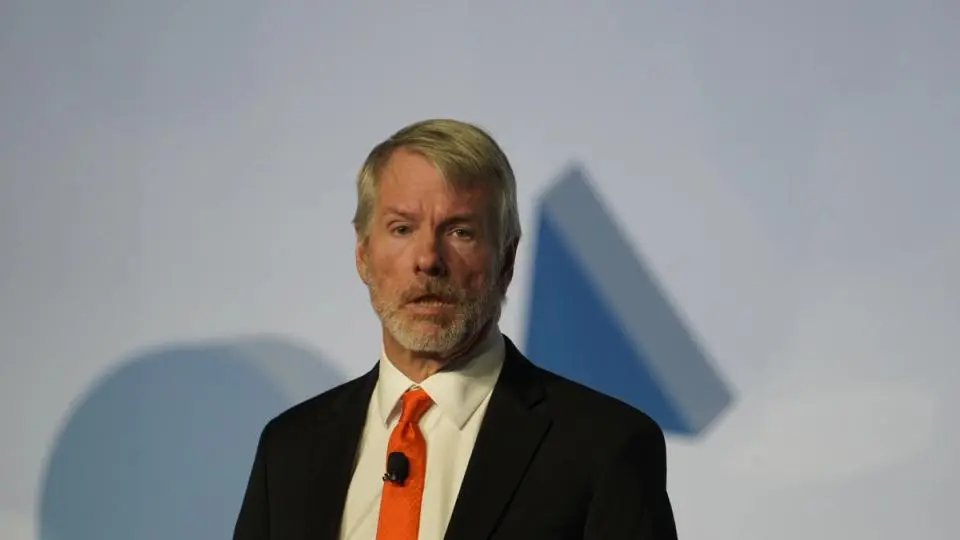
Bitcoin  Ripple CTO David Schwartz Flags Bitcoins Incentive ProblemSchwartz says Bitcoin mining incentives create costly user-miner conflicts.XRP Ledger avoids mining rewards to reduce fees and centralization risks.Bitcoin and XRP declined despite renewed debate over blockchain efficiency.  The long-running debate between Bitcoin and XRP gained fresh attention after Ripple CTO David Schwartz revisited his criticism of Bitcoin‘s incentive structure. During a detailed presentation, Schwartz argued that Bitcoin’s proof-of-work model creates costly friction for users and miners alike. He also claimed the XRP Ledger offers a more efficient approach by reducing reliance on artificial incentives.  Schwartz explained that blockchain systems need eventual agreement to function properly. Without consensus, users could not trust transactions or transfer value securely.  However, he argued that Bitcoin solves this challenge through expensive mining competition. Consequently, miners continuously consume resources while competing for block rewards and transaction fees.  According to Schwartz, this design creates misaligned incentives inside the network. Miners want higher fees because they profit from them.  Meanwhile, users prefer cheaper transactions and lower operating costs. Additionally, he argued that proof-of-work systems force participants into constant competition, which pushes operators to cut costs aggressively.  He also warned that mining systems naturally centralize around operators with cheaper electricity and specialized hardware. Hence, the network gradually

05-14

SUI Price Turns Bearish as Selling Pressure Rises: Is a Drop Below $1 Coming Next?

Tech  SUI Price Turns Bearish as Selling Pressure Rises: Is a Drop Below $1 Coming Next?  The post SUI Price Turns Bearish as Selling Pressure Rises: Is a Drop Below $1 Coming Next? appeared first on Coinpedia Fintech News  The SUI price is once again showing signs of weakness after failing to sustain above the crucial $1.30 resistance zone. Following a sharp breakout rally over the past few sessions, the token quickly lost momentum and slipped back toward lower support levels. The weakness comes shortly after the highly anticipated SUI Basecamp event in Miami, which was expected to generate stronger bullish momentum for the ecosystem. However, despite the event-driven hype, the broader market response remained relatively muted, with the rally fading quickly after the initial surge.  At the same time, derivatives data now suggests bullish conviction may be weakening as traders begin reducing leveraged exposure around the recent highs. The latest rejection has also increased concerns that SUI could revisit the $1 range if buyers fail to regain control soon.  SUI Faces Strong Rejection Near Key Resistance  The daily chart suggests the SUI price is struggling to sustain its recent breakout rally after facing strong rejection near the $1.32 resistance zone. The token briefly surged above

05-14

Anthropic launches Claude for Small Business to bring AI agents into QuickBooks, PayPal, and HubSpot

Tech  Anthropic launches Claude for Small Business to bring AI agents into QuickBooks, PayPal, and HubSpot  Anthropic launched Claude for Small Business, a new product package that brings its AI assistant into the software tools used by small business owners, including QuickBooks, PayPal, HubSpot, Canva, Docusign, Google Workspace, and Microsoft 365.  The launch expands Anthropics push to turn Claude into a workplace agent rather than a standalone chatbot. The company said the product runs through Claude Cowork and gives small businesses access to ready-made workflows for finance, operations, sales, marketing, HR, and customer service.  Anthropic said Claude for Small Business can help owners plan payroll, close monthly books, monitor cash flow, chase invoices, triage leads, review contracts, and prepare marketing campaigns.  The workflows connect to existing apps so Claude can pull business context from services such as PayPal settlements, QuickBooks cash flow data, HubSpot campaigns, Canva assets, and Docusign agreements.  The company is targeting a large but slower-adopting AI market. Small businesses account for 44% of US GDP and employ nearly half of the private sector workforce, but Anthropic said many owners have not moved beyond basic chatbot use because AI tools and training are often built for larger companies.  The product also emphasizes user control. Anthropic

05-14

Ethereum trades in macro shadow as semiconductor rally signals renewed risk-on spillover

U.S. semiconductor equities rallied on May 13, with major chipmakers posting strong gains as investors rotated back into high-growth technology exposure following recent macro data surprises.U.S. semiconductor stocks rose broadly, with Micron up nearly 5%, ON Semiconductor also up close to 5%, and NXP Semiconductors gaining 4.6%.The move reflects strengthening risk appetite in AI and hardware-linked equities as inflation data reshapes macro expectations.Ethereum, often correlated with high-beta tech and compute cycles, is increasingly positioned as a “digital infrastructure asset” in risk-on phases.  Micron Technology climbed nearly 5%, ON Semiconductor rose close to 5%, and NXP Semiconductors advanced 4.6%, according to Jinshi reports.  The move signals renewed appetite for compute-intensive sectors tied to artificial intelligence, data infrastructure and next-generation hardware — a backdrop that has historically influenced sentiment toward Ethereum (ETH), which is often framed by market participants as a decentralized compute and settlement layer.  Semiconductor strength reinforces Ethereums “compute beta” narrative  While the rally in chipmakers is rooted in traditional equity markets, the spillover effect into crypto is increasingly visible in Ethereum pricing dynamics, where ETH tends to respond to shifts in global risk appetite for computational infrastructure.  Ethereums ecosystem sits at the intersection of financial settlement, decentralized applications and blockchain-based computation. As semiconductor stocks

05-14

DeFi Mobilize Against Senate Amendments to CLARITY Act

Tech  DeFi Mobilize Against Senate Amendments to CLARITY ActSenate amendments could expand legal risks for DeFi developers nationwide.Crypto groups warn new AML rules may tighten pressure on self-custody tools.Advocacy groups plan senator scorecards ahead of key CLARITY Act votes.  Crypto advocacy organizations intensified pressure on U.S. senators ahead of the Senate Banking Committees markup of the CLARITY Act. According to Eleanor Terrett, a journalist and co-host of the Crypto In America podcast, the push followed the submission of more than 100 amendments to the legislation late Tuesday night. Several industry groups warned that multiple proposals could reshape decentralized finance rules and weaken protections for developers.  The DeFi Education Fund identified a list of amendments that it believes threaten decentralized finance infrastructure. According to the group, the proposals could expand liability for software developers, tighten anti-money laundering obligations, and reduce legal protections tied to self-custody technology.  Besides targeting developers, the amendments also focus on DeFi front-end operators, tokenization frameworks, and broader compliance standards for digital asset companies. Consequently, advocacy groups have started lobbying senators before Thursdays committee vote.  Democratic Senators Push Tougher Oversight  Several amendments originated from Democratic senators, including Catherine Cortez Masto, Andy Kim, Chris Van Hollen, Elizabeth Warren, and Jack Reed.  DEF argued that several amendments

05-14

UK parliament to probe Nigel Farage’s $6.8 million donation from crypto billionaire

Nigel Farage, the leader of Reform UK and a member of Parliament, is facing a formal investigation by the parliamentary standards watchdog after failing to declare a 5 million-pound ($6.8 million) gift from crypto billionaire Christopher Harborne, news services including the Guardian reported Wednesday.  Farage received the donation from Harborne, a Thailand-based businessman with a 12% stake in stablecoin issuer Tether, weeks before announcing he would stand as a candidate in the 2024 general election, and did not declare it when elected as MP for Clapton. New MPs must register all financial interests received within the 12 months preceding their election.  A weekly YouGov poll of voting intentions has Reform UK gaining the largest share of votes, at 28%, putting Farage as the frontrunner to become the next prime minister. If the watchdog finds he breached the code of conduct, he could face suspension and potentially be forced to fight again for his parliamentary seat.  Farage, who is supportive of the crypto industry, has said that because Harborne‘s donations were intended to cover his security expenses he was not compelled by law to declare them. Reform UK recently said the gift falls under the exemption for purely personal gifts. Labour and other parties

05-14

Hyperliquid price forms bearish double top, will it crash back to $35?

The neckline of the pattern currently sits near the $35.2 support zone, which also aligns with a major horizontal support area that buyers defended aggressively during the April consolidation phase.  A look at the MACD indicator reinforces the weakening momentum outlook. The MACD histogram has turned negative again, while the MACD line has crossed below the signal line, confirming a bearish crossover and suggesting that downside pressure may continue building in the short term.  Meanwhile, the Aroon indicator also points to fading bullish momentum. The Aroon Up indicator has declined toward the 50% level while the Aroon Down remains subdued near 7%, signaling that buyers are gradually losing control of the trend even though broader bearish dominance has not yet fully emerged.  If sellers manage to push HYPE below the neckline support near $35, the bearish double top setup could trigger a larger correction toward the $31–$32 region.  On the upside, bulls would likely need to reclaim the $44 resistance area to invalidate the bearish structure and restore momentum toward the psychological $50 level.

05-14

RWA news: Animoca-backed NUVA brings Figures $19 billion of tokenized assets to Ethereum

As Wall Street firms race to bring stocks, bonds and credit products onto blockchain rails, a new Ethereum-based marketplace backed by Animoca Brands is aiming to turn tokenized assets into something crypto investors can use across decentralized finance (DeFi).  NUVA, developed by Animoca and Nuva Labs, is connecting around $19 billion worth of tokenized real-world assets originating on the Provenance blockchain ecosystem, including private credit and Treasury-linked products tied to Figure Technologies Solutions (FIGR), the blockchain firm founded by former SoFi CEO Mike Cagney.  Tokenized real-world assets have become one of cryptos fastest-growing sectors. Asset managers and fintech firms view blockchain rails as a way to modernize how financial products are issued, traded and used as collateral. The broader market for tokenized assets could reach trillions of dollars over the next decade, according to multiple industry forecasts.  NUVA was designed as a distribution layer for tokenized assets, allowing them to move beyond closed financial networks and into DeFi markets, giving average retail users access to assets often limited to institutional investors.  It debuts with two flagship products: a Treasury-linked yield vault called nvYLDS, tied to Figure‘s SEC-regulated stablecoin YLDS with more than $500 million supply, and nvPRIME, a token tied to Figure’s $18.4 billion

05-14

U.S. Senate Confirms Kevin Warsh as Fed Chair to Succeed Jerome Powell

Tech  U.S. Senate Confirms Kevin Warsh as Fed Chair to Succeed Jerome Powell  The U.S. Senate has confirmed pro-crypto Kevin Warsh as the next Federal Reserve chair, replacing Jerome Powell. This comes just a day after they confirmed him as a member of the Board of Governors. Warsh‘s confirmation also comes as the U.S. House seeks to remove the Fed’s dual mandate.  Senate Confirms Kevin Warsh as Next Fed Chair  The Senate has confirmed Kevin Warsh as the next Chairman of the Board of Governors of the Federal Reserve for a term of four years. The senators voted 54 to 45 in favor of confirming him as the next Fed chair.  As CoinGape reported, the Senate confirmed Kevin Warsh as a Fed governor yesterday, which cleared the way for his confirmation as the next Fed chair. He will replace Powell, whose term as the Fed chair ends on Friday, May 15.  However, Powell has revealed that he will make the unusual move of staying on as a Fed governor for the foreseeable future. Most Fed chairs have historically resigned from the board after their term as Fed chair ends.  Kevin Warsh‘s confirmation comes at a time when the Fed’s independence is in question, with U.S. President Donald

05-14

Bitcoin Slides Below $79K as $304M in Crypto Longs Vanish After PPI Shock

Bitcoin Crypto  Bitcoin Slides Below $79K as $304M in Crypto Longs Vanish After PPI Shock  briefly plunged below $79,000 for the first time since May 4 as investors digested the latest producer price index (PPI) data, which showed a sharp acceleration in wholesale . According to the s daily price chart, was coasting above $81,000 before tumbling to an intraday low of $78,704.  Although the had recovered and was trading just over $79,000 at the time of writing (1:08 p.m. EDT, May 13), it remained down 1% over a 24-hour period, while its market capitalization slipped below $1.6 trillion. Following the latest retreat, has shed approximately $3,000 from its May 11 peak of $82,145. The decline began after the Trump administration rejected an Iranian counter-peace proposal.  While global markets await Washingtons next move after President Donald Trump characterized U.S.-Iran relations as being on “life support,” the release of consumer price index (CPI) data showing slightly ahead of projections spooked investors. According to a Bitunix analyst, the latest CPI data indicates that energy-driven price shocks “are once again becoming the dominant force within the U.S. structure, with pressure now spreading into housing, services, and broader consumer sectors.”  “The data suggests that despite two years of restrictive

05-14
1
...
546548
...
1000