What is a consortium stablecoin? Open USD model
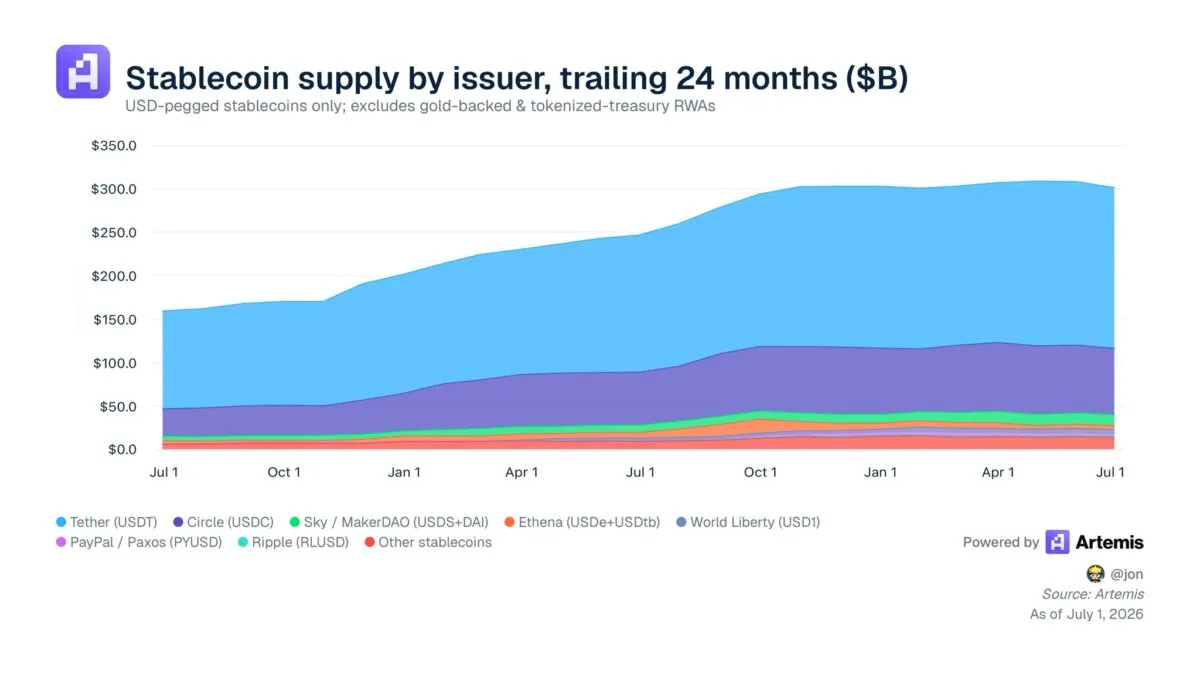
Tether and Circle built their businesses by keeping the interest on the dollars behind their coins. A new kind of stablecoin, run and owned by a group instead of a single company, shares that money instead. Here is how the consortium model works and why it is spreading. Table of ContentsConsortium versus single-issuer stablecoinsThe two defining features: shared governance and shared economicsWhy consortium stablecoins are emerging nowThe leading examplesA cautionary precedent: the Centre ConsortiumWhy the model mattersThe risks of the consortium modelWhere consortium stablecoins fit among stablecoin typesFrequently Asked Questions A consortium stablecoin is a digital dollar, or other fiat-pegged token, that is issued and governed collectively by a group of companies rather than controlled by one. The defining idea is shared ownership of both the decisions and the economics: a board drawn from the partner companies sets the rules, and the income earned on the reserves backing the coin is distributed among those partners instead of kept by a single issuer. That structure is a deliberate break from the model that built the stablecoin giants, and it has become one of the most important trends in digital money. This explainer covers what makes a stablecoin a consortium stablecoin, why the model is