Stablecoin payments firm dtcpay closes $25M round with SBI backing

Singapore-based stablecoin payments company Dtcpay has completed a $25 million Series A funding round after securing backing from Japanese conglomerate SBI Group.  On Friday, SBI Holdings said it invested through SBI Ventures Asset and the SBI-NTU-Kyobo Digital Innovation Fund, two Singapore-based investment vehicles managed by the group. Neither SBI nor dtcpay disclosed the size of SBI‘s contribution or the company’s valuation.  Dtcpay said the investment completed its $25 million Series A, which began with a $10 million tranche led by Vertex Ventures Southeast Asia & India in April. Genedant Capital and existing investor Kwee Liong Tek also participated in the round. Dtcpay previously raised $16.5 million in pre-Series A funding in June 2023.  The company provides infrastructure that allows businesses and individuals to accept, store and transact in stablecoins and fiat currencies. Its services include a real-time stablecoin-to-fiat conversion system, merchant payment terminals and a Visa card that lets customers spend supported stablecoins through the card network.  The company holds a Major Payment Institution license from the Monetary Authority of Singapore and an Electronic Money Institution license in Luxembourg.  Dtcpay said the funding would support an expansion of its merchant network and product suite, including a revamped business portal and new consumer features. Meanwhile, SBI

09-18انڈسٹری

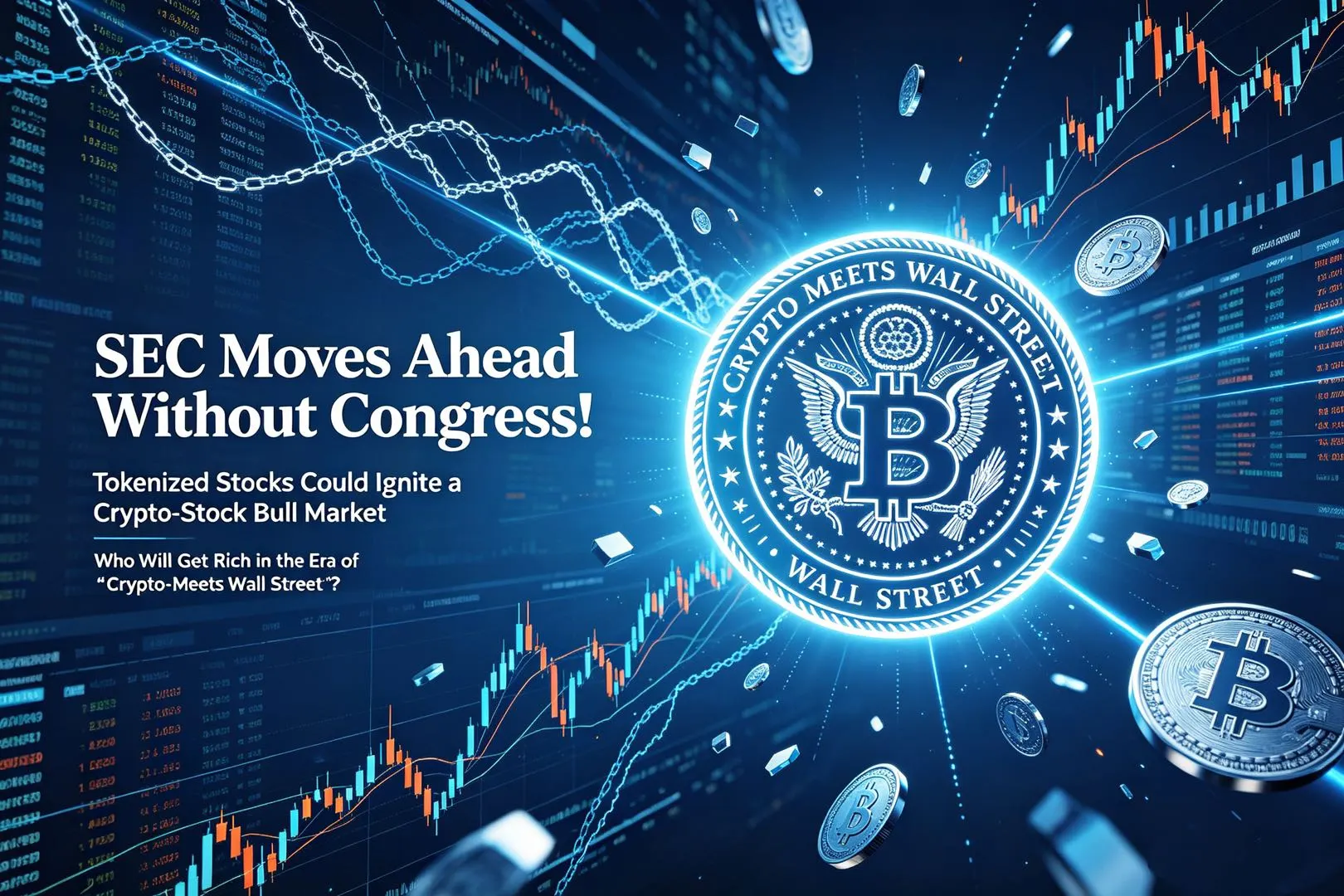
SEC Moves Ahead Without Congress! Tokenized Stocks Could Ignite a Crypto-Stock Bull Market: Who Will Get Rich in the Era of “Crypto Meets Wall Street”?

If the biggest story in crypto over the past decade was “moving money onto the blockchain,”  then the next, potentially much bigger story could be:  “Moving the entire capital market onto the blockchain.”  On September 17, the U.S. Securities and Exchange Commission (SEC) suddenly sent a major signal. After progress on the CLARITY Act stalled, the SEC introduced an “Innovation Exemption,” allowing qualified Tokenized Securities Venues (TSVs)—in other words, “tokenized securities trading venues”—to trade certain tokenized U.S. stocks through permitted AMMs and liquidity pools.  This is not simply a matter of “putting U.S. stocks on-chain.”  What really matters is that, for the first time, the SEC has established a formal regulatory framework that opens a temporary, controlled, and compliant pathway for stocks to be traded on blockchain networks.  And that makes a scenario that once sounded almost science fiction increasingly realistic:  Stock → Token → Wallet → DEX → Stablecoin → DeFi → Collateralized Lending  If this entire chain eventually works, the next RWA boom may no longer be limited to “tokenized Treasury bonds.”  Instead, we could be entering a genuine:  “Crypto-Stock Bull Market.”1. What Exactly Did the SEC Allow? Not a Bull-Market Button, but a Five-Year “On-Chain U.S. Stock Market Stress Test”  Dont rush to declare a bull market just

09-18گہرا غوطہ

Hong Kong plans 24/7 CBDC settlement for tokenized deposits by year end

Hong Kong has set plans to bring 24/7 central bank digital currency settlement to its tokenized deposit market by around the end of 2026, while preparing real value CBDC transactions for after hours derivatives trading and tests involving more than HK$1.3 trillion in Exchange Fund Bills.  SummaryHong Kong plans to introduce 24/7 wholesale CBDC settlement for tokenized deposits under EnsembleTX by the end of 2026.HKEX and the HKMA are preparing real value wholesale CBDC transactions for after hours derivatives trading.HKMA plans tests involving more than HK$1.3 trillion in Exchange Fund Bills as Hong Kong expands its tokenization program.Regulated stablecoins are being explored for tokenized money market fund settlement under Hong Kongs digital asset framework.  According to Hong Kongs 2026 Policy Address, the Hong Kong Monetary Authority plans to implement CBDC settlement and round the clock operations under EnsembleTX, the pilot phase of Project Ensemble, while continuing to explore new uses for tokenized deposits.  The plan would give banks access to tokenized central bank money for settlement beyond the operating hours of conventional payment infrastructure. EnsembleTX has been running real value transactions involving digital assets and tokenized deposits during 2026, with the HKMA progressively upgrading the pilot environment to support 24/7 settlement in tokenized

09-18انڈسٹری

CLARITY Act needs 3 more senators and a race against the clock for a 2026 revival

Seven Democratic senators said Sept. 16 that CLARITYs failed Senate vote was not the end. The crypto market-structure bill fell short 49-50 the previous day on a procedural motion that needed 60 votes to advance.  Related Law CLARITY Act: US Digital Asset Market Structure United States · Passed  Getting from that statement to a law now depends on a compressed legislative calendar, still-unresolved policy disputes, and a House of Representatives that would need to accept whatever the Senate eventually produces.  Even if all seven signatories switched from “No” to “Yes,” the count would move from 49 to 56, four short of 60. Adding North Carolina Republican Thom Tillis, whose “no” vote was a procedural move preserving his ability to bring the measure back for reconsideration, would push the total to 57, still three votes shy.  The statement shows real political will to keep negotiating, but it falls far short of describing a coalition capable of clearing the floor.ScenarioYes VotesStill Short of 60What It ShowsSept. 15 cloture result4911The bill failed to advanceSeven Democratic signatories switch to yes564Their support alone would not be enoughSeven Democrats plus Thom Tillis switch573Tillis helps reopen the path but does not solve itMinimum needed for cloture600Supporters still need a broader deal  Getting

09-18انڈسٹری

Bitcoin cycle bottom may already be in at $58K, says analyst James Check

James Check, founder and lead analyst at Checkonchain, said Bitcoin may have already established its cycle bottom after undergoing two capitulation events, arguing that shifts in holder behavior indicate the market has absorbed much of its selling pressure.  Bitcoin (BTC) reached a record of just over $126,000 in October 2025 and traded around $77,400 at the time of writing, nearly 39% below its peak. Some traders expect BTC to establish another low in October 2026 based on its historical four-year cycle. In July, analyst Benjamin Cowen said that cycle-duration data and the US midterm-election calendar pointed toward a fourth-quarter bottoming window.  In an interview on Cointelegraph‘s Proof of Thesis show, Check described Bitcoin’s February decline toward $60,000 as a “price-pain capitulation,” when investors who bought near the top sold at substantial losses. He identified a second “time-pain capitulation” around $58,000 in June and July, following months of sideways price action that caused holders to question whether Bitcoin would recover.  “What‘s the difference between $58,000 and $59,000 or $60,000? Nothing,” Check told Cointelegraph. “It’s the six months that separated them. Thats the actual difference.” His assessment challenges expectations of an October low, suggesting the capitulation signals associated with a bear-market bottom appeared months earlier.  Check

09-18انڈسٹری

Binance brushes off Lagarde MiCA speculation, reaffirms Europe commitment

Binance declined to address a report that European Central Bank President Christine Lagarde intervened in its failed Greek crypto license bid and said it continues seeking authorization under the European Unions Markets in Crypto-Assets Regulation (MiCA).  The Wall Street Journal reported Friday that a vice chair of Greeces Hellenic Capital Market Commission (HCMC) told Binance that Lagarde had asked Greek Prime Minister Kyriakos Mitsotakis not to approve its application.  Greek officials informed the European Securities and Markets Authority in early June that the regulator intended to approve the license, according to the report.  “We will not comment on speculation,” a Binance spokesperson told Cointelegraph. “In Europe, Binance remains committed to operating on a long-term, compliant basis under the EUs Markets in Crypto-Assets Regulation.”  The latest report adds detail to uncertainty surrounding Binances Greek application after the exchange applied for a MiCA license in Greece in January. In mid-June, online reports suggested that the HCMC was set to reject the application, while The Big Whale subsequently reported that Lagarde had intervened over the application.  Binance later withdrew its Greek application and said it would seek authorization in another EU jurisdiction just days ahead of the July 1 MiCA deadline.  Cointelegraph contacted the ECB and HCMC for comment

09-18انڈسٹری

Bitcoin Price Forecast: For JPMorgan BTC Could Outperform Gold

Bitcoin trades at $77,831 as of September 18, up 1.43% on the day, and the timing of that move lines up with a research note most traders didnt see coming from a Wall Street bank. Any Bitcoin price forecast worth reading right now has to account for it: JPMorgan is telling clients Bitcoin has more upside room than gold right now.  Why? Not because of some crypto conversion story, but because of options and short-interest mechanics buried in ETF (exchange-traded fund) positioning data. What that mechanical edge actually means for price targets is where things get interesting.  JUST IN: JPMorgan says Bitcoin could outperform gold if investors unwind ETF hedges.  Gold ETFs have fully recovered earlier outflows, while Bitcoin ETFs have only recovered half, leaving more room for upside.  — The Block pic.twitter.com/OqqIFlFhw0  — Bitcoin Archive (@BitcoinArchive) September 17, 2026  JPMorgan analysts led by Nikolaos Panigirtzoglou published the note on September 16, pointing to two structural gaps. BlackRock‘s iShares Bitcoin Trust (IBIT) carries short interest sitting near 2026 highs, while the SPDR Gold Shares ETF (GLD) sits below its historical average. IBIT’s put-to-call open interest ratio also remains elevated versus GLD, meaning options traders are paying up for Bitcoin downside protection at a rate gold isnt

09-18انڈسٹری

Why risk a smart contract exploit when safe US Treasuries pay better crypto yields?

The Federal Reserve raised its target range by 25 basis points to 3.75%-4.00% on Sept. 16, pushing the one-year Treasury yield to 4.45% the same day and pressuring crypto lending yields.  That move lifts the return available to anyone willing to hold nothing riskier than government debt, setting a fresh benchmark for crypto lending yields to measure against.  Coin Metrics found that USDC lenders on Aave earned an average of 31 basis points less than that one-year Treasury throughout the period it studied in 2026. The Aave yield fell short of the Treasury rate in 78% of the intervals measured across that same window.  Related Company Coin Metrics Cryptoasset market and network data APIs, analytics, and research  That gap predates the Fed decision, and the more useful question is what a Fed hike does to the calculation from here.  Related Asset USDC USDC · StablecoinYield / BenchmarkCurrent or Studied LevelWhat it MeasuresWhy it MattersFed target range3.75%–4.00%Policy-rate floorRaises the base return available in dollar markets1-year Treasury4.45%Low-risk dollar alternativeMain opportunity-cost benchmark for investorsAave USDC vs 1-year Treasury-31 bps avg.Stablecoin lending spreadShows Aave lenders did not consistently earn a premiumAave underperformance frequency78% of intervalsConsistency of yield shortfallShows the gap was not just a one-offMorpho median USDC vault+65 bps

09-18انڈسٹری

Wall Street gains direct oversight of Web3 security as S&P Global buys OpenZeppelin

Ss announcement said. Financial terms were not disclosed, and Ss research capacity, market data, institutional reach and additional resources.  That would add smart contract security expertise to Ss institutional risk and data operations without changing the public availability of OpenZeppelins code.  Ss current terms of service permit certain changes to paid or hosted plans, including pricing, features, quotas and usage limits, with protections and notice depending on the type of change.  For customers, the announcement makes specific continuity promises about audits, engineering work, ecosystem programs and open-source code. It does not make the same promise about every price, product feature or usage limit.  Until closing, OpenZeppelin remains the subject of a pending acquisition agreement, not an Ss data, research, and institutional distribution, while OpenZeppelin says its public code and core client work will continue.

09-18انڈسٹری

Solana moves closer to 200ms slots after latest speed upgrade

Solana has cut its target slot time from 300 milliseconds to 250 milliseconds, increasing the rate at which the network produces slots by nearly 17% without raising its overall processing ceiling by the same amount.  According to blockchain data, the new setting went live on Sept. 18 and brings Solana to four targeted slots per second, compared with roughly 3.3 under the previous 300ms configuration. The change is the third stage of SIMD-0525, which is designed to gradually reduce slot times from the networks original 400ms setting to a final target of 200ms.  A slot is the period in which a designated validator can produce a block. Shortening that period gives wallets, exchanges and trading applications more frequent updates on the state of the network.  Validators continue to serve as leaders for four consecutive slots. With each slot now targeted at 250ms, a validators nominal leader window has fallen from 1.2 seconds at the previous setting to one second.  Solana slot time reaches 250ms  Solana began the current rollout in August when it cut its slot time from 400ms to 350ms for the first time since the network launched, as crypto.news previously reported.  SIMD-0525 divided the process into four stages at 350ms, 300ms, 250ms and 200ms

09-18انڈسٹری
1
...
130132
...
1000