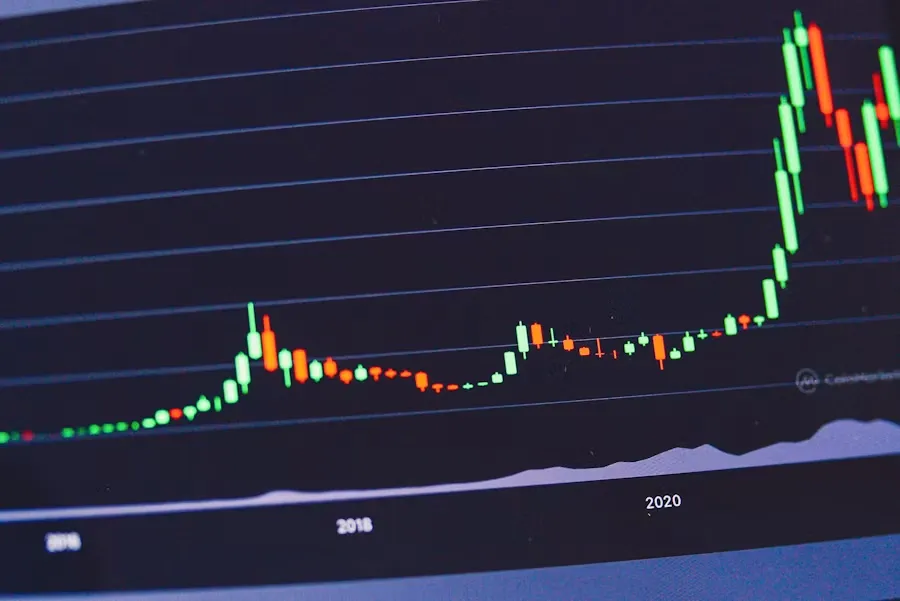
Japans Largest Exchange Plans To List Bitcoin, Crypto ETFs By 2027

Japan Exchange Group, the countrys largest exchange operator, is gearing up for crypto ETFs. It plans to launch Bitcoin and crypto ETFs as soon as 2027, provided law changes are passed.  Japan Exchange Group Eyes Bitcoin, Crypto ETF Listing  In an interview, JPX Chief Executive Hiromi Yamaji said that the plans have been fueled by increased institutional interest in digital asset products linked to Bitcoin and other cryptocurrencies. Fund managers, he noted, have demonstrated “strong interest” to launch crypto ETFs.  However, Yamaji said the key factor is law reform, which is underway in the Japanese parliament. “As far as crypto is concerned, you may know that the Japanese FSA had a special committee to discuss cryptocurrencies,” he said.  Yamaji added that “the new revision of the law is at the Diet,” according to a Bloomberg interview. He added exchanges can start “forming some sort of a product about the cryptocurrency next year maybe.” in addition, he stressed that JPX is ready: “We will do it.”  His remarks come amid mixed signals in the global markets for crypto ETFs. Farside Investors‘ recent figures show significant outflows from U.S. Bitcoin ETFs late last month with even BlackRock’s IBIT suffering outflows.  Spot Bitcoin ETF Outflow Data  The total net outflows

05-01

ICO market slows sharply with only six completions in 2026

According to CryptoRank, only six token sales were completed in 2026 to date, and half are underwater compared to their offering price. Crypto financing is shifting, with VC-funded rounds also slowing down in April.   Just six crypto projects chose an Initial Coin Offering (ICO) in 2026. The ICO was a staple during the 2017 bull market, but was gradually displaced by other models.  Currently, smaller projects have shifted to airdrops or running as tokenless apps, while larger crypto companies look toward initial public offerings (IPO) on traditional exchanges.  CryptoRank noted the six ICOs used CoinList or Echo for their sales, instead of staging independent events.  CryptoRank noted outflows of VC funding  As Cryptopolitan reported, crypto funding accelerated in March, achieving its best score in six months. In April, however, funding rounds slowed down again, coinciding with a more bearish sentiment on crypto markets.  For the month of April, only $653M were raised in 61 funding rounds, the smallest total for the past 12 months. In April 2025, VC funds raised over $2B in 89 funding rounds.  Funding in April fell to the lowest level for the past 12 months, as big VC backers retreated from the crypto space. | Source: CryptoRank.  The VC participants also shifted, with

05-01

XLM Technical Analysis Apr 30

XLM is trapped in a tight range at $0.16 and exhibits a risky environment dominated by the downtrend. Traders should implement tight stop-loss strategies to prevent capital loss if nearby support levels break.  Market Volatility and Risk Environment  XLM is trading at $0.16 with a 1.18% drop over the last 24 hours, and the daily range has remained almost flat, limited to the $0.16-$0.16 band. Volume is low at $42.33M, indicating suppressed volatility but requiring vigilance against sudden breakouts. RSI at 42.63 is in neutral territory but carries downside momentum risk; approaching oversold could offer short-term rebound potential, though the overall downtrend may limit this opportunity. Supertrend gives a bearish signal and $0.18 resistance forms a strong barrier. Failure to stay above EMA20 ($0.17) reinforces the short-term bearish structure. In multiple timeframes (MTF), the 1D timeframe has 4 strong levels (2 supports, 2 resistances), while 3D and 1W lack levels, increasing long-term uncertainty. Low volatility can be deceptive; in crypto markets, sudden volume spikes can lead to 10%+ moves, so ATR-based volatility measurement is critical.  Risk/Reward Ratio AssessmentPotential Reward: Target Levels  In a bullish scenario, the $0.2097 target (score: 44) offers 31% potential above the current price, dependent on breaking above EMA20 and a

05-01

Jim Cramer: Supply Constraints Trump Earnings in New Tech Stock Playbook

Meta delivered revenue acceleration unseen in half a decade. Yet shares slipped as Wall Street fixated on escalating expenditure commitments.  Companies navigating production bottlenecks experienced dramatically different outcomes.  Seagate shares climbed after management highlighted constrained availability of data storage equipment linked to surging data center requirements. According to Cramer, the manufacturer “faces overwhelming demand they simply cannot fulfill.”  Bloom Energy also experienced significant gains. The companys energy systems, increasingly essential for data center operations, face supply limitations. Cramer identified it as among his preferred holdings.  NXP Semiconductors experienced an unexpected rally driven by automotive chip scarcity — a dramatic turnaround for a previously struggling segment.  Legacy Technology Makes a Comeback  Cramer captured the market transformation concisely. “Today‘s hottest technology is paradoxically yesterday’s tech,” he observed. “Production capacity disappeared, then demand suddenly returned.”  The underlying principle rewards businesses with constrained production capabilities and clear demand visibility over enterprises offering rapid growth without scarcity dynamics.  This pattern aligns with Aprils broader semiconductor sector momentum. The PHLX Semiconductor index (SOX) skyrocketed roughly 35% from April 1 through April 24, climbing from 7,802 to peak at 10,513. A subsequent correction trimmed approximately 4.5% from those highs.  Cramer highlighted that chipmakers experienced their second-strongest month on record this April. The only superior performance occurred

05-01

Gemini Secures CFTC clearing license, gains full derivatives infrastructure

Geminis Olympus unit won CFTC clearing license enabling in-house derivatives infrastructure for futures, options, perpetuals, and prediction markets.License enables in-house clearing for futures, options, perpetual contracts and prediction marketsGemini received Derivatives Clearing Organization (DCO) license from CFTC on April 30, 2026Approval follows December 2025 Designated Contract Market (DCM) license for Gemini Titan subsidiary  Gemini announced April 30 that its affiliate Gemini Olympus received a Derivatives Clearing Organization (DCO) license from the Commodity Futures Trading Commission, positioning the exchange as one of few crypto-native platforms with complete regulatory infrastructure to operate derivatives clearing in the United States. The license allows Olympus to act as a clearinghouse for regulated derivatives trading, including prediction markets.  “Today marks a major milestone in Gemini‘s marketplace expansion,” said Cameron Winklevoss, Gemini’s President. “In addition to our crypto spot marketplace, Gemini now has a full-stack, end-to-end marketplace for predictions as well as futures, options, and more.”  Regulatory Roadmap Complete  The DCO approval follows the CFTCs December 2025 designation of Gemini Titan as a Designated Contract Market, which enabled the launch of its predictions marketplace the same month. Gemini Titan will explore expanding its derivatives offering for U.S. customers to include crypto futures, options, and perpetual contracts.  According to The Block, Gemini is

05-01

Dow Jones rallies above 49,500 on Caterpillar earnings boost

The Dow Jones Industrial Average, one of the oldest stock market indices in the world, is compiled of the 30 most traded stocks in the US. The index is price-weighted rather than weighted by capitalization. It is calculated by summing the prices of the constituent stocks and dividing them by a factor, currently 0.152. The index was founded by Charles Dow, who also founded the Wall Street Journal. In later years it has been criticized for not being broadly representative enough because it only tracks 30 conglomerates, unlike broader indices such as the S public participation, when the wider public joins in; and distribution, when the smart money exits.  There are a number of ways to trade the DJIA. One is to use ETFs which allow investors to trade the DJIA as a single security, rather than having to buy shares in all 30 constituent companies. A leading example is the SPDR Dow Jones Industrial Average ETF (DIA). DJIA futures contracts enable traders to speculate on the future value of the index and Options provide the right, but not the obligation, to buy or sell the index at a predetermined price in the future. Mutual funds enable investors to buy a

05-01

XLM Technical Analysis Apr 30

XLM is trapped in a tight range at $0.16 and exhibits a risky environment dominated by the downtrend. Traders should implement tight stop-loss strategies to prevent capital loss if nearby support levels break.  Market Volatility and Risk Environment  XLM is trading at $0.16 with a 1.18% drop over the last 24 hours, and the daily range has remained almost flat, limited to the $0.16-$0.16 band. Volume is low at $42.33M, indicating suppressed volatility but requiring vigilance against sudden breakouts. RSI at 42.63 is in neutral territory but carries downside momentum risk; approaching oversold could offer short-term rebound potential, though the overall downtrend may limit this opportunity. Supertrend gives a bearish signal and $0.18 resistance forms a strong barrier. Failure to stay above EMA20 ($0.17) reinforces the short-term bearish structure. In multiple timeframes (MTF), the 1D timeframe has 4 strong levels (2 supports, 2 resistances), while 3D and 1W lack levels, increasing long-term uncertainty. Low volatility can be deceptive; in crypto markets, sudden volume spikes can lead to 10%+ moves, so ATR-based volatility measurement is critical.  Risk/Reward Ratio AssessmentPotential Reward: Target Levels  In a bullish scenario, the $0.2097 target (score: 44) offers 31% potential above the current price, dependent on breaking above EMA20 and a

05-01

Crypto Is the Most Muted Topic on Elon Musk’s X, Ahead of Politics: Product Head

Crypto ranks as the most muted topic on X.Politics and the Iran conflict follow.Data points to fatigue with high-volume content.  Are you being shadowbanned? Is your engagement down bad? Well, if you spend your day tweeting about crypto or politics on X, your followers may just be sick of it.  Crypto is the most muted topic on X‘s “For You” feed, ahead of politics and global conflict, according to data shared by the platform’s head of product, Nikita Bier.  The ranking comes after X rolled out its snooze feature earlier this month, which lets users hide unwanted topics for 24 hours.  “Today were also rolling out a tool to snooze topics on your For You tab—if you ever want to crank up or turn down the slop,” Bier posted on X at the time. The post came as X began rolling out a custom timelines feature.  Crypto tops the list, followed by politics, the Iran conflict, sports, and business and finance, with gaming, artificial intelligence, science and technology, and entertainment also frequently muted.  Responses to the reveal were mixed, with some posting, in typical crypto fashion, memes to cope with Biers post.  Others criticized the snooze features impact.  “Or you could make it easier by just offering a

05-01

WTI eases near $100 after rally as Hormuz tensions persist

West Texas Intermediate (WTI) declines on Thursday, trading around $101.45 at the time of writing, down 3.70% on the day after three consecutive days of gains. Despite this technical pullback, US Crude remains above the psychological $100 level, reflecting a market that is still under strain.  The corrective move comes in a context where geopolitical risks remain elevated. According to the Associated Press, US President Donald Trump is exploring options to end the shutdown of the Strait of Hormuz, a strategic chokepoint for global energy transport. However, the proposed plan does not include lifting the US naval blockade on Iranian ports, focusing instead on coordinating with allies to increase pressure on Iran.  These developments are maintaining a strong risk premium in Oil prices. The Strait of Hormuz is a critical corridor for Middle Eastern Crude exports, and any prolonged disruption continues to raise fears of supply shortages in global markets.  Analysts at Danske Bank note that tensions linked to the Iran conflict continue to support energy prices. The bank highlights that markets remain skeptical about a swift normalization of maritime traffic in the region.  In this environment, elevated energy prices continue to weigh on broader market sentiment, fueling inflationary pressures and influencing dynamics across

05-01

Jim Cramer: Supply Constraints Trump Earnings in New Tech Stock Playbook

Meta delivered revenue acceleration unseen in half a decade. Yet shares slipped as Wall Street fixated on escalating expenditure commitments.  Companies navigating production bottlenecks experienced dramatically different outcomes.  Seagate shares climbed after management highlighted constrained availability of data storage equipment linked to surging data center requirements. According to Cramer, the manufacturer “faces overwhelming demand they simply cannot fulfill.”  Bloom Energy also experienced significant gains. The companys energy systems, increasingly essential for data center operations, face supply limitations. Cramer identified it as among his preferred holdings.  NXP Semiconductors experienced an unexpected rally driven by automotive chip scarcity — a dramatic turnaround for a previously struggling segment.  Legacy Technology Makes a Comeback  Cramer captured the market transformation concisely. “Today‘s hottest technology is paradoxically yesterday’s tech,” he observed. “Production capacity disappeared, then demand suddenly returned.”  The underlying principle rewards businesses with constrained production capabilities and clear demand visibility over enterprises offering rapid growth without scarcity dynamics.  This pattern aligns with Aprils broader semiconductor sector momentum. The PHLX Semiconductor index (SOX) skyrocketed roughly 35% from April 1 through April 24, climbing from 7,802 to peak at 10,513. A subsequent correction trimmed approximately 4.5% from those highs.  Cramer highlighted that chipmakers experienced their second-strongest month on record this April. The only superior performance occurred

05-01
1
...
855857
...
1000