Lukas Haas On Going Hardboiled For Nicolas Cage’s ‘Spider-Noir’

Courtesy of Aaron Epstein/Prime  Every good film noir villain needs a trustworthy henchmen with an overt lack of moral fortitude to carry out their dirty work. ‘sKasper Gutman has Wilmer Cook, ’s Noah Cross has the guy who slices up Jake Gittes‘ nose like a Christmas ham, and ’s Silvermane has Winston.  The new Marvel series from triumvirate Phil Lord, Chris Miller, and Amy Pascal certainly lives up to its name, unfolding in an alternate version of 1930s Manhattan bursting with femme fatales, political corruption, stark shadows, and a web-slinging private eye named Ben Reilly (Nicolas Cage).  Since losing the love of his life five years ago, Reilly has given up The Spider alter ego, preferring to find comfort at the bottom of every whiskey bottle he can find, while his investigations business goes down the tubes. His shot at redemption arrives when someone attempts to bump off the citys most powerful crime figure, Finbar “Finn” Byrne, a.k.a. Silvermane (Brendan Gleeson).  Among the kingpin‘s criminal entourage is hardened enforcer Winston, played by Lukas Haas (, ). “He’s basically Silvermane‘s consigliere,” Haas recently told me over Zoom, using a term that should be recognizable to any fan out there. “He’s super-loyal, trying to protect his


05-29

YZi Labs welds creators to Web3, AI and frontier tech deal flow

YZi Labs launches a curated Creator Program that plugs Web3 and AI storytellers into over 300 portfolio projects, extending its push to fuse capital, hiring and narrative.YZi Labs unveils Creator Program focused on Web3, AI, and frontier techInitiative connects vetted creators with over 300 portfolio projects and foundersMove extends YZi Labs wider push into Web3 infrastructure, talent, and content  YZi Labs has launched a new Creator Program designed to build a curated network of storytellers focused on Web3, artificial intelligence, and cutting‑edge technology, while plugging them directly into distribution channels across more than 300 portfolio companies. According to the announcement on ChainCatcher, participating creators will receive priority access to founders in the YZi Labs portfolio, while projects tap into content specialists who can “tell the story of their products and visions” across social and media platforms.  Today were launching the YZi Labs Creator Program — a curated network of creators across Web3, AI, and frontier tech, plugged into the distribution layer of our 300+ portfolio companies.  Creators gain first access to our founders. Founders connect with storytellers who bring… pic.twitter.com/xPN3mkJEcl  — YZi Labs (@yzilabs) May 28, 2026  The program effectively turns YZi Labs deal flow and existing network—built over years of crypto and frontier‑tech investing—into

05-29

Trezor adds USDC USDT yield via Morpho

Trezor has launched a Morpho integration that lets users earn yield on USDC and USDT inside Trezor Suite.Trezor Suite now offers native USDC and USDT yield through two Morpho vaults curated by Steakhouse Financial.Yield comes from borrowing demand on Morpho, not token incentive programs.Deposits, withdrawals and reward claims are signed directly on the Trezor hardware wallet.  Hardware wallet maker Trezor has launched a native stablecoin yield feature inside Trezor Suite. The product runs through a Morpho integration that lets users earn on USDC and USDT without leaving the app.  The move signals how custody providers are folding DeFi into their core products. The Steakhouse Prime USDC vault on Morpho, one of two vaults Trezor selected at launch, allocates deposits against blue-chip crypto and real-world asset collateral, with yield generated from borrowing demand.  How the Morpho integration works  Trezor picked two vaults curated by Steakhouse Financial: USDC Prime and USDT Prime. Both sit in Steakhouses institutional-grade lending range, which the curator says targets a 4.5% to 6.5% APY for USDC and 4.5% to 6% for USDT, with a 15% management fee.  Deposits, withdrawals and reward claims are signed directly on users Trezor hardware devices through clear-signing, which displays transaction details in human-readable form on the device

05-29

HYPE Whale Bets Grow Larger As Institutional-Linked Accumulation Reaches $170M

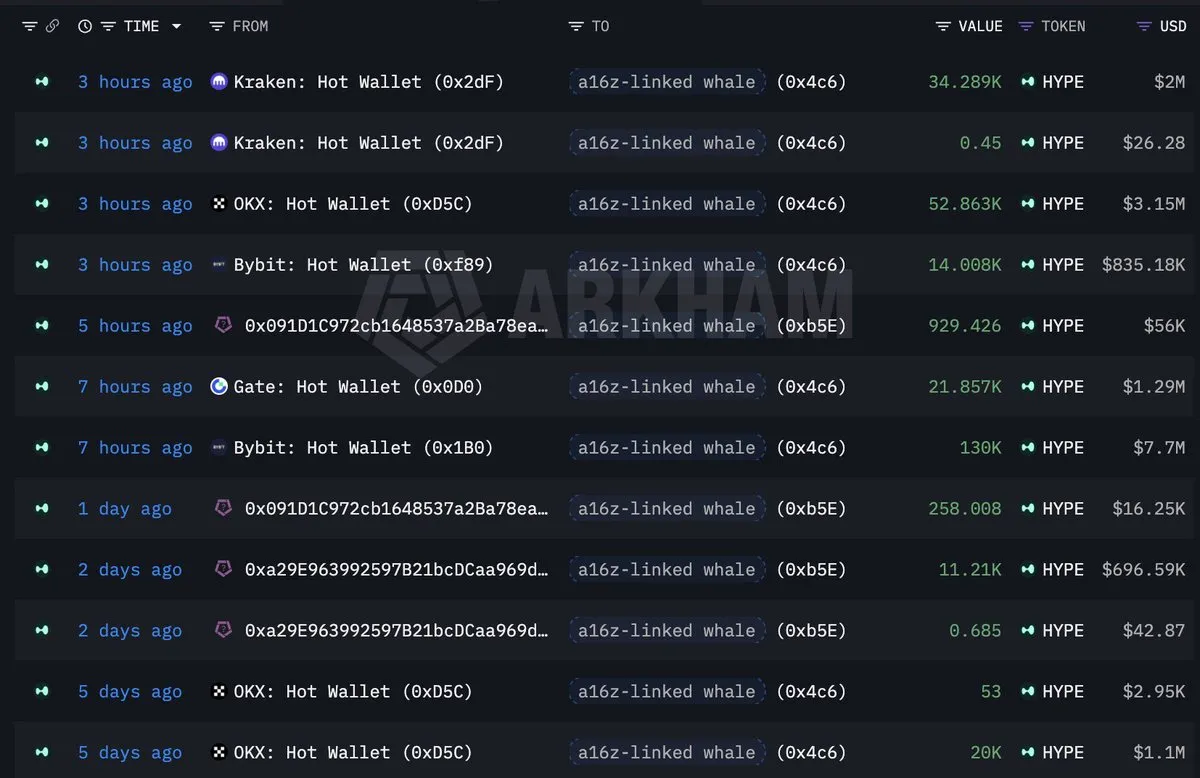
$HYPE has pulled back below $60 as the broader market faces selling pressure that has touched even the strongest performers of recent weeks. The retreat from all-time highs is real — but data from Arkham Intelligence has revealed a transaction that puts the current price weakness in a context that changes how it should be read.  The wallet linked to Andreessen Horowitz — the Silicon Valley venture capital firm universally known as a16z, whose dedicated crypto fund has been one of the most influential institutional forces in digital assets since its launch and has backed foundational projects including Coinbase, Uniswap, and Solana — has purchased another 253,947 $HYPE tokens worth approximately $15.03 million over the past several hours.  a16z-linked wallet buying $HYPE | Source: Arkham  The timing is the detail that matters most. A16z is not buying $HYPE at its all-time high in a moment of market euphoria. It is buying $HYPE as the price pulls back below $60 under market-wide selling pressure — deploying $15 million at precisely the moment most participants are reducing risk rather than adding to it. That behavior is not reactive. It is the expression of a thesis that does not change based on short-term price movements.  For $HYPE

05-29

U.S government moves $1.9 million in Alameda-linked altcoins – Selling or reshuffling?

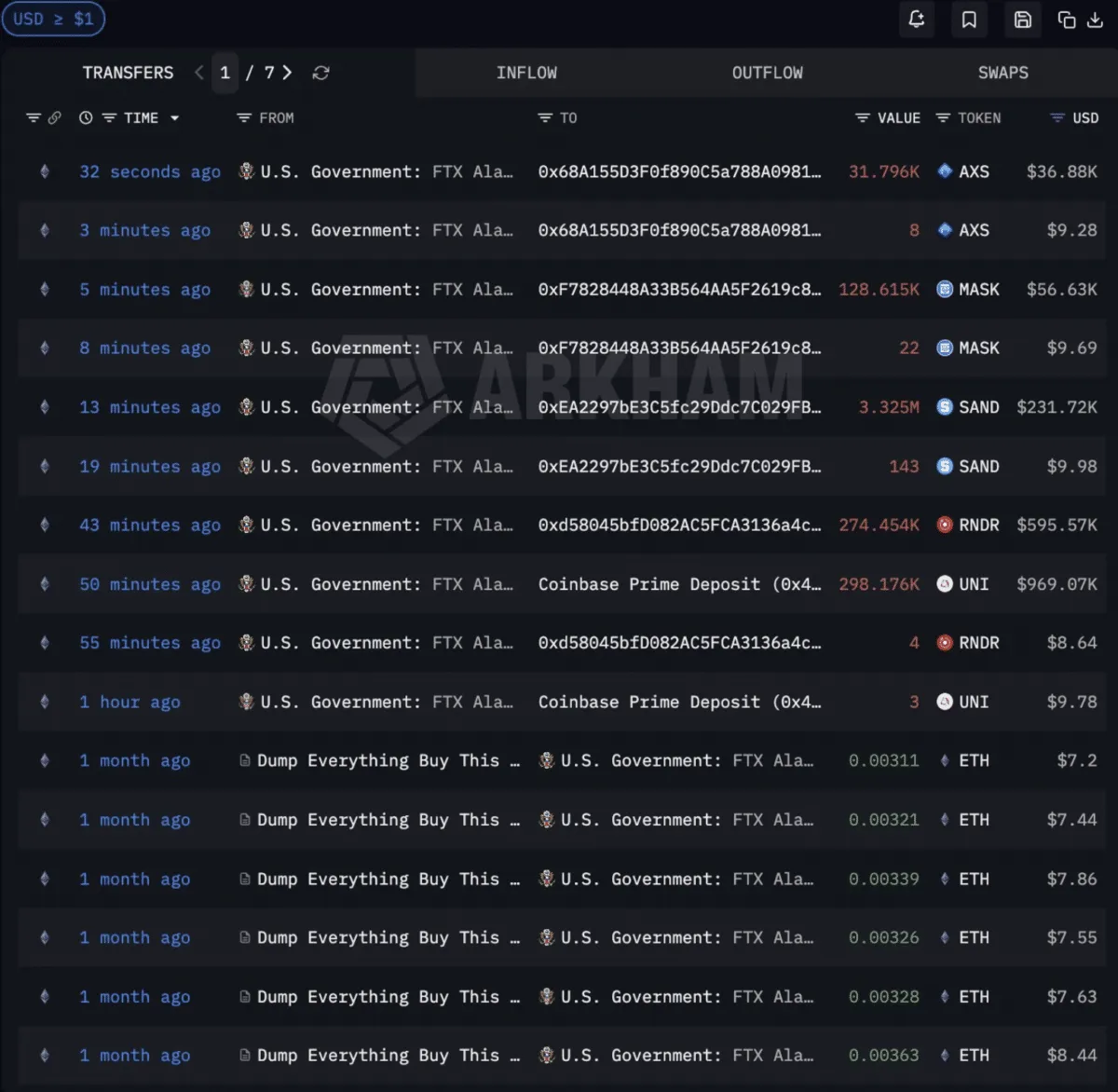
In a recent development, the US government transferred $1.9 million of Alameda funds to Coinbase Prime.  Render (RNDR), Uniswap ($UNI), The Sandbox ($SAND), Mask Network ($MASK), and Axie Infinity ($AXS) were moved from a wallet that Arkham identified as belonging to the US Government.  Source: ArkhamUSG moves funds, and the crowd gets divided  For background, more than three years ago in 2023, the USG had seized $13 million worth of Alamedas assets from Binance.  Additionally, Coinbase Prime worked as the institutional arm of the exchange. As anticipated, the movement of these whales sparked worries about a potential government sale.  Many in the cryptocurrency community said that this was simply a staged liquidation process or a part of custody management, with no intention of selling.  Source: X  Still, a lot of people thought otherwise.  Source: XMarket dynamics raises concerns  This came as RNDR was trading at $1.99 following a 9.5% decline over the previous day. Meanwhile, at the time of writing, $SAND was down 4.47% at $0.06682, $MASK was down 4.45% at $0.4231, and $AXS was down 6.05% at $1.09 at the same time.  This might not, however, indicate selling pressure because the global crypto market cap was down 3.07% from the day before, trading at $2.46 trillion.  That said, the Crypto

05-29

Is Hyperliquid the Next Financial Services Juggernaut?

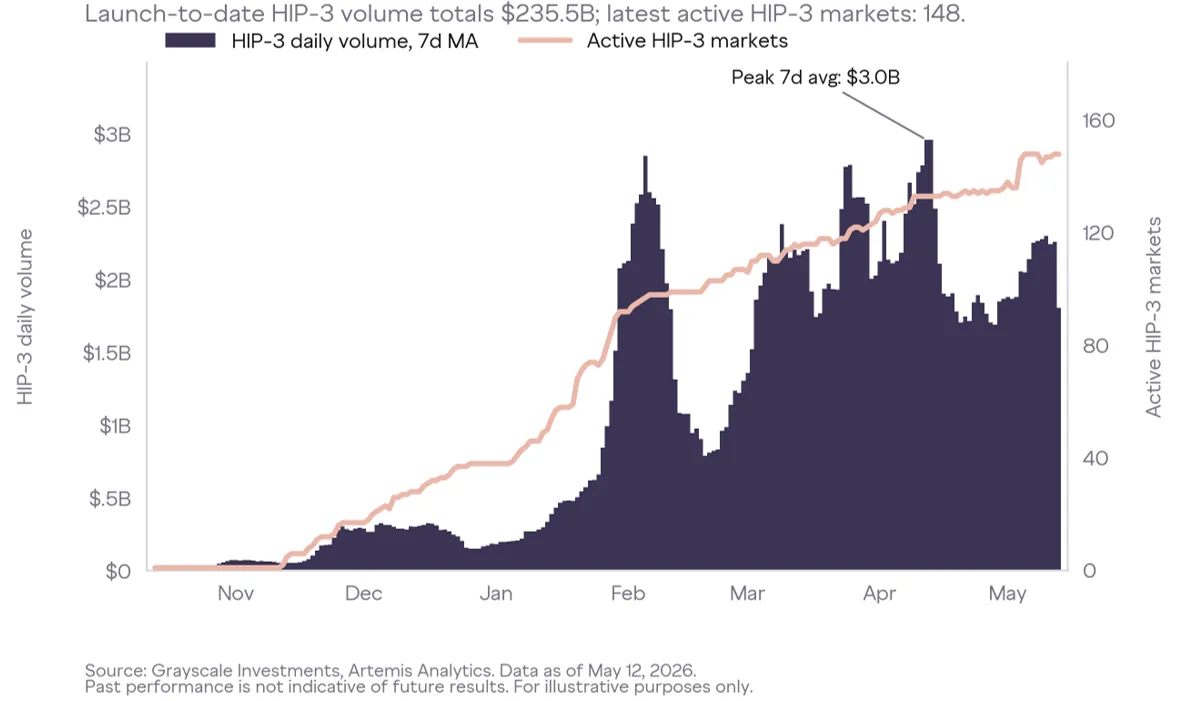
Hyperliquid is becoming one of cryptos biggest breakout stories. That attention increased after Grayscale published a report arguing the platform could grow into a major financial services company.  Grayscale described Hyperliquid as a startup-style success story. The platform generated around $800 million in revenue in 2025 alone. It achieved that while competing in one of cryptos toughest markets: derivatives trading.  Even though Hyperliquid is less than three years old and still blocks users in markets like the United States, it has already become one of the largest perpetual futures exchanges in crypto.  At the center of its growth is decentralized perpetual futures trading, often called “perps.” These contracts let traders speculate on asset prices without expiration dates. Perpetual futures have become one of cryptos largest markets, averaging roughly $200 billion in daily trading volume across the industry in 2025.  For years, centralized exchanges like Binance, Bybit, and OKX dominated the sector. However, Hyperliquid became the first decentralized platform to seriously challenge them. It did this by offering a trading experience similar to centralized exchanges while still keeping trades on-chain and allowing self-custody.  Hyperliquids Core Breakthrough  According to Grayscale, Hyperliquid succeeded because it made on-chain trading fast and practical for active traders.  The platform offers deep liquidity, quick

05-29

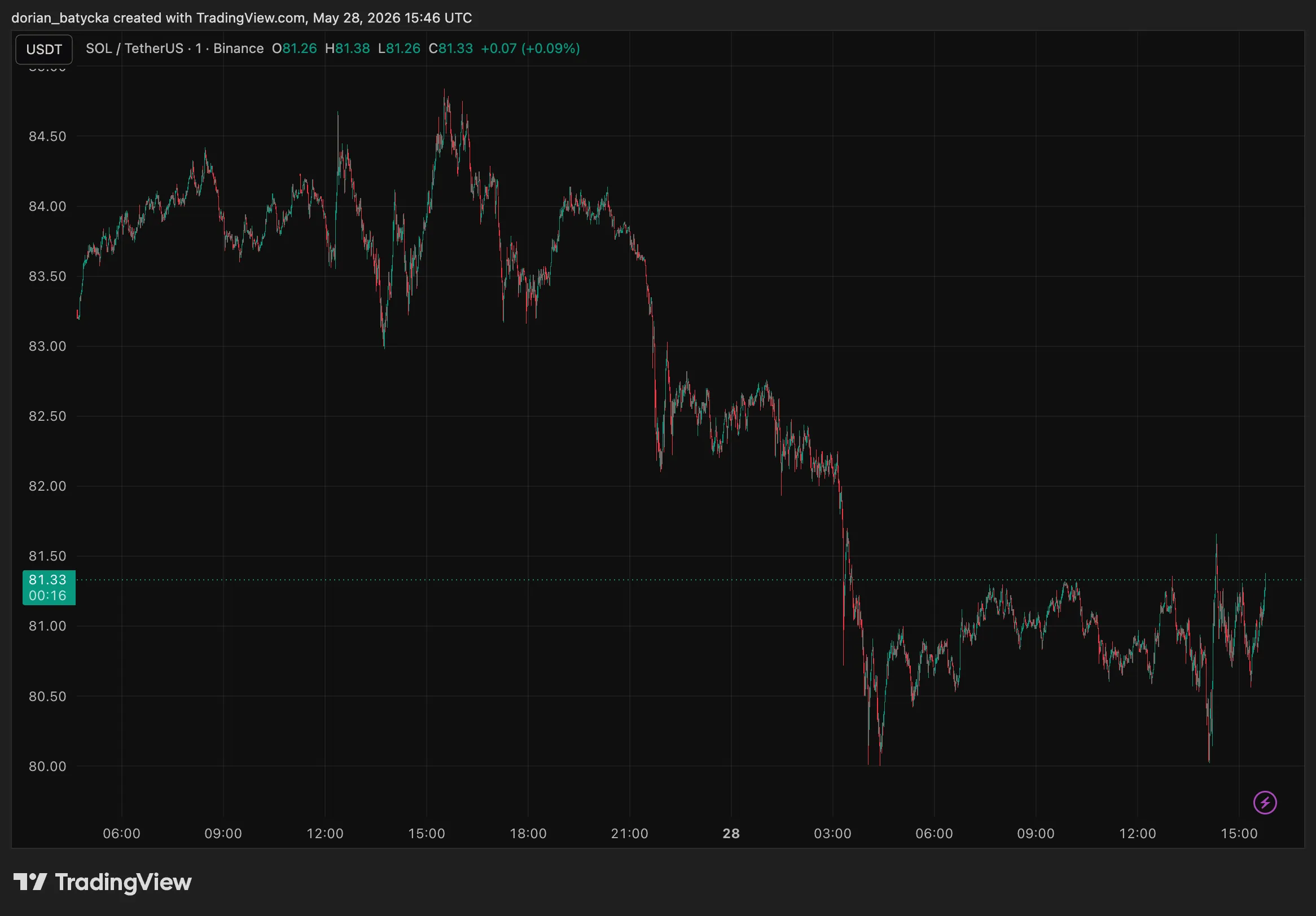
Solana price hovers near $83 as bulls try to defend key support zone

Coinbase now runs nearly 10% of all staked $SOL with a newly upgraded, multi client validator architecture it says can update with “near zero downtime.”  Coinbase has disclosed that it is now staking roughly 40.48 million $SOL ($SOL) on Solana, representing 9.52% of the networks total staked supply, according to a new Q1 2026 Solana validator performance report referenced by industry outlet ChainCatcher.  In the report, Coinbase says its validator nodes are distributed across six countries or regions, positioning the exchange as one of the largest and most geographically dispersed institutional operators on Solana.  The report outlines how Coinbase has implemented what it calls a “near zero downtime” (ZDD) upgrade mechanism that allows validator software to be updated via hot swapping while remaining protected by dual signature controls. According to Coinbase, this process is designed so that the validator update cycle “does not affect network security and stability,” a crucial claim in a network that has previously taken criticism for outages and client level fragility.  Coinbases emerging role in Solana validation  Beyond raw stake, Coinbase is leaning into client diversity, stating that its Solana validator stack now supports multiple independent implementations, including Harmonic, Jito, JitoBAM, Firedancer, and Rakurai.  By explicitly avoiding reliance on a single scheduling

05-29

Why Render traders watch $1.75 support after a 12% daily drop

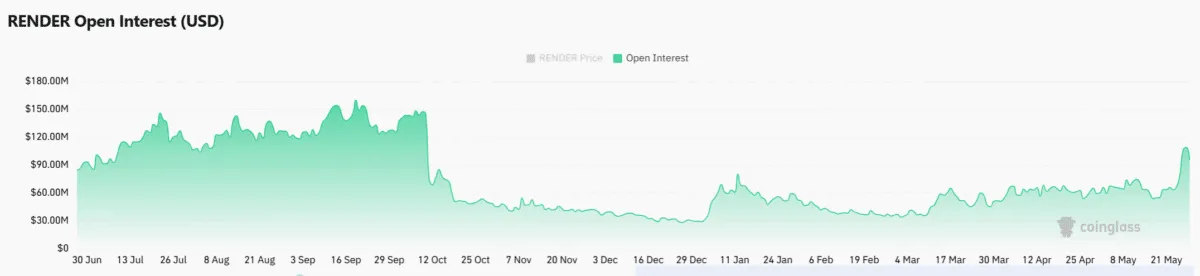
Render [$RENDER] fell nearly 12% in 24 hours as liquidation fears over seized Alameda‑linked tokens intensified market‑wide selling pressure. The decline deepened after reports confirmed U.S. authorities transferred part of the seized assets to Coinbase Prime, sparking speculation about potential sell‑side distribution.  Trading activity also weakened sharply, with 24-hour volume falling more than 43% during the correction phase. However, the broader structure still reflected an active ascending channel despite the rejection near overhead resistance.  The focus now is whether the $1.75 support region will stabilize price action before another wave of volatility emerges.  $RENDER leveraged traders rapidly reduced exposure  At the time of writing, Open Interest (OI) dropped 13.73% to nearly $88.49 million as derivatives traders pulled capital from the market during the correction. The decline reflected fading speculative participation rather than aggressive bullish positioning.  Many leveraged traders likely closed positions after volatility surged around the government transfer reports. However, the reduction in OI also suggested that excessive leverage had started clearing from the market.  The shift slightly reduced the probability of extreme liquidation-driven volatility in the near term. Derivatives activity therefore remained cautious despite Render still trading inside a broader bullish structure.  As leveraged exposure cooled, market participants appeared increasingly focused on whether spot demand could

05-29

Ethereum price drops under $2,000; how low can it go?

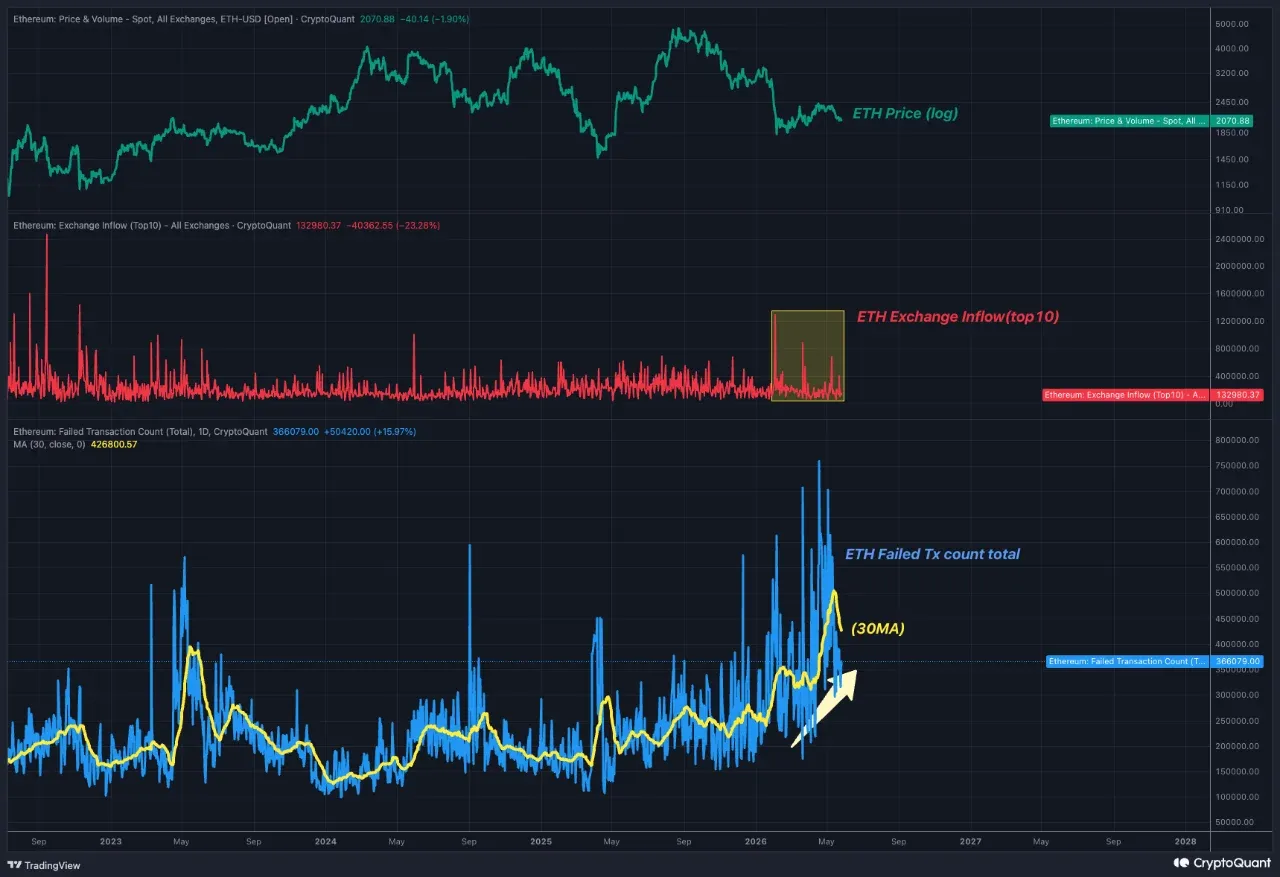
Ethereum has fallen below the $2,000 level for the first time since March as weakening on-chain activity, ETF outflows, and renewed geopolitical tensions added pressure to the second-largest cryptocurrency.  According to data from CoinGecko, $ETH dropped to an intraday low below $1,970 on Wednesday after losing a key psychological support zone that had held for nearly two months.  Ethereum lost the key level alongside the broader crypto market, which also weakened, with total market capitalization falling 3.43% to $2.46 trillion after reports emerged of a US airstrike on an Iranian military facility near the Strait of Hormuz.  The development pushed investors away from risk assets amid fears of further instability in the Middle East.  Bitcoin also slipped below $73,000 during the selloff, while major altcoins posted losses across the board.  Why is Ethereum price falling?  Fresh on-chain data added to Ethereums weakness.  Arab Chain said Ethereum exchange withdrawals over the past 30 days dropped to around 16.05 million $ETH, the lowest reading since June 2024.  Lower withdrawal activity can indicate that fewer investors are moving $ETH off centralized platforms for long-term holding, especially during periods of weak price action.  Binance recorded the largest Ethereum withdrawals at roughly 7 million $ETH, followed by OKX with around 1.43 million $ETH and

05-29

Ethereum Price Today: Standard Chartered Forecasts ETH to Hit $4,000

Ethereum  Ethereum Price Today: Standard Chartered Forecasts ETH to Hit $4,000  for the first time since March 29 as renewed U.S.-Iran hostilities triggered a broad crypto sell-off and pushed traders into defensive positions.  ETH traded near $1,980 at press time, down about 4% to 5% over the past 24 hours. The decline came as the wider crypto market lost about $80 billion in value following fresh and Iranian retaliation, ending hopes that a temporary ceasefire would hold.  The sell-off also followed continued outflows from U.S. spot Ethereum ETFs and a wave of market liquidations across crypto assets. Bitcoin also dropped to multi-week lows as investors reacted to renewed pressure around the Strait of Hormuz and rising geopolitical risk.  ETH Falls Below Key Psychological Level  Ethereums move below $2,000 has drawn attention because the level has acted as an important psychological marker for traders. Market data showed retail discussion quickly shifting toward “buy the dip” reactions after the drop.  Santiment data suggested that many traders are still treating the decline as a buying opportunity rather than a panic event. Historically, when retail traders remain optimistic during a sharp decline, prices can sometimes face further pressure before stabilizing.  Source:  The current move follows a rejection from the $2,400 resistance zone. ETH

05-28
1
...
674676
...
1000