Widespread Flight Delays Snarl Northeast Travel
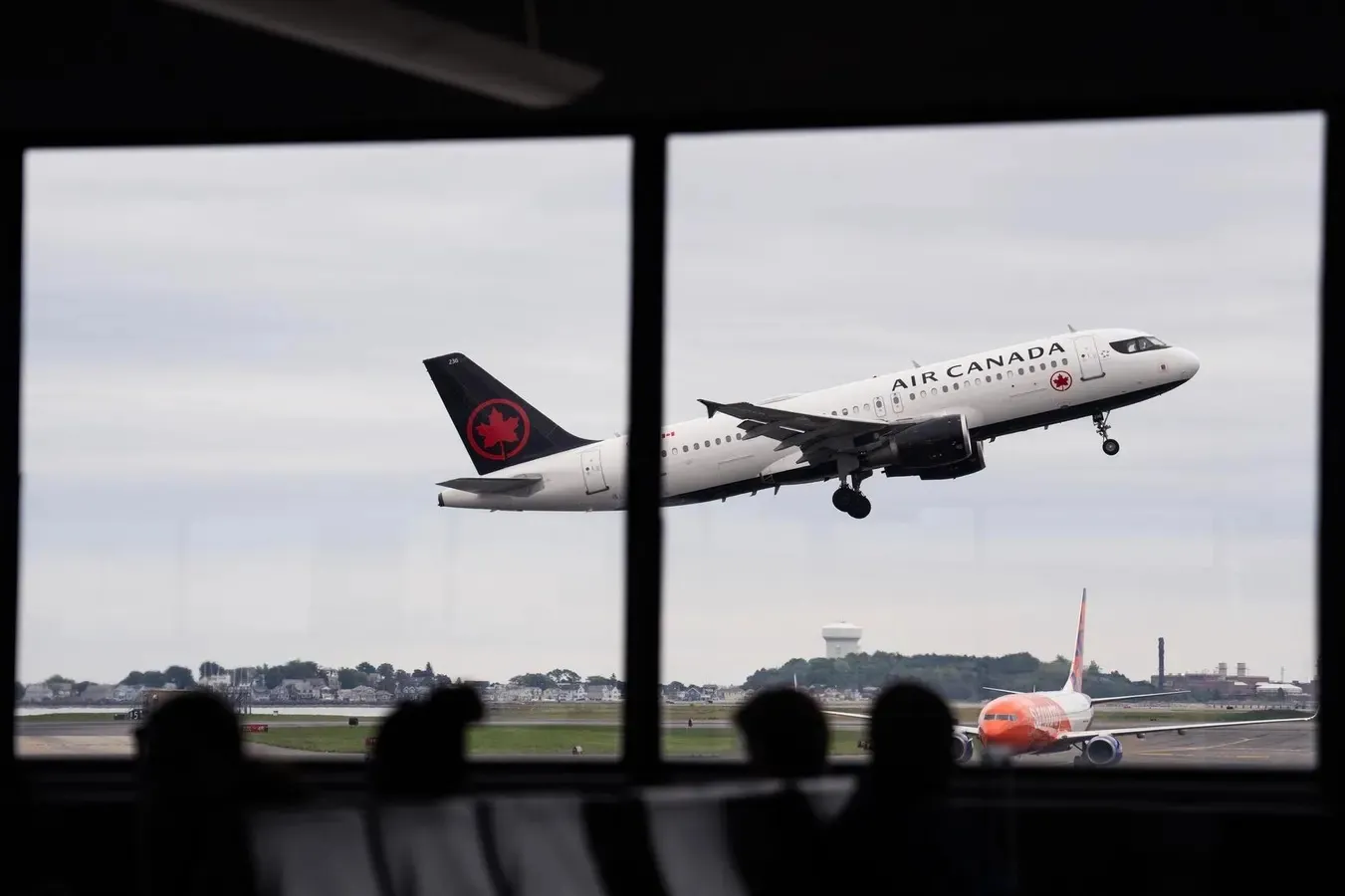
Topline Heavy rainfall and flash flooding is snarling traffic in the Northeast, forcing hundreds of flight delays across the region on Sunday as delays across the country neared 4,000 by mid-afternoon. An Air Canada airplane takes off from Boston Logan International Airport in August 2026. CQ-Roll Call, Inc via Getty Images Key Facts Parts of New England, including Boston, Rhode Island and eastern Connecticut are under a flood watch lasting until at least 6 p.m. EDT on Sunday—with some areas seeing up to 4 inches of rainfall in less than 3 hours, potentially leading to flash flooding. Other parts of the Northeast were under flood watches earlier in the day before the storms shifted east, including the New York City metro area, and the NWS predicted parts of Long Island and southern Connecticut could see local highs of up to 5 inches of rainfall. The storms contributed to delays at several major airports across the entire region: about 250 inbound flights had been delayed for Boston Logan International Airport as of 3:15 p.m. EDT—almost 40% of those scheduled—as well as around 150 at New York City‘s JFK and more than 100 at New York City’s LaGuardia Airport, according to online tracker FlightAware. Other major airports outside of the